Executive Overview
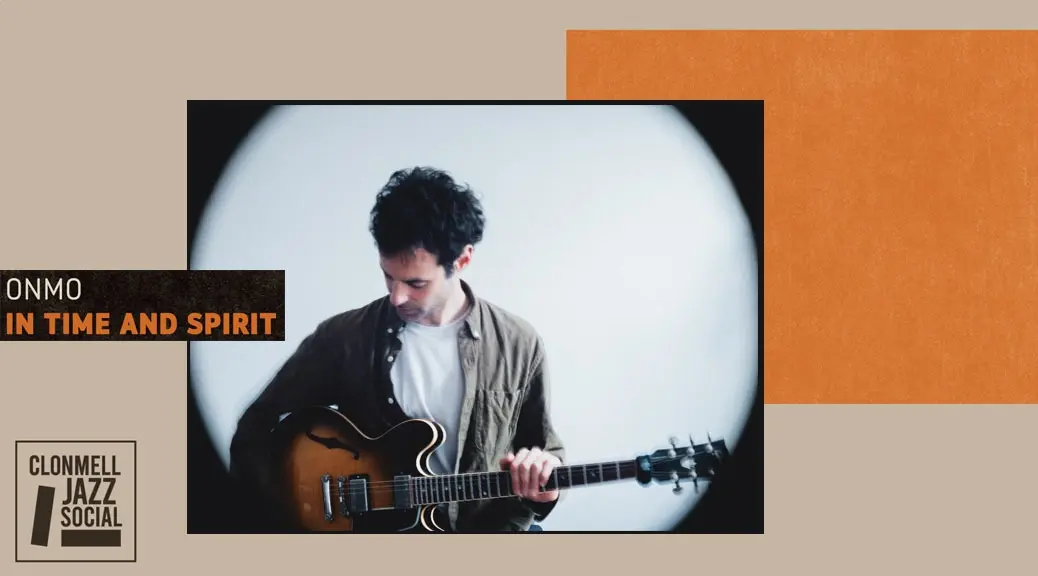
In an era dominated by hyper-individualized digital production and transient single releases, the contemporary London jazz ecosystem continues to defy conventions by prioritizing collective consciousness and shared artistic lineage. Enter ONMO, a transcendent sextet whose debut full-length record, In Time And Spirit, stands as a masterclass in modern ensemble interplay. While guitarist and composer Jean de Talhouët serves as the primary architect behind the album’s five expansive compositions, the record fundamentally resists the traditional "leader-and-sidemen" hierarchy. Instead, it operates as a unified organism—a living, breathing collective where composition and improvisation dissolve into one continuous stream of musical dialogue.
Spanning a rich terrain that balances ECM-inspired spatial minimalism with the kinetic pulse of London’s vibrant underground, In Time And Spirit is an ambitious artistic statement. It synthesizes diverse sonic vocabularies—drawing subtle inspiration from jazz titans like Wayne Shorter and Joe Henderson, acoustic luminaries like Ralph Towner and Bill Frisell, and the hypnotic structural minimalism of Steve Reich and Nik Bärtsch. Yet, despite these formidable genealogical markers, ONMO manages to forge a distinct, highly contemporary identity.
Behind the music lies a profound narrative of resilience. The album’s genesis is intimately tied to de Talhouët’s harrowing journey navigating long COVID—an experience that forced a deep re-evaluation of time, breath, and physical capability. Rather than yielding to melancholy, however, the resulting record transforms adversity into an optimistic celebration of human connection, adaptability, and the cathartic power of communal music-making. As the jazz community prepares for the band’s official album launch party at London’s legendary Vortex Jazz Club on November 5, 2026, In Time And Spirit cements itself as a vital addition to the modern European jazz canon, demanding a granular examination of its construction, execution, and cultural resonance.
Detailed Chronology and Track-by-Track Evolution
To truly understand the architecture of In Time And Spirit, one must trace its trajectory across its five substantial movements. The album is structured not merely as a collection of songs, but as an unfolding narrative arc that moves from intimate introspection to expansive minimalism, ultimately culminating in vibrant emotional release.
1. The Opening Salvo: "Lapse" and the Art of Listening
The album opens with "Lapse," a track born directly from de Talhouët’s personal struggles with long COVID. The composition avoids theatrical grandiosity, opting instead for a quietly determined melodic thread introduced by de Talhouët’s guitar. Almost imperceptibly, Mike Soper’s trumpet and Jonathan Chung’s tenor saxophone begin to weave around the central motif, creating a delicate web of sound.
The rhythm and harmonic foundation—anchored by Rupert Cox on piano and keyboards, Huw V Williams on double and electric bass, and Joost Hendrickx on drums—do not merely accompany the melody; they inhabit it. From the opening seconds, the listener is struck by a rare sense of collective respiration. The ensemble listens with acute sensitivity, allowing space to function as an active instrument. Even within its reflective, highly atmospheric passages, the track maintains an underlying warmth and brightness, setting a hopeful tone for the journey ahead.
2. Rhythmic Synthesis: "Inner Games"
Moving away from pure spatial ambience, "Inner Games" showcases the ensemble’s structural versatility and rhythmic fluency. Built upon a supple, hip-hop-inflected groove, the track serves as a sandbox for polyrhythmic exploration. Hendrickx delivers a masterclass in understated percussion complexity, laying down a fluid foundation that allows the harmonic and rhythmic ideas to pile upward without crushing the tune’s core groove.
As the track develops, the horns and guitar engage in an increasingly dense, conversational exchange. This is where ONMO’s shared history on the London scene pays the highest dividends. Even during chaotic passages where multiple players seem to be improvising conversational counterpoints simultaneously, the mix never muddies. The music retains an ironclad sense of balance, proving that structural freedom requires deep internal discipline.
3. The Monumental Centrepiece: The Three-Part Title Suite
The emotional and structural core of In Time And Spirit rests in its sprawling, three-part title piece. Here, the album ventures into genuinely expansive territory, heavily indebted to minimalist forebears like Steve Reich while maintaining an unmistakable jazz soul.
- Part I: The movement begins with hypnotic, repeating patterns established by Cox’s piano and Williams’s bass. This minimalist framework gradually transforms into an open-air canvas for harmonic exploration and collective improvisation.
- Part II: Widely recognized as a structural high-point of the album, this movement layers accumulating textures that generate forward momentum while fiercely protecting the individual voices of the soloists. No one player is swallowed by the wave; rather, each voice contributes a distinct hue to the shifting sonic mosaic.
- Part III: The suite reaches its ultimate catharsis in the final movement. Shimmering color palettes, Cox’s ascending piano lines, and de Talhouët’s increasingly forceful, soaring guitar work provide a powerful, deeply satisfying emotional release, bringing the suite to a triumphant climax.
Supporting Context, Personnel, and Musical Metrics
The London Nexus: A Foundation of Shared History
Great jazz rarely emerges in a vacuum; it is the product of geography, community, and shared lived experiences. The members of ONMO did not meet via corporate auditions or algorithms. They arrived at this project through years of overlapping friendships, jam sessions, and collaborative ventures across the fiercely competitive, fiercely supportive London jazz landscape.

This shared history manifests as an almost telepathic responsiveness on stage and in the studio. When one player nudges the music down an unexpected harmonic alleyway or shifts the tempo subtly, another is already waiting there to catch them. This deep mutual trust allows ONMO to venture into high-risk improvisational territory without fear of collapse.
Dissecting the Influences
While de Talhouët’s compositions clearly echo the sophisticated modal frameworks of Wayne Shorter and the muscular, lyrical phrasing of Joe Henderson, the ensemble’s overall aesthetic stretches far beyond traditional post-bop parameters.
- The Minimalist Thread: The structural DNA of Steve Reich and Nik Bärtsch is clearly audible in the cyclical, interlocking rhythmic motifs that drive pieces like the title suite.
- The Acoustic/Electric Texture: The delicate interplay between fingerpicked acoustic textures and atmospheric electric jazz recalls the ECM-era chamber jazz of Ralph Towner and the genre-blurring lyricism of Bill Frisell.
Despite these heavy influences, ONMO avoids becoming a pastiche. The band metabolizes these references, filtering them through the lens of contemporary London’s multi-genre melting pot—where jazz, hip-hop, contemporary classical, and ambient music exist in fluid coexistence.
Album Metrics at a Glance
- Release Date / Key Milestone: Album launch party scheduled for November 5, 2026, at The Vortex Jazz Club, London.
- Total Composition Count: 5 substantial, long-form pieces.
- Primary Instruments Utilized: Electric/Acoustic Guitars, Trumpet, Tenor Saxophone, Piano/Keyboards, Double Bass/Electric Bass, Drums/Percussion.
- Core Aesthetic: Contemporary European Jazz, Chamber Jazz, Minimalist Improvisation.
Official Statements and Artistic Philosophy
Reflecting on the philosophy underpinning In Time And Spirit, the underlying narrative is one of healing and human connection. De Talhouët has spoken candidly about how the physical isolation and cognitive fog of long COVID forced a radical simplification of his life, which paradoxically opened up new avenues for compositional depth.
"When your physical capacity is radically constrained, you learn to listen differently," notes the collective ethos surrounding the project. "You stop trying to fill every sonic inch with notes, and you start paying attention to the spaces between them, the breath of the ensemble, and the sheer gift of making sound with people you trust."
Critics and early industry listeners have echoed these sentiments, noting that the album’s ultimate achievement lies not in its technical complexity—though the musicianship is world-class—but in its infectious optimism. In an artistic landscape frequently drawn to cynicism, irony, or self-indulgent abstraction, ONMO offers an unashamed celebration of adaptability, friendship, and the fundamental human need for communal expression.
Future Outlook: What Lies Ahead for ONMO
As ONMO prepares for their high-profile live debut at Stoke Newington’s premier creative jazz hub, The Vortex, on November 5, 2026, anticipation within the UK jazz community is palpable. The release of In Time And Spirit marks more than just a successful debut; it signals the emergence of a formidable new voice in British improvised music.
Looking forward, the primary challenge—and opportunity—for ONMO will be translating the intricate, studio-refined interplay of In Time And Spirit into the dynamic, high-wire environment of the live stage. Given the pedigree and deep-seated interpersonal chemistry of the ensemble, there is little doubt they are up to the task.
For jazz enthusiasts, contemporary classical fans, and seekers of thoughtful, expansive sonic art, ONMO represents the vibrant bleeding-edge of modern music. In Time And Spirit is a record that demands active listening, repeated spins, and—above all—live experiencing. As the collective voice forged on this debut continues to evolve, ONMO is well-positioned to leave an indelible mark on the international jazz landscape for years to come.