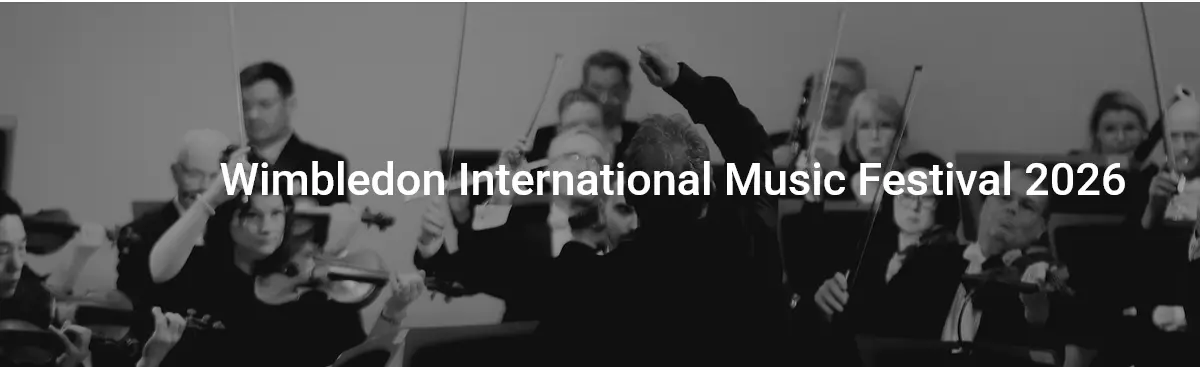
The Wimbledon International Music Festival (WIMF) is set to return for its eagerly anticipated 18th edition, running from November 7 to November 29, 2026. Featuring an expansive roster of 26 meticulously curated events, this year’s festival marks a critical chapter in the institution’s history. It represents the second consecutive year under the artistic directorship of Anthony Friend, who successfully assumed the mantle in 2025 from the festival’s visionary founder, Anthony Wilkinson.
Since its inception in 2009, WIMF has grown from a localized classical music series into a culturally significant fixture on the United Kingdom’s autumn arts calendar. While Wilkinson’s foundational dream was to establish a dedicated, state-of-the-art concert hall in Wimbledon, the modern incarnation of the festival under Friend has transformed spatial limitations into a distinct artistic asset. Eschewing the traditional, monolithic auditorium model, WIMF 2026 fully embraces the concept of "music in unexpected places."
The upcoming festival builds bridges between elite classical performance and local community integration. By utilizing a diverse array of venues—ranging from consecrated spaces and prestigious educational halls to neighborhood pubs, wine bars, and libraries—the festival redefines how audiences interact with chamber music, orchestral masterworks, early music, and jazz. With world-renowned soloists, rising international competition laureates, and major choral and orchestral ensembles scheduled to perform, the 2026 festival promises an uncompromising standard of artistic excellence paired with groundbreaking accessibility.
Detailed Chronology & Programme Highlights: A Journey Through November 2026
Spanning over three weeks, the 26 events of the 2026 Wimbledon International Music Festival offer a rich, chronological tapestry of sonic experiences. From the monumental choral works of the Venetian and Spanish Renaissance to contemporary orchestral commissions and late-night jazz, the festival’s schedule is designed to captivate both seasoned connoisseurs and adventurous newcomers.
Opening Weekend and Baroque Splendour
The festival commences on Friday, November 7, with an opening concert titled Sacred Splendour. St John the Baptist Church on Spencer Hill will reverberate with the glorious, polyphonic architecture of Venice and Madrid. This grand inauguration features the Academy Choir of Wimbledon, directed by George Inscoe—who serves as Sub-Organist at St Paul’s Cathedral—alongside the period-instrument brilliance of His Majesty’s Sagbutts and Cornetts. This performance sets a high-baroque tone for the opening week, blending historical performance practice with emotional resonance.
Mid-Festival Masterworks and Chamber Collaborations
As November progresses, the chamber music and recital series take center stage.
- Pianistic Brilliance: The acclaimed pianist David Khrikuli, a celebrated laureate of the Chopin International Piano Competition, brings his virtuosic touch to works by Bach, Chopin, Ravel, and Rachmaninoff. Later in the month, festival artistic director Anthony Friend steps onto the stage alongside the brilliant Quatuor Agate to perform Mozart’s timeless Clarinet Quintet, complemented by striking string quartets by Korngold and Schubert.
- Cross-Currents in Chamber Music: Spanish pianist Antonio Oyarzábal joins forces with the Solem Quartet to deliver rich interpretations of piano quintests by Dvořák and Amy Beach. Meanwhile, members of Sinfonia Cymru, led by Haim Choi, offer an eclectic programme that bridges the expansive textures of Mendelssohn’s Octet and Olli Mustonen’s Nonetto II with intimate, smaller-scale works by trailblazing female and French composers, including Lili Boulanger, Louise Farrenc, and Jean Françaix.
- Vocal and Choral Explorations: Max Barley, Director of Music at Holy Trinity Sloane Square, returns to the festival to lead a dedicated exploration of Johann Sebastian Bach. His programme features the profound cantata Gottes Zeit ist die allerbeste Zeit (Actus Tragicus), the motet O Jesu Christ, meins Lebens Licht, and the radiant Magnificat.
Orchestral Powerhouses and Rising Stars
The orchestral and recital strands of the festival highlight the best of contemporary performance. Sinfonia Smith Square, under the baton of conductor Charlotte Corderoy, presents a dynamic programme at King’s College School. The concert features Anna Clyne’s high-octane orchestral showpiece Sound and fury, the world premiere or showcase of a new flugelhorn concerto titled Hargrove by Gabriel Jackson—written specifically for and performed by soloist Imogen Whitehead—and concludes with Mendelssohn’s evocative Scottish Symphony.
The festival’s commitment to championing emerging talent shines brightly in the annual Tertis Memorial Concert. Edgar Francis, who made waves internationally when he won the Cecil Aronowitz International Viola Competition at just 22 years of age, teams up with pianist Jâms Coleman. Their programme thoughtfully pairs works by the romantic masters Clara and Robert Schumann with the introspective chamber expressions of Rebecca Clarke and Frank Bridge.
Immersive, Late-Night, and Multi-Sensory Experiences
Pushing the boundaries of traditional concert-going, WIMF 2026 features several unique experiential events:
- The Rushmere Takeover: The festival takes over The Rushmere pub on Ridgway for two distinct nights. Jazz singer Natalie Williams and her band—performing in association with the legendary Ronnie Scott’s jazz club—bring an intimate, swinging atmosphere to the venue. On another evening, the prestigious Orchestra of the Age of Enlightenment steps out of the concert hall to perform French Baroque music in their accessible, lighthearted Night Shift format.
- Candlelit and Nordic Atmospheres: A pair of atmospheric, candlelit concerts offer moments of contemplative beauty. The Lodestar Trio marries the rustic, haunting strains of Nordic folk music with the mathematical precision of J.S. Bach, while soprano Ruby Hughes and lutenist Jonas Nordberg present a dedicated exploration of the melancholic lute songs of John Dowland.
- Wine and Song: At Jeroboams wine bar in Wimbledon Village, the festival curates immersive pairings of music and terroir. Audiences can experience traditional Neapolitan songs paired with fine wines from Naples and southern Italy, or the passionate tango rhythms of Astor Piazzolla accompanied by select Argentinian vintages.
- Art Meets Music: In a truly innovative multi-media collaboration, cellist Jérémie Queyras and violinist Charlotte Spruit perform live while artistically interacting with visual mediums, creating three large-scale canvases in real-time during the concert. These unique artworks will be made available for purchase following the performance.
Grand Finale
The 2026 festival reaches its crescendo on Sunday, November 29, with a masterclass in pianism. The legendary pianist Angela Hewitt returns to the festival for her third appearance, delivering a closing recital that is guaranteed to showcase the clarity, elegance, and profound musicality that have defined her peerless international career.
Supporting Context, Venues & Financial Metrics
The Evolution of WIMF Venues
The architectural footprint of the Wimbledon International Music Festival is a testament to Anthony Friend’s philosophy of cultural integration. While St John the Baptist Church on Spencer Hill remains the anchor venue—offering sublime acoustics for major choral and orchestral performances—the festival’s embrace of unconventional spaces has expanded its demographic reach.

The 26 events are strategically distributed across a diverse geographical and cultural map of Wimbledon:
- Traditional Educational Spaces: Auditorium at Wimbledon High School; Upper Hall at Sacred Heart Church; and the grand halls of King’s College School, Wimbledon.
- Civic and Community Hubs: Merton Arts Space located within Wimbledon Library; and a dedicated schools’ concert hosted at the historic New Wimbledon Theatre.
- Commercial and Social Spaces: The Rushmere pub on Ridgway; Jeroboams wine bar in Wimbledon Village; and local parish churches.
This decentralized venue strategy not only mitigates the historic absence of a dedicated concert hall in Wimbledon but actively democratizes classical music. By removing the psychological barriers often associated with formal concert halls, WIMF invites patrons to experience high art in environments where they already live, socialize, and gather.
Educational Outreach and Community Metrics
Beyond its public performance schedule, WIMF maintains an unyielding commitment to music education and community engagement. Through a deeply integrated, long-standing partnership with the Merton Music Foundation (MMF), the festival reaches thousands of young people across the London Borough of Merton.
This educational pipeline ensures that live classical music is not viewed as an insular art form for the elite, but as an accessible, vital component of youth development. The festival subsidizes school-focused performances, facilitates workshops with visiting international artists, and ensures that the next generation of music lovers has direct, unmediated contact with world-class performers. Financial models for the festival rely on a sustainable mix of ticket sales, private philanthropic donations, corporate sponsorships (such as partnerships with Roebuck Estates for English sparkling wine), and local authority support, ensuring that WIMF remains financially resilient while pursuing ambitious artistic goals.
Official Statements & Leadership Insights
The transition of leadership from founder Anthony Wilkinson to artistic director Anthony Friend marked a pivotal evolution for the festival. Speaking on the philosophy guiding the 2026 programme, Friend emphasized the importance of surprise, diversity, and community integration.
"Music has a remarkable power to transform spaces. When we take world-class artists out of the conventional acoustic box and place them into the heart of our community—whether that is a candlelit church, a historic local pub, a bustling wine bar, or a school hall—we strip away the intimidation factor of classical music. The 2026 festival is designed to be an exploration of sound in unexpected places, proving that exceptional artistry can resonate just as powerfully over a glass of wine or under the glow of candlelight as it does on the stages of London’s West End."
Reflecting on the legacy of the festival’s founding vision, organizers note that while Wilkinson’s original dream of a bricks-and-mortar concert hall in Wimbledon remains an unfulfilled ambition, the modern festival has achieved something arguably more radical: it has turned the entire town of Wimbledon into a living, breathing concert hall.
Future Outlook: The Path Ahead for WIMF
As the Wimbledon International Music Festival prepares to open its doors for its 18th iteration in November 2026, the organization stands at the vanguard of modern classical music programming. The festival’s successful pivot toward immersive, multi-disciplinary, and unconventional venue-based curation serves as a replicable model for regional arts organizations across the United Kingdom.
Looking toward the future, the strategic roadmap for WIMF under Anthony Friend focuses on three core pillars:
- Expanding Audience Demographics: Continuing to break down barriers between high art and casual social settings, ensuring sustainable growth among younger and more diverse cohorts.
- Deepening Educational Impact: Strengthening the alliance with the Merton Music Foundation to guarantee that cuts to arts education in schools are actively counterbalanced by direct, high-quality live music interventions.
- Commissioning and Innovation: Continuing the tradition of premiering new works and supporting contemporary composers, ensuring that classical music remains a living, breathing, and evolving art form rather than a museum-bound relic.
With ticket sales opening through the official festival channels, early indicators point toward record attendance across multiple events. For residents of Wimbledon and international visitors alike, November 2026 promises three weeks where the ordinary geography of a London suburb is transfigured by the extraordinary power of live music.
Full details, box office bookings, and the complete day-by-day programme for WIMF 2026 can be accessed directly via the Wimbledon International Music Festival Website.