Executive Overview
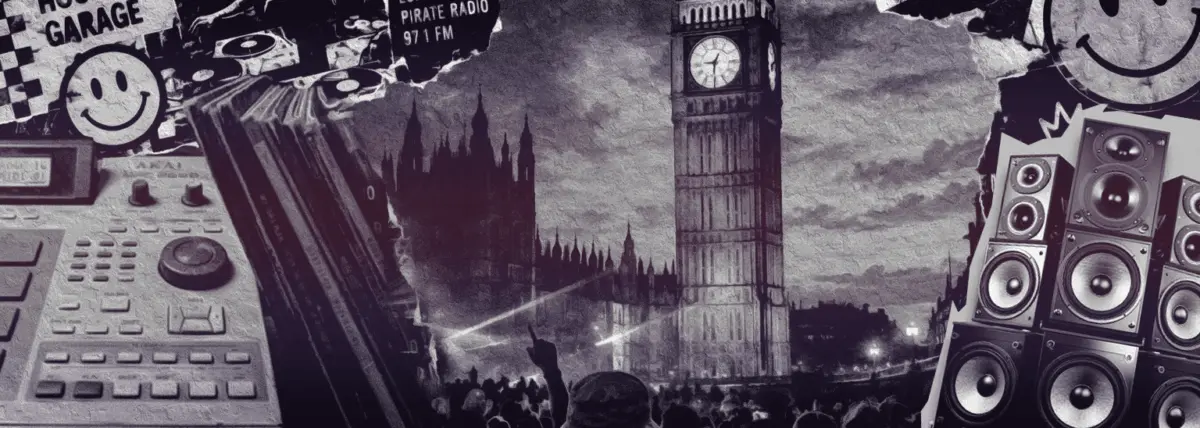
UK Garage (UKG) has experienced a monumental global resurgence, migrating from the damp confines of late-90s home studios and illicit pirate radio transmitters to the sun-baked main stages of international mega-festivals like Coachella, championed by modern standard-bearers such as Sammy Virji. Yet, UKG has never been a monolithic genre; rather, it operates as a broad, eclectic umbrella spanning transatlantic imports—such as Todd Edwards’ intricate vocal-slicing Sample Choir E.P.—homegrown four-on-the-floor bassline heavyweights like Ripgroove, soulful 2-step anthems like Movin’ Too Fast, and even industrial, wobbly Teutonic re-interpretations like Timo Maas’ iconic remix of Dooms Night.

Among this rich sonic tapestry, 2-step stands out as UKG’s most undeniably homegrown and structurally distinct innovation. Much like jungle, drum and bass, and dubstep, 2-step serves as a masterclass in how British electronic music thrives when it taps into its own multicultural lineage rather than passively mirroring American blueprints.

This comprehensive technical walkthrough deconstructs the anatomy of a timeless 2-step beat. Taking contemporary inspiration from Rose Holland’s rolling, vocal-driven production Solid On The Ground, we will explore how to build a rhythm section from the ground up. By examining kicks, rimshots, top-end percussion, and dynamic arrangement edits, producers can capture the hypnotic bounce and spacious swing that define the genre.

Detailed Chronology: The Evolution and Architecture of 2-Step Production
To build an authentic 2-step groove, a producer must first understand the structural DNA that separates it from standard house or techno beats. Traditional 4/4 electronic genres rely heavily on a steady, marching kick drum on every quarter note. In contrast, 2-step deliberately subverts this expectation, pulling the second and fourth kicks from the grid to create a syncopated, rolling void. This rhythmic breathing room allows the characteristic deep basslines to dominate the low-end frequencies while giving the intricate percussion space to swing.

Step 1: Crafting the Low-End Anchor (The Kick)
UKG kick drums are fundamentally distinct from the massive, sub-heavy kick drums found in modern trap or techno. A proper UKG kick features a short release tail and avoids a deep, booming sub-frequency. Instead, it punches firmly in the upper bass and lower midrange (typically between 100Hz and 140Hz using a clean low-cut filter). This design choice serves a vital engineering purpose: it leaves unobstructed frequency real estate for deep sub-basslines while keeping the rhythm nimble.

- The Core Kick: Begin with a staple sample, such as Ableton Live’s Kick 70s 1. The foundational pattern places two kicks per bar—specifically on beats 1 and 1.3.3. To emphasize the inherent skip of the rhythm, introduce an auxiliary kick on beat 4.4.3 every fourth bar, accented with a slightly higher velocity.
- The Bounce Layer: Layer this with a synthetic, classic 2-step flavor, such as Live’s Club Kick. Rather than rigidly locking this second layer to the quantization grid, program these skippy hits slightly off-grid by ear to capture a humanized, organic bounce.
- Level Balancing: Lower the volume of the Club Kick by approximately 10dB relative to the primary acoustic kick. This ensures the Kick 70s 1 provides the physical weight, while the Club Kick adds percussive syncopation across a two-bar loop.
Step 2: The Driving Force (The Rimshot)
If the kick establishes the skeletal pulse, the rimshot provides the heartbeat of any 2-step production. The sound source does not strictly require an authentic acoustic rimshot sample; any short, dry, unlit wooden knock or percussion hit will suffice, provided it remains devoid of excessive high-frequency sizzle.

- Placement and Layering: Rim placement in classic 2-step is remarkably consistent, landing firmly on every second beat. Because rimshots possess distinct tonal qualities, layering two different samples—such as Rim 3k Sharp and Rim 90s MPC—yields a richer composite sound. To add internal variation over a two-bar loop, mute every fourth instance of the Rim 90s MPC.
- Skippy Accents: To drive the tempo forward, program fast, intricate rim patterns using a swung, manually quantized groove. For instance, utilize Live’s Rim DMX Fatso 2 sample, pitched down by three semitones. Pair this with a secondary pattern utilizing the Rim LDre 2 sample, similarly pitched down by three semitones. Interlocking these two samples creates a dynamic question-and-answer dialogue spanning one- and two-bar phrasing.
- Melodic Pitch Shifting: Elevate your rim patterns by duplicating the skippy rim tracks to auxiliary drum lanes, pitching them up or down by a single semitone, and selectively relocating notes. This transforms a static rhythm into a melodic percussive sequence.
Step 3: Air and Movement (Hats and Rattles)
The upper-frequency spectrum of a 2-step beat relies on a careful composite of closed and open hi-hats, tambourines, shakers, and auxiliary rattles. Historically born from hardware sampling and pirate radio tape compression, modern producers have access to pristine library assets, yet the core rule of sample length remains unchanged: even open hats must be clipped short and punchy.
- Open Hat Dynamics: Utilize short open hat samples, such as Hihat Open Ironman and High Open Machine Hard, programmed on the off-beats. Introduce a longer sustained note paired with a short skip note on the High Open Machine Hard to reinforce the two-bar cyclical framework.
- Tambourine Call-and-Response: Introduce a tambourine shake (such as a tambourine sample recorded at 86 bpm and pitched up by 8.44 semitones to match modern UKG tempos) during the second half of each bar, extending its duration every second bar.
- Transient Management: Fill the rhythmic gaps with subtle shakers, reversed hats, and environmental textures. The golden rule for these auxiliary top elements is to avoid sharp, aggressive transients that might clash with the primary skippy rimshots and kicks. Reversed samples excel here, provided they are pushed forward on the timeline so that their natural swell aligns with the rhythmic grid.
Step 4: Arrangement Dynamics (The Edits)
No dancefloor rhythm section is complete without structural edits and variations to maintain listener engagement and accentuate arrangement transitions. 2-step edits traditionally involve stripping out selected kicks, snares, or hats at the terminal bars of four- or eight-bar phrases, or injecting rapid-fire kick rolls.
- Rolls and Dropouts: Program accelerating drum rolls using the Club Kick sample over the span of a single bar, leaving a momentary micro-pause at the very end to propel the listener into the subsequent phrase. Mute the primary kick pattern entirely during the roll to maximize sonic contrast.
- Cymbal Accents: Introduce short, high-pitched 909 crash cymbals at the downbeat of every eight-bar block, supplemented by skippy, truncated crashes at the end of the phrase to lock in with the rhythmic edits. Reintroducing a clean rimshot on the final beat of bar eight builds powerful psychological tension, priming the dancefloor for the drop that follows.
Supporting Context & Metrics: The 90s Classics and Production Workflow
To fully appreciate modern garage production, one must look back at the golden era of 90s and early-2000s 2-step. The genre’s permissive nature in clubs and on underground radio allowed producers to cross-pollinate genres freely:
- Chunky Club Favorites: Tracks like Real Loving (Dub) demonstrated how underground anthems could repurpose iconic rave hooks (such as Right Before My Eyes).
- Syncopated Workouts: Productions like With a Little Bit of Luck proved the commercial viability of intricate hi-hat swing.
- R&B Crossovers: Releases such as B With Me and Got Myself Together bridged the gap between smooth American R&B vocal aesthetics and rugged British rhythm production.
- Minimalist Innovation: Groundbreaking tracks like Battle showcased how stripping back instrumentation in favor of a rolling, melodic bassline could yield timeless dancefloor authority.
Ergonomic Production Advice
When spending hours programming intricate, micro-timed syncopation, ear fatigue and frequency masking are formidable enemies. Producers should implement strict workflow management:
- Utilize Break Timers: Step away from the digital audio workstation (DAW) at regular intervals to reset auditory perception.
- The Overnight Rule: If upper-mid frequencies begin to blur together, save the project and sleep on it. Returning to the mix with fresh ears—or leaving the track to "breathe" for a few days—often reveals immediate solutions to mixing bottlenecks.
Official Statements and Industry Insights
Reflecting on the enduring legacy of UK garage, veteran producers and contemporary headliners alike emphasize that the genre’s strength lies in its rhythmic elasticity.
Industry veterans note that the transition from hardware-based Akai samplers and early software sequencers to modern in-the-box production has made achieving the signature 2-step swing more accessible, yet the human element remains irreplaceable. As contemporary touring artists frequently observe, the secret to a successful 2-step groove is not rigid grid quantization, but rather the deliberate manipulation of micro-timing, velocity scaling, and strategic space.
When a beat leaves enough room for the human voice and a warm sub-bassline to interact, the music transcends its technical origins to become a unifying cultural experience.
Future Outlook
As UK Garage continues its rapid ascent across global festival circuits—cemented by cross-genre collaborations, high-profile festival bookings, and an influx of producers adopting hybrid hardware-software workflows—the technical foundations established during the pirate radio era remain profoundly relevant.

The techniques outlined in this guide—meticulous transient shaping, off-grid kick programming, tonal rim layering, and dynamic phrase editing—provide producers with a reliable toolkit for the modern studio. Whether crafting sparse, atmospheric 2-step rollers or high-energy festival bangers, the philosophy of UKG remains steadfast: honor the groove, embrace multicultural heritage, and always leave space for the rhythm to breathe.