Executive Overview
In the intricate architecture of modern music production, few tools are as fundamental, ubiquitous, and transformative as equalization—universally known as EQ. At its core, equalization is the process of adjusting the balance of frequency components within an electronic audio signal. While the concept sounds straightforward, mastering EQ is arguably the single most important skill for anyone looking to transition from making amateur noise to engineering professional, polished audio.
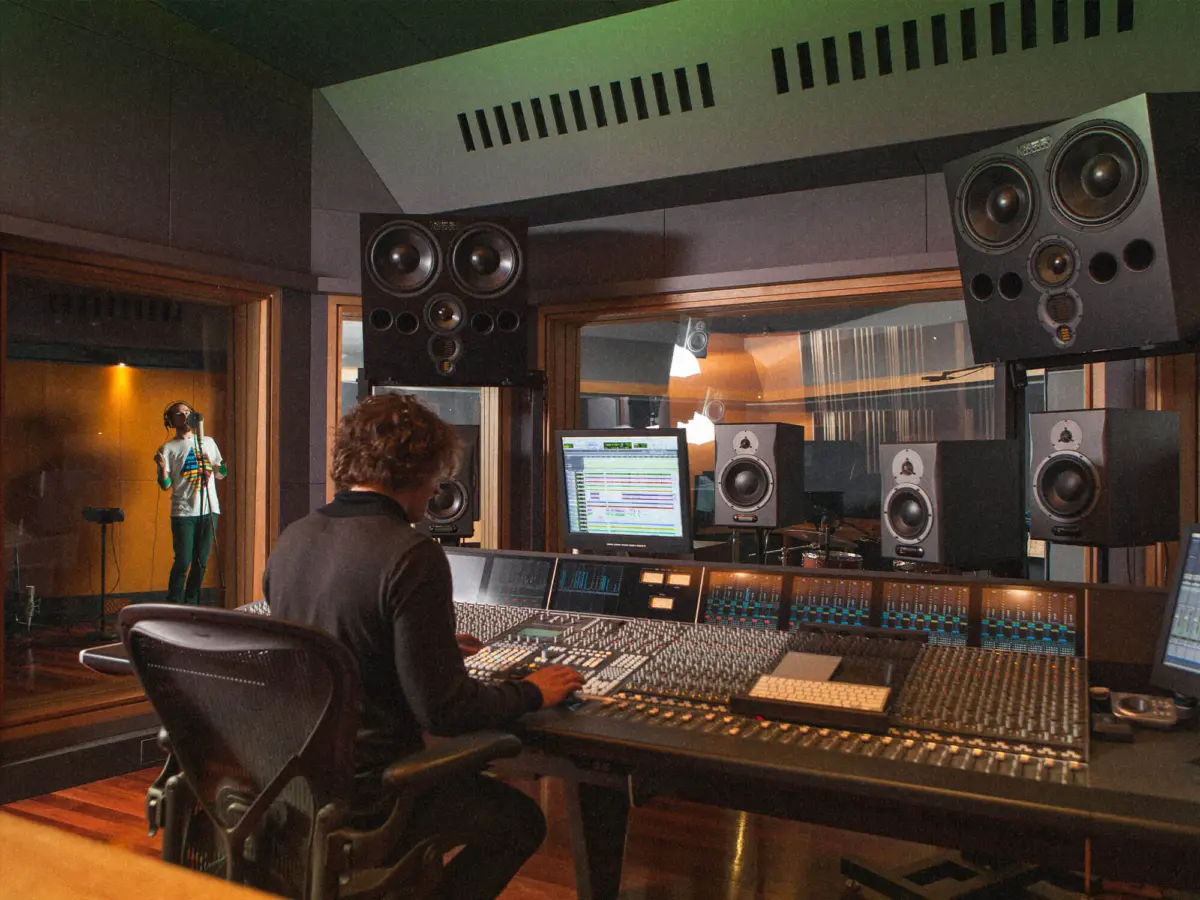
Whether working in a high-end commercial recording studio or a bedroom production setup, producers use EQ to shape tone, correct acoustic imperfections, carve out sonic real estate for individual instruments, and glue an entire mix together. Without EQ, a multitrack recording typically devolves into a muddy, clashing wall of sound. Instruments fight for the same frequencies, vocals get buried behind guitars and synths, and low-end rumble obscures the clarity of the rhythm section.
This deep-dive guide explores the mechanics of equalization, breaks down the various filter types and processor designs, and outlines how producers apply these tools across every stage of the audio lifecycle—from tracking to the final master. Furthermore, we examine how the hardware-to-software evolution has democratized these tools, allowing modern engineers to harness both the character of vintage analog gear and the surgical precision of modern digital plugins.
Detailed Chronology and Technical Evolution of EQ
To truly understand how EQ functions today, it helps to look backward. Equalization did not begin inside computers as a visual graphic interface with infinite bands; rather, it evolved out of a physical necessity in early telecommunications and broadcast engineering.
The Acoustic and Telephonic Origins (Early 20th Century)
Long before the birth of multi-track recording, early telephone and radio engineers faced the harsh reality of signal degradation over long distances. High and low frequencies naturally attenuated (faded) as they traveled through long copper wires, resulting in muffled, unintelligible speech. To combat this, engineers developed passive electrical filters designed to "equalize" the frequency response—boosting the high and low ends to restore the signal to its natural state. This is where the term "equalization" originated.
The Birth of Broadcast and Studio Consoles (1930s–1950s)
As the recording industry shifted from purely mechanical acoustic recording to electrical microphone-based recording, the need to alter frequency balance for artistic and corrective purposes became apparent. Early film studios and radio networks commissioned custom filter units. These were rudimentary devices, often featuring simple switchable high-pass and low-pass filters to eliminate unwanted low-frequency hum (like rumble from traffic or building vibrations) or high-frequency hiss.
The Golden Age of Analog Hardware (1950s–1970s)
The middle of the 20th century saw the introduction of iconic hardware that still influences plugin design today.
- The Pultec Era: Developed by Pulse Techniques in the 1950s, the Pultec EQP-1A introduced passive tube-driven EQ circuits. It became legendary for its ability to simultaneously boost and cut the same low frequencies, creating a unique, musically pleasing phase shift that added weight and air to recordings.
- Console Integration: As mixing desks grew more complex, manufacturers like Neve, API, and SSL began building proprietary EQ circuits directly into every channel strip. This allowed engineers to quickly tweak the tonal balance of individual tracks without patching in external outboard gear. These consoles birthed the "parametric" EQ, giving engineers control over not just the amount of boost or cut, but also the specific frequency and the width of the affected band.
The Digital Revolution and Plugin Era (1980s–Present)
The advent of digital signal processing (DSP) in the 1980s and 90s revolutionized audio engineering. Suddenly, engineers could recall entire mix sessions instantly—a feat impossible on analog consoles where settings were physically dialed in by hand.
Today, digital EQ plugins offer unprecedented visual feedback, infinite bands, zero phase distortion options, and meticulous emulations of every vintage analog console ever made. What once required racks of heavy, expensive hardware can now be loaded hundreds of times over in a standard laptop.

How EQ Works: The Physics of Sound and Frequency
At its fundamental level, sound travels through the air as pressure waves, which microphones convert into electrical audio signals. These signals are composed of a vast spectrum of frequencies, measured in Hertz (Hz) or kilohertz (kHz). Human hearing typically spans from roughly 20 Hz (deep, subterranean bass) to 20,000 Hz (ultra-high sheen and air).
EQ tools work by boosting or cutting the amplitude (volume) of specific frequencies within that spectrum.
- Boosting makes a specific frequency range louder, bringing out characteristics such as warmth, bite, presence, or air.
- Cutting attenuates a specific frequency range, removing mud, harshness, boxiness, or unwanted resonance.
Anatomy of an EQ Band
EQ processors typically include multiple "bands." Each band operates around a central frequency, and different types of bands affect the surrounding frequencies in distinct mathematical ways.
Understanding how these bands behave is vital for precise mixing:
- Parametric / Peak Bands: The workhorse of modern mixing. A parametric band creates a bell- or trough-like curve centered on a specific frequency. The width of this bell curve is controlled by a parameter known as "Q" (Quality factor) or Bandwidth. A high Q setting creates a narrow, surgical notch, perfect for removing a single offensive frequency (like a room ring on a snare drum). A low Q setting creates a wide, gentle slope, ideal for broad musical shaping (like adding warmth to an entire acoustic guitar).
- Low Shelving Bands: This band affects all frequencies lying below a chosen cutoff point, boosting or cutting them uniformly while gradually tapering off as it moves toward the mid-range. It is commonly used to add weight to a kick drum or reduce sub-bass rumble on a vocal.
- High Shelving Bands: The functional opposite of a low shelf. It boosts or cuts all frequencies above a set threshold. Mixing engineers frequently deploy high shelves to add "air" and sparkle to vocals, acoustic instruments, or a master bus.
- Low Cut (High-Pass Filter): A low-cut filter allows high frequencies to pass through while completely blocking frequencies falling below a specified threshold. Every time an engineer places a high-pass filter on a non-bass instrument (like a piano or voice), they clear out invisible low-frequency energy that would otherwise eat up headroom.
- High Cut (Low-Pass Filter): The inverse of a low cut, this filter allows low frequencies to pass while attenuating everything above the cutoff point. It is useful for rolling off harsh high-frequency digital fizz or taming an overly bright cymbal.
Supporting Context & Typology: Different Types of EQ Processors
While the underlying math remains consistent, the user interface and internal architecture of EQ processors vary wildly. Today’s producers generally choose among three primary varieties of EQ units:
1. Studio- or Console-Style EQs
These are designed to mimic the channel strips of legendary analog mixing consoles (such as SSL 4000 series or Neve 1073). They typically combine fixed or semi-parametric high- and low-shelving bands with two fully parametric mid-bands, alongside dedicated high- and low-cut filters. They are celebrated for their musicality and intuitive workflow.
2. Pultec-Style Vintage EQs
Based on passive tube hardware, Pultec-style plugins are unique because they often handle cutting and boosting through separate, interacting band controls. Furthermore, their frequency selection is stepped rather than continuously variable. Engineers love them on vocals, bass, and mix buses because pushing their controls introduces subtle, harmonic saturation and phase shifts that make audio sound instantly "expensive" and finished.
3. Graphic EQs
A graphic EQ combines a large number of fixed-frequency, fixed-width peak bands. The boost or cut of each band is controlled by a vertical fader. Because the physical layout of the faders visually mimics the resulting frequency response curve on a screen or faceplate, they earned the name "graphic" EQ. While rare in modern in-the-box music mixing—where parametric EQs offer far more flexibility—graphic EQs remain standard equipment in live sound reinforcement and acoustic room tuning.
Official Industry Perspectives: When and How to Use EQ
Professional mixing and mastering engineers agree that EQ is not merely a corrective tool, but an artistic paintbrush. It is utilized across four distinct stages of the production pipeline:
1. Input Conditioning (Pre-Recording)
Before a sound even hits the digital audio workstation (DAW), hardware EQs on mixing consoles or high-end microphone preamplifiers are used to optimize the signal at the source. This helps counter poor microphone coloration, tame excessive proximity effect, and correct obvious acoustic anomalies before tracking begins.
2. Tracking (The Recording Phase)
During tracking sessions, engineers occasionally apply gentle, temporary EQ to create a comfortable, inspiring headphone mix for the performer. For instance, rolling off the low end on a vocal mic can prevent heavy chest thumps from distracting the singer in their cans, ensuring a better performance.
3. Mixing (The Sculpting Phase)
This is where 90% of EQ work happens. Mixing is the art of fitting a puzzle together. Every instrument—from the 808 sub-bass to the highest shimmer of a hi-hat—needs its own designated spectral space.
- Corrective Mixing: Finding and removing harsh resonances, nasal boxiness (often found around 300 Hz–500 Hz), and mud.
- Character Mixing: Enhancing the natural timbre of an instrument—adding woodiness to an acoustic guitar, punch to a snare, or bite to an electric guitar distortion.
4. Mastering (The Final Polish)
Mastering engineers treat the finalized stereo mix file as a single piece of audio. Here, EQ is applied with extreme subtlety. Using high-Q, tightly focused cuts to fix isolated frequency imbalances, or broad, low-Q shelving boosts to gently tilt the overall tonal balance toward a commercially competitive standard.
Future Outlook: The AI and Spectral Revolution
As audio software continues to advance, the boundaries of traditional EQ are rapidly expanding. We are currently witnessing a generational shift driven by artificial intelligence and spectral processing.
Spectral EQs and Dynamic Processing
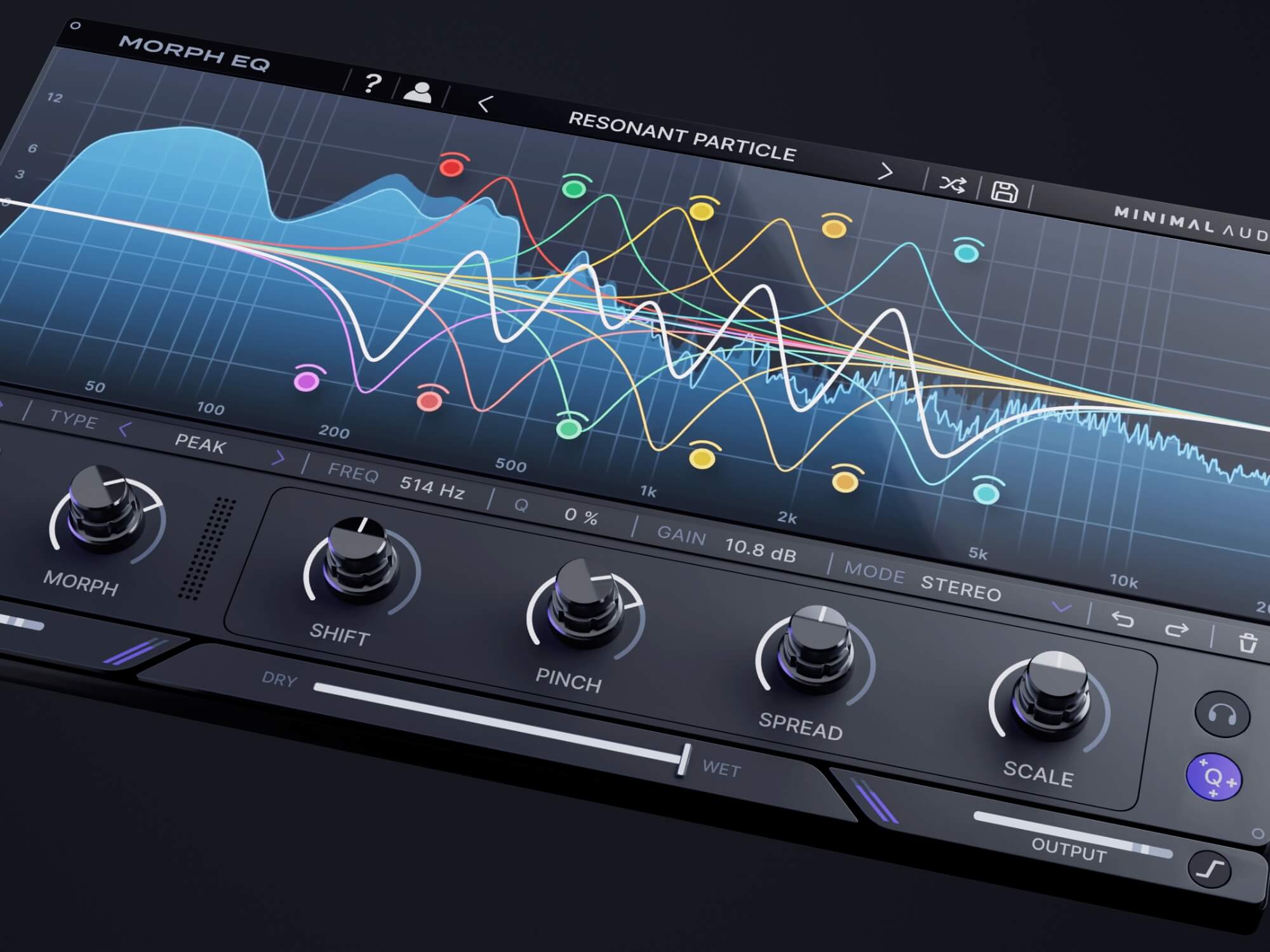
Traditional EQs apply static boosts or cuts over time. However, modern processors like Eventide’s SplitEQ or Minimal Audio’s Morph EQ allow engineers to separate transient sounds (the sharp attack of a drum) from tonal sounds (the sustained ring), applying completely different EQ curves to each. Furthermore, dynamic EQs respond to the incoming signal level—meaning the EQ band only cuts or boosts when the frequency energy exceeds a specific threshold, preventing the static over-processing that plagued early digital mixing.
AI-Assisted Mixing Assistants
Artificial intelligence tools are entering the market at a rapid pace. Plugins now feature automated spectral learning capabilities that listen to an incoming vocal or instrumental track, analyze its frequency deficiencies against commercial databases, and suggest or automatically apply corrective EQ curves in seconds.
While purists argue that human intuition and emotional response can never be replaced by algorithms, these AI tools are transforming beginner workflows and speeding up the tedious initial stages of mixing.
The Endless Horizon for Producers
Ultimately, whether using a stock DAW equalizer, a meticulous analog hardware emulation, or an AI-powered spectral processor, the core mission of the producer remains unchanged: to translate an artistic vision into a clear, compelling sonic experience. As technology progresses, the tools will only become more transparent, creative, and powerful—leaving the modern engineer with more freedom than ever to shape the future of sound.