Executive Overview
In the intricate architecture of modern audio engineering, few tools are as fundamental, ubiquitous, and transformative as equalization—universally known as EQ. At its core, equalization is the process of adjusting the balance of frequency components within an electronic audio signal. Whether utilized to sculpt the aggressive punch of a kick drum, carve out essential clarity for a lead vocal, or tame the harsh, piercing resonances of an acoustic guitar, EQ remains the absolute cornerstone of both corrective audio cleanup and creative sound design.
As the music production landscape has transitioned from massive, hardware-heavy analog mixing consoles to highly portable, software-driven Digital Audio Workstations (DAWs), the role of the equalizer has evolved exponentially. Today’s producers and mixing engineers are no longer bound by the physical limitations of vintage outboard gear. Instead, they wield infinitely customizable parametric plugins, dynamic spectral processors, and meticulously modeled analog emulations that can pinpoint and manipulate frequencies with microscopic precision.
Understanding how to deploy EQ effectively is what separates an amateur recording from a professional, radio-ready mix. Without proper equalization, individual tracks within a multi-instrument arrangement compete for the same acoustic real estate, resulting in mud, masking, and overall sonic fatigue. This comprehensive guide explores the mechanics of EQ, deconstructs its various bands and hardware-inspired processor types, examines its practical application across every stage of the production pipeline, and looks toward the future of intelligent, AI-driven spectral processing.
Detailed Chronology: The Evolution of Equalization from Hardware to the Digital Realm
To fully appreciate the power of modern software-based EQ, one must examine the fascinating evolutionary timeline of how audio engineers have manipulated frequency spectra over the past century.
The Dawn of Tone Control (1920s–1950s)
Equalization was not originally born in the recording studio; it was first developed to correct frequency losses in early telephone lines and motion picture sound systems. In the earliest days of electrical recording, rudimentary tone controls—often consisting of simple high-pass or low-pass filter networks—were employed to prevent low-frequency rumble and high-frequency tape hiss.
By the late 1940s and 1950s, the emergence of high-fidelity (Hi-Fi) consumer audio and the birth of magnetic tape recording necessitated more advanced tonal shaping. Pioneering manufacturers began introducing passive program equalizers. These early units utilized inductors, capacitors, and resistors to alter frequency responses without active amplification stages, setting the stage for legendary vintage designs that remain coveted today.
The Golden Age of Outboard Hardware (1960s–1980s)
The 1960s and 70s marked the golden age of analog mixing consoles and discrete outboard gear. Iconic studios worldwide adopted modular consoles featuring fixed or semi-parametric channel strip EQs. Engineers gained the ability to selectively boost and cut specific frequency bands on every single microphone input.
During this era, legendary processors like the Pultec EQP-1A introduced innovative passive circuit designs that allowed engineers to simultaneously boost and attenuate the same low frequencies, creating a unique, highly musical phase shift and warmth. Simultaneously, the invention of fully parametric EQ by pioneers like George Massenburg in the early 1970s gave engineers total, unprecedented control over center frequency, gain, and bandwidth (Q), fundamentally changing how mixing was approached.
The Digital Revolution and Plugin Era (1990s–Present)
As computers gained processing power in the 1990s and 2000s, the paradigm of audio production shifted dramatically. Digital Signal Processing (DSP) allowed developers to translate complex analog mathematical formulas into software plugins. Early digital EQs offered clinical precision, completely free of the harmonic distortion, phase anomalies, and noise floors inherent in analog circuits.

However, as computing power continued to skyrocket, software developers shifted focus toward ultra-faithful analog emulations. Today, modern producers can load dozens of instances of vintage console EQs, graphic analyzers, and dynamic EQs into a single laptop project—achieving the warmth of vintage hardware paired with the pristine accuracy of the digital age.
Supporting Context & Metrics: The Physics of Sound and Frequency Bands
To master EQ, an engineer must first understand the fundamental physics of sound. Audio is perceived by the human ear as vibrations traveling through the air, measured in Hertz (Hz) representing cycles per second. The standard human hearing range spans roughly from 20 Hz (the lowest sub-bass rumbles felt more than heard) to 20,000 Hz (the highest airy frequencies).
Equalization tools work fundamentally by boosting or cutting the amplitude (volume) of specific frequencies within this spectrum. This is achieved through various architectural configurations known as "bands," each designed to manipulate the acoustic environment in distinct ways.
Anatomy of an EQ Band: The Different Types
Modern EQ processors typically combine multiple bands into a single interface. Each band operates around a specific frequency center and utilizes distinct mathematical curves to shape the surrounding audio:
- Parametric / Peak: The most common and versatile band type. It creates a bell- or trough-shaped curve centered on a specific frequency. The height of the peak (gain) determines how much the frequency is boosted or cut, while the "Q" (Quality factor) or bandwidth setting dictates how wide or narrow the affected frequency range is. A high Q creates a razor-sharp notch, while a low Q creates a broad, gentle slope.
- Low Shelving: This band progressively cuts or boosts all frequencies that lie below a designated threshold frequency. While the primary focus is on the sub-frequecies, a transitional slope typically affects a portion of the frequencies immediately above the cutoff point, providing a smooth, musical roll-off.
- High Shelving: The functional opposite of a low shelving band. It uniformly boosts or attenuates all frequencies residing above the chosen threshold frequency, making it ideal for adding air, shimmer, or sparkle to high-end sources like vocals, acoustic guitars, and cymbals.
- Low Cut (High-Pass Filter): A low-cut filter completely blocks and eliminates frequencies that fall below a set threshold frequency, allowing everything above it to pass through unaffected. This is essential for clearing out sub-bass mud, rumble, and mechanical thumps from tracks that do not require low-end energy.
- High Cut (Low-Pass Filter): The functional opposite of a low cut, this filter blocks frequencies lying above a specified threshold while letting lower frequencies pass. It is frequently used to tame harsh high-frequency fizz, hiss, or digital harshness.
Classifying EQ Processors
EQ plugins and hardware units generally fall into three distinct stylistic categories based on their design heritage:
- Studio- or Console-Style EQs: Integrated directly into channel strips or available as standalone plugins, these typically combine low- and high-shelving bands with two fully parametric mid-bands, frequently flanked by dedicated high- and low-cut filters. They are the workhorses of contemporary mixing.
- Pultec-Style EQs: Modeled after vintage vacuum-tube hardware processors, these units are celebrated for their distinctive interactive controls. They typically separate boost and cut functions and feature stepped frequency selections rather than continuous rotary knobs, imparting a legendary musical warmth and perceived low-end weight.
- Graphic EQs: Composed of a fixed number of frequency-specific peak bands spaced at standard ISO intervals (often third-octave increments), graphic EQs utilize physical or digital vertical faders. The physical alignment of these faders creates a visual graphical curve of the overall frequency response—hence the name. They are predominantly deployed in live sound reinforcement and room acoustic tuning.
Official Industry Perspectives: The Philosophy of Equalization
Top-tier mixing and mastering engineers view equalization not merely as a corrective utility, but as an artistic tool for emotional communication. Industry veterans consistently emphasize that every EQ move should serve a definitive purpose within the context of the entire arrangement.
Renowned mix engineer Dave Pensado famously advocates for subtractive EQ, noting that removing unwanted frequencies often yields a cleaner, more transparent result than aggressive boosting. "Before you reach for a boost to make something brighter or louder, ask yourself if cutting competing frequencies in other instruments will naturally reveal the character you are looking for," Pensado suggests.
Meanwhile, mastering engineers approach EQ with a macro-lens perspective. Unlike tracking or mixing engineers who sculpt individual instruments, mastering professionals utilize high-Q precision EQs to solve clinical problems across a stereo mixbus, combined with broad, gentle low-Q shelving curves to enhance the overall tonal balance, warmth, and commercial sheen of a finalized master recording.
Furthermore, leading plugin manufacturers stress the importance of understanding phase relationships. Traditional minimum-phase EQs introduce minor phase shifts when boosting or cutting frequencies—an artifact that, while often musically pleasing and historically authentic, must be managed carefully. Modern linear-phase EQs, by contrast, preserve exact phase alignment across the frequency spectrum, making them invaluable for complex bus processing and mastering where phase cancellation could otherwise compromise transient response and stereo imaging.
Practical Applications: When and How to Use EQ
Equalization is deployed extensively across every single phase of the modern audio production workflow. Understanding the specific objectives at each stage ensures a streamlined, professional session.
1. Input Conditioning and Tracking
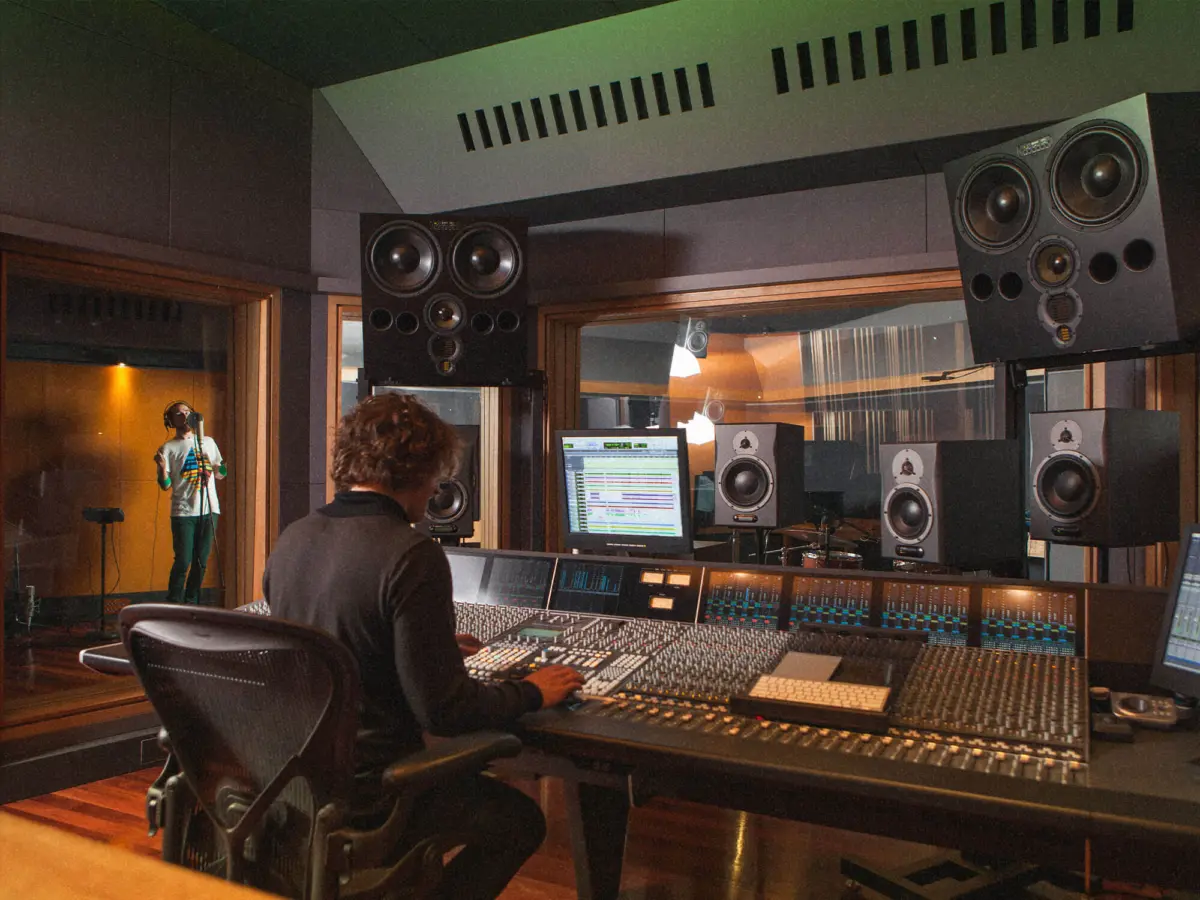
During the recording stage, hardware EQs integrated into preamps or recording channels are frequently deployed to optimize the source signal right at the microphone capsule. Applying a gentle high-cut or low-cut filter during tracking can eliminate air-conditioning rumble or stage vibrations before they hit the analog-to-digital converter. Temporary EQ adjustments can also be applied to headphone cue mixes, allowing performers to clearly hear the elements they need for optimal performance without permanently printing unwanted tonal colors to the master take.
2. Mixing: Sculpting Spectral Space
The primary battleground for EQ is the mixing stage. In a dense arrangement featuring drums, bass, guitars, synths, and multiple vocal takes, instruments naturally vie for the same frequency ranges. Without intervention, this results in acoustic masking—where louder or denser sounds overpower subtler ones.
Mixing engineers use EQ to carve out dedicated spectral real estate for each element. For example, if a heavy electric guitar obscures the fundamental clarity of a lead vocal, a narrow parametric cut in the vocal’s primary frequency range on the guitar track can instantly pull the vocal forward in the mix. Conversely, a subtle boost in the high-midrange of a snare drum can give it the cutting crack required to slice through a wall of distorted guitars.
3. Mastering: The Final Polish
In the mastering suite, EQ is executed with extreme care. Engineers utilize high-precision, transparent EQs to address localized resonant frequency spikes or harsh sibilance issues that slipped through the mixing phase. Following this, very subtle, wide-bandwidth low- and high-shelving adjustments are applied to impart a cohesive, professionally balanced tonality that translates accurately across consumer playback systems, from high-end studio monitors to smartphone speakers and car stereos.
Future Outlook: The Next Generation of Intelligent Spectral Processing
As we look toward the future of audio production, the technological landscape of equalization is undergoing a radical paradigm shift driven by artificial intelligence and machine learning.
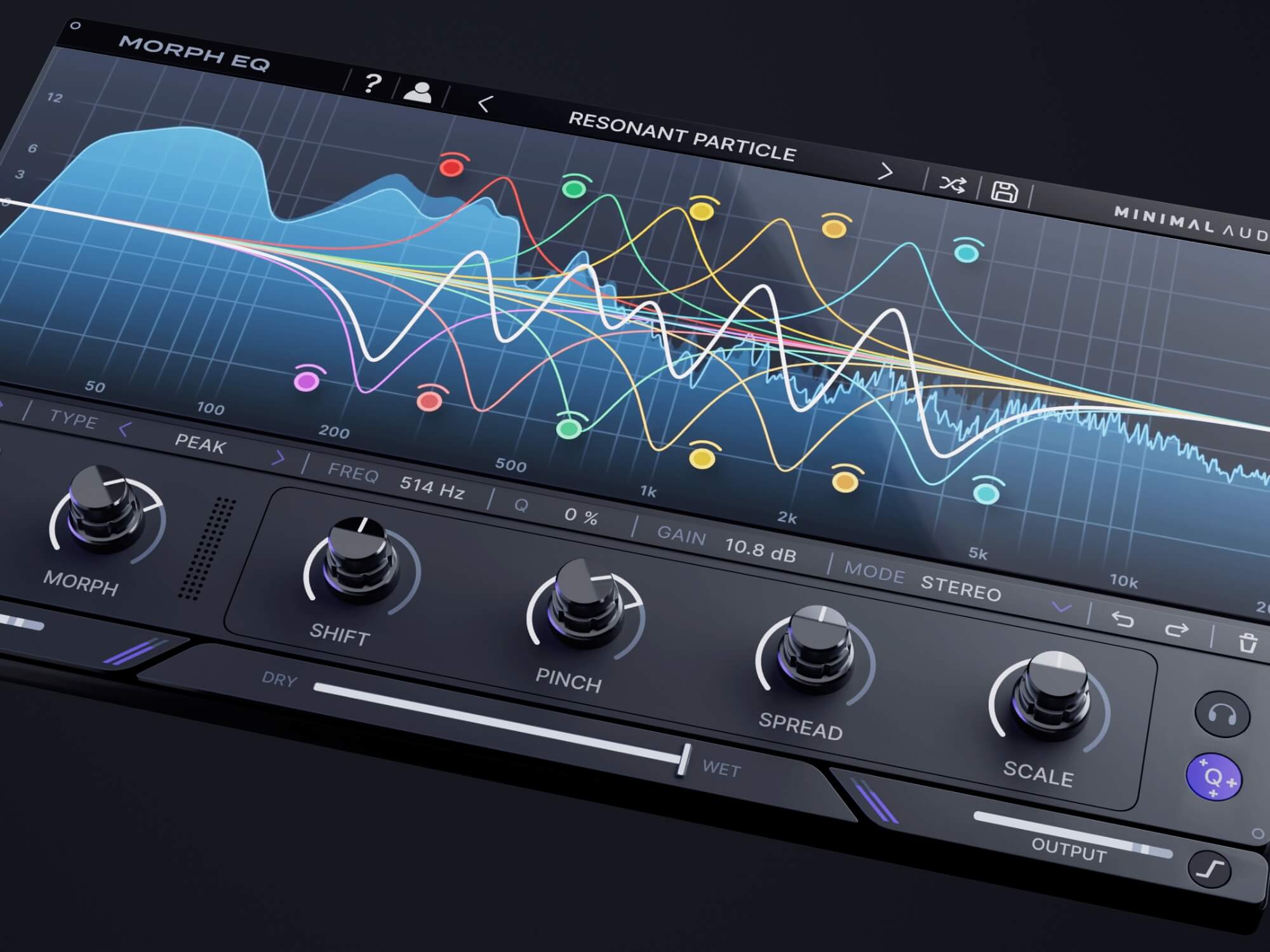
Traditional EQs require the engineer to manually sweep frequencies, hunt for problem resonances, and make educated guesses. Today, however, an expanding market of intelligent "smart" EQs utilizes algorithmic spectral analysis to automatically listen to audio material, identify tonal imbalances, and suggest corrective curves in real-time. Plugins from developers like iZotope (Ozone/Neutron), Sonible (smart:EQ), and Minimal Audio represent the bleeding edge of this movement, offering spectral balancing that adapts dynamically to the incoming audio signal.
Beyond static or dynamic curve shaping, future-forward processors like Eventide SplitEQ allow engineers to independently EQ the transients (the initial sharp attack) and the tonals (the sustained body) of a sound source. This unprecedented level of control frees producers from the traditional limitations of treating an entire waveform uniformly, opening up limitless creative avenues for sound design and precision mixing.
Choosing Your Toolkit
While third-party developers continue to push the boundaries of innovation with sophisticated analog emulations and AI-assisted plugins, every major Digital Audio Workstation (Logic Pro, Pro Tools, Ableton Live, Cubase) comes equipped with exceptionally powerful, CPU-efficient native parametric EQs capable of achieving professional, commercial-grade results. Whether working with stock utilities or specialized boutique plugins, the ultimate success of equalization relies not on the price tag of the software, but on the trained ear, critical listening skills, and artistic vision of the engineer behind the console.