Executive Overview
Electronic music royalty Carl Cox has expanded his cinematic footprint by contributing exclusive, unreleased music to Skintown, a gritty and vibrant new feature film chronicling the 1990s Northern Irish rave scene. Directed by Kieron J. Walsh, the film celebrated its world premiere this past weekend at the prestigious Edinburgh International Film Festival, instantly generating buzz among cinephiles and electronic music purists alike.
Adapted from Ciarán McMenamin’s acclaimed 2018 novel of the same name, Skintown transports audiences back to the politically charged summer of 1994, coinciding with the historic IRA ceasefire. Against this turbulent backdrop, the film follows small-town protagonists trying to break out of the economic stagnation and geographical isolation of Enniskillen—affectionately and ironically nicknamed "Skintown"—through high-stakes, unorthodox schemes, most notably trafficking stolen MDMA.
At its core, Skintown is heavily anchored in the countercultural escapism of the era. The narrative revolves around a massive illegal rave and beach afterparty where Carl Cox is scheduled to appear. To authentically recreate the pulse-pounding, sweat-drenched energy of a mid-90s underground warehouse party, the filmmakers curated an uncompromising soundtrack. Alongside Cox’s prized unreleased compositions, the sonic landscape features heavy-hitting archival cuts from foundational electronic and alternative acts, including The Prodigy, Elastica, Happy Mondays, and techno pioneer Jeff Mills.
This high-profile cinematic contribution marks another milestone in an exceptionally busy period for Carl Cox. Beyond his work on Skintown, the legendary DJ and producer recently contributed original music to Andy Serkis’s highly anticipated animated adaptation of George Orwell’s Animal Farm. Concurrently, Cox remains a dominant force on the global club circuit, currently commanding his flagship [UNVRS] residency in Ibiza, where he continues to make headlines through historic back-to-back performances and high-profile guest appearances.
Detailed Chronology
From Page to Screen: The Genesis of Skintown
The journey of Skintown began long before its Edinburgh premiere, rooted in the lived experiences and creative vision of author Ciarán McMenamin. Published in 2018, McMenamin’s novel drew heavily from his own youth growing up in Enniskillen during the waning years of the Troubles. Rather than focusing solely on the sectarian conflict that dominated international headlines, the novel—and subsequently the film—opted to explore the universal trials of working-class youth seeking liberation through sex, drugs, and electronic dance music.
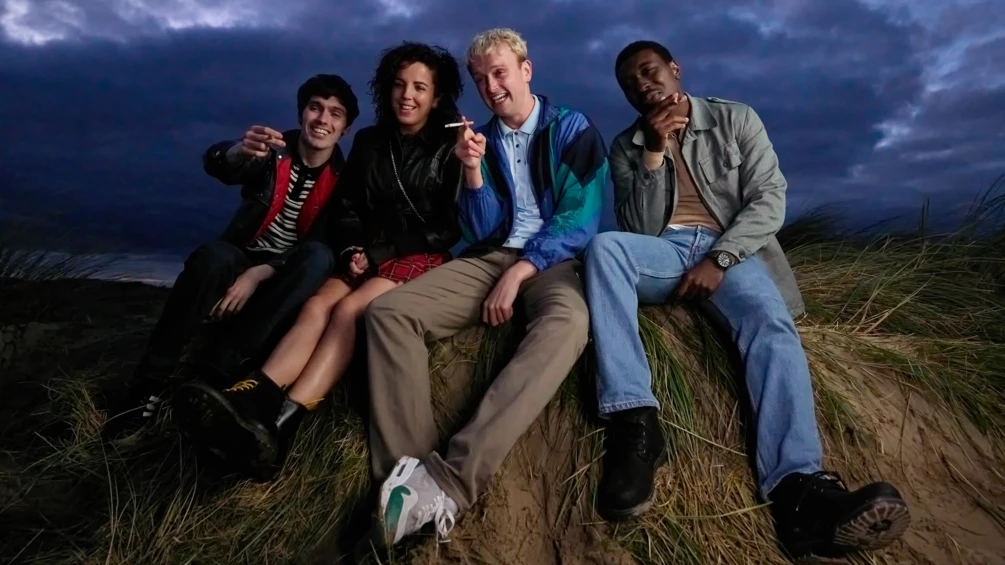
Director Kieron J. Walsh recognized the cinematic potential of McMenamin’s prose, assembling a dynamic young cast to bring the characters to life. Rising stars Jack Rowan and Chris Walley lead the feature as the central schemers attempting to hustle their way out of Enniskillen via the illicit drug trade. They are joined by a stellar supporting ensemble, including Derry Girls breakout star Jamie-Lee O’Donnell and Hope Ikpoku Jr., injecting the narrative with biting wit, raw energy, and authentic regional flavor.
Production moved swiftly through development and principal photography, with the filmmakers placing heavy emphasis on atmospheric authenticity. Because the narrative pivots toward a pivotal rave sequence and beach afterparty set to feature Carl Cox, the music supervision team faced the rigorous task of mirroring the exact sonic architecture of 1994 rave culture.
The Edinburgh International Film Festival Premiere
The culmination of these creative efforts materialized this past weekend at the Edinburgh International Film Festival. Walking the red carpet, the cast and crew spoke passionately about the project’s unique tonal balance. Far from being a traditional historical drama about the Troubles, Skintown presents a nuanced, high-octane snapshot of youth culture persisting against the odds.
The premiere screening received a rapturous response from festival-goers, with particular praise directed toward the film’s kinetic pacing, stylistic cinematography, and thunderous soundtrack. When the needle dropped on classic 90s cuts and the heavy, subterranean basslines of Carl Cox’s unreleased tracks, the cinema effectively transformed into an extension of the on-screen dancefloor. Critics noted that the audio design does not merely accompany the visual narrative; it drives it forward, serving as the heartbeat of the characters’ rebellion.
Supporting Context & Metrics
The 1994 Rave Boom and the Political Backdrop
To fully appreciate the cultural resonance of Skintown, one must examine the socio-political paradox of Northern Ireland in 1994. The declaration of the IRA ceasefire in August of that year sent shockwaves of cautious optimism across the island. For a generation that had grown up under the constant shadow of checkpoints, military patrols, and sectarian violence, the momentary easing of tension opened up unprecedented psychological and physical spaces for expression.
Simultaneously, the global techno and rave explosion—originating in Detroit and Chicago before finding a chaotic, euphoric second home in the UK and Ireland—provided a powerful counter-cultural vehicle. For youth in peripheral towns like Enniskillen, illegal warehouse parties, field raves, and beach afterparties offered a radical form of escapism. The dancefloor was an equalizer; tribalism was momentarily replaced by the collective euphoria of the 4/4 beat.
Skintown captures this lightning-in-a-bottle phenomenon. The juxtaposition of bleak economic prospects and political fragility with the kaleidoscopic, hedonistic release of rave culture forms the ideological spine of the film.
A Masterclass in Soundtrack Curation
The inclusion of Carl Cox’s unreleased music alongside heavyweights of the era cements Skintown as a time capsule for electronic music aficionados. The soundtrack reads as a veritable who’s who of 90s alternative and electronic royalty:
- The Prodigy: Representing the jagged, punk-infused breakbeat hardcore that terrorized and thrilled UK charts.
- Jeff Mills: Bringing the hypnotic, uncompromising minimalism of the Detroit techno underground.
- Elastica & Happy Mondays: Bridging the gap between Madchester groove, indie rock, and the burgeoning club consciousness.
- Carl Cox: Serving as the connective tissue, bridging historical rave authenticity with timeless, driving underground techno.
Industry analysts note that feature films centering on electronic music subcultures have enjoyed a commercial and critical resurgence. By leaning into authentic artifacts—such as unreleased tracks from era-defining icons—directors like Kieron J. Walsh are able to bypass cheap pastiche, delivering an immersive sensory experience that resonates with both older generations who lived through the era and younger audiences discovering it retrospectively.
Official Statements
Speaking with The Hollywood Reporter ahead of the premiere, lead actor Jack Rowan elaborated on the film’s thematic departure from standard depictions of Northern Ireland’s troubled past.
"This isn’t necessarily a film about the Troubles," Rowan stated. "It’s actually just a film about people just getting on with their lives… I would just hope people enjoy it, appreciate it, and have as much fun watching it as we did filming it."
Rowan’s comments highlight a conscious shift in contemporary Irish cinema—moving away from trauma porn and direct political exposition toward human-centric narratives where historical context serves as the wallpaper rather than the plot. The characters are driven not by geopolitical ideology, but by universal youthful impulses: boredom, ambition, the desire for status, and the urgent need to dance.
While formal press statements from Carl Cox regarding his specific musical contributions to Skintown remain concise, his willingness to share unreleased material underscores his enduring commitment to nurturing electronic music culture across diverse mediums. Cox has long championed the symbiotic relationship between film, visual media, and dance music, viewing the cinematic canvas as an ideal platform to push his sonic boundaries beyond the traditional club environment.
Future Outlook
Carl Cox’s Expanding Cinematic and Live Portfolio
Carl Cox’s involvement in Skintown is part of a broader, deliberate diversification of his artistic output. Earlier this year, the veteran selector made headlines by contributing original music to Hollywood royalty Andy Serkis’s bold, animated adaptation of George Orwell’s political allegory, Animal Farm. These cinematic ventures signal a new chapter for Cox, who is increasingly translating his decades of studio mastery into dynamic film scores and soundscapes.
Simultaneously, Cox’s live schedule remains nothing short of monumental. He is currently deep into the grueling, high-stakes trenches of his [UNVRS] residency in Ibiza—a venue that has quickly established itself as the epicenter of the island’s underground scene this season.
The residency has already yielded historic cultural moments. Earlier in July, Cox teamed up with French superstar David Guetta to play their very first back-to-back (b2b) set, a collaboration that drew immense international media attention and thrilled purists and commercial fans alike. Just this past weekend, another high-water mark was reached when Cox’s guest, Miss Monique, shocked the packed [UNVRS] dancefloor by inviting pop icon Robbie Williams on stage to perform their brand-new collaborative single, ‘Beauty In Us’.
The Legacy of Skintown
As Skintown completes its festival run and looks toward broader theatrical distribution, its cultural impact is already taking shape. By anchoring a deeply regional, historically specific narrative to the universal language of the rave, the film bridges generational divides.
For Carl Cox, the project further cements his status not merely as a master of the turntables, but as an enduring cultural curator whose work continues to define the sonic and emotional textures of modern storytelling. Whether shaking the foundations of an Ibiza superclub with a landmark b2b set, scoring dystopian literary classics, or providing the unreleased pulse for a 1990s Northern Irish youth crusade, Carl Cox remains an indispensable architect of electronic music history.