Executive Overview
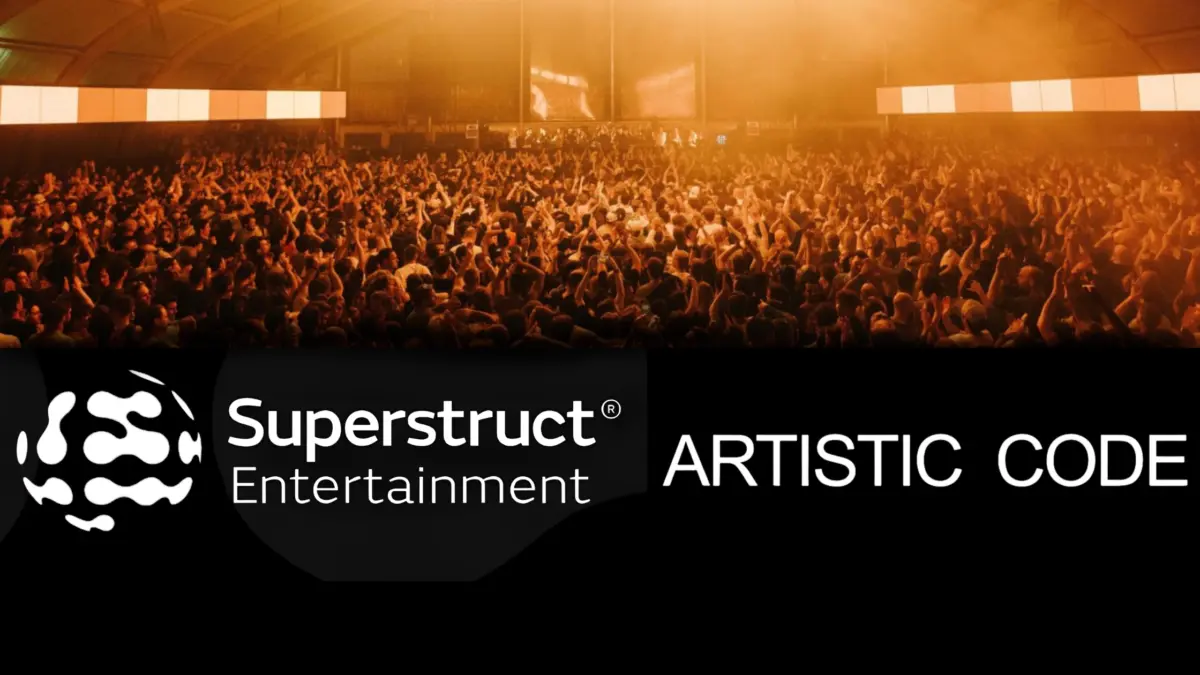
In an era where live music and socio-political activism have become inextricably linked, festival monolith Superstruct Entertainment has drawn a definitive line in the sand. The global entertainment heavyweight—which oversees a massive portfolio of over 80 major music festivals across Europe and beyond, including household names like Awakenings, Boardmasters, Field Day, Flow Festival, Kendal Calling, Mighty Hoopla, Sonar, Sziget, Truck Festival, Victorious, and Y Not—has officially rolled out its Artistic Code.
Formally described by corporate leadership as a definitive "demonstration" of the company’s "longstanding support for artistic freedom and the creative independence of its festivals," the code arrives at a turbulent time for the live entertainment sector. Over the past several years, festival promoters, event organizers, and independent artists have found themselves caught in the crosshairs of an increasingly polarized public square. From contentious backstage debates and social media firestorms to high-profile calls for boycotts and performer blacklists, the modern festival circuit is regularly roiled by geopolitical friction.
Superstruct’s newly minted Artistic Code attempts to provide a clear, standardized operational framework for its diverse array of branded events. Based on the fundamental corporate belief that "festivals should be places where artists can challenge, provoke and express different points of view," the policy seeks to safeguard the sacred space of creative expression while offering a unified playbook for festival teams, from the initial booking phase all the way to show day. Yet, as the industry quickly realizes, codifying free speech in the age of global geopolitical conflict is rarely a straightforward endeavor.
Detailed Chronology: The Escalation of Live Music Politics
To understand the necessity and timing of Superstruct’s Artistic Code, one must examine the cascading series of controversies that have transformed the contemporary festival landscape over the past half-decade. The collision of art, commerce, and geopolitics has manifested primarily along two distinct, highly contentious battle lines: the ideological vetting of performing artists, and grassroots campaigns targeting festival ownership and sponsorship.
Phase 1: The Corporate Ownership Backlash (2024–Present)
The roots of Superstruct’s current operational paradigm cannot be separated from its corporate evolution. In 2024, the entertainment group was acquired by global private equity giant KKR. Almost immediately, the acquisition catalyzed a wave of grassroots activism and "festival boycotts" spearheaded by activist groups, concertgoers, and artists unhappy with KKR’s financial footprint, particularly its investments linked to the ongoing conflict in Israel and Palestine.
Because Superstruct operates on a decentralized model—allowing its constituent festivals to retain their own strong, independent brand identities and hyper-local communities—the burden of responding to these boycott campaigns has historically fallen on individual festival teams. In many instances, these festival organizers have successfully navigated the friction by publicly distancing themselves from KKR’s broader corporate portfolio, occasionally issuing statements critical of their ultimate owner’s financial interests while affirming solidarity with various social causes. Remarkably, both KKR and Superstruct’s executive management have adopted a remarkably permissive, hands-off approach, allowing individual events to chart their own course in the court of public opinion.
Phase 2: On-Stage Polemics and the Demands for Censorship
While corporate ownership structures have sparked external boycotts, a parallel and more direct challenge to festival operations has emerged around on-stage speech. A growing chorus of critics has increasingly demanded that festival bookers blacklist and refuse platforms to artists who express contentious political views, whether on stage or via personal social media channels.
This tension has been underscored by several high-profile flashpoints. Punk duo Bob Vylan and Irish rap group Kneecap have both faced ferocious public backlash—and subsequent calls for cancellation—due to their blistering, unvarnished criticisms of Israel and vocal solidarity with Palestine. Conversely, other controversies have stemmed from erratic off-stage behavior and hate speech, such as the persistent debates surrounding Kanye West and his history of antisemitic commentary, forcing promoters to weigh artistic legacy against moral complicity.
As these controversies mount, artists themselves have found navigating the modern touring landscape an increasingly high-stakes minefield. Many performers have privately admitted to experiencing intense peer pressure, online harassment, and outright bullying from fellow musicians to participate in politically motivated boycotts—even when doing so jeopardizes their own financial stability, release schedules, and multi-market touring plans.
Supporting Context & Metrics: The Anatomy of Festival Polarization
The modern music festival is no longer just a weekend escape for music lovers; it has evolved into a high-profile public forum where cultural battles are fought in real time. The quantitative and qualitative pressures facing promoters reveal a complex ecosystem under strain:
- Scale of the Superstruct Empire: The Artistic Code governs over 80 distinct festivals worldwide, representing millions of attendees annually across diverse cultural, legal, and political jurisdictions.
- Dual Fronts of Contention: Industry data highlights that festival controversies are split roughly evenly between corporate alignment disputes (objections to sponsors, private equity backers, and institutional partners) and expressive content disputes (objections to lyrical content, stage banter, political imagery, and artist public personas).
- The Toll on Artist Mental Health: Industry mental health advocacy groups note a sharp rise in anxiety and burnout among touring musicians caught between ideological gatekeeping, cancel culture, and the financial imperative to perform.
- The Legal Boundaries of Performance: Recent legal challenges—most notably Kneecap’s high-profile court battles regarding political imagery on stage—demonstrate that festival promoters are increasingly vulnerable to liabilities tied to local speech laws and public safety ordinances.
Official Statements and Code Analysis
At the core of Superstruct’s announcement is a calculated effort to institutionalize free expression while establishing indisputable operational boundaries. Unveiled via a formal corporate document, the Artistic Code is anchored by statements from key executives who view the policy as both a moral shield and an operational compass.
Launching the code, Superstruct Chief Operating Officer Rebecca Kane Burton articulated the company’s philosophical stance with absolute clarity:
"Artistic freedom sits at the heart of our festivals. They are places for artists to express themselves, challenge ideas and bring different points of view to audiences. We believe strongly in backing that freedom. The Artistic Code makes our position clear and gives artists and our festival teams shared principles to work from, with creative independence at the heart of them."
What the Code States: Freedom and Editorial Non-Interference
At a macro level, the Artistic Code explicitly acknowledges the messy, unpredictable nature of live performance. Its primary provisions establish that:
- Separation of Artist and Promoter: Artists perform at Superstruct events and may express political positions, worldviews, or statements that are entirely independent of the festival organizers, which the company may not necessarily endorse or agree with. The code affirms that “that is their right.”
- Zero Editorial Censorship: Superstruct maintains a strict policy of non-interference, stating, “We do not censor or editorially control performances to ensure alignment with our group values or commercial interests.” This explicitly covers social and political commentary delivered during live sets or via an artist’s wider public persona.
- Right of Reply: While promoters will not censor artists, Superstruct and its individual festivals reserve their own freedom of speech. The code notes that “if an artist’s public statements or behaviour diverges from our core values, we reserve the right to clarify our organisation’s independent position.”
The "Two Absolute Red Lines"
Crucially, the code recognizes that absolute free speech is an illusion within public event spaces. To prevent chaos and legal liability, Superstruct has drawn two absolute red lines where artistic freedom must yield to safety and the law:
- Public Safety and Incitement: Anything that puts the physical safety of festival visitors or staff at risk—such as inciting dangerous crowd surges, encouraging violence, or targeting specific individuals or marginalized groups in a discriminatory manner.
- Legal Compliance: Content or speech that explicitly violates the laws of the host country, such as expressing support for officially proscribed terrorist organizations or hate groups.
The Gray Areas: When Red Lines Blur
While the red lines appear clear on paper, reality is rarely so accommodating. Critics of controversial acts frequently weaponize these exact thresholds, arguing that sharp political commentary inherently crosses the line into incitement or discrimination.
For example, when Bob Vylan led crowds in chants of "death, death to the IDF" (referring to the Israel Defense Forces), detractors fiercely condemned the act as blatant antisemitism and incitement to violence. Similarly, demands to cancel Kneecap have frequently cited unproven allegations that the group has expressed verbal or symbolic support for proscribed organizations like Hamas and Hezbollah. Furthermore, critics argue that aggressive political rhetoric creates a hostile environment that alienates and terrifies segments of the audience at festivals designed to welcome diverse communities.
Conversely, the artists and their legal representatives push back vehemently against these characterizations. Neither Bob Vylan nor Kneecap has ever been convicted of hate speech or criminal incitement. Police investigations into Bob Vylan’s stage commentary resulted in zero criminal charges. Meanwhile, Kneecap member Mo Chara faced criminal charges over allegations of displaying a Hezbollah flag on stage, but the case ultimately collapsed due to administrative errors by prosecutors—though the group’s legal team maintained absolute confidence that the charges would have been dismissed on merit regardless.
The Great Flag Debate
In a nod to the perennial festival annoyance of oversized national, regional, or political banners blocking sightlines, Superstruct’s code also addresses the use of flags and symbols. The policy adopts a pragmatic, liberal approach: flag waving by attendees is permitted unless the symbol is illegal in the host market or poses a documented safety hazard agreed upon by local permit authorities.
Regarding artists utilizing flags and political imagery as part of their production, the code maintains identical standards: “We do not prohibit flags or symbols simply because they are controversial.” Restrictions will only be applied if a clear legal violation or safety risk materializes.
Future Outlook: Can a Code Solve a Culture War?
The rollout of Superstruct Entertainment’s Artistic Code represents a watershed moment for the commercial festival sector. By establishing a unified, enterprise-wide defense of artistic freedom, Superstruct has provided its 80-plus festival brands with a robust institutional shield against the rising tide of reactionary outrage and cancel culture. When public pressure mounts to drop a controversial band, festival directors no longer need to scramble for ad-hoc PR responses; they can simply point to the code.
However, the true test of the Artistic Code will not be found in its eloquent phrasing, but in its execution during moments of acute crisis. Because the policy’s "red lines" regarding safety, discrimination, and illegality are inherently subjective, future controversies are guaranteed to test the limits of Superstruct’s corporate resolve.
As geopolitical tensions continue to simmer worldwide and live music remains a primary theater for cultural expression, festival promoters will inevitably find themselves walking a perpetual tightrope. Superstruct has boldly chosen to lean into the chaos, betting that the long-term cultural value of an untamed, provocative stage outweighs the short-term headaches of public controversy. Whether the broader industry follows Superstruct’s lead—or retreats into risk-averse sanitization—will define the character of live music for generations to come.