Executive Overview
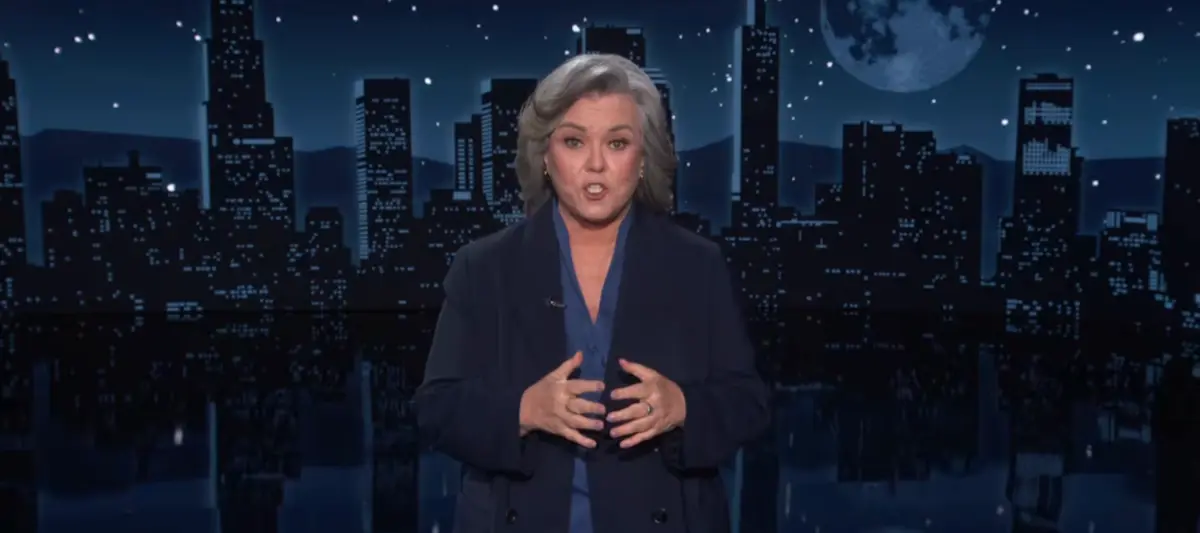
During a high-profile guest-hosting stint on ABC’s Jimmy Kimmel Live!, comedian and television personality Rosie O’Donnell used her platform to launch a scathing comedic assault on Donald Trump. O’Donnell, who has relocated to Ireland alongside her 13-year-old child, Clay, in the wake of the administration’s resurgence, took direct aim at the president’s social media declarations, foreign policy blunders, and long-standing personal animosities.
The appearance marks a dramatic return to the American cultural zeitgeist for O’Donnell, whose multi-decade feud with Trump is one of the longest-running celebrity-political rivalries in modern history. While O’Donnell initially surprised late-night viewers by keeping her opening monologues relatively light during the early days of her week-long residency, Tuesday’s broadcast featured a sharp pivot. Centering her comedic ire on a controversial Truth Social post regarding the Strait of Hormuz, O’Donnell offered a masterclass in politically charged satire, dubbing the president "Velvito Corleone" and "President Oompa J. Loompa."
The exchange underscores the deeply polarized nature of contemporary American media and politics, where traditional late-night television continues to serve as an unyielding battleground for anti-Trump sentiment. As geopolitical tensions escalate in the Middle East and the White House responds with its own brand of rhetorical retaliation, O’Donnell’s return to the spotlight highlights how the intersection of entertainment, high-stakes international diplomacy, and personal celebrity feuds remains a potent recipe for prime-time viewership.
Detailed Chronology: A Week of Primetime Satire and Political Fireworks
Monday: Setting the Stage and Announcing the Exile
O’Donnell’s week-long takeover of Jimmy Kimmel Live! began with immediate theatrical flair. Stepping onto the stage to a roaring studio audience, the comedian wasted no time establishing the tone for her tenure.
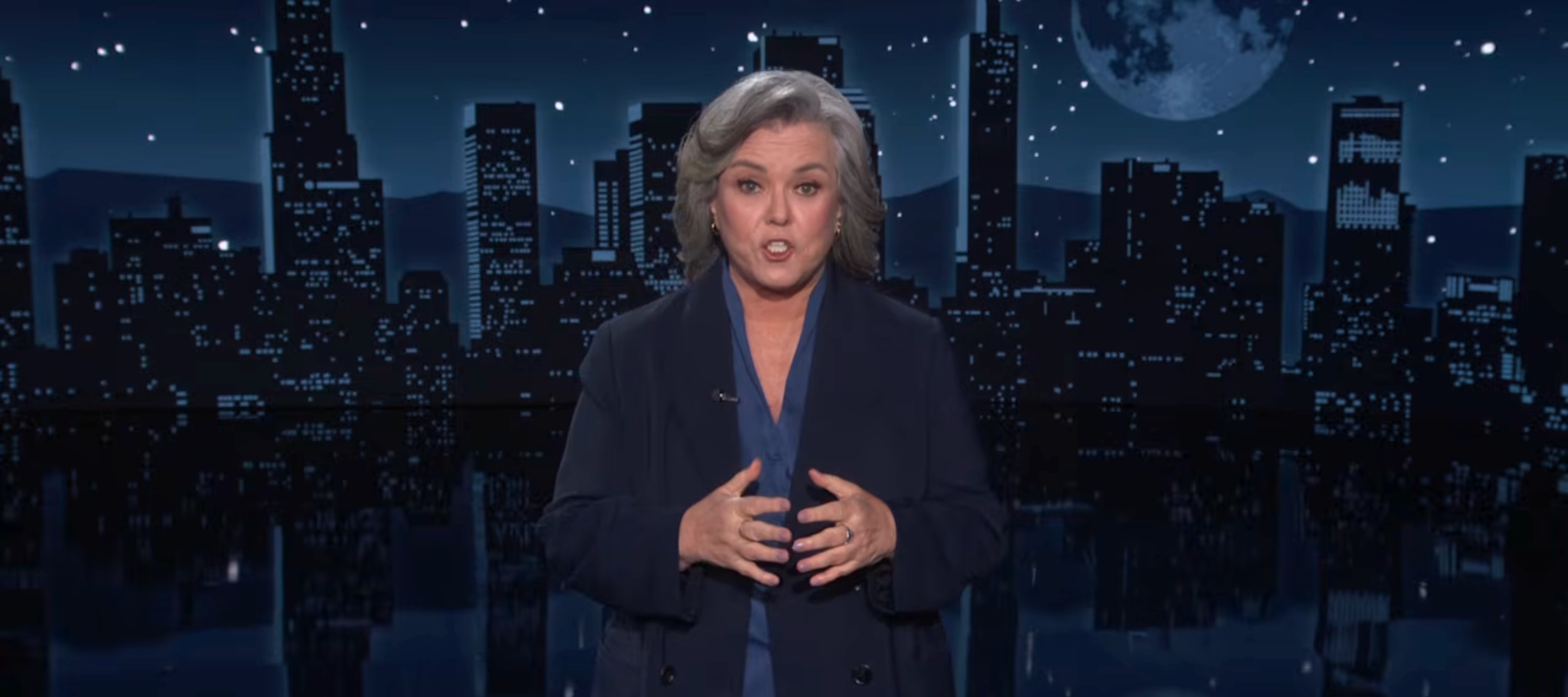
"They said you can’t come home again, but here I am," O’Donnell declared during her Monday debut. "And if you thought the president hated Jimmy Kimmel Live! when it was hosted by Jimmy Kimmel, buckle up, people. Buckle up!"
Addressing the elephant in the room—her self-imposed exile from the United States—O’Donnell didn’t mince words about why she packed her bags following the January inauguration of Trump’s second term.
"You know, I’ve been living in Ireland for the past two years because of Mango Mussolini," she joked, drawing enthusiastic applause from the crowd. "I read Project 2025 and said, ‘Got to get myself out of here, you know?’ And I decided to go to Ireland, a place where people are driven to drink regardless of who’s running their country."
The opening salvo immediately signaled to network executives and viewers alike that O’Donnell’s residency would not shy away from direct, unfiltered political commentary, setting up a collision course with the executive branch.
Tuesday: The Strait of Hormuz Controversy and Escalating Retorts
By Tuesday evening, O’Donnell escalated her critique, training her focus on an erratic foreign policy claim made by the president earlier that morning.
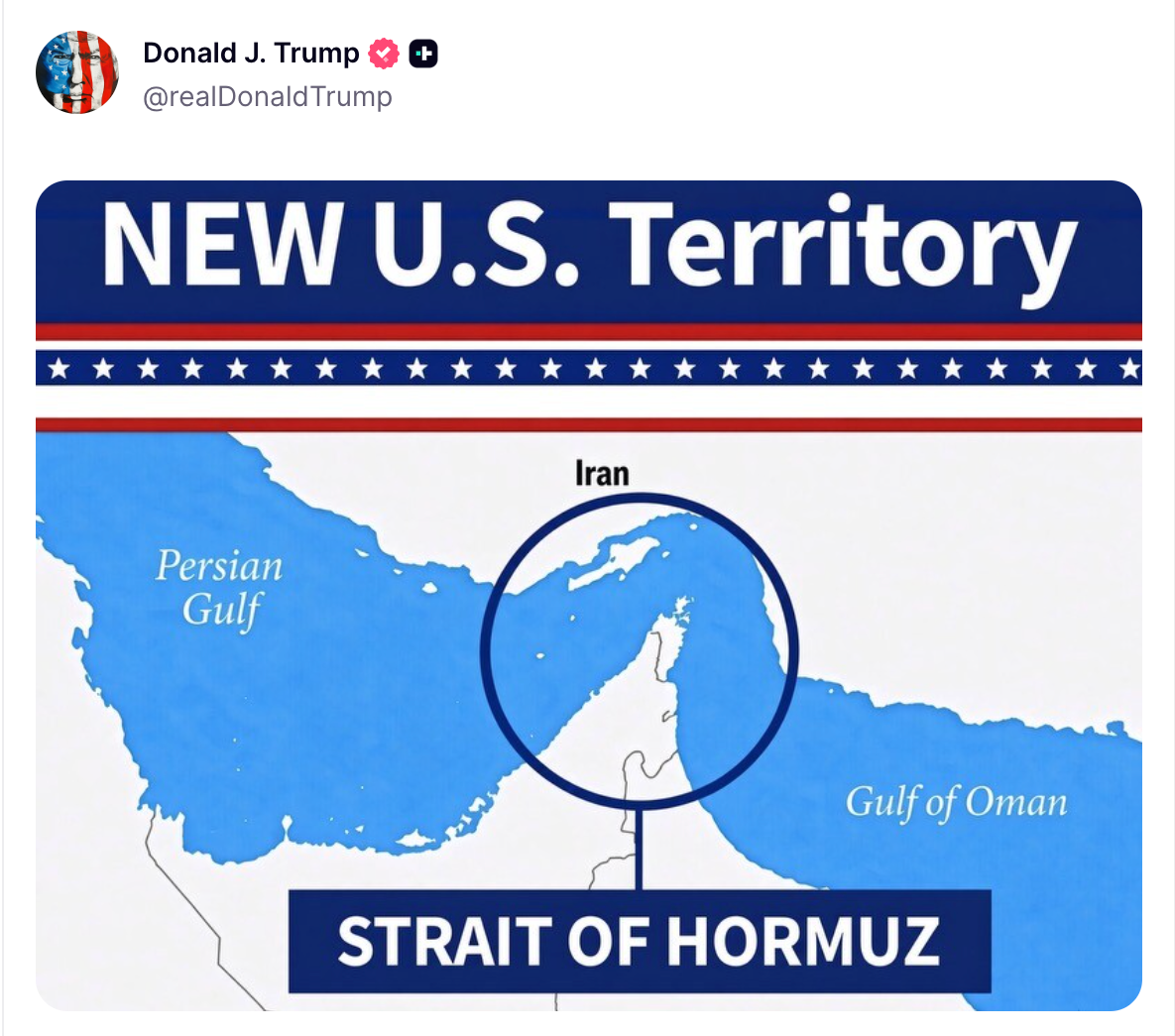
In a captionless post on Truth Social, the president had shared a map circling the strategically vital Strait of Hormuz, labeling the critical global shipping lane as "new U.S. territory." The post arrived amid an ongoing, volatile standoff between Washington and Tehran, raising alarms among international observers and shipping conglomerates alike.
Displaying the bizarre map to the Jimmy Kimmel Live! audience, O’Donnell dismissed the claim as entirely detached from reality. Nicknaming the president "Velvito Corleone," she offered a biting assessment of the administration’s geopolitical posturing.
"I’ll put it this way: If the US is in charge of the strait, then I’m also straight," O’Donnell quipped. "And let’s face it, I’m not. The moron-a-thon continues."
The comedian did not stop at foreign policy. Earlier in the Tuesday monologue, she offered a tongue-in-cheek expression of gratitude to the commander-in-chief for inadvertently reviving her domestic profile.
"This has been kind of a strange experience for me because all of a sudden I’m re-famous," she mused. "I’m back in the spotlight, all thanks to President Oompa J. Loompa, who is watching us this evening from inside a catering cart."
This particular barb referenced widely reported security protocols and logistical maneuvers following an alleged Iranian assassination threat against the president, which reportedly saw Trump whisked away in unconventional transport during a NATO summit in Turkey.
"You know, I couldn’t have done it without you, sweetie," O’Donnell added. "You brought me back—just like you did with fascism and the measles."
Supporting Context & Metrics: The Geopolitical Reality Behind the Comedy
While O’Donnell’s monologues provided levity and biting satire for late-night viewers, the underlying political and geopolitical realities she targeted are grave.
The Strait of Hormuz Standoff
The president’s Truth Social post claiming the Strait of Hormuz as "new U.S. territory" occurred against a backdrop of escalating maritime insecurity. The narrow waterway—through which approximately a fifth of the world’s petroleum passes—has become a flashpoint in the renewed U.S.-Iran conflict. Despite sweeping rhetorical declarations from Washington, defense analysts and maritime agencies confirm that U.S. and allied forces have been fundamentally unable to guarantee safe, unhindered passage for commercial container ships and oil tankers navigating the region.
The international community was quick to respond to the White House’s map-labeling exercise. Iran’s deputy foreign minister publicly dismissed the assertion as a "delusion," issuing sharp warnings that the United States cannot seize a sovereign international waterway merely by executive "tweet" or through unilateral military enforcement.
The Economics of Late-Night and the "Re-Famous" Phenomenon
O’Donnell’s quip about being "re-famous" speaks volumes about the shifting media landscape. For decades, traditional television residencies have relied on guest hosts to maintain ratings stability during scheduled host vacations. However, pairing an outspoken, polarizing figure like O’Donnell with a platform as high-profile as Jimmy Kimmel Live! guarantees viral social media metrics, algorithm-driven engagement, and fierce partisan reactions.
Media analysts note that the commercial viability of late-night talk shows increasingly relies on these digital-first, controversy-driven moments. Clips of O’Donnell’s monologues racked up millions of views across YouTube, TikTok, and X (formerly Twitter) within hours of airing, proving that the symbiotic, albeit hostile, relationship between Trump and his most vocal celebrity critics remains an unmatched driver of media attention.

Official Statements and Institutional Reactions
The White House Response
True to form, the administration did not let O’Donnell’s remarks pass without institutional retaliation. Rather than issuing a formal policy brief or a traditional press secretary statement from the White House briefing room, the administration utilized digital channels to signal its displeasure.
In response to inquiries regarding O’Donnell’s monologues, White House representatives directed reporters to a resurfaced Truth Social post originally published by the president’s account. The post, dating back to June, directly targeted O’Donnell by questioning her gender identity and reiterating long-standing accusations that the comedian is pathologically "obsessed" with the president.
This digital counter-offensive highlights the blurring lines between formal governmental communication channels and personal, grievance-driven social media responses—a hallmark of the current administration’s public relations strategy.
Iranian Diplomatic Rebuttal
On the international front, Tehran maintained a posture of firm defiance. Following the viral circulation of the "new U.S. territory" map, Iranian state media amplified the deputy foreign minister’s statements, framing the American social media post as evidence of strategic desperation rather than strength. International maritime organizations echoed these sentiments, expressing deep concern that erratic public posturing from world leaders could miscalculate risk profiles and destabilize already fragile global supply chains.
Future Outlook: What Lies Ahead for the Residency and the Feud
As O’Donnell’s week-long guest-hosting gig on Jimmy Kimmel Live! draws to its conclusion, industry insiders and political commentators are left evaluating the broader cultural fallout of her return to American television.
- The Longevity of the Feud: The animosity between Rosie O’Donnell and Donald Trump, which traces its roots back to bitter public spats over the Miss USA pageant in the mid-2000s, shows no signs of cooling down. As long as both figures command public platforms, their mutual hostility will likely remain a fixture of the American cultural war.
- Late-Night Television’s Political Identity: Shows like Jimmy Kimmel Live! have fully embraced their roles as ideological counter-weights to the executive branch. O’Donnell’s successful ratings bump during her guest stint proves that audiences—depending on their political leanings—are either ravenous for anti-Trump satire or deeply alienated by it. This polarization will continue to dictate network booking strategies moving forward.
- O’Donnell’s Professional Trajectory: Whether this high-profile residency in late-night television serves as a permanent springboard for O’Donnell to return to the U.S. media landscape—or simply remains an entertaining interruption to her quieter life in Ireland—remains to be seen. However, one thing is certain: Rosie O’Donnell proved this week that she hasn’t lost her comedic edge, nor her appetite for taking on the highest office in the land.