Executive Overview
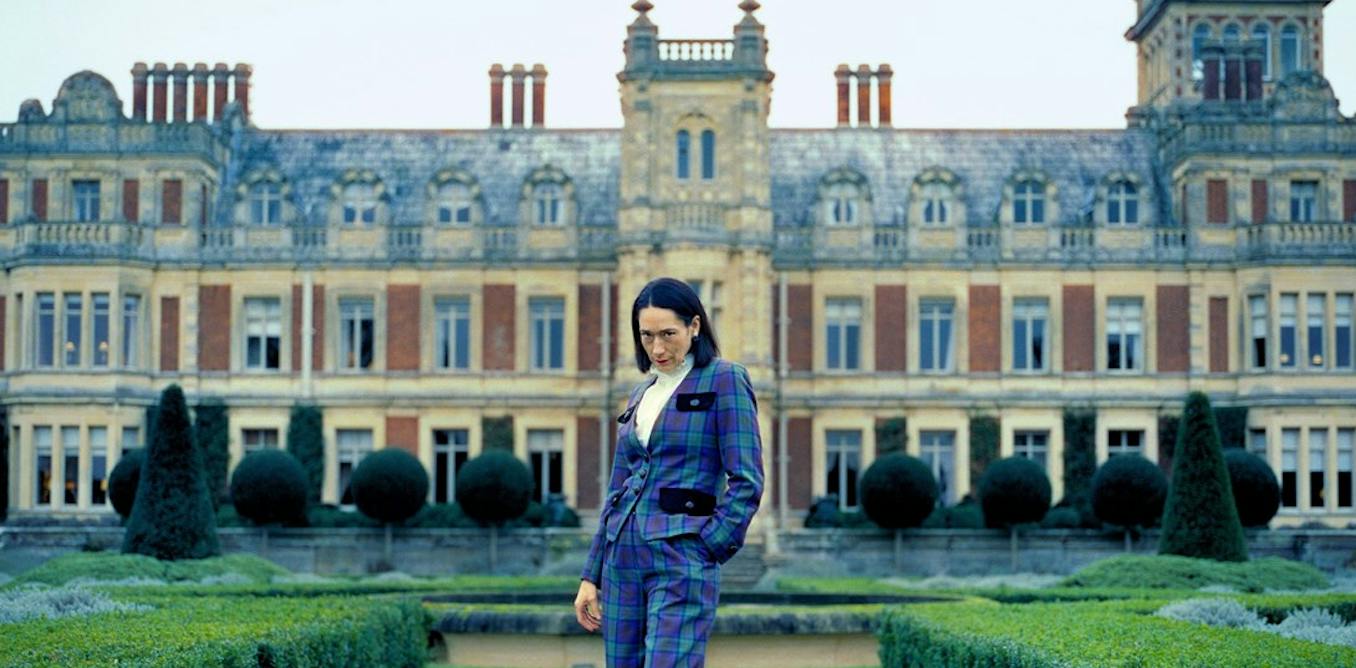
At first glance, director Samuel Abrahams’ surrealist feature Lady feels right at home within the booming cinematic lineage of "eat the rich" social satire. Following hot on the heels of high-profile cultural exports like Saltburn, Parasite, The Menu, and Triangle of Sadness, the film initially primes audiences for a familiar skewering of elite absurdity. Set against the sprawling, melancholic backdrop of Ravenhyde Hall—a stately country estate in Suffolk—the film introduces us to Lady Isabella, played with razor-sharp comedic timing and underlying vulnerability by Sian Clifford.
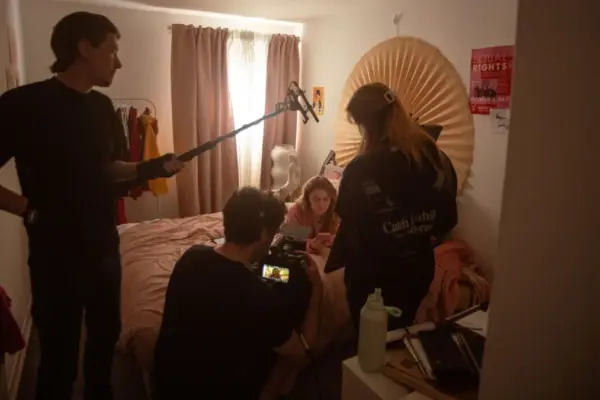
In her eccentric isolation, the forty-something aristocrat fancies herself "aristocracy’s answer to the Kardashians," embarking on a misguided crusade to reinvent herself as a modern-day multimedia artist and internet influencer. To capture her ascension, she employs Sam (Laurie Kynaston), a hungry, struggling young filmmaker desperate for a BAFTA-winning breakthrough.
However, beneath its bright comedic veneer and biting institutional critique, Lady quickly sheds its skin to reveal a deeply melancholic, surreal psychological exploration. The narrative’s central conceit hinges on a tragicomic paradox: despite her vast inherited wealth, enormous estate, and aristocratic title—privileges that ought to render her impossible to ignore—Isabella feels profoundly unseen. This alienation takes a literal, body-horror turn when Isabella begins to physically disappear.
What starts as an absurd premise morphs into a poignant exploration of the cultural erasure of aging women in a hyper-commodified society. As the film progresses, the dynamic between Isabella and her documentarian curdles into a scathing critique of modern content creation, revealing how both subject and filmmaker exploit pain for public consumption. Ultimately, Lady offers a sharp indictment of a culture obsessed with self-performance, arguing that the relentless pursuit of visibility is precisely what erases us.
Detailed Chronology: The Making of an Aristocratic Spectacle
Act I: The Pivot to Influencer Culture
The narrative engine of Lady kicks off when Lady Isabella decides that her aristocratic lineage is no longer enough to secure her cultural relevance. Recognizing the tectonic shift in how fame and prestige are distributed in the digital age, she declares herself the "aristocrat’s answer to the Kardashians." Her ambition is grand, erratic, and utterly unmoored from reality: she wants to turn her private eccentricities into publicly consumable modern art.
To achieve this, she hires Sam, a young documentary filmmaker whose ambitions are entirely career-driven. Sam views Isabella as a golden ticket, a bizarre character study that could secure him industry recognition and critical acclaim. Initially, the film delights in exploiting the inherent comedy of this pairing. Isabella’s immense wealth gives her the dangerous freedom to indulge her every whim, turning isolated country-house musings into elaborate, self-indulgent performances.
Yet, the screenplay subverts expectations early by ensuring Isabella is not merely a static target for satire. Her relentless narcissism is rapidly unmasked not as petty vanity, but as a severe psychological defense mechanism. When her hands begin to turn literally invisible, she attempts to bypass the reality of the symptom simply by hiding them in gloves. When the condition is subtly coded as a physiological symptom of perimenopause, she completely dismisses it, weaponizing denial to shield herself from bodily decline.
Act II: Unraveling Grief and the Commodification of Decay
As the layers are peeled back, a darker, more tragic history emerges. Beneath Isabella’s performance of the "tortured artist" lies profound, unresolved trauma: a loveless marriage of convenience and the devastating loss of her only child. Her desperate bid to remain the center of attention is an elaborate armor erected to keep out the crushing weight of her grief.
This dynamic leads to one of the film’s most revealing verbal skirmishes. When Sam accuses Isabella of being "self-obsessed," she indignantly corrects him, insisting she is "self-centred" rather than "self-obsessed." While absurdly pedantic, this distinction cuts to the very core of her psychological architecture. Isabella has transformed her suffering into an artistic enterprise; even her agony must be meticulously curated as an act of self-expression, insulating her from the messy, uncontrollable world outside Ravenhyde Hall.
As Isabella’s vulnerability deepens, the satirical crosshairs pivot sharply toward Sam. Initially posing as an objective, truth-telling documentarian who merely records Isabella’s madness, Sam is exposed as every bit as exploitative and performative as his subject. When he captures footage of Isabella at her most unhinged, vulnerable, and fading, he immediately envisions how to package it into a slick sizzle reel for Netflix.
The cruelty of his enterprise is laid bare in a devastating sequence when Isabella asks why she looks "old and crazy" in the rushes. Sam replies with brutal, unvarnished candor: because she is old and crazy. Rather than acting as a neutral observer of her physical and mental decay, Sam is actively facilitating and capitalizing upon it, trading her humanity for industry clout.
Act III: The Climax at "Stately Stars" and the Path to Redemption
The narrative reaches its psychological and emotional apex at "Stately Stars," an annual local talent contest sponsored by Isabella for neighborhood children. Demonstrating a staggering lack of social awareness, Isabella decides to enter the competition herself.
Her performance is a magnificent, raucous explosion of surrealism: she appears entirely naked, save for a giant raven’s head that floats menacingly above her now fully invisible body. Yet, the moment of grace and redemption arrives not through self-exhibition, but through self-forgetfulness. Noticing that Sam is paralyzed by crippling public-speaking anxiety, Isabella abruptly shifts her focus away from her own performance to aid him. By guiding him through the recitation of one of her poems, she confronts a reality entirely outside her own ego. Paradoxically, this outward act of empathy reverses her physical disappearance.
Supporting Context & Metrics: Analyzing the Satirical Lineage
While mainstream press comparisons to Saltburn are inevitable given the shared tropes of eccentric country-house wealth, Gothic decay, and eccentric set-pieces (such as giant inflatable pink flamingos), Lady operates on a distinctly different literary and cinematic frequency.
[Traditional Elite Satire: Saltburn/The Menu]
       │
       ├── Focus: External class warfare & systemic consumption
       └── Resolution: Cynical destruction of the ruling class

[Psychological Black Comedy: Lady / Catch-22 / My Year of Rest and Relaxation]
       │
       ├── Focus: Internal dissociation, grief, and self-erasure
       └── Resolution: Epiphany through outward empathy and ego-death
The film’s true spiritual ancestors are the bleak, absurdist black comedies of mid-century and contemporary literature—most notably Joseph Heller’s Catch-22 and Ottessa Moshfegh’s My Year of Rest and Relaxation. Much like those narratives, Lady begins with high-concept, comic outrageousness before gradually descending into a stark, unyielding psychological reality.
Key Thematic Metrics Explored in Lady:
- The Invisibility Metaphor: A direct critique of how contemporary media renders women over forty invisible, treating the aging female body either as a disposable commodity or a source of grotesque humor.
- The Creator-Subject Exploitation Ratio: Examines the parasitic relationship between modern documentarians/content creators and vulnerable subjects, highlighting how "authenticity" is routinely manufactured and monetized.
- Ego Dissociation: Maps out how profound personal trauma (bereavement, failed marriages) drives individuals into hyper-fixated loops of self-performance, substituting genuine human connection with parasocial validation.
Official Statements and Artistic Vision
Director Samuel Abrahams has noted in press statements that the genesis of Lady lay in observing how modern digital culture forces individuals to curate their trauma into digestible entertainment.
"We live in an era where suffering is no longer private; it is currency," Abrahams explains. "I wanted to explore what happens when an individual takes the ultimate symptom of our age—the desperate, algorithmic need to be seen—and pushes it to its illogical, bodily extreme. Isabella isn’t just fighting aging; she’s fighting the modern terror of irrelevance in a world that only values human beings if they are currently generating content."
Lead actress Sian Clifford reflected on the physical and emotional demands of portraying a character navigating both literal and metaphorical erasure:
"Isabella is profoundly tragic because her narcissism is just a tiny shield holding back a tidal wave of grief. She doesn’t know how to exist without an audience because without a witness, she fears she never truly existed at all. The tragedy of the film is that Sam looks at her through a lens to frame her, rather than looking at her with his eyes to love her."
Laurie Kynaston, discussing his role as the morally compromised filmmaker Sam, emphasized the insidious nature of modern ambition: "Sam isn’t a moustache-twirling villain. He’s a product of our current creative economy, where young artists are taught that sensationalism equals success. He genuinely believes he’s making art, right up until the moment he realizes he’s just a digital vulture."
Future Outlook: The Cultural Legacy of Lady
As Lady makes its way through the international festival circuit and secures distribution, its resonance within contemporary cinema is likely to endure. The film arrives at a critical juncture in cultural discourse, where audiences are increasingly fatigued by hollow, cynical "eat the rich" narratives that rely on cheap schadenfreude without offering genuine psychological depth.
By steering the genre away from simple class warfare and toward an intimate examination of grief, aging, and digital alienation, Abrahams has crafted a work that speaks directly to the anxieties of the 2020s. Lady leaves its audience with a bracingly wholesome, counter-cultural takeaway: in an algorithm-driven society that demands we turn every breath into a monetized spectacle, the most radical act of self-preservation—and true self-knowledge—is simply the decision to look outward.