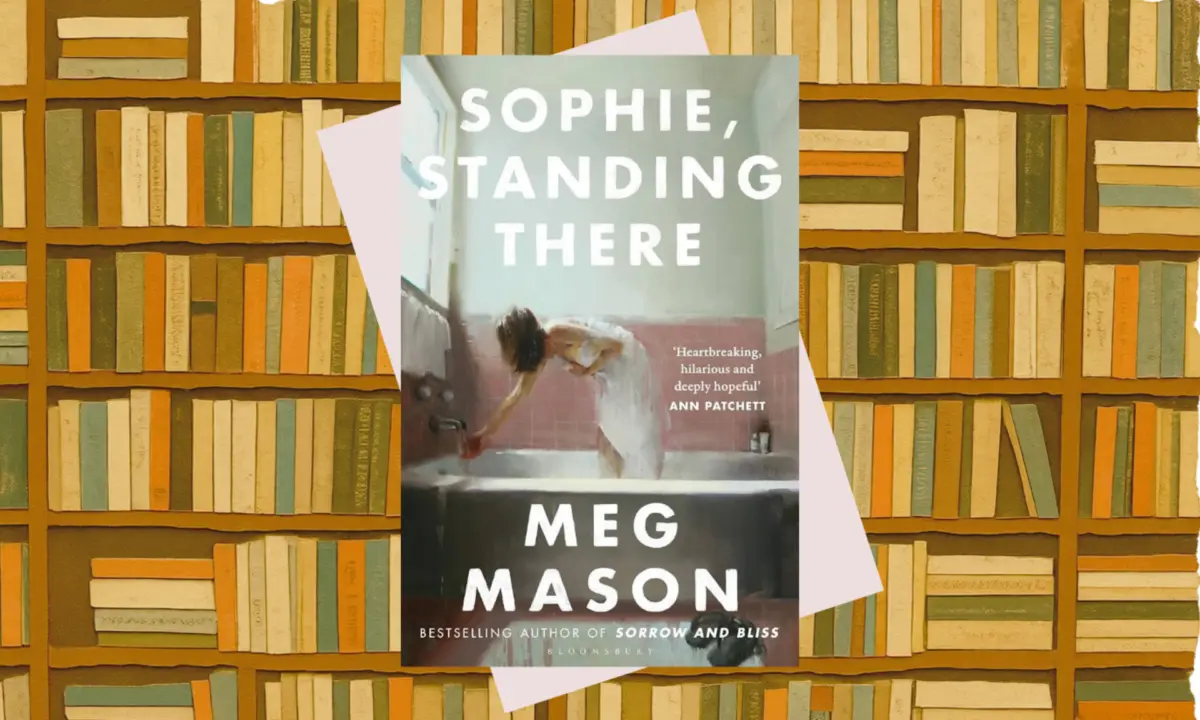
In the contemporary literary landscape, few authors command the immediate cultural gravity and emotional resonance of Meg Mason. Following the runaway international success of her breakout novel, Sorrow and Bliss, Mason returns with Sophie, Standing There—a work that has quickly ignited intense debate among critics, academics, and fiction enthusiasts alike. Advertised ostensibly as a bittersweet narrative of love, loneliness, and accidental connection, the novel probes deeply into the architecture of modern alienation, hyper-introspection, and the often-unseen machinery of the global literary festival circuit.
This comprehensive review-analysis examines the critical reception, thematic underpinnings, character psychology, and structural mechanics of Mason’s latest offering. Positioned at the intersection of "sad-girl fiction," Virginia Woolf-esque stream-of-consciousness, and classic Jane Austen domestic comedy, Sophie, Standing There challenges the reader’s patience. It demands a deliberate surrender to narrative passivity, rewarding perseverance with devastating late-stage revelations.
While general readers and major review outlets have largely lauded the book’s exquisite emotional precision, sharp industry satire, and profound exploration of female self-effacement, dissenting voices point to unsettling narrative distances and a rushed final act. Nevertheless, Mason’s latest work cements her status as a master chronicler of female psychological endurance, asking a fundamental question: Can books, art, and human connection truly save a life, or do they merely furnish the theater of our endurance?
Detailed Chronology and Narrative Architecture
To understand the polarizing impact of Sophie, Standing There, one must first map the fragile, meticulously constrained world of its protagonist. Sophie is a sound technician navigating the precarious, seasonal gig economy of high-profile literary festivals. Her career trajectory has been deliberately stunted; she initially deferred her own professional ambitions to support her husband’s career, making the bitter realization of her sacrifices all the more agonizing when the novel opens mid-crisis.
The Inciting Incident and the Weight of Passivity
The narrative begins not with a slow unspooling, but with a visceral shock: Sophie is grieving the abrupt dissolution of her marriage, brought to an end by her husband in a moment of absolute callousness while she was showering. Yet, in true Mason fashion, the visceral details of this betrayal are withheld, trickling out across the text with agonizing slowness.
Sophie dwells endlessly on immediate domestic and emotional ripples—spilled soup, ruined trousers, erratic playlists, the hum of electric car chargers, and cold bathrooms—while remaining tight-lipped about the core trauma until late in the narrative. This structural choice positions Sophie as a literary anomaly: a modern "witness-protagonist."
Unlike canonical witnesses such as Nelly Dean in Wuthering Heights or Nick Carraway in The Great Gatsby, who observe the seismic transformations of others from the margins while subtly manipulating events, Sophie is profoundly static. She is paralyzed by a catastrophic lack of self-worth. Struggling financially and recovering from both a failed marriage and a failed IVF journey, Sophie exists as a perpetual caregiver eager to be of service, yet entirely unable to advocate for her own basic human dignity.
The Festival, the Obsession, and the Austen-esque Comedies of Error
As Sophie works her precarious technical shifts at an upcoming literary festival, the plot thickens through a series of classic, almost Austen-esque complications. She develops a consuming, bizarre obsession with a fiercely successful writer who is slated as a surprise replacement headliner. This obsession manifests in dark, neurotic fantasies—such as lacing microphone wires under the author’s clothes—though these fantasies are quickly deflated by Sophie’s own internal boundaries, including her inability to conceptualize herself as sexually attracted to women.
Parallel to this fixation, the novel unfolds a series of domestic catastrophes and social reversals:
- Sudden, feverish illnesses and awkward, inopportune recoveries.
- The profound redemption of minor characters, such as her formerly impolite manager Annaliese, who is revealed to be deeply vulnerable and fiercely loyal.
- The unexpected emotional intelligence displayed by her flighty best friend, Emma.
It is within these mundane, micro-interactions—dripping egg sandwiches, cold hotel bathrooms, and the oppressive weight of domestic minutiae—that Mason builds her masterwork. Perseverance through this painstaking detail ultimately unlocks a late-stage revelation that casts Sophie’s lifetime of inaction into sharp, painful focus, granting the fragile heroine the agency she has long denied herself.
Supporting Context & Metrics: The Literary Landscape
To fully appreciate the cultural footprint of Sophie, Standing There, one must examine the broader metrics of its release, critical reception, and its relationship to Mason’s prior catalog.
| Metric / Category | Details & Industry Standing |
|---|---|
| Authorial Precedent | Follows Sorrow and Bliss (2021), a global bestseller widely praised for its tender, comic, yet unflinching look at mental illness. |
| Primary Genre Classifications | Contemporary literary fiction, "sad-girl fiction," domestic psychological drama, modern romance. |
| Core Literary Parallels | Virginia Woolf, Bridget Jones, Jane Austen, and twentieth-century stream-of-consciousness narratives. |
| Key Thematic Focuses | Loneliness, literary festival culture, the gig economy, secondary infertility, female self-effacement, friendship. |
| Critical Polarization Index | High acclaim for prose style and emotional authenticity; moderate friction regarding narrative pacing and late-stage backstory drops. |
The Satire of the Literary Industrial Complex
Beyond its psychological interiority, Sophie, Standing There functions as a biting critique of the modern literary festival circuit. Mason draws heavily on her own rapid, dizzying ascent to literary stardom, offering insider insights that will delight industry insiders and observant readers alike.
The novel skewers the infrastructure of contemporary authorship: festival employees who skim rather than read the books they promote, rampant and petty author gossip, and the occasional display of profound entitlement and rudeness from celebrated writers. This meta-commentary serves a thematic purpose, constantly reminding the reader not to judge a book—or a person—by its cover. External glamour often masks profound institutional precarity, financial desperation, and hidden human vulnerabilities.
Official Statements and Critical Reception
The literary establishment has responded to Sophie, Standing There with a mixture of awe and analytical caution. Reviewers across major international publications have weighed in on its distinct tonal shift from Mason’s previous work.
Critical Perspectives
- The Guardian: Noted that while the novel is "less hilarious, more touching" than Sorrow and Bliss, it matches its predecessor in its laser-sharp observations of human frailty. However, some critics within its pages noted that the primary object of Sophie’s obsession occasionally feels "unsatisfyingly distant."
- Literary Review Outlets: Praise has been nearly universal regarding the book’s linguistic precision. One reviewer observed that reading the novel can feel "unsettling and uneasy," mirroring Sophie’s internal state of hyper-vigilance and social discomfort.
- Aotearoa/New Zealand Literary Review: Highlighted structural concerns, suggesting that the late, hasty revelation of Sophie’s backstory felt "inadequately explored" relative to the luxurious, slow-burn pace of the opening two-thirds. Yet, cultural analysts argue that this very swiftness is a deliberate artistic choice—reflecting how repressed trauma and lifelong self-effacement shatter an individual’s reality all at once when finally brought to light.
Meg Mason’s Thematic Intent
While formal authorial press statements regarding the book’s specific plot points have been measured, interviews surrounding the release indicate that Mason sought to explore what happens to individuals who spend their lives existing merely in the peripheral vision of others. In conversations with cultural platforms, Mason has emphasized the role of digital culture, social media pressures, and artificial intelligence on modern loneliness—themes subtly woven into Sophie’s alienation from the hyper-curated personas of the writers she services.
Future Outlook: Legacy and Cultural Impact
As Sophie, Standing There settles onto international bestseller lists and populates book club discussions worldwide, its long-term cultural legacy appears secure.
1. Evolution of the "Sad-Girl" Subgenre
While Sophie initially tries to avoid the very genre of contemporary fiction that mirrors her despair, the novel elevates "sad-girl fiction" from a transient internet-era trend into a timeless study of female interiority. By marrying the structural preoccupations of Virginia Woolf with the acute social mechanics of Jane Austen, Mason has expanded the boundaries of what domestic fiction can achieve.
2. Adaptation and Academic Discourse
Given the visual and spatial dynamics of the literary festival setting, industry insiders are already whispering about potential cinematic or streaming adaptations. The claustrophobia of backstage green rooms, the quiet humiliation of technical work, and the psychological drama of unrequited fixation provide ripe material for a character-driven miniseries. Furthermore, academic literary circles are expected to generate significant commentary regarding Sophie’s role as a non-traditional witness-protagonist, expanding university syllabi that focus on marginality in twentieth and twenty-first-century literature.
3. The Enduring Message of Self-Forgiveness
Ultimately, the lasting impact of Sophie, Standing There lies in its emotional resolution. As early blurbs and advanced reviews promised, the book is indeed heartbreaking, moving, and breathtaking. By the time Sophie finally confronts her past and unlocks the specific meaning encoded in the novel’s title, she arrives at a destination of profound grace: self-forgiveness. In extending that grace to its deeply flawed, frustrating, and ultimately heroic protagonist, Mason invites the reader to do the very same in their own messy, everyday lives.