Executive Overview
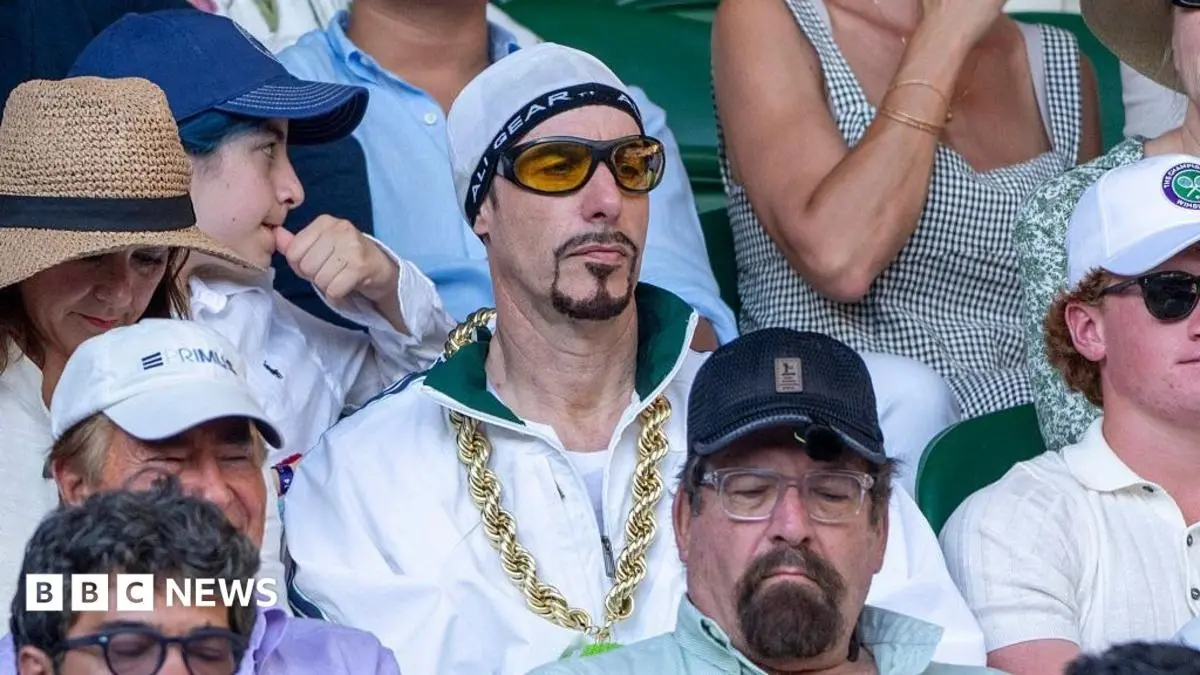
Two decades after he first burst onto television screens as the tracksuit-wearing voice of Britain’s suburban counter-culture, Sacha Baron Cohen’s most polarizing creation is making a contentious comeback. The character of Ali G—complete with trademark yellow shell suit, skullcap, and idiosyncratic street vernacular—is returning to cinemas this Friday in a new feature film, Ali G: Who iz I?, serving as a direct sequel to the 2002 hit Ali G Indahouse.
While the return has been met with fervent nostalgia by a dedicated fanbase—highlighted by a recent promotional stunt in London where over 300 lookalikes swarmed the Underground and iconic city landmarks—it has simultaneously ignited a fierce cultural debate. Critics, cultural commentators, and contemporary comedians have sharply condemned the revival, accusing the franchise of perpetuating damaging racial stereotypes and relying on outdated comedic tropes that mock the Black community.
Conversely, Baron Cohen, his creative team, and high-profile defenders argue that Ali G has always functioned as a Trojan horse: a satirical vehicle designed to expose the genuine bigotry, ignorance, and systemic prejudices harbored by the powerful and privileged. As the film prepares for its theatrical release, the ensuing controversy serves as a microcosm of a broader, ongoing societal struggle over the boundaries of creative freedom, the evolution of satire, and the weaponization of identity in modern comedy.
Detailed Chronology: From Cult Phenomenon to Modern Re-emergence
1. The Noughties Rise and the Birth of a Cultural Touchstone
The character of Ali G first entered the British cultural consciousness in the late 1990s and early 2000s, gaining widespread prominence through The 11 O’Clock Show before headlining Da Ali G Show. Characterized by deadpan, often surreal interviews with unwitting public figures, politicians, and celebrities—ranging from Harrods owner Mohamed Al Fayed to football icons David and Victoria Beckham—the character popularized catchphrases like "Booyakasha" and "Is it because I is black?"
During this era, Baron Cohen operated largely under the guise of an authentic subculture, leveraging his persona to trick powerful subjects into lowering their guards and exposing their own biases, classism, and casual prejudices. However, the character’s linguistic ticks and stylistic choices quickly transcended television, permeating school playgrounds and popular culture.
2. The Hiatus and the Changing Media Landscape
Following the release of Ali G Indahouse in 2002, Baron Cohen largely retired the character, pivoting instead to high-profile cinematic satires such as Borat, Bruno, and The Dictator, as well as dramatic acting roles. During this prolonged hiatus, the cultural landscape underwent a seismic shift. Public discourse around representation, cultural appropriation, institutional racism, and systemic inequality matured significantly. The casual mimicry of marginalized identities, once commonplace in mainstream British sketch shows—exemplified by programs like Little Britain and Catherine Tate—began to face rigorous examination and moral reckoning.
3. The 2026 Revival and the Immediate Backlash
Earlier this month, the promotional campaign for Ali G: Who iz I? signaled the character’s return. A viral stunt saw hundreds of fans cram onto a London Underground escalator and ride an open-top bus past Big Ben, Leicester Square, and Covent Garden. Baron Cohen, broadcasting via megaphone in character, declared to the camera: "This is the biggest gathering of cultural appropriators in history."
While intended as self-aware marketing, the stunt immediately galvanized online opposition. Criticism gained rapid traction across social media platforms, with comedians, content creators, and film fans generating thousands of likes and comments condemning the revival. Singer and presenter Jordan Stephens posted multiple TikTok videos critiquing the franchise’s return, while Labour MP Paulette Hamilton labeled the character explicitly racist during a discussion on the Jeremy Vine show, arguing that Baron Cohen would never dare portray any other racial group in the manner he targeted the Black community.
Supporting Context & Metrics: The Anatomy of the Controversy
The debate surrounding Ali G’s return extends far beyond standard cinematic critique; it touches upon deep-seated grievances regarding how minority communities have been represented in British media.
The Appropriation of Catchphrases and Caricature
Critics argue that while Baron Cohen may have intended to satirize white suburban youths adopting Black urban aesthetics (a phenomenon colloquially known as "staging" or cultural minstrelsy), the real-world impact was profoundly different. For many viewers, the character’s catchphrases were detached from any satirical context and weaponized in everyday life.
Renowned British comedian Dane Baptiste, the first Black British comic nominated for an Edinburgh Comedy Award, has articulated this concern vividly. Recalling the character’s noughties heyday, Baptiste noted that phrases like "Is it because I is black?" were frequently used in casual environments to diminish legitimate grievances.
"A lot of the time, I would hear people using phrases like ‘Is it because I is black?’ or ‘Booyakasha’…" Baptiste recalls. "Even taking the phrase ‘Is it because I is black?’… that was used to the point of caricature, whereby, whenever black people experienced actual grievances relating to systemic and institutional racism, it was reduced to this catchphrase."
Baptiste further contends that the return of what he terms a "black caricature" arrives at an inopportune juncture when contemporary Black creatives are systematically starved of mainstream opportunities.
The Accentism Paradigm and Shifting Sensibilities
Social psychologist Amy Kean, who has extensively researched "accentism" and linguistic discrimination, contextualizes the character within the broader landscape of 1990s and 2000s British television comedy.
"Ali G, Little Britain, Catherine Tate, all of those comedians and sketch shows, they made the voice the joke," Kean observes, drawing parallels to her own experiences of being marginalized for her Essex accent.
Kean argues that the comedic mechanics of that era—relying heavily on mockery of socio-economic status, regional speech patterns, and cultural hybridity—are no longer culturally relevant or acceptable to modern audiences who recognize the underlying harm of linguistic elitism.
Official Statements & Defense: The Satirist’s Perspective
Faced with mounting criticism, Sacha Baron Cohen and his defenders have mounted a robust defense of the character’s underlying intent, creative methodology, and historical contribution to modern satire.
Baron Cohen’s Rationale: Exposing Metastasized Prejudice
In a recent, extensive essay published in Time magazine, Baron Cohen forcefully argued that his characters have consistently operated as diagnostic tools to uncover prejudice, bias, and societal stupidity. He contended that the primary target of the Ali G persona has never been the marginalized, but rather the predominantly white, male establishment.
"The fact that Ali G is outdated and problematic is the very reason I resurrected him," Baron Cohen wrote. "The world he’s returned to is, in many ways, worse than the one he left 20 years ago. All the prejudices my characters are designed to expose haven’t just lingered—they’ve metastasized. They’re fueled by the greatest propaganda machine in history—social media—and now by its monstrous child, AI."
Reflecting on his interview methodology during an appearance on CBS, Baron Cohen emphasized that while his primary objective is to provoke genuine laughter, sophisticated satire remains smuggled within the chaotic framework of his interactions. He recounted historical instances, such as his infamous interview with Donald Trump on Da Ali G Show, where the billionaire assumed a well-spoken, Etonian-educated producer would conduct the interview, only to be visibly rattled by the arrival of a character embodying a lower-class, multi-ethnic urban persona. Baron Cohen maintains that such encounters expose the instantaneous class and cultural biases of the powerful.
The Creative Team Speaks Out
The production team behind Ali G: Who iz I? has likewise defended the film’s integrity. Colton Dunn, one of the film’s Black writers, staunchly rejected the notion that Baron Cohen or the project harbors malicious intent. Speaking to Deadline, Dunn highlighted the physical and reputational risks Baron Cohen routinely assumes during production—such as infiltrating hostile political rallies in protective gear—as evidence of a genuine commitment to exposing dangerous ideologies rather than punching down at minority groups.
"From my point of view, Ali G is not a racist character. Ali G is a tool to expose racists," Dunn stated. "That’s why I signed on. I wouldn’t sign on to work with somebody that I thought was racist, that’s against everything that I’ve done."
Local Pride and Political Allies
Support for the character also manifests in unexpected corners. In Staines-upon-Thames, Surrey—the fictional hometown of Ali G—local resident Alex Balkan has long championed the character as a unique source of civic identity and international recognition. While acknowledging the validity of contemporary sensitivities, Balkan asserts that Ali G successfully lampooned a specific archetype of white suburban cultural appropriation rather than attacking Black culture directly.
Furthermore, conservative political figures have rallied to the defense of the franchise. Sir Jacob Rees-Mogg, one of the character’s most famous historic interview victims, took to social media to champion the return of unrestricted satirical comedy.
"It is clever, satirical humour which makes the country, and many of us look foolish, and that’s no bad thing," Sir Jacob posted. Criticizing what he perceives as an overextension of sensitivity, he added: "This excessive zeal of political correctness, of left-wing po-facery, is crazy. It’s a joke, it’s comedy and it is poking fun at society as it is, as the best comedy often does."
Future Outlook: The Unresolved Debate Over Comedy and Accountability
As Ali G: Who iz I? opens in cinemas this weekend, the profound polarization surrounding its release illustrates a fundamental schism in modern entertainment. On one side stand audiences and critics who view the resurrection of the character as anachronistic, insensitive, and incapable of separating itself from the real-world harm inflicted by racial caricature. On the other stand defenders of free expression, satirical subversion, and Baron Cohen’s unique brand of investigative provocation, who argue that sanitized comedy fails to adequately challenge a regressive political and social climate.
Ultimately, it remains premature to pass definitive judgment on the film before audiences have fully experienced its narrative context and satirical targets. However, the intense cultural friction preceding its premiere proves that more than twenty years after his initial inception, Ali G continues to function as a volatile mirror held up to society. Whether that mirror reveals insightful truths about systemic hypocrisy or simply reflects the unaddressed biases of a bygone era is a question that will continue to divide critics, comedians, and audiences alike long after the cinema lights go down.