Executive Overview
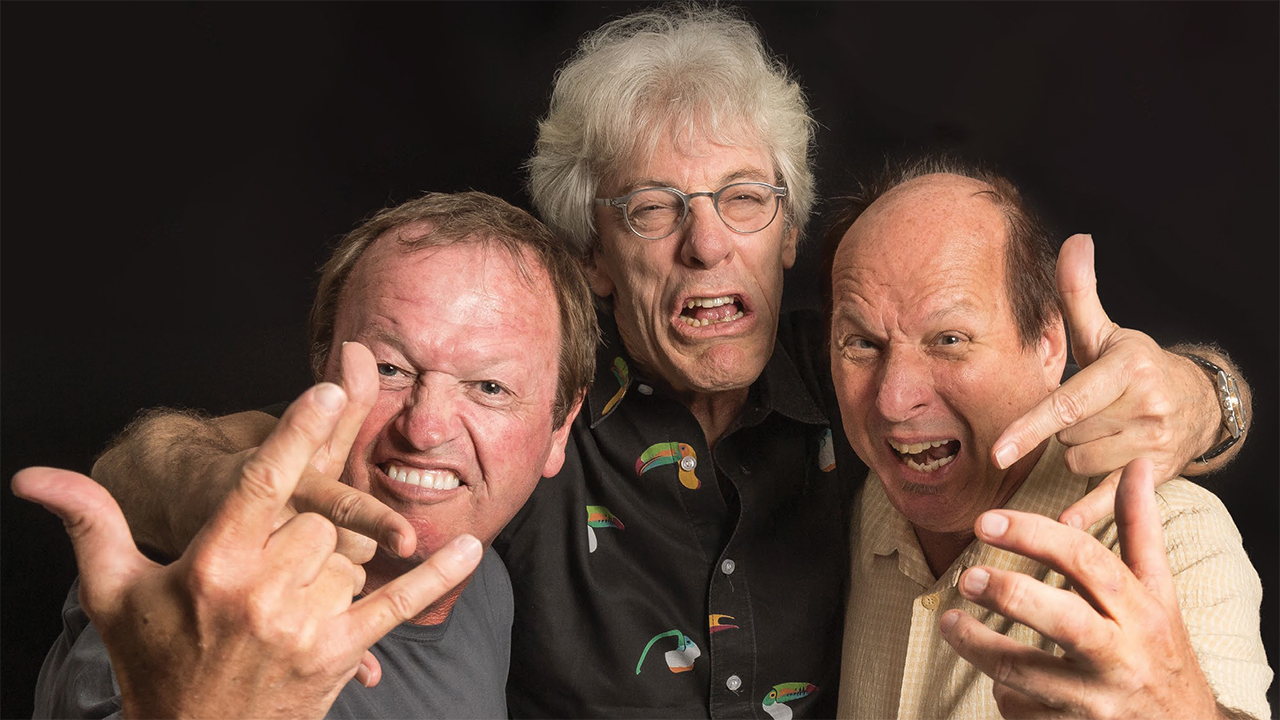
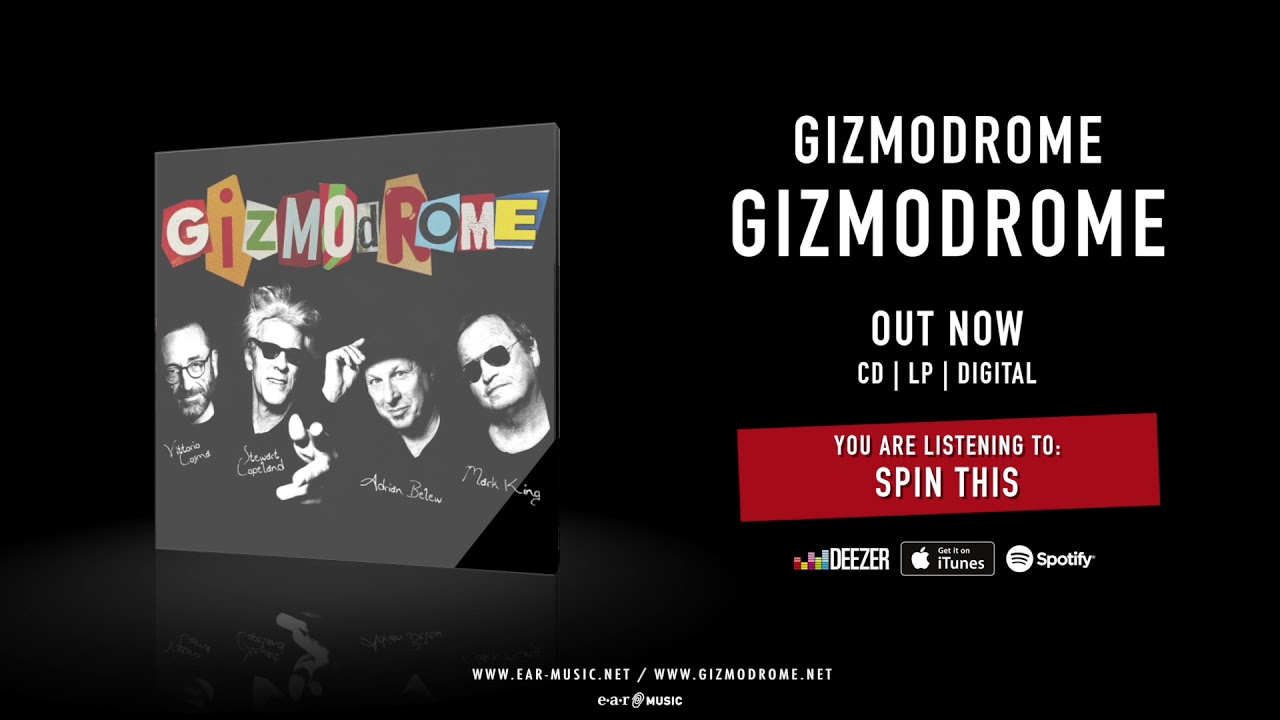
In an era where commercial supergroups are often manufactured through corporate boardrooms and file-sharing servers, Gizmodrome stands as a striking anomaly: a genuinely spontaneous, high-energy musical coalition born from camaraderie, uninhibited jam sessions, and a shared disdain for artistic conservatism. Formed in 2017, the quartet brings together four distinct titans of modern music:
- Stewart Copeland, the polyrhythmic powerhouse behind The Police;
- Adrian Belew, the avant-garde guitar wizard whose career spans Frank Zappa, David Bowie, Talking Heads, and King Crimson;
- Mark King, the thumb-slapping bass virtuoso and frontman of Level 42; and
- Vittorio Cosma, the acclaimed Italian keyboardist, composer, and long-time European collaborator.
What originally began as an informal recording session in Milan rapidly morphed into what the band self-identifies as "punk prog"—a volatile, eccentric blend of short-form songwriting, explosive virtuosity, and irreverent humor. Blending the kinetic urgency of 1970s new wave with the technical complexity of progressive rock and the rhythmic groove of jazz-funk, Gizmodrome offers an instructive case study in how veteran musicians can dismantle their own legacies to create something entirely unpredictable.
Detailed Chronology: From Impromptu Phone Call to Milanese Lab
+-----------------------------------------------------------------------------------+
|                                  GIZMODROME GENESIS                               |
+-----------------------------------------------------------------------------------+
|  July 2017                 First Milan Session            April 2017              |
|  Initial outreach text     10-day spontaneous studio jam  Secondary sessions &    |
|  from Copeland to King.   yields core album tracks.      overdub completion.      |
+-----------------------------------------------------------------------------------+
The Initial Catalyst (July 2017)
The genesis of Gizmodrome was far from a calculated industry play. In July 2017, Stewart Copeland reached out to Level 42 bassist Mark King via a brief, casual text message: "Hey Marco… do you wanna come join a band in Italy?"
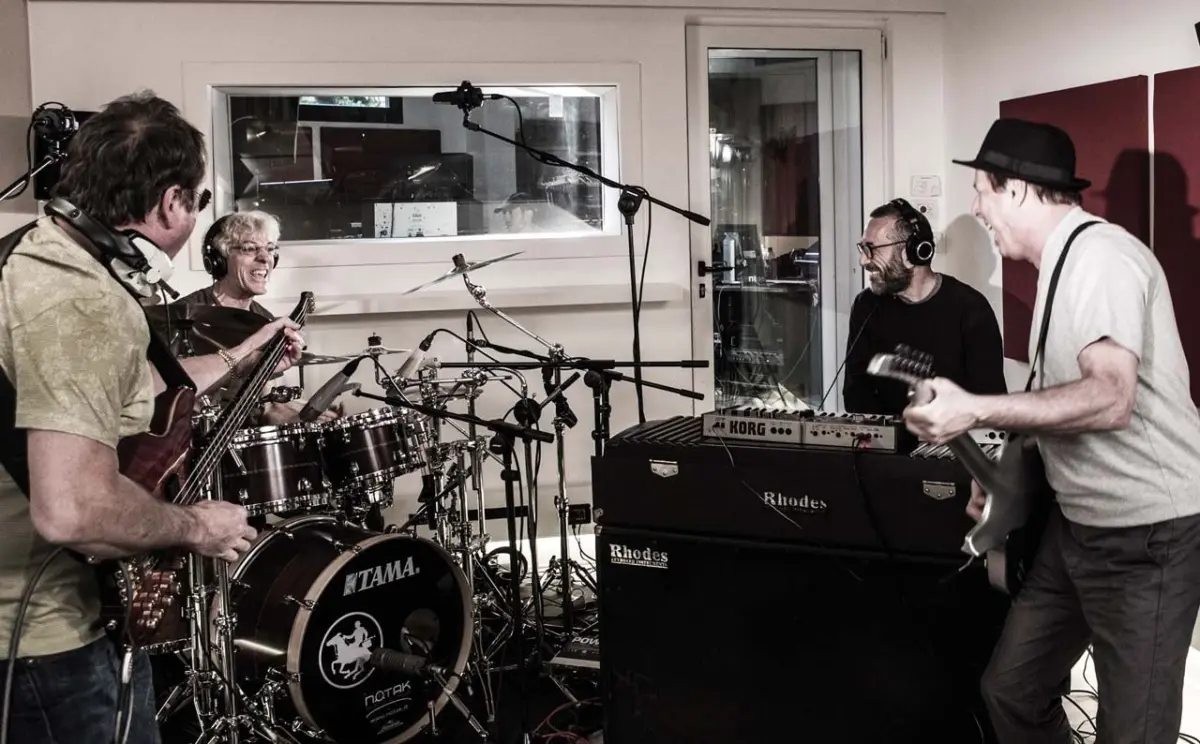
King, who had long admired Copeland’s rhythm work and had previously shared European stages with him decades earlier, accepted immediately. Within seven days, the core members had converged at a recording studio in Milan, Italy, joining keyboardist Vittorio Cosma to explore foundational song skeletons Copeland had been assembling in his home studio.
The Ten-Day Milan Residency
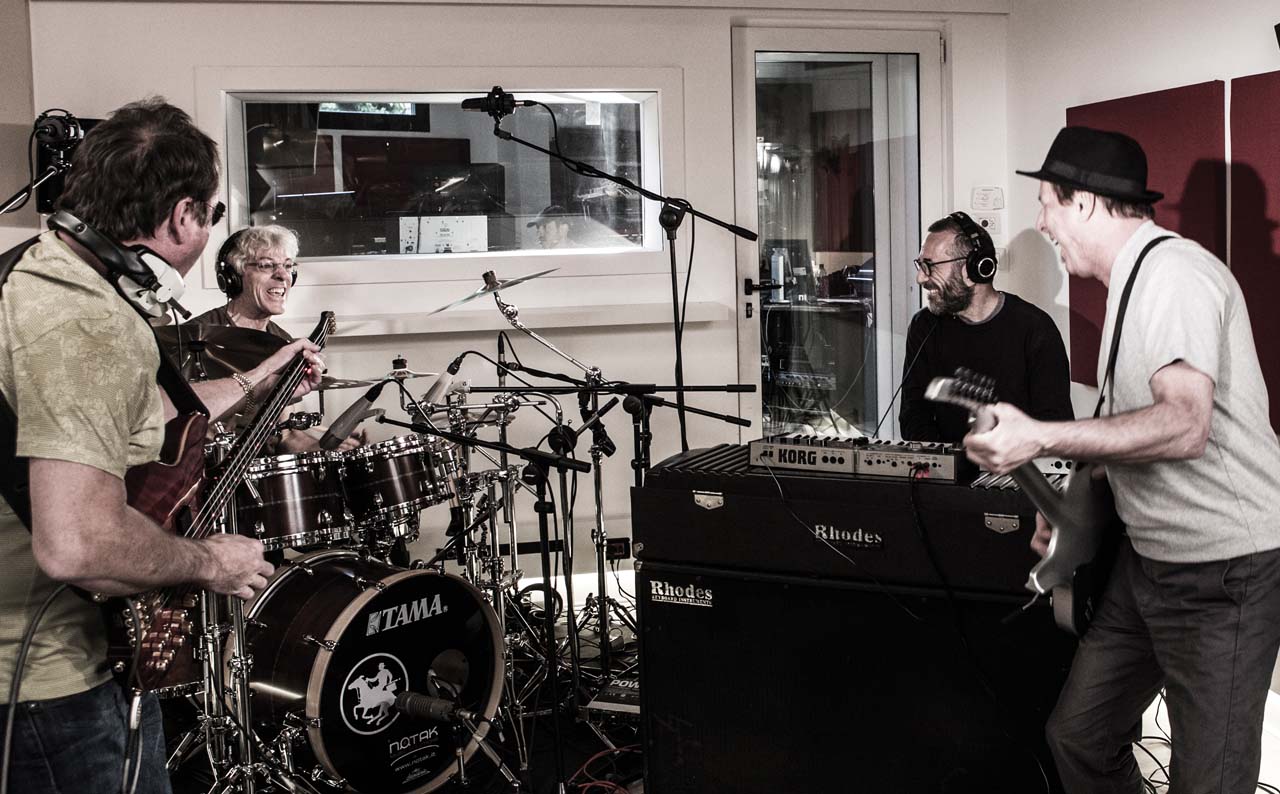
The initial recording sessions in Milan were defined by speed and atmospheric spontaneity. Rather than spending weeks pre-producing tracks or laying down isolated guide tracks, the ensemble opted for direct live-in-the-room interaction.
The daily schedule quickly established an organic creative rhythm:
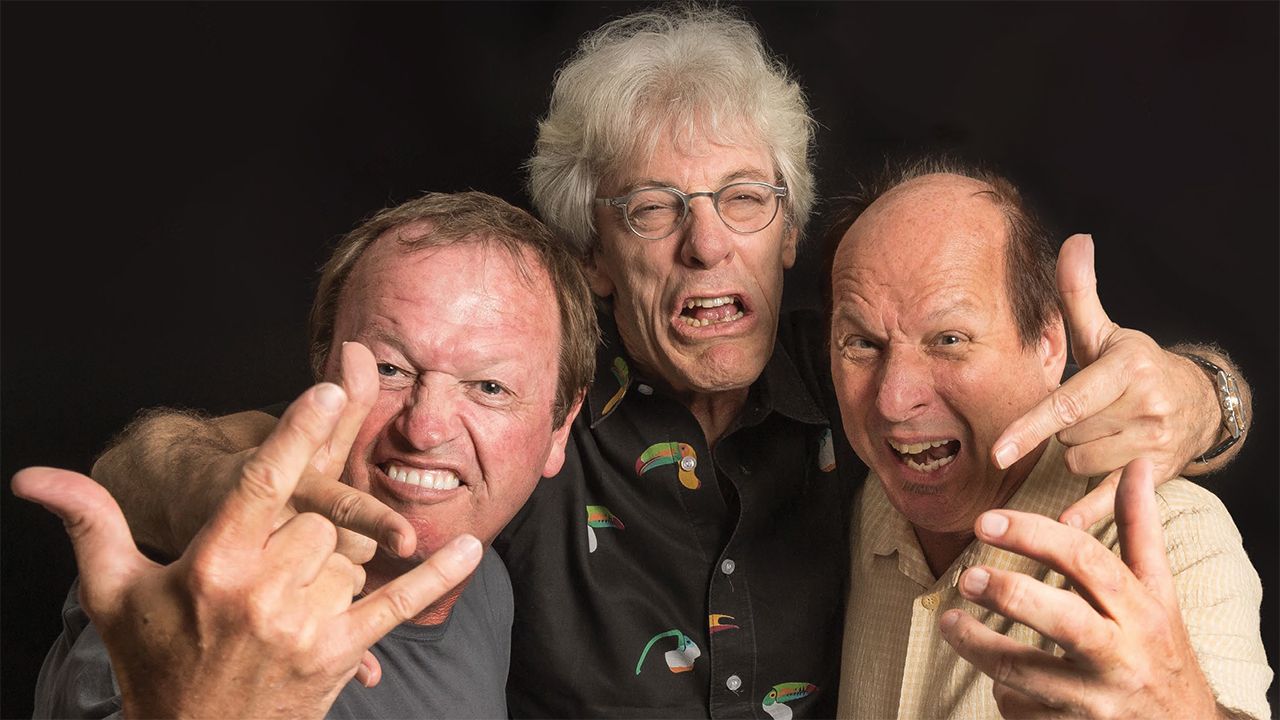
- Morning discussions over espresso at a local Italian piazza.
- High-intensity live tracking sessions through the afternoon.
- Late-afternoon social breaks (often marked by a round of tequila at 5:00 PM).
- Extended evening dinner sessions at local restaurants, where creative ideas and anecdotes were debated.
By the end of the initial ten-day period, the core rhythm tracks, structural arrangements, and arrangements for roughly 90% of the debut album were fully tracked.
Secondary Tracking and Refinement (April 2017)
In April, the group reassembled for a second brief session to lay down vocal harmonies, refine arrangements, and allow Adrian Belew to add his signature, wildly eccentric guitar textures. Rather than imposing rigid constraints, the production process encouraged improvisation and structural disruption, transforming Copeland’s original song ideas into multi-layered group compositions.
       [ Copeland's Original Demos ]
                     │
                     ▼
       [ The Milan Studio Dynamic ]
        • Collective Deconstruction
        • Live Room Synergy
        • Vocal Harmonization
                     │
                     ▼
   [ Gizmodrome Debut LP ("Punk Prog") ]
Supporting Context & Musical Metrics: The Convergence of Virtuosity
To fully grasp the musical mechanics of Gizmodrome, one must examine the specific technical pedigrees and artistic histories that each participant brought to the studio.
Lineup Breakdown & Historical Context
| Musician | Core Instrument / Role | Legacy Bands & Projects | Primary Musical Contribution to Gizmodrome |
|---|---|---|---|
| Stewart Copeland | Drums, Percussion, Lead Vocals | The Police, Klark Kent, Orchestral Compositions/Opera | Off-beat syncopation, theatrical/declamatory vocals, narrative concepts. |
| Adrian Belew | Lead Guitar, Backing Vocals | King Crimson, Frank Zappa, David Bowie, Talking Heads | Sonic guitar processing, wild pitch-bending solos, harmonic vocal textures. |
| Mark King | Bass Guitar, Backing Vocals | Level 42 | High-speed thumb-slap basslines, percussive low-end drive, counter-vocals. |
| Vittorio Cosma | Keyboards, Synthesizers | Premiata Forneria Marconi (PFM), Elio e le Storie Tese | Harmonic glue, ambient synth pad backdrops, classical piano arrangements. |
Structural Mechanics: Decoding "Punk Prog"
The term "punk prog" may sound like an oxymoron, yet it accurately describes Gizmodrome’s structural format. Progressive rock traditionally favors extended epics, complex multi-suite arrangements, and somber thematic tone poems. Punk rock, conversely, demands brevity, aggression, simplicity, and street-level energy.
Gizmodrome bridges this gap through a unique set of musical metrics:
- Short Song Structures: Tracks rarely exceed the four-to-five-minute mark, adhering to accessible pop and rock arrangements (verse-chorus-bridge).
- Dense Polyrhythmic Fills: While the songs are compact, the internal performances are hyper-complex. Copeland saturates the tracks with frantic snare cracks, hi-hat syncopations, and unexpected fills.
- Aggressive Slap-Bass Mechanics: Mark King’s percussive bass style provides a continuous driving engine, applying a funk-fusion technique within a driving rock framework.
- Avant-Garde Guitar Textures: Adrian Belew avoids standard blues-rock soloing clichés, choosing instead to manipulate his guitar signal to sound like alien radio transmissions, animal noises, and distorted industrial machinery.
Lyrical Tropes and Vocal Identity
Vocal duties on the album are uniquely distributed. Copeland takes center stage as lead vocalist, adopting a declamatory, theatrical delivery style heavily reminiscent of his late-1970s solo project, Klark Kent, alongside stylings he likens to a cross between Tom Waits, Barry White, and Lee Marvin.
Lyrically, the album steers clear of standard romantic cliches, delving instead into surrealism, dark satire, and rootless disorientation:
- Urban Paranoia: Narratives involving mall zombies, corrupt politicians, and shadowy back-alley encounters.
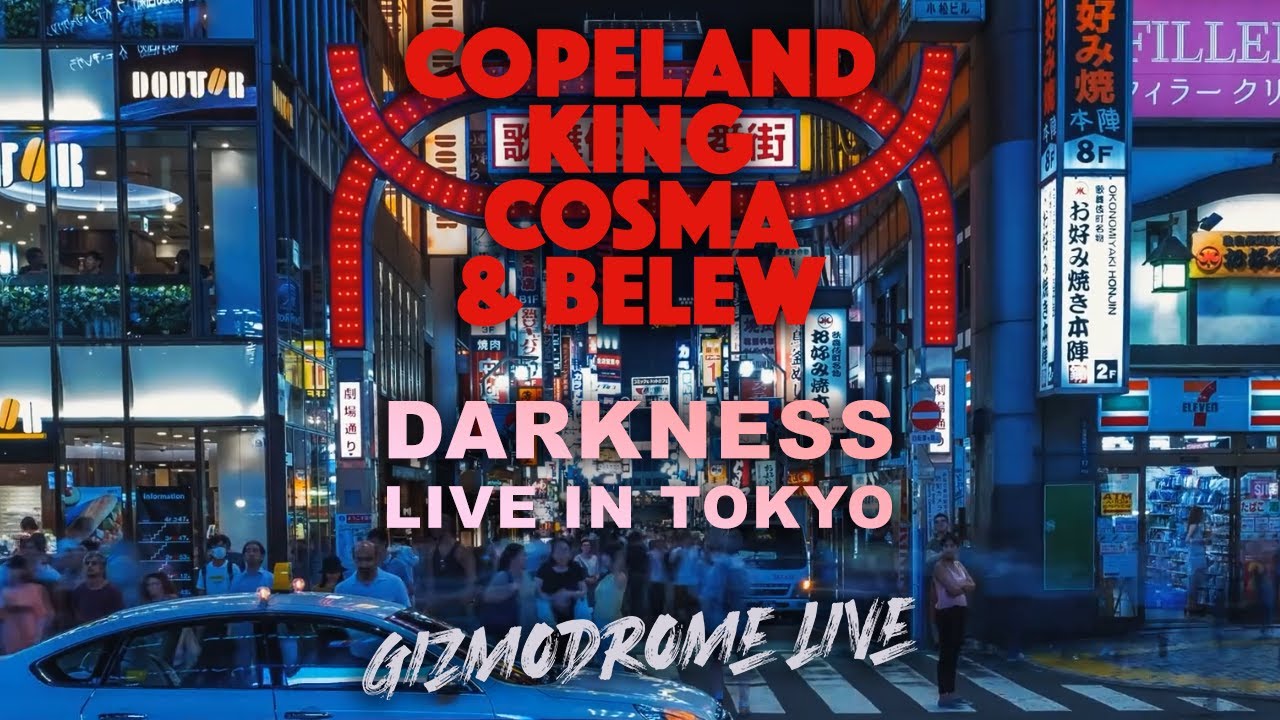
- Traveler’s Alienation: Themes inspired by sitting in foreign train stations, riding late-night cabs through unfamiliar cities, and escaping suburban routine.
- Absurdist Motifs: Recurring, unexplained references to horses and odd sci-fi elements that lighten the album’s satirical edge.
Official Statements: In Their Own Words
The interplay among Copeland, King, and Belew during their promotional engagements highlights the relaxed, highly collaborative nature of the group.
On Defining the Sound
Addressing the ongoing debate over the band’s genre classification, Stewart Copeland humorously detailed the conflict between progressive musical chops and punk attitude:
"Is it prog? Recently the French were telling us: ‘It’s progressive, but the songs are short. We are confused. We think maybe it is punk prog!’ I’d say we’re prog because there are way too many fucking drum fills all over the place. And we’re prog because Adrian’s guitar-playing is insane and should not be allowed on a pop record.
And then Mr. King fires up and this is a whole new world—all the other bass players, like Stanley Clarke, will soil their pants when they hear this. Oh my God, that’s a hell of a lot of band. Then again, maybe it’s punk because of the energy—and because, frankly, it’s our intention to burn down the city and eat all the children."
On the Studio Synergy and Chemical Dynamic
Reflecting on the speed with which the ensemble locked into a groove, Mark King noted how effortless the initial tracking sessions felt despite the players’ formidable resumes:
"Last July, I get a text from Stew, saying, ‘Hey Marco… do you wanna come join a band in Italy?’ Straight away I said yes. Seven days later we’re in the studio. As a bass player, the chance to play with Stewart is just fantastic… And I started out as a drummer, so the drums are very important to me. Then you see Adrian weave his magic, making things happen. It’s just been an absolute joy.
And so easy to do—it’s not as if everyone had to find their place, to settle in… we just played, and it sounded so good that after 10 days most of the songs were in the can."
Adrian Belew echoed this sentiment, highlighting how rare it is for musicians of their stature to hit upon immediate collective synergy without ego clashes:
"90 percent of it is us three in the studio, being able to get excited, to talk about it. Very rarely does putting people in the room together result in the synergy that this automatically had. It was palpable. By the end of the second day I was thinking, ‘Damn, what a great band this is!’
It struck me that for the first time in a long time, this material was custom-made for what I like to do. I bring a lifetime of experience in… anything you want, I can throw it in there. If Stewart’s singing about an alien radio station, cool, I’ll play an alien radio station sound."
+-----------------------------------------------------------------------------------+
|                        CREATIVE PHILOSOPHY COMPARISON                             |
+-----------------------------------------------------------------------------------+
|  Traditional Studio Album                  Gizmodrome's Dynamic                   |
|  • Composer holds total control.           • "Sanctity of Composer" abandoned.    |
|  • Tracks built layer-by-layer.            • Live group jams dismantle demos.     |
|  • Polished, metronomic execution.         • High energy, "Troggs Tapes on acid".  |
+-----------------------------------------------------------------------------------+
On Dispensing with the "Sanctity of the Composer"
Copeland explained that a vital rule of the sessions was abandoning personal ego regarding songwriting ownership—a strategy he previously used during the early days of The Police:
"One important part of the process was we dispensed with the notion of ‘sanctity of the composer.’ Of course, when you write a song, you imagine it’s perfection; it’s goddam ‘Stairway To Heaven,’ y’know? But with these guys, it’s gonna get better. Whatever chords or riffs I had, they’d chew on it for five minutes then for the next 25 they’d fuck it up, with my blessing and encouragement.
You get stuff out of Belew that Trent Reznor’s not gonna get; you get the real shit, coming out of his imagination… By the way, that’s an old Police trick. Next time you hear a Police record, consider that the drummer and guitarist had never heard that song until 20 minutes before recording it."
King added with a laugh:
"We’d be shouting out, ‘Section change!’ And, ‘I don’t know this part yet!’ At times it was like The Troggs Tapes on acid."
Future Outlook & Strategic Prospects
[ Studio Record Released ] ──► [ Touring Configuration Prepared ] ──► [ Live Global Tour ]
                                (Pete Biggin added on drums to
                                 free Copeland for front-man duties)
The Live Tour Mechanics
As Gizmodrome transitioned from a studio experiment into a fully realized live act, the group faced a unique logistical hurdle: how to replicate Copeland’s complex drum tracks live while allowing him to deliver his eccentric, theatrical lead vocals out front.
To solve this, the band recruited Level 42 drummer Pete Biggin to join the touring lineup as an auxiliary percussionist and main kit driver. This strategic move allows Copeland to split his live duties—playing dual-drum setups alongside Biggin on heavy polyrhythmic sections, while stepping up to center stage as lead frontman during narrative-heavy tracks.
Strategic Legacy and Industry Footprint
In the broader context of modern rock, Gizmodrome provides a blueprint for veteran musicians seeking to bypass the traditional nostalgia circuit. Rather than resting on legacy catalog tours or releasing overly polished, conservative rock records, Copeland, Belew, King, and Cosma constructed a project that prioritizes:
- Risk-taking over refined polish, maintaining a volatile, live-in-the-room feel.
- Cross-genre hybridization, proving that pop hooks, progressive rock time signatures, and funk bass grooves can coexist without diluting one another.
- Collective dynamic over ego, establishing an environment where song structures are intentionally disrupted to allow individual musical voices to shine.
Gizmodrome stands as proof that when world-class technique meets a refusal to take oneself too seriously, the resulting "happy accident" can yield a surprisingly formidable musical output.