The modern music creator’s workspace is no longer defined by a static chair anchored to a mixing console. Today’s producers, audio engineers, multi-instrumentalists, and content creators frequently transition between multiple roles over the course of a single session. One moment, they are configuring microphone placements across a live tracking room; the next, they are tweaking hardware synthesizers, arranging drums on a sequencer, or editing transient-heavy stems at a DAW workstation.
For decades, the professional audio industry has demanded a tethered existence. Traditional studio headphones require heavy, inflexible cabling that limits movement, creates snag hazards, and anchors the user to a fixed physical perimeter. Conversely, the consumer wireless market has long relied on Bluetooth protocols that introduce unacceptable variables for serious audio work: audio latency, data compression algorithms, and a measurable degradation of high-frequency fidelity and dynamic range.
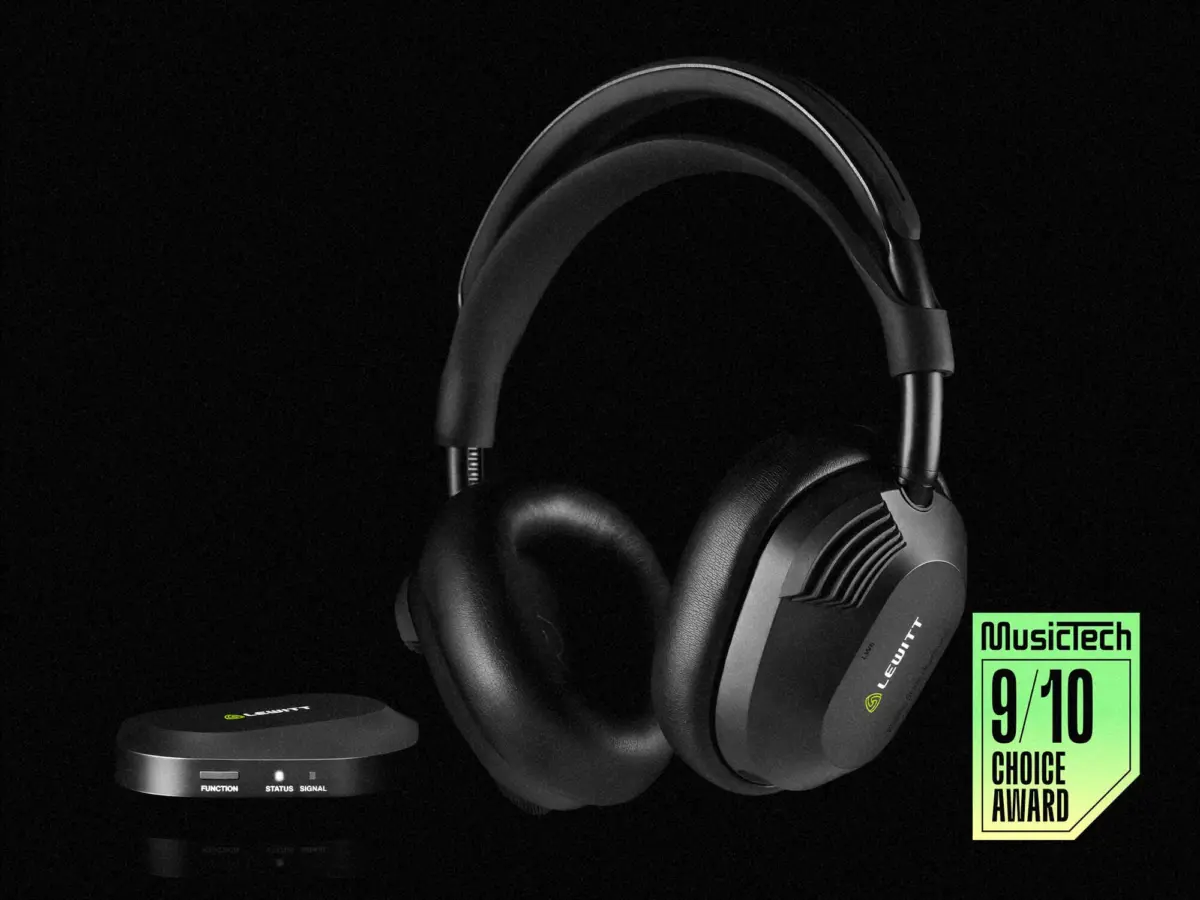
Enter the Lewitt LW6 wireless studio headphones (priced at £519 / $699). Designed to dismantle the historical compromise between untethered freedom and pristine audio integrity, Lewitt’s flagship offering introduces a proprietary uncompressed wireless architecture aimed squarely at professional studio environments. Featuring ultra-low latency, uncompressed 24-bit/48kHz PCM transmission, exceptional isolation, and a robust software ecosystem complete with room-simulation DSP, the LW6 challenges the status quo.
While carrying a premium price tag that positions them outside impulse-buy territory, these headphones promise to unify tracking, mixing, mastering, and casual listening into a single, cohesive hardware platform. This comprehensive review examines whether the LW6 successfully redefines professional monitoring or if cutting the cord still demands too many compromises.
Detailed Chronology & Technological Evolution
To understand the significance of the Lewitt LW6, one must contextualize the historical friction between wireless consumer technology and professional audio engineering. For years, manufacturers of studio-grade monitoring gear avoided wireless transmission due to three insurmountable bottlenecks: latency, bandwidth limitations, and signal compression.
The Evolution of Studio Monitoring Freedom
The Tethered Era: Historically, wired headphones have been the undisputed gold standard for mission-critical audio production. Copper wiring guarantees zero dropouts, negligible latency, and a direct, uncompressed signal path from the digital-to-analog converter (DAC) straight to the driver diaphragm.
The Bluetooth Dead-End: While consumer brands revolutionized lifestyle listening with Bluetooth 5.x and codecs like LDAC, aptX, and AAC, professional engineers rejected them outright. Latency figures hovering between 50ms and 200ms render real-time instrument tracking impossible. Furthermore, psychoacoustic lossy compression strips away critical transient information and high-end air, making precise EQ and compression decisions unreliable.
The Ultra-Wideband Breakthrough: Lewitt bypassed traditional Bluetooth limitations for its flagship monitoring mode by deploying proprietary RealSound technology operating within the Ultra-Wideband (UWB) spectrum. This architecture bypasses lossy codecs to stream uncompressed PCM audio at a staggering 1,728 kbps.
Practical Performance in the Workflow
In daily studio operations, this technological leap translates to an astonishingly responsive listening experience. Lewitt quotes end-to-end latency at under six milliseconds. In practice, tracking virtual instruments, recording live vocals, or performing dynamic synth passes yields no perceptible delay between physical action and audio feedback.
Crucially, users are not forced into a wireless-only paradigm. When plugged in directly via USB-C, the headphones unlock high-resolution audio workflows up to 24-bit/96kHz. Furthermore, standard Bluetooth 5.3 (supporting lossy SBC and AAC codecs) is built-in for casual mobile listening, ensuring the LW6 functions seamlessly outside the studio environment.
Supporting Context & Metrics
Evaluating a pair of £500+ studio headphones requires a granular examination of hardware engineering, acoustic tuning, software integration, and physical ergonomics. The LW6 distinguishes itself across several core performance metrics.
Connectivity and Transmitter Flexibility
The hardware package centers around a pocket-sized, USB-C-powered wireless transmitter. This unit is remarkably versatile:
Digital & Analog Inputs: It accepts incoming audio digitally via USB-C or through a traditional 3.5mm analog input jack.
Signal Stacking: A 3.5mm analog output port on the transmitter allows engineers to daisy-chain multiple units or feed more than one headphone receiver from a single analog source.
Line-of-Sight Limitations: Because the RealSound UWB technology relies on an unobstructed line of sight, its effective operational radius is capped at approximately five meters (around 16 feet). While this easily covers the footprint of a home studio or project mixing suite, traversing thick architectural walls or obstructing the receiver will result in signal drops.
Acoustic Tuning and Sonic Profile
Developed in collaboration with professional acoustic engineers and validated through extensive human subject testing, the LW6 delivers an unvarnished, flat, and highly detailed sonic signature.
Frequency Balance: The tuning leans slightly bright—a characteristic favoured by many professional engineers for exposing harsh sibilance, transient clutter, and micro-details in a mix.
Dynamic Transparency: Stereo imaging is exceptionally wide and stable, and the noise floor remains completely silent even under extreme dynamic swings. The transient response allows mixes to translate reliably across external studio monitors and consumer playback systems alike.
Loudness Guard: Capable of driving exceptionally high SPLs for performers who require intense monitoring levels, the LW6 includes a configurable Loudness Guard feature within the companion app. This safeguards hearing health by automatically capping peaks above a user-defined threshold, protecting against unexpected mic pops, feedback loops, or synth patch spikes.
Software Integration and Spatial Simulation
Hardware performance is heavily augmented by Lewitt’s companion software and mobile application:
Parametric EQ: Users can dial in a custom 5-band parametric equalizer to tailor the frequency response to personal tastes or specific mix-checking tasks.
Virtual Studio Mode: Leveraging advanced DSP, this mode simulates the acoustic experience of listening in front of physical studio monitors, reducing ear fatigue during extended tracking and mixing marathons.
Space Replicator Essential: Upon registering the hardware, users receive a complimentary license for Lewitt’s Space Replicator Essential plug-in. This software allows engineers to audition their mixes through acoustic models of famous mixing environments and rooms directly on their headphones.
Ergonomics, Isolation, and Build Quality
Comfort and Weight: Built with lightweight materials, the LW6 minimizes neck strain during marathon sessions. The ear pads offer exceptional comfort and high passive acoustic isolation, preventing sound bleed from leaking into sensitive condenser microphones during vocal or acoustic tracking. However, their proprietary shape means aftermarket pad replacements will be difficult to source.
Chassis Design: While structurally sound, the industrial design leans toward the utilitarian. The rubberized adjustable headband, in particular, raises minor questions regarding long-term durability over years of heavy studio wear.
Battery Architecture
The LW6 operates strictly as an active-circuit headphone; it cannot function in a completely passive, unpowered state via an analog cable if the battery is depleted. Fortunately, the internal lithium-ion cell delivers a reliable 21 hours of continuous playback. When depletion does occur, fast-charging technology provides three hours of runtime from a rapid 15-minute USB-C top-up.
Official Statements & Industry Reception
The audio engineering community has greeted the introduction of uncompressed wireless studio monitoring with a mixture of cautious optimism and immediate enthusiasm. Industry veterans note that while wireless convenience has transformed live performance monitoring via in-ear systems (IEMS), studio mixing environments have remained fiercely loyal to copper cabling due to fidelity concerns.
In technical briefings accompanying the product launch, Lewitt’s acoustic development team emphasized that the LW6 was not designed to be a lifestyle product with studio branding slapped on the earcups. Instead, the project was approached from the ground up as a primary reference tool.
"We refused to accept that professional engineers should have to choose between the physical freedom of movement and the sonic integrity required for commercial mixing," noted lead product developers during early technical demonstrations. "By engineering a proprietary Ultra-Wideband pipeline capable of delivering 1,728 kbps of uncompressed PCM audio, we have closed the performance gap between wired and wireless monitoring once and for all."
Early independent reviews from professional producers echo these sentiments, frequently highlighting the psychological phenomenon of standing up from a mixing desk out of habit, only to realize there is no cable tethering them to the interface. This frictionless transition between roles—from tracking instruments on the studio floor to refining automation curves at the DAW—has been universally praised as a paradigm shift for modern hybrid workflows.
Future Outlook
The launch of the Lewitt LW6 marks a critical inflection point in professional audio gear design. By successfully solving the latency and compression hurdles that have plagued wireless monitoring for decades, Lewitt has established a new benchmark for what producers and engineers should expect from their studio gear.
Looking ahead, several trajectories emerge for this technology:
Mainstream Industry Adoption: As hybrid production spaces continue to replace massive, fixed-console commercial studios, the demand for untethered, uncompressed studio peripherals will accelerate. Competitors in the pro-audio space will inevitably be forced to develop rival UWB or proprietary lossless wireless protocols.
Hardware Iteration: Future iterations of the LW6 concept will likely address minor community feedback—such as incorporating more premium exterior chassis materials (e.g., brushed aluminum or wood accents), integrating active noise cancellation (ANC) for mobile travel without sacrificing acoustic fidelity, and adding built-in microphones for remote conference calls or voice notes.
Ecosystem Expansion: As Lewitt bridges the gap between hardware recording components (such as their acclaimed studio microphones) and monitoring solutions, we can anticipate a tightly integrated hardware ecosystem where transmitters, interfaces, and headphones communicate seamlessly via lossless wireless channels.
Final Verdict
At £519 / $699, the Lewitt LW6 represents a significant financial investment. However, for professional engineers, producers, and multi-instrumentalists who spend countless hours locked to a headphone cable, the value proposition is profound. By uniting studio-grade uncompressed audio fidelity, ultra-low latency, robust software tooling, and untethered freedom into a single cohesive device, the LW6 proves definitively that wireless studio headphones have finally grown up.