Executive Overview
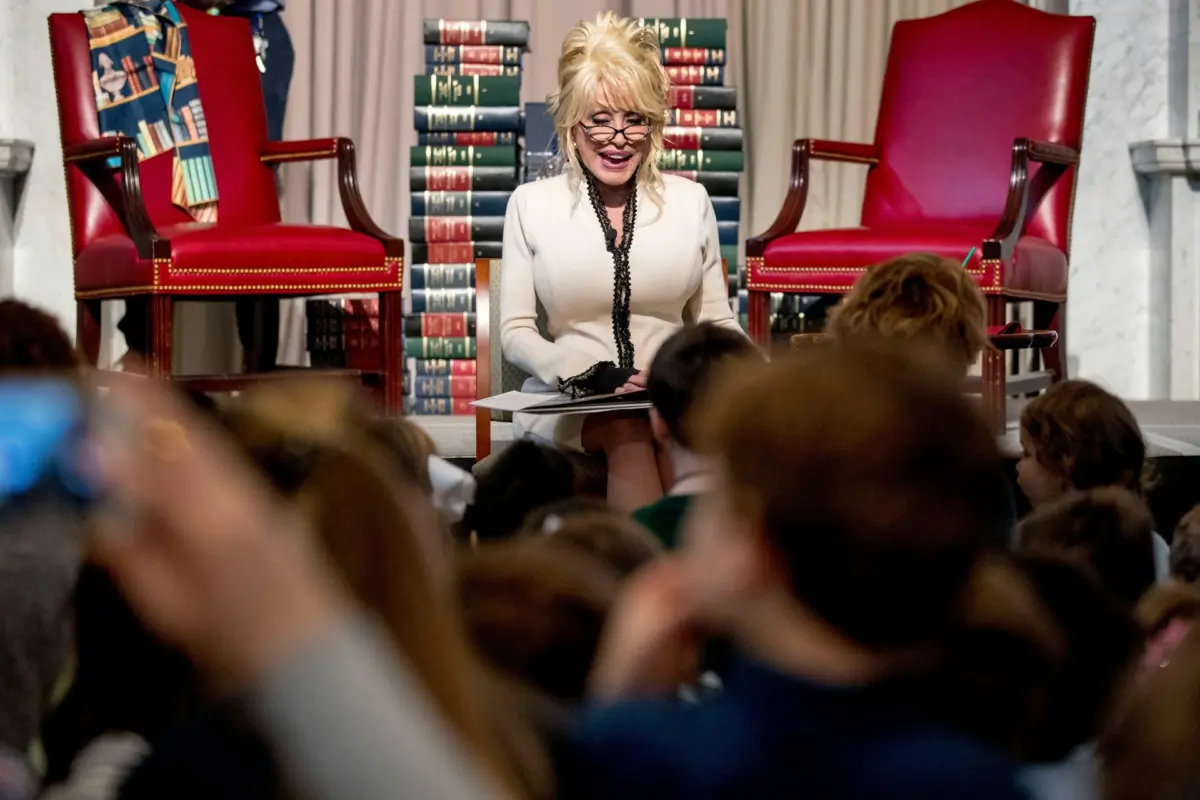
The passing of global music icon Dolly Parton has prompted an outpouring of grief and reflection across the cultural landscape. It is both sad and strangely fitting that her death occurred during the United Kingdom’s National Year of Reading. Throughout her life, Parton utilized her immense wealth, international profile, and calculated public persona to champion literacy, community welfare, and educational equity.
At the center of this philanthropic legacy is the Imagination Library, an ambitious global initiative founded in 1995 that has distributed hundreds of millions of free books to pre-school children. Yet, while access to literature is a vital first step, contemporary educational research reveals a sobering truth: philanthropy alone cannot solve the global literacy crisis.
As reading and language academics emphasize, distributing books must be paired with robust, evidence-based reading instruction and sustained support that stretches far beyond early childhood into adolescence. This investigative feature explores the intersection of Parton’s extraordinary philanthropic vision and the empirical realities of modern literacy education. It examines why cultivating a lifelong "love of reading" requires both the motivation inspired by programs like the Imagination Library and the technical reading skills developed through rigorous classroom pedagogy.
Detailed Chronology: Building an Empire of Education
Dolly Parton was acutely aware that she was frequently underestimated. Often reduced to her dazzling, hyper-feminine, almost cartoonish aesthetic, she weaponized public assumptions to her advantage. Behind the glamorous facade lay a remarkably astute businesswoman, strategist, and visionary who directed her immense cultural capital toward structural problems: poverty, community isolation, educational deprivation, and, above all, childhood literacy.
The chronology of Parton’s educational philanthropy illustrates a long-term, deeply personal commitment to uplifting vulnerable communities, rooted originally in the lived experiences of her own family.
- 1986 – Economic Catalyzation: Parton launched the Dollywood theme park in her native East Tennessee. Far beyond a commercial entertainment venture, the park was intentionally designed to stimulate the local economy, creating thousands of sustainable jobs in an impoverished Appalachian region.
- 1988 – Institutionalizing Support: Building on the economic foundation of Dollywood, she established the Dollywood Foundation. The foundation was conceived as an operational engine to fund localized educational initiatives, combat high school dropout rates, and invest directly in the youth of Sevier County.
- 1995 – The Birth of the Imagination Library: Driven by a desire to honor her father—a man whose potential and life trajectory were severely constrained by functional illiteracy—Parton launched a modest local program in Tennessee. The core concept was elegantly simple: mail one high-quality, age-appropriate book every month to any child enrolled, completely free of charge, from birth until their fifth birthday.
- Early 2000s – International Expansion: Recognizing the universal barrier of early childhood literacy poverty, the Imagination Library scaled rapidly. The program expanded past US borders, establishing official operations in Canada, the United Kingdom, Australia, and the Republic of Ireland.
- 2014 – Broadening Accessibility: Demonstrating a commitment to inclusivity, Parton personally presented the Imagination Library’s one-millionth UK book in Liverpool—which was also its historic first-ever Braille edition—showcasing a dedication to serving disabled and visually impaired children.
- 2025 – The 30th Anniversary Milestone: Marking three decades of continuous operation, the Imagination Library crossed a staggering global milestone: distributing over 300 million books to children worldwide.
Supporting Context & Metrics: Will Meets Skill
While the cultural impact of gifting 300 million books is immeasurable, educational scientists urge a balanced understanding of how children actually learn to read. Parton was motivated to act because her father could not read, a scenario mirrored by the UK’s BookTrust Bookstart program and countless global literacy interventions. These initiatives succeed brilliantly at building motivation and engagement—what educators call the "will" to read.
However, modern developmental psychology demonstrates that motivation is only one piece of a complex cognitive puzzle.
The Six Pillars of Reading Engagement
According to insights derived from projects like the Nuffield Foundation’s Love to Read initiative, fostering genuine reading engagement relies on six core, research-backed principles:
- Access to Books: Ensuring physical books are present in the home environment.
- Choice: Allowing children autonomy over the reading materials they consume.
- Dedicated Time: Structuring uninterrupted periods specifically for reading practice.
- Personal Resonance: Providing texts that connect with a child’s lived experiences and identity.
- Social Interaction: Encouraging shared reading, peer discussions, and adult-child dialogue about narratives.
- Success: Cultivating early and ongoing success so that a child confidently internalizes the identity of "being a reader."
The Cognitive Mechanics of Literacy
Unlike spoken language—an evolutionary adaptation hardwired into the human brain over millennia—reading is a culturally invented technology. It forces the brain to repurpose neural networks originally evolved for vision and speech. Because reading does not happen naturally, it must be explicitly and systematically taught.
In the United Kingdom, the national curriculum mandates systematic synthetic phonics. This pedagogical approach explicitly teaches children how to map distinct sounds (phonemes) to written letters (graphemes), integrating this technical decoding instruction within a rich, immersive language environment.
Despite world-class early years instruction, systemic gaps persist. Recent data highlights that a substantial minority of students fail to meet standard government benchmarks:
- Ages 6: Approximately 20% to 25% of children fail to meet expected standards on early literacy checks.
- Ages 11 (Key Stage 2): A similarly stubborn performance gap leaves roughly a quarter of pupils struggling with advanced comprehension as they transition out of primary school.
Furthermore, extensive empirical research conducted by academic teams—including studies by Laura Shapiro, Sanne van der Kleij, Adrian Burgess, and colleagues—proves that reading difficulties do not vanish after primary school. Secondary school reading needs remain heavily prevalent, disproportionately impacting adolescents from socioeconomically disadvantaged backgrounds.
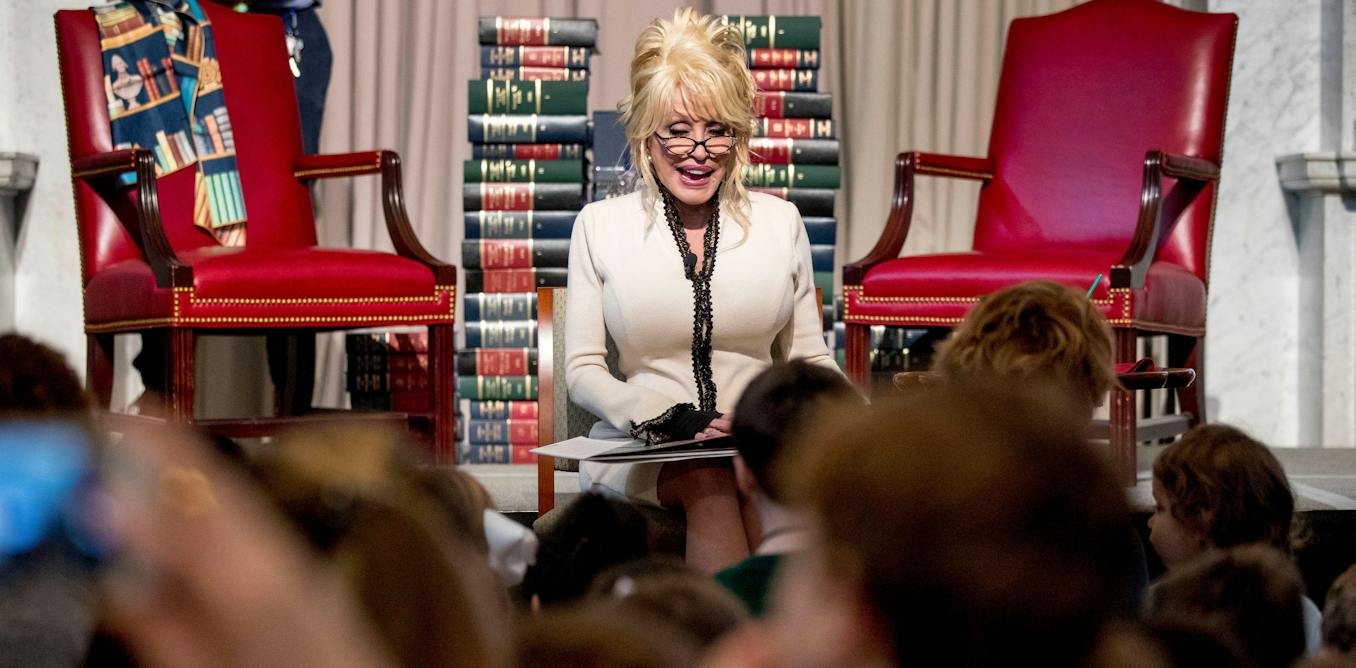
To bridge this gap, specialized Continuing Professional Development (CPD) programs have been engineered to train secondary school teachers and leaders to diagnose and remediate adolescent reading deficiencies. The central takeaway of this research is unequivocal: Skill must precede and accompany will. If a child lacks fundamental decoding and comprehension skills, they cannot enter the virtuous circle of reading more, improving rapidly, and enjoying lifelong literacy.
Official Statements & Academic Insights
The friction between early book access and long-term literacy acquisition has generated significant academic discourse. Experts in educational psychology and developmental linguistics have stepped forward to contextualize the true weight of Parton’s work against institutional educational frameworks.
Dr. Caroline Zwierzchowska-Dod, whose landmark research at Swansea University evaluated the longitudinal impact of the Imagination Library across the UK’s four home nations, published findings that validate the power of early intervention. Her research revealed that the program directly drives:
- An increase in frequent shared reading habits between parents and infants.
- Measurable improvements in early childhood literacy indicators prior to formal schooling.
- Enhanced "school readiness," giving marginalized children a fighting chance upon entering reception classes.
Complementing these findings, infant-focused literacy research published by Royal Holloway highlights that shared reading of simple "first word" books directly accelerates infant vocabulary acquisition, while simultaneously fostering parental confidence and child attention spans.
However, leading literacy academics emphasize an urgent caveat: Early intervention is never a permanent cure.
In academic policy frameworks addressing reading in secondary schools, experts warn against the dangerous assumption that a toddler who enjoys shared picture books is inoculated against future reading failure. The cognitive demands of reading evolve dramatically over time:
- Early Childhood: Relies heavily on listening comprehension and spoken language as adults read aloud to infants.
- Early Primary: Shifts sharply toward technical phonological decoding (mapping sounds to letters).
- Upper Primary and Secondary: Expands into complex vocabulary acquisition, deep text comprehension, syntactic parsing, and vast background knowledge requirements.
Because the barriers to successful reading shift at every developmental stage, reading difficulties can—and frequently do—emerge years after a child has graduated from pre-school book gifting programs. Continuous monitoring, diagnostic tracking, and sustained, targeted interventions are mandatory throughout both childhood and adolescence.
Future Outlook: Sustaining the Virtuous Circle
As the global community reflects on the remarkable life of Dolly Parton, the conversation surrounding literacy must mature. Parton demonstrated an uncanny genius for mobilizing public sympathy and commercial resources to place physical books into the hands of over 300 million children. Her vision proved that corporate philanthropy and heartfelt personal tributes could converge to spark a global movement for book access.
Yet, looking toward the future of education policy, stakeholders—including governments, school administrators, philanthropists, and researchers—must shoulder the heavy lifting required beyond the age of five.
The blueprint for the future of global literacy is clear and multifaceted:
- Preserve Early Access: Programs modeled on the Imagination Library and BookTrust must continue to receive robust public-private backing to ensure every infant, regardless of socioeconomic background, experiences the bonding and cognitive stimulation of shared reading from birth.
- Institutionalize Rigorous Pedagogy: Schools must maintain strict adherence to evidence-based foundational instruction, ensuring systematic phonics and rich language environments are universally accessible in early classrooms.
- Extend Support into Adolescence: Educational systems must discard the myth that reading intervention ends in primary school. Secondary institutions require funding, specialized diagnostic tools, and teacher training programs (CPD) to catch and remediate adolescent reading struggles before they compound into systemic disadvantage.
Dolly Parton may no longer grace the physical stage, but her literary legacy lives on in the millions of minds she helped ignite. By wedding the boundless motivation of her generous book-gifting empire with the rigorous, sustained skill development demanded by modern educational science, society can ensure that every child enters—and remains within—the virtuous circle of lifelong literacy.