Against a backdrop of unrelenting heatwaves scorching contemporary Wales and increasingly volatile meteorological phenomena across the globe, the BBC’s television adaptation of Liz Jensen’s 2009 dystopian novel, The Rapture, establishes a tense psychological thriller. At its core, the five-part series explores the intersections of climate anxiety, corporate greenwashing, spiritual manipulation, and personal trauma.
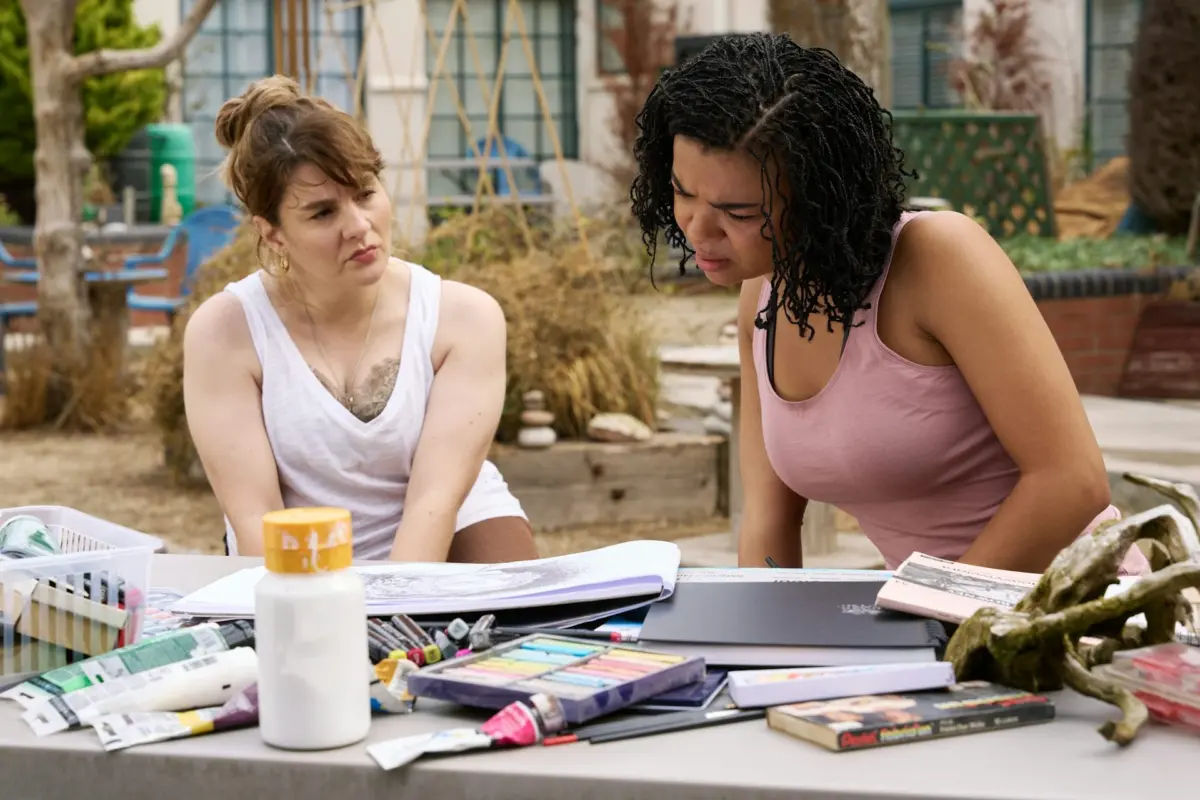
The narrative follows Dr. Gabrielle Fox (portrayed by Ruth Madeley), a psychologist returning to work at an adolescent internment unit two years after a devastating car accident that claimed her husband’s life and left her paralysed from the waist down. Fox is assigned to evaluate 16-year-old Bethany (India Amarteifio), an institutionalised teenager accused of the brutal matricide of her mother using a screwdriver. Found blood-soaked at the crime scene, Bethany vehemently denies the charges, complicating matters further by having drawn a gruesome premonition of the murder a week prior.
While the series occasionally relies on predictable tropes, it transcends standard procedural frameworks by using its central mystery to examine the psychological drivers of climate action. By weaving together the competing agendas of radical eco-activists, powerful spiritual movements, cynical energy corporations, and local politicians, The Rapture frames the climate crisis not merely as an environmental emergency, but as a crisis of truth, justice, and human responsibility. This piece offers an investigative deconstruction of the series, analyzing its narrative architecture, sociopolitical commentary, and psychological depth.
Detailed Chronology and Narrative Progression
The Inciting Incident and Initial Assessment
The narrative commences in a breathless, stifling environment where temperature stamps continuously register above 40°C—a direct, visual manifestation of an inhospitable future bearing down on the present. Dr. Gabrielle Fox steps back into professional life at a high-security adolescent internment unit. Her initial assessment of Bethany forms the spine of the early episodes.
Bethany is an enigma: found covered in her mother’s blood, holding the weapon, yet projecting an eerie detachment from the physical reality of the crime. Fox discovers that a week before the fatal stabbing, Bethany sketched a vivid and disturbing premonition depicting the exact manner of her mother’s death. Rather than engaging with standard psychiatric protocols immediately, Fox finds herself drawn into the teenager’s internal universe, searching for the missing links between Bethany’s visions and her upbringing.
The Web of Influence: The Faith Way vs. The Climate Front
As Fox digs deeper into Bethany’s background, the canvas of the story broadens to encompass a fierce ideological war. Bethany’s parents are the masterminds behind "The Faith Way," a highly successful post-Christian spiritual movement. Leveraging the slogan "Choose Hope," the movement dominates social media feeds, effectively weaponising toxic positivity to undermine and delegitimise the warnings of local environmental groups, most notably "The Climate Front."
The Climate Front engages in both street-level blockades and legal challenges to halt fossil fuel extraction. However, they find themselves systematically sidelined. Local MP Caroline Wren (Lisa Palfrey)—whose constituency bears the generational scars of deindustrialisation and the closure of coal mines—champions a controversial data centre project near a protected natural area, justifying it through the lens of local job creation and energy security.
Simultaneously, political maneuvering reaches a fever pitch as parliament tables a ballot to proscribe the Climate Front as a terrorist organisation. The activists, suspecting state infiltration designed to discredit their peaceful civil disobedience, watch their public standing disintegrate under an avalanche of targeted disinformation campaigns and manufactured outrage propagated by online influencers aligned with The Faith Way.
Professional Boundary-Crossing and Self-Discovery
Fox’s investigation into Bethany’s life is mirrored by a steady erosion of her own professional and emotional boundaries. Struggling to adapt to life as a paraplegic, Fox grapples with profound survivor’s guilt regarding the accident that killed her husband. Her impulsivity and miscalculated risks in trying to unlock Bethany’s psychological profile stem directly from this unresolved grief.
By projecting her need for atonement onto her patient, Fox leaves herself vulnerable to manipulation by external forces. She attends public political rallies, monitors online radicalisation forums, and finds herself entangled in a power play that stretches from corporate boardrooms to pastoral pulpits. When Fox uncovers evidence suggesting Bethany may genuinely possess visionary or precognitive abilities, the narrative flirts with the supernatural, challenging both the psychologist’s scientific worldview and the viewer’s skepticism.
The Unravelling of Truth and Climactic Resolution
As the series reaches its climax, the rigid boundaries separating the personal from the political dissolve entirely. Fox’s quest to uncover whether Bethany is a cold-blooded killer or a victim of systemic gaslighting leads to the ultimate revelation of the truth.
The narrative ties Bethany’s psychological unravelling—characterised by vivid hallucinations and severe climate anxiety—directly to the repressive environment engineered by her parents and the psychological weight of inheriting a burning planet. When the final truths are laid bare, Bethany is vindicated not as a crazed doomsayer, but as a young person demanding accountability. In a profound thematic parallel, just as Fox must confront and accept the permanent loss of her husband, Bethany and society at large must accept the anguish of ecocide, viewing the murdered mother as a poignant metaphor for Mother Earth.
Supporting Context & Metrics: Climate Anxiety in Fiction and Reality
The release of The Rapture arrives at a pivotal moment in contemporary media ecology, where "cli-fi" (climate fiction) has transitioned from speculative fringe to mainstream fixture. Psychological and sociological research underscores the increasing prevalence of "eco-grief" and climate anxiety, particularly among younger demographics who feel stripped of agency regarding their ecological future.
Cognitive Dissonance and Complexity: Psychologists note that human brains are evolutionarily ill-equipped to process complex, slow-burn global systemic threats like climate change. Consequently, narratives that personify these crises through interpersonal conflict—such as family trauma, institutional corruption, and criminal investigations—serve as vital cognitive bridges, translating abstract statistical warming models into relatable human values.
Greenwashing and Industrial Legacy: The tension depicted in the series between renewable energy facades and fossil fuel expansion mirrors real-world economic anxieties. The justification used by fictional MP Caroline Wren—balancing regional deprivation and job losses against environmental protection—reflects the complex socio-economic hurdles faced by post-industrial regions across the United Kingdom during the low-carbon transition.
Information Ecosystems: The series provides a sharp critique of modern information warfare. By illustrating how algorithmically driven social media movements ("Choose Hope") can effectively neuter radical political action through manufactured consensus and clickbait distraction, The Rapture mirrors modern sociological studies on digital radicalisation and attention economies.
Official Statements and Industry Insights
The adaptation of Liz Jensen’s novel has sparked considerable discourse among television critics, environmental psychologists, and the creative team behind the Mammoth Screen production for the BBC.
Speaking on the psychological dimensions of the series, lead actress Ruth Madeley reflected on the vulnerability of her character:
"Gabrielle is a woman defined by her intellect, yet completely dismantled by her physical reality and hidden grief. Her journey with Bethany isn’t just about solving a crime; it’s about a professional forced to strip away her armor, acknowledging that her own unhealed trauma makes her susceptible to the very manipulations she is trying to decode."
Showrunners and environmental consultants working alongside the production have emphasised the deliberate choice to ground the speculative elements in contemporary British landscapes—juxtaposing solar-paneled rooftops, decaying industrial architecture, and wind turbines against sweltering, unseasonal heatwaves.
Cultural commentators have similarly highlighted the political subtext of the series. Dr. Aris Thorne, a media sociologist specialising in climate narratives, noted:
"What makes The Rapture effective is its refusal to paint the climate crisis as a distant sci-fi dystopia. By anchoring the debate in local council politics, parliamentary anti-terror bills, and the weaponisation of faith groups, it demonstrates how ordinary citizens are co-opted into defending systems that are actively dismantling their futures."
Future Outlook: The Evolution of Eco-Thriller Storytelling
The resonance of The Rapture signals a permanent shift in how psychological thrillers engage with systemic global crises. For decades, mainstream television relegated environmental themes to peripheral documentaries or heavy-handed, didactic messaging. However, as extreme weather events transition from forecasts to lived reality, audiences increasingly demand stories that reflect the psychological weight of living on a transforming planet.
As television commissioners greenlight more projects that explore eco-anxiety, institutional corruption, and generational justice, productions will likely continue moving away from cartoonish dystopias toward nuanced, character-driven narratives. By treating the climate crisis not as a backdrop, but as an active participant that shapes human psychology, corruption, and grief, future psychological thrillers can successfully bridge the gap between entertainment and civic consciousness.
Ultimately, The Rapture demonstrates that when the personal becomes inextricably political, stories of individual healing cannot be separated from collective planetary survival. For viewers navigating their own eco-grief, such narratives offer a dual prescription: an unflinching acknowledgement of systemic destruction, and a renewed, defiant demand for truth, accountability, and systemic justice.