Executive Overview
In June 1944, Group Captain James Martin Stagg delivered what many historians and meteorologists regard as the most critical weather forecast in human history. The fate of more than 150,000 Allied troops preparing to storm the heavily fortified beaches of Normandy on D-Day—and, by extension, the ultimate trajectory of World War II in Europe—rested squarely on Stagg and his collaborative forecasting teams. A miscalculation of the volatile Atlantic and North Sea weather systems could have turned an already perilous amphibious assault into a catastrophic massacre, potentially prolonging a global conflict already entering its fifth brutal year. Inside the tense, tobacco-smoke-filled briefing room at Southwick House near Portsmouth, General Dwight D. Eisenhower waited for the verdict that would determine the course of history.
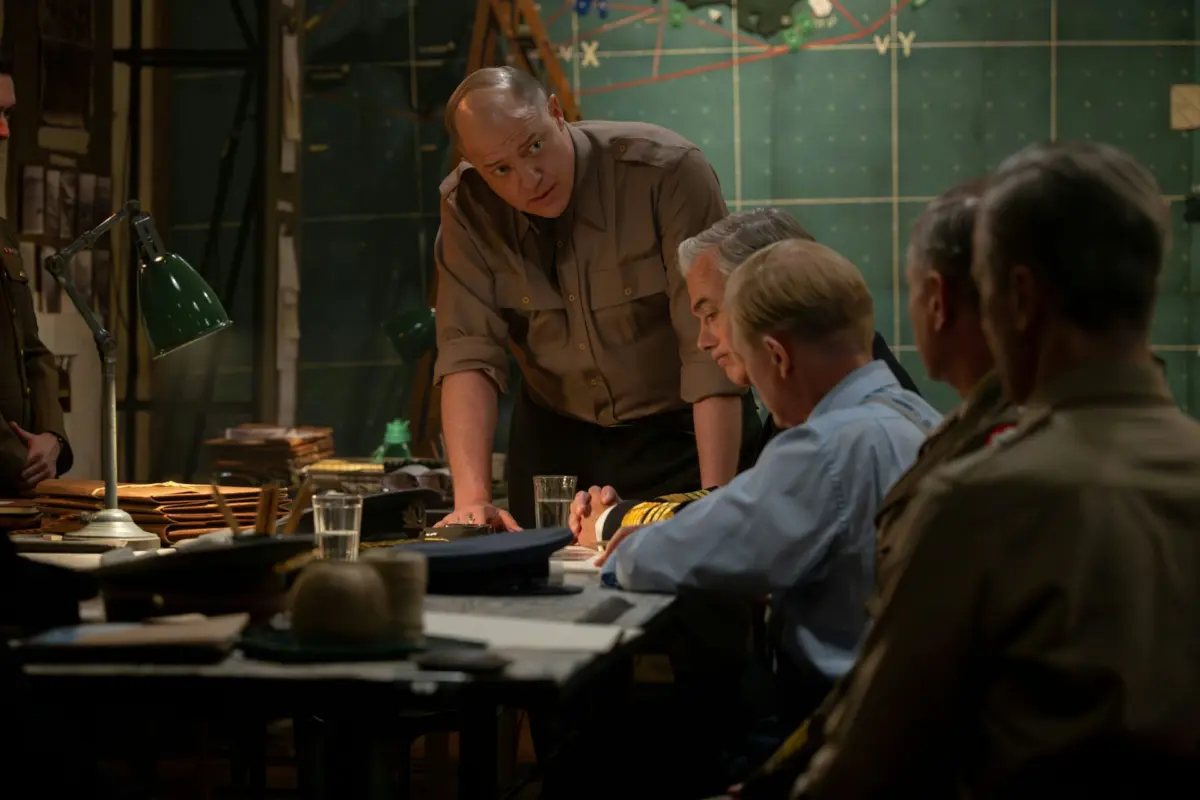
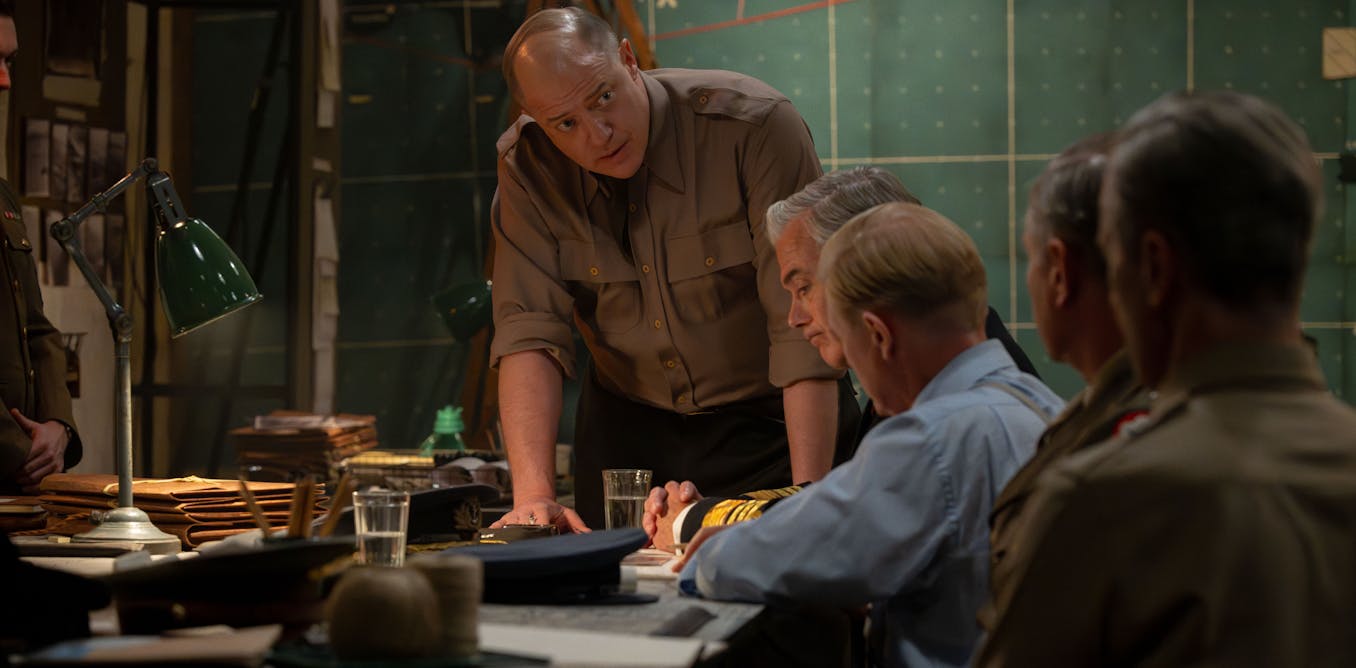
More than 80 years later, the upcoming wartime thriller film Pressure is bringing this high-stakes meteorological drama back into the global spotlight. For the modern scientific community—particularly those who spend their lives studying atmospheric dynamics, meteorology, and climatology—seeing a weather forecaster cast as the pivotal hero of a major Hollywood-style blockbuster is a thrilling cultural moment. More importantly, it provides a rare, highly engaging springboard for a fascinating scientific question: Would today’s hyper-advanced meteorological systems, driven by artificial intelligence and high-resolution supercomputers, have gotten the D-Day forecast right?
To answer this, a groundbreaking new scientific study has combined newly digitized historical weather observations, modern weather science, and cutting-edge artificial intelligence forecasting systems to systematically recreate the exact meteorological challenge faced by Stagg and his colleagues in real time.
The results of this retrospective investigation are surprisingly nuanced. Modern AI forecasting models likely would have supported the historic decision to delay the invasion from June 5 to June 6, 1944. However, those same state-of-the-art models would have simultaneously underestimated the severity of the punishing surface conditions that ultimately battered the English Channel on June 6. Ultimately, the research demonstrates that even with our modern era’s space-age satellites, supercomputers, and neural networks, executing the Normandy landings would still have been a terrifyingly difficult, razor-thin call.
Detailed Chronology: The Anatomy of a Meteorological Dilemma
To fully comprehend the magnitude of Stagg’s responsibility, one must trace the agonizing sequence of events that unfolded in the first week of June 1944. The invasion armada—consisting of thousands of ships, landing craft, and aircraft—was primed and waiting in southern English ports. Men were packed tightly into transports, seasick and hyper-aware of the dangers ahead.
[May 1944: Observation Gathering]
       │
       ▼
[June 3-4: Conflicting Forecast Teams]
  ├─ Pettersen/Wolfe Team (Physics-based dynamics)
  └─ Krick Team (Analogous historical patterns)
       │
       ▼
[June 4, Evening: The Crucial Briefing] Stagg advises Eisenhower to delay from June 5.
       │
       ▼
[June 5: The Postponement] Storms rage over the Channel; fleet holds position.
       │
       ▼
[June 6: The Window of Opportunity] Stagg identifies a brief, precarious weather break. Eisenhower gives the order: "Let's go."
The Competing Schools of Thought
Stagg did not work in a vacuum; rather, he was forced to synthesize radically contradictory predictions from two distinct meteorological teams operating under intense wartime pressure:
- The Physical-Dynamic School: Led jointly by Sverre Pettersen and Geoffrey Wolfe, this team focused on the fundamental physical development of atmospheric systems, air masses, and pressure gradients. They looked at the fluid mechanics of the atmosphere to understand why weather was changing.
- The Analogue School: Led by American meteorologist Irving Krick, this group took a historical approach. They searched past weather archives for similar historical configurations, operating on the assumption that current weather patterns would evolve identically to past meteorological events.
These two schools often presented General Eisenhower with fundamentally conflicting guidance. Stagg’s job was to stand between these warring factions, filter out the analytical noise, and deliver a single, authoritative directive to the Supreme Allied Commander.
By the evening of June 4, Stagg recognized that a fast-moving low-pressure system in the North Sea was generating severe gales and heavy cloud cover that would blind Allied air support and swamp landing craft. Exercising extraordinary courage, Stagg advised Eisenhower to postpone the invasion from its original date of June 5. Eisenhower accepted the risk of delay—an immensely stressful decision that risked operational leaks and troop morale.
However, looking ahead to June 6, Stagg identified a narrow, highly precarious "window" of relative calm between two major storm systems. Trusting his synthesis of the data, Eisenhower uttered his famous command: "Let’s go."
Supporting Context & Metrics: Reconstructing the Skies of 1944
All weather predictions—whether made with pencil and paper in 1944 or by deep-learning neural networks today—begin from a fundamental baseline: knowing the precise current state of the atmosphere. Interestingly, modern researchers attempting to reconstruct past weather often face a surprising irony: scientists today sometimes have fewer immediate historical observation points available in digital formats than Stagg did on his desk in 1944.
During World War II, a vast network of weather stations, ship reports, radiosonde balloon ascents, and aircraft reconnaissance missions fed manual weather charts. Because many of these historic records remain trapped on aging paper archives, they have historically been difficult to analyze globally. However, massive international archiving efforts are currently transforming these physical logs into digital databases.
Data Assimilation and Modern Reconstructions
By feeding these digitized historical observations into state-of-the-art numerical weather prediction models using a mathematical technique known as data assimilation, scientists can paint a remarkably rich, three-dimensional picture of the atmosphere as it existed on the eve of D-Day.
Had modern weather satellites and global numerical models been at Stagg’s disposal, his team would have immediately scrutinized two massive compounding factors:
- The North Sea Low-Pressure System: A deep vortex generating violent surface winds across the invasion channels.
- Extensive Cloud Fronts: Heavy maritime overcast that threatened to neutralize the tactical advantage of Allied strategic and tactical air bombardments.
Recent experimental reconstructions produced by the European Centre for Medium-Range Weather Forecasts (ECMWF) clearly visualize these thermal and pressure anomalies. Maps of surface pressure and cloud cover from early June 1944 reveal the twin storms over the North Atlantic and North Sea that haunted Allied forecasters, illustrating precisely why the margins for error were razor-thin.
Official Statements and Scientific Insights
To test how modern forecasting technology would have coped with the historic 1944 crisis, researchers recently ran an extraordinary experiment. They pitted the Artificial Intelligence Forecasting System (AIFS)—one of the world’s leading AI-driven weather models developed by the ECMWF—against the exact data constraints Stagg faced.
The goal was to simulate the operational briefings delivered at Southwick House. The results offer a humbling perspective on the limits of prediction, even in the twenty-first century.
"While AIFS successfully captured the development of the dangerous North Sea storm shown in historical reconstructions, we were deeply surprised by the level of residual uncertainty still present in the localized forecasts for the Normandy beaches," noted lead researchers in the study published in the journal Weather.
The AI models indicated that the storm impacting the early phase of the landings would have tracked slightly faster through the North Sea in simulation than it did in historical reality. Yet, even if Stagg had possessed access to these ultra-fast AI predictions on June 5, the core dilemma would have remained agonizingly complex:
- The 30% Risk Factor: AI-driven ensemble outputs on June 5 still showed a distinct 30% probability of persistent strong winds and significant cloud cover over the French coastline for June 6.
- The Human Burden: Would a modern AI output showing a 30% hazard threshold have given Eisenhower the confidence to pull the trigger? Statistics alone cannot substitute for executive accountability.
Future Outlook: The Intersection of AI, Physics, and Human Judgment
The evolution of meteorology over the past century reflects a continuous philosophical debate over how best to model a chaotic atmosphere.
The Century of Progress
- 1960s—The Discovery of Chaos: American meteorologist Edward Lorenz discovered that the Earth’s atmosphere is fundamentally a chaotic system, mathematically explaining why long-term weather forecasting is intrinsically limited. This led to ensemble forecasting—running models multiple times with slightly perturbed initial conditions to calculate the probability of various futures.
- 1980s to Present—Supercomputing and Physical Models: Mobile weather apps today rely on massive numerical weather prediction (NWP) models running on petascale supercomputers. These models stem directly from the physical-dynamic concepts pioneered by Sverre Pettersen’s wartime team. Thanks to these innovations, humanity’s ability to predict large-scale weather patterns has improved consistently by roughly one full day of forecast skill per decade.
- The Modern AI Revolution: Over the last several years, traditional physical models have been dramatically challenged by machine learning systems—ironically echoing the analogue methods of Irving Krick. Modern AI weather models are trained on over 40 years of historical reanalysis data. Neural networks rapidly recognize spatial and temporal patterns, projecting future atmospheric states in mere seconds rather than the hours required by traditional supercomputer physics solvers.
┌────────────────────────────────────────────────────────┐
│              THE MODERN FORECASTING MATRIX             │
├──────────────────────────┬─────────────────────────────┤
│ Physical-Dynamic Models  │ AI Neural Networks          │
│ (Pettersen's Legacy)     │ (Krick's Analogue Evolution)│
├──────────────────────────┼─────────────────────────────┤
│ Based on fluid mechanics │ Based on historical pattern │
│ & thermodynamic laws.    │ recognition via ML.         │
│                          │                             │
│ Run on massive HPC       │ Compute results in seconds  │
│ supercomputers.          │ via deep learning.          │
└──────────────────────────┴─────────────────────────────┘
The Indispensable Role of the Human Expert
As meteorology steps into a future dominated by hybrid systems—where physical models and AI neural networks work in tandem—one lesson from the D-Day crisis remains immutable: the irreplaceable value of human judgment.
The technological toolset available to a modern meteorologist would have seemed utterly miraculous, if not magical, to James Stagg. Yet, decision-makers like Dwight D. Eisenhower will always require more than raw data or algorithmic probabilities. They need seasoned human experts—forecasters equipped with intuition, contextual wisdom, and the courage to interpret the frightening gray areas of extreme weather when the fate of nations hangs in the balance.