Executive Overview
As British television fast approaches the centenary of Scottish engineer John Logie Baird’s first live public broadcast via the BBC, a subtle yet profound paradigm shift is taking place across the nation’s airwaves. For the first two decades of television’s nascent existence, pre-recording technology was non-existent. Consequently, entertainment was forged in the white-hot crucible of live performance—dominated by theatrical revues, variety hours, rapid-fire sketches, and musical numbers.
With the mid-century dawn of the situational comedy (sitcom) and magnetic tape, live television was largely relegated to rolling news channels and morning chat shows. Yet, the contemporary landscape is experiencing an unexpected nostalgic resurgence. British comedy is aggressively reclaiming its live, unvarnished roots. Following the surprise commercial and critical success of SNL UK, comedian Joe Lycett has stepped into the breach, embracing unscripted spontaneity, genuine chaos, and audience interaction with his new Friday-night variety hour, Live from the Lycett Arms, broadcast on Channel 4.
Staged within a meticulously constructed television set masquerading as a traditional British boozer, complete with professional studio lighting and a distinctly photogenic supporting cast of locals, Live from the Lycett Arms attempts to marry old-school music hall rowdiness with modern, irreverent alternative comedy. However, beneath the veneer of spilled beer, drag acts, and sword-swallowing lies a more complex critical question: Can a primetime entertainment format successfully balance structured television production with the thrillingly dangerous unpredictability of live broadcasting? Or does this chaotic venture ultimately squander the biting socio-political talents of one of Britain’s most incisive contemporary satirists in favor of safe, low-stakes innuendo?
Detailed Chronology: Inside the Doors of The Lycett Arms
To understand the sheer sensory overload of Live from the Lycett Arms, one must trace the frantic choreography of its premiere episode. The curtain lifted—figuratively speaking—with Joe Lycett twirling onto the soundstage amidst a gloriously camp, high-energy musical number that immediately established the tone: loud, proud, and unapologetically shambolic.
Lycett quickly welcomed his audience to what he described as "your favourite local pub," before introducing his inaugural guest slate. This included comedian Guz Khan and, in a delightfully idiosyncratic touch, Lycett’s actual biological aunties, Margaret and Pauline, stationed behind the bar to pull pints and manage the watering hole for the evening.
What followed was a dizzying hour of variety programming that stretched the boundaries of conventional broadcasting. The studio floor transformed into a venue reminiscent of Victorian music halls, packed with recurring gags alongside comedians Mark Silcox and Jake Bhardwaj. Celebrity cameos came thick and fast, featuring figures as disparate as veteran DJ Spoony, culinary doyenne Prue Leith, former politician-interrogator Ross Kemp, and reality television breakout stars Big John and Stephen from BBC’s The Traitors.
The surrealism escalated rapidly. Viewers were treated to a dead mackerel wearing a tiny hat, a mock-military toast dedicated to conservative figurehead Priti Patel, and a bizarre interview conducted entirely through a studio-built gloryhole—a comedic stunt that would have likely left legendary broadcasting stalwart Sir Michael Parkinson spinning in his grave.
As the hour progressed, the structural seams began to fray, exposing the deliberate slapdash nature of the production. Interviews with primary guests Guz Khan and BBC Radio 2 host Sara Cox felt perfunctory, treated by Lycett less as conversational milestones and more as bureaucratic hurdles to clear before the next skit. In a wonderfully candid unscripted moment, Lycett appeared genuinely oblivious to the fact that his guest, Khan, had recently starred in Guy Ritchie’s blockbuster Netflix hit, The Gentlemen.
Yet, for every awkward conversational beat, there was a breathless pivot to another piece of theatrical madness. The frantic rundown included a loose interpretation of a pub quiz, a competitive toast-battle, live sword-swallowing, and a high-octane Dolly Parton drag tribute act. The broadcast even established a live video link to a real-world establishment, symbolically "twinning" the fictional studio pub with a genuine British local.
Supporting Context & Metrics: The Cultural Economy of the British Pub and Live TV
To evaluate the cultural resonance of Live from the Lycett Arms, one must examine the broader socio-economic landscape of the British pub—a sacred, endangered institution—alongside the changing economics of modern television production.
The Vulnerable "Third Space"
In sociological terms, the traditional British pub represents one of the last remaining "third spaces"—neutral community hubs distinct from home (the first space) and work (the second space). However, this sector has faced catastrophic economic headwinds over the past decade. Squeezed by punishing business rates, spiralling energy costs, post-pandemic recovery struggles, and changing consumer habits, thousands of community boozers have shuttered permanently across England, Scotland, and Wales.
Joe Lycett is no stranger to the trials of the hospitality industry. His previous critically acclaimed consumer-rights satire series, Joe Lycett’s Got Your Back, demonstrated his capacity to leverage comedic performance art to champion under-fire institutions and challenge corporate malfeasance (previously taking aim at corporate giants like Hugo Boss and the Qatari state). Furthermore, Lycett’s own public social media commentary regarding his bureaucratic struggles with personal licensing exams—conceding on air that he ultimately failed and required a third-party licensee to legally back the show’s premise—teed up high expectations for political commentary.
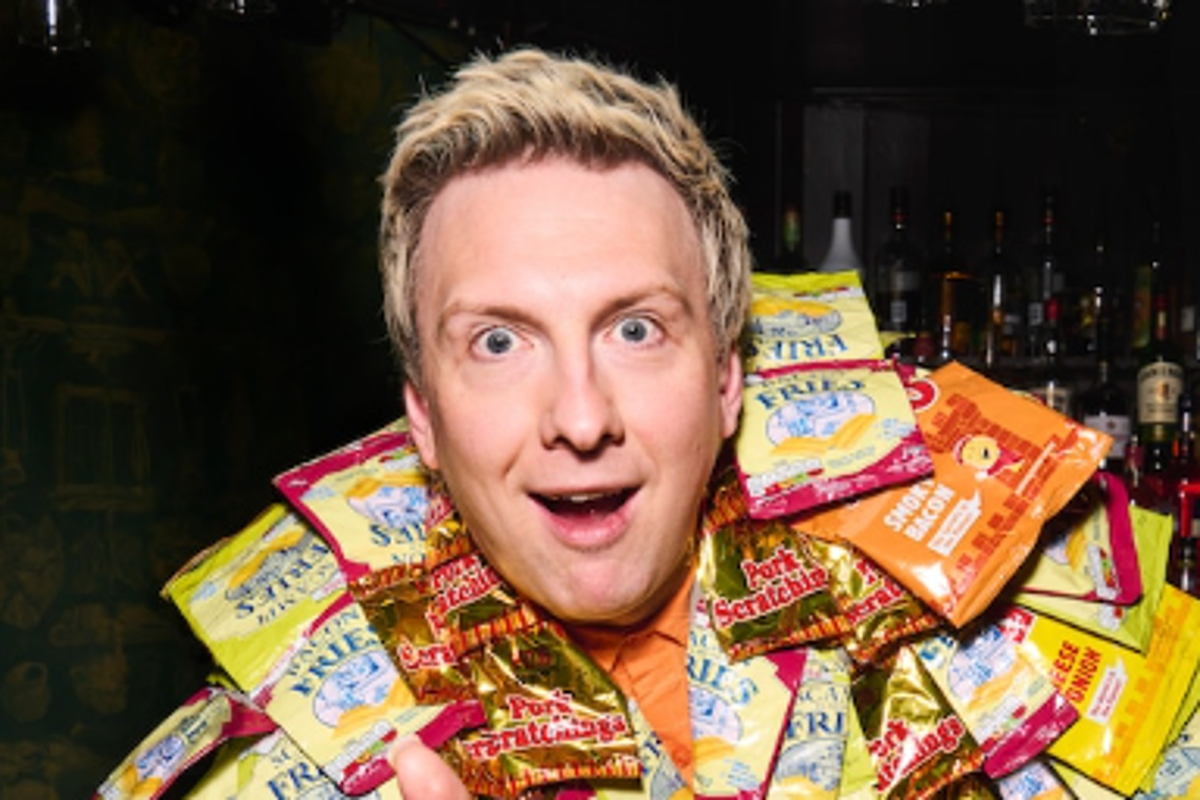
Observers and cultural critics alike anticipated that Live from the Lycett Arms might interrogate the systemic pressures facing the British hospitality sector. Instead, the show largely eschewed incisive social critique in favor of low-brow games, prop comedy, and smutty innuendo, leaving critics to debate whether a golden opportunity for impactful satire was traded for easy primetime laughs.
The Metrics of Television Chaos
| Show Metric / Element | Live from the Lycett Arms | Traditional Studio Talk Show |
|---|---|---|
| Format | Live Variety / Improvised Hybrid | Pre-recorded / Highly Scripted |
| Primary Setting | Fictionalized Studio Pub ("The Lycett Arms") | Minimalist Interview Stage |
| Pacing | Frantic, deliberately disorganized | Measured, segment-driven |
| Target Audience | Mainstream Channel 4 Demographics | Niche / Targeted cable viewers |
| Key Risk Factor | High potential for live broadcast failure | Low risk via editing suite intervention |
The economics of live television production also heavily dictate the show’s texture. Producing live television in the 2020s is an expensive, high-stakes gamble. Broadcasters typically rely on pre-recorded safety nets to polish content, eliminate dead air, and ensure regulatory compliance. By voluntarily stepping back into the live arena, Channel 4 and Lycett have introduced a volatile variable into their schedule. While this generates an authentic frisson of danger—viewers tune in hoping to witness a trainwreck—it also strains the structural integrity of a tightly constrained 60-minute time slot.
Official Statements and Industry Reactions
The reception to Live from the Lycett Arms has ignited a lively debate within the British media establishment, drawing commentary from television executives, cultural analysts, and the comedian himself.
Channel 4 executives have quietly championed the project as a bold return to adventurous, risk-taking light entertainment. In a prior press statement regarding the network’s autumn slate, commissioning editors emphasized the vital importance of injecting spontaneity back into linear broadcasting to capture younger demographics who increasingly consume fragmented content via digital platforms.
However, critical consensus from television reviewers has been notably mixed. Writing for major arts publications, critics have pointed out the inherent contradictions of the format. One prominent reviewer noted:
"Lycett is talented, and live telly always introduces a frisson of chaos. But ‘Live from the Lycett Arms’ feels not only messy in its delivery, but messy in its conception. The premise is never explained nor justified: why is a light comedy variety show being set in a fictional pub at all?"
Industry insiders have also questioned the geographical logistics of the production. Filmed in a London television studio rather than Lycett’s native Birmingham, the show’s choice of location raised eyebrows—particularly when its opening-night marquee guest, Guz Khan, hails from nearby Coventry. Critics argue that transplanting a working-class Midlands pub aesthetic into a polished London soundstage strips the concept of some vital, gritty authenticity.
Lycett, for his part, has remained unapologetic about the loose construction of the programme. Acknowledging the unpredictable nature of the broadcast to his studio audience, Lycett stated with characteristic candor: "I do like to run quite a loose ship." This transparent self-awareness acts as both a shield against criticism and a mission statement for the series’ chaotic ethos.
Future Outlook: Whither British Variety?
As Live from the Lycett Arms continues its freshman run on Channel 4, its trajectory will likely serve as a crucial bellwether for the future of live light entertainment on British television.
The central challenge facing the production team moving forward is evolution. Can a show built entirely on the novelty of live chaos sustain audience interest over multiple episodes without descending into repetitive schtick? To truly cement its legacy alongside historic British variety staples, the show must decide whether it wants to be a harmless, throwaway end-of-the-week knees-up, or a sharper, more subversive vehicle that utilizes its live platform to engage with the real cultural anxieties plaguing modern Britain.
If Lycett and his producers choose to lean further into the socio-political realities of the British pub—perhaps handing actual community landlords a platform to air grievances about business rates and energy tariffs—Live from the Lycett Arms could transcend its current status as a messy experiment. Conversely, playing it safe within the confines of primetime broadcasting restrictions risks squandering the unique comedic teeth of one of the UK’s sharpest performers.
Ultimately, the experiment proves that while television can successfully look backward to recapture the electric, unscripted magic of John Logie Baird’s earliest transmissions, reviving the spirit of variety requires more than just studio beer pumps and nostalgic set design. It demands a clear narrative purpose—reminding the industry that the true point of live television is not merely to court chaos for its own sake, but to forge a genuine, unfiltered connection with the audience watching at home.