In a bold and uncompromising leap into the rarely charted waters of 17th-century French baroque opera, the intrepid New Sussex Opera (NSO) has added another milestone to its storied history of fearless programming. On October 20, 2026, at London’s prestigious Cadogan Hall, the company staged a compelling performance of Marc-Antoine Charpentier’s David et Jonathas (David and Jonathan).
While the operatic canon is heavily saturated with the warhorses of Verdi, Puccini, and Mozart, NSO has carved out a vital niche by resurrecting neglected gems. Previous seasons have seen them breathe modern theatrical life into Weber’s Oberon, Chabrier’s L’Etoile, Stanford’s final operatic works, and John Christopher Lampe’s The Dragon of Wantley. However, tackling Charpentier’s biblically rooted, five-act tragédie en musique represents their most audacious gambit to date.
The production featured a stellar international cast supported by the period-instrument Bellot Ensemble under the baton of Toby Purser, with stage direction by Paul Higgins. Although the staging occasionally suffered from a cool dramatic temperature and occasional intelligibility hurdles due to language adaptations, the overarching achievement is undeniable. Through fine solo performances, an enthusiastic community-based chorus, and rich instrumental textures, NSO successfully surmounted the steep stylistic barriers of French baroque performance practice, delivering a night of intelligent, high-caliber musical theater.

Detailed Chronology and Production Analysis
A Historical Curio on the Modern Stage
Marc-Antoine Charpentier’s journey into the operatic annals was famously throttled during his lifetime by the suffocating monopoly held by Jean-Baptiste Lully over the Académie Royale de Musique. Though Charpentier managed to mount a full-scale masterwork like Médée in 1693, the vast majority of his dramatic output was relegated to domestic or institutional margins—ranging from private household commissions for the Duchesse de Guise to works tied to Jesuit educational institutions.
David et Jonathas, first performed in 1688, possesses a uniquely fascinating and complex history. It is a true five-act tragédie en musique, yet its genesis is tied directly to Jesuit pedagogy. The French libretto was penned by a Jesuit priest and was originally performed alternatingly with a spoken Latin drama, Saul. This structural framework presupposed an audience with deep pre-knowledge of the biblical narrative, creating a storytelling apparatus that feels decidedly elusive to modern theatergoers.
The London Performance at Cadogan Hall
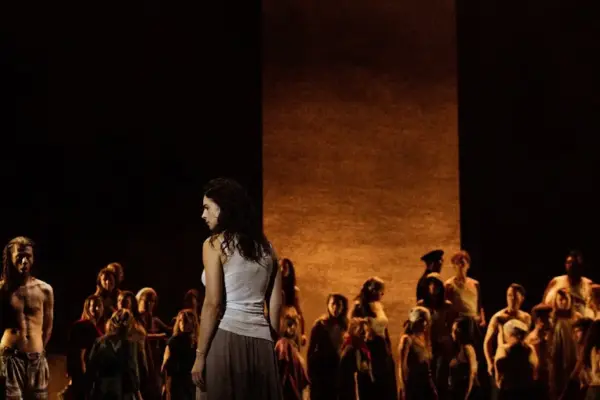
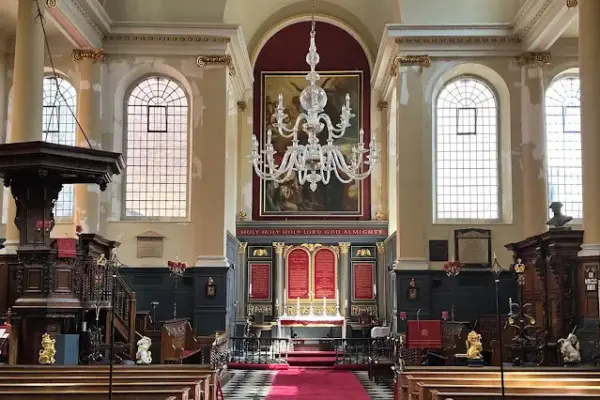
Following regional preview performances in Hove and Cuckfield—with subsequent dates slated for Eastbourne and Winchester—the Cadogan Hall iteration on October 20, 2026, showcased a production design by Mollie Cheek and lighting by Daisy Hardwick that favored abstract minimalism.

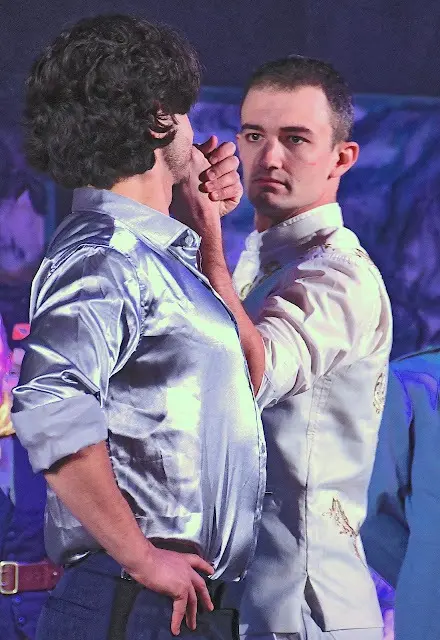
The directorial vision by Paul Higgins placed the characters in a visual pastiche. Costuming largely drew upon mid-20th-century aesthetics, yet embraced playful anachronisms: Tom Lilburn’s Jonathan sported subtle gilt embroidery beneath a regulation military uniform, while Massimo Modoni’s Saul transitioned fluidly from timeless, loose-fitting garments into an elaborate, Louis XIV-era coat and wig for moments of formal statecraft. Namiko Gahier-Ogawa served as both dancer and choreographer, infusing the production’s divertissements with stylized, highly effective physical movement.
Sung in a new English translation by Christopher Cowell—a practical necessity given the technical limitations of surtitle infrastructure across some of NSO’s touring venues—the production faced distinct linguistic hurdles. The cast featured an eclectic international mix of English, Turkish, Italian, Venezuelan, Hong Kong-born, and Ukrainian artists. Unfortunately, this linguistic diversity sometimes hampered overall textual clarity. Because much of the opera relies on extended, static dialogues and formal recitative rather than breathless physical action, compromised diction occasionally left the audience struggling to track the minutiae of the plot without constantly consulting programme summaries.
Supporting Context & Metrics
Cast & Creative Personnel
- Conductor: Toby Purser
- Director: Paul Higgins
- Set & Costume Designer: Mollie Cheek
- Lighting Designer: Daisy Hardwick
- Dancer & Choreographer: Namiko Gahier-Ogawa
- Orchestra: The Bellot Ensemble (12-piece period instrument ensemble comprising strings, oboes/recorders, bassoon, harpsichord, and theorbo, supplemented by period percussion)
- Chorus Director: Ruth Kerr
Principal Cast Roster
- David: Harun Ellis Tekin
- Jonathan: Tom Lilburn
- Saul: Massimo Modoni
- Samuel / Achis: Daniel Chomiak
- The Pythoness: Nadiia Chaichenko
- Joabel: Ambrose Chiu
Vocal and Musical Highlights
Despite the dramatic chill noted in certain conversational exchanges, the vocal performances frequently scaled heights of emotional and technical excellence.

- Harun Ellis Tekin (David): A product of the Guildhall School and the Curtis Institute, tenor Harun Ellis Tekin brought a heroic, muscular edge to the demanding haut-contre role (the high French tenor tessitura sitting between standard tenor and countertenor). Singing with remarkable projection and zero discernible strain, Tekin portrayed David not as a passive shepherd, but as a battle-hardened fighter whose eventual ascension to the kingdom felt hard-won and psychologically earned.
- Tom Lilburn (Jonathan): Recently crowned first-prize winner at the 2026 Northern Aldborough Festival New Voices Singing Competition and a member of The Queen’s Six, countertenor Tom Lilburn was a revelation. Clad entirely in white, Lilburn projected an ethereal innocence that matched the unearthly beauty of his vocal timbre. His extended death scene in the final acts was handled with delicate emotional gravity, steering completely clear of melodrama.
- Massimo Modoni (Saul): Modoni infused the tragic monarch with visceral, restless fury. His portrayal bypassed the clinical mental breakdown famously mapped by Handel in his oratorio Saul, focusing instead on an all-consuming, obsessive jealousy directed at David. The explicit sartorial nod to Louis XIV anchored Saul’s isolation within a framework of absolute, crumbling monarchical power.
- Ambrose Chiu (Joabel): As the primary antagonist, Chiu delivered the most intelligible text of the evening. His villainous Joabel was sharply etched, utilizing direct addresses to the audience to maximize theatrical impact.
- Nadiia Chaichenko (The Pythoness): Costumed as an eerie, infernal nurse, mezzo-soprano Chaichenko navigated the traditionally haut-contre role of the Pythoness with rich, gravelly lower registers that provided a genuinely unsettling, supernatural counterpoint to the high-flying string writing.
Official Statements and Industry Impact
Championing Community Arts and Emerging Talent
At the beating heart of New Sussex Opera’s operational model is a deeply rooted commitment to community participation, relying on a dedicated chorus and an unpaid, passionate administrative team. Recognizing the importance of bridging the gap between grassroots performance and professional development, NSO launched a vital initiative for this production: The Chalk Cliff Trust NSO Emerging Artists’ Scheme.
This scheme successfully integrated six early-career singers into the rigorous production framework, offering them invaluable professional development alongside seasoned international soloists and a period-instrument ensemble.
Industry observers have continually praised NSO for taking risks that major national houses—bound by conservative box-office pressures—frequently avoid. Staging a 17th-century French baroque work outside of specialized early-music festivals is a logistical and artistic tightrope walk. Without an ingrained national familiarity with the French baroque style (unlike the relative ubiquity of Handel or Purcell in the UK), companies must build audience appreciation from the ground up.

Future Outlook
New Sussex Opera’s mounting of David et Jonathas marks a defining moment in contemporary regional opera production. While the evening occasionally demanded patience from listeners unaccustomed to the static declamatory style of Lully-school derivatives, the dividends paid by the musical forces were immense.
The production serves as a blueprint for how smaller, daring companies can successfully mount complex early-music masterworks without sacrificing artistic integrity. By pairing period-instrument authenticity via the Bellot Ensemble with forward-thinking artist development programs like the Chalk Cliff Trust Scheme, NSO has ensured that its legacy extends far beyond a single performance run.
As the production completes its regional tour across Hove, Cuckfield, Eastbourne, and Winchester, it leaves behind an indelible impression. It proves that with rigorous musical preparation, inventive design, and unyielding courage, the rich, shadowed corridors of 17th-century French opera can be successfully illuminated for modern audiences. For NSO, this brave step into the baroque past solidifies its reputation as one of the most vital and adventurous independent opera companies operating today.