By The Arts & Culture Desk
Published: Special Preview Edition
Executive Overview
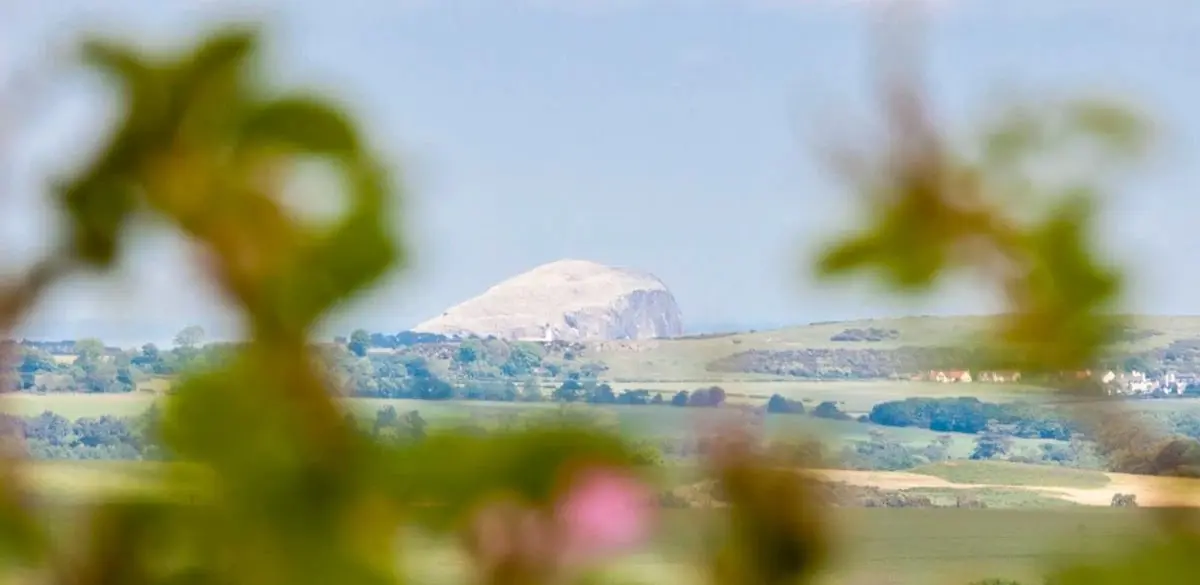
Set against the rolling hills, sweeping coastline, and historic architecture of East Lothian, the Lammermuir Festival has carved out a distinct and revered niche on the international classical music calendar. Eschewing the frantic, high-volume hustle of major metropolitan summer festivals, Lammermuir offers something increasingly rare in the contemporary arts landscape: an immersive, 13-day exploration of ambitious music-making where the venue is as much a protagonist as the performer.
Returning for its eagerly anticipated 2026 edition—running from September 8 to September 20—the festival continues to refine its defining ethos. It is an event deliberately shaped by geography, architectural heritage, and long-standing artistic relationships. Rather than relying on transient star power or disconnected programming, Lammermuir curates an interconnected web of residencies, deeply collaborative projects, and site-specific performances. Here, historic churches, country houses, and community halls transform into acoustical and visual sanctuaries, making the music feel fundamentally inseparable from its surrounding landscape.
The 2026 programme is a masterclass in thoughtful curation. It balances grand operatic scale with devastating intimacy, bridging centuries of repertoire from Hildegard of Bingen and J.S. Bach to Benjamin Britten, Leos Janáček, and contemporary voices like David Fennessy. Anchored by major residencies from the Royal Northern Sinfonia, Concerto Copenhagen, and star pianist Jeremy Denk, alongside cornerstone collaborations with Scottish Opera and the Scottish Chamber Orchestra, this year’s festival promises to be one of its most musically rigorous and emotionally charged chapters to date.
Detailed Programme Chronology & Highlights
The 13-day journey across East Lothian unfolds through a tightly woven tapestry of orchestral masterworks, operatic breakthroughs, vocal intensity, and instrumental virtuosity.
Orchestral Anchors and Operatic Milestones
A major architectural pillar of the 2026 festival is the return of the Royal Northern Sinfonia (RNS), whose presence infuses the schedule with exceptional depth. Under the baton of Dinis Sousa, the RNS is set to achieve a major festival milestone: its first-ever concert performance of a Mozart opera, bringing Così fan tutte to the Lammermuir stage. This landmark production boasts a stellar cast of lovers portraying the complex emotional matrix of Mozart’s score, featuring Christina Gansch, Alexandra Oomens, Jonas Hacker, and Cody Quattlebaum, alongside seasoned luminaries Rebecca Evans and Neal Davies.
The RNS footprint extends further through an ambitious three-concert series exploring the full breadth of Mozart’s piano concerto output. Joined by acclaimed pianist Jeremy Denk and directed by Maria Wąszczowska, the series pairs concertos Nos. 9, 14, 17, 20, 24, and 25 with bracing companion works by Janáček, Stravinsky, and Britten. This residency highlights Denk’s enduring, symbiotic relationship with the festival, serving as a testament to Lammermuir’s philosophy of nurturing deep, ongoing creative partnerships rather than one-off engagements.
Operatic ambitions are further amplified by the festival’s enduring alliance with Scottish Opera. Conductor Douglas Boyd leads the Orchestra of Scottish Opera in a compelling showcase of Benjamin Britten’s vocal-orchestral writing. Joined by sopranos Charlotte Kennedy and Charlotte Clapperton alongside mezzo-soprano Avery Lafrentz, the ensemble will tackle three of Britten’s most psychologically acute works for solo voice and orchestra: the luminous travelogue Les Illuminations, the politically and socially charged Our Hunting Fathers, and the tragic classical sweep of Phaedra.
Intimate Dramas and Song Cycles
While orchestral forces fill the larger halls, the festival frequently finds its most potent emotional resonance in stripped-back, highly concentrated pairings.
On a smaller scale but carrying immense dramatic weight, tenor Nicky Spence and mezzo-soprano Simmonds unite with the omnipresent Jeremy Denk for a searing interpretation of Leoš Janáček’s Diary of One who Disappeared. This raw, confessional song cycle deals with themes of obsession, alienation, and societal rupture. Denk’s collaborative journey continues as he joins forces with tenor Nicholas Mulroy for a pilgrimage through Franz Schubert’s monumental and frostbitten winter journey, Winterreise.
Vocal mastery dominates several other key recitals. Soprano Lucy Crowe brings her crystalline tone to Richard Strauss’s valedictory and deeply moving Four Last Songs. Meanwhile, soprano Ailish Tynan collaborates with the Hebrides Ensemble to explore twentieth- and twenty-first-century masterworks by Judith Weir, Thea Musgrave, Helen Grime, and Stuart MacRae.
For lovers of intense, expressionist chamber theatre, soprano Claire Booth and violinist Tamsin Waley-Cohen team up to perform György Kurtág’s harrowing and fragmentary Kafka Fragments, a work that distills existential dread and biting wit into micro-movements of astonishing concentration. Baritone Matthew Brook joins the Dunedin Consort for an evening of introspective solo cantatas by Dietrich Buxtehude and J.S. Bach, grounding the festival in the rich soil of Baroque polyphony.
Period Instruments and Contemporary Horizons
Among the most anticipated thematic threads of the 2026 festival is the residency by period-instrument specialists Concerto Copenhagen. Their sequence of programmes dives deep into the symphonic world of Joseph Haydn, offering audiences a rare chance to hear Classical-era masterworks played with historical authenticity and rhetorical verve. The residency highlights a vivid triptych of Haydn’s programmatic works: the "Morning, Noon and Night" symphonies, showcasing the composer’s wit, descriptive genius, and structural brilliance.

Pianist Javier Perianes makes a highly anticipated festival debut, opening with a dedicated Chopin recital before stepping onto the podium to direct the Scottish Chamber Orchestra. His programme weaves together the impressionistic colors of Ravel, the classical clarity of Haydn, and the stormy romanticism of Beethoven’s Piano Concerto No. 3.
Chamber music connoisseurs will welcome the return of violist Timothy Ridout, whose recital centers on the autumnal warmth of Brahms’s Viola Sonata No. 2 alongside the visceral textures of Ernest Bloch’s Suite for Viola. Expanding the festival’s geographical and stylistic borders, international visitors include Scottish-Indian classical guitarist Samrat Majumder and the dynamic Fibonacci Quartet, injecting youthful energy and diverse perspectives into the chamber roster.
Choral Splendor and Polyphonic Echoes
Choral music has always occupied a sacred space within Lammermuir’s acoustically rich historic churches. The 2026 roster reads like a roll call of elite vocal ensembles: Tenebrae, The Marian Consort, and The Binchois Consort will each bring their peerless blend of precision, warmth, and historical insight to the programme.
In one of the festival’s most adventurous crossover configurations, the female voices of the National Youth Choir of Scotland’s Chamber Choir join forces with the Scottish Ensemble. Their collaborative programme features David Fennessy’s striking contemporary work Blood, a piece rooted in and haunted by the soaring, mystical vocal melodies of medieval visionary Hildegard of Bingen, bridging centuries of spiritual and sonic devotion.
Supporting Context, Metrics & Cultural Impact
The Anatomy of a Place-Based Festival
Founded to celebrate the unique heritage of East Lothian—stretching from the Lammermuir Hills down to the Firth of Forth—the festival operates on a model that prioritizes acoustic and architectural synergy. Venues such as the Collegiate Church of St Mary and Stobhill, among others, dictate the programming. A quiet piano sonata in a candlelit twelfth-century chapel or a roaring Haydn symphony in a rural parish hall creates an immersive environment that large, monolithic urban concert halls simply cannot replicate.
Economic and Cultural Footprint
Over its multi-year history, the Lammermuir Festival has generated substantial cultural tourism for East Lothian. By decentralizing classical music—moving performances out of Edinburgh’s central hubs and into towns, villages, and rural landmarks—the festival distributes economic benefits across the region. Local hospitality providers, boutique accommodations, and transport networks report significant seasonal boosts, proving that high-art curation can successfully stimulate regional economies without compromising artistic integrity.
Official Statements & Artistic Vision
While specific artistic director statements for the 2026 cycle emphasize continuity and deepened relationships, the overarching philosophy of the festival remains clear: art is not a commodity to be consumed in sterile isolation, but an experience to be lived in community and context.
Speaking on the evolution of the festival’s programming philosophy, organizational leadership has consistently highlighted the importance of depth over breadth. Rather than chasing blockbuster ticket sales through superficial curation, Lammermuir invests in multi-year residencies—such as those seen this year with Jeremy Denk, Concerto Copenhagen, and the Royal Northern Sinfonia. This allows musicians to test boundaries, take artistic risks, and establish a profound dialogue with local audiences who return year after year.
Similarly, the inclusion of community-rooted ensembles like the National Youth Choir of Scotland alongside internationally renowned soloists underscores a commitment to mentorship, generational continuity, and the democratization of high-level music performance.
Future Outlook: Sustaining Excellence in a Changing Cultural Landscape
As the Lammermuir Festival looks toward September 2026, its trajectory points toward a sustainable, highly resilient model for classical music festivals in the 21st century. By refusing to compromise on artistic ambition while remaining deeply rooted in its geographic identity, the festival has insulated itself against the homogenizing trends affecting larger European and global arts festivals.
Looking ahead, organizers are focused on expanding educational outreach, deepening environmental sustainability measures across venue transport and operations, and continuing to commission works that converse with the past while speaking urgently to the present.
For the discerning music lover, the 2026 Lammermuir Festival is not merely a sequence of concerts; it is a pilgrimage. It offers an invitation to step away from the noise of the modern world, travel through breathtaking landscapes, and witness world-class artists performing at the height of their powers in spaces designed to elevate the human spirit.
Full details, venue breakdowns, and ticket booking information can be found directly on the official Lammermuir Festival Website.