Switzerland’s cultural landscape is bracing for a transformative weekend of cross-genre exploration as the Between Mountains Festival returns for its landmark second edition. Scheduled to run from September 4 to 6, 2026, the festival has officially graduated from its highly successful one-day premiere into an immersive, three-day destination experience. Set against the breathtaking backdrop of the rolling hills of Basel-Landschaft at the foot of the Jura Mountains, the event unfolds at the historic Holdenweid estate in Hölstein.
At its core, Between Mountains challenges traditional paradigms of musical curation. The festival dismantles the invisible walls that have historically separated classical masterpieces from cutting-edge electronic soundscapes and avant-garde experimentation. By placing chamber music, contemporary classical compositions, and genre-defying acoustic performances side-by-side with hypnotic electronic live sets, the festival offers an antidote to the hyper-categorized, algorithm-driven listening habits of the modern era.
Following a rapturous response from audiences, critics, and artists during its inaugural outing, the 2026 edition scales up its ambitions. Beyond a vastly expanded multi-stage musical roster—featuring internationally renowned classical soloists, celebrated electronic producers, and boundary-pushing ensembles—the festival introduces on-site camping and overnight accommodation for the first time. This physical expansion transforms the event from a mere series of concerts into a holistic weekend community, where music, nature, and social connection intersect.
In this comprehensive report, we examine the mechanics of this ambitious cross-genre programming, chart the festival’s rapid evolution, analyze its broader socio-cultural implications for the classical music world, and present an exclusive interview with co-founder and conductor Baldur Brönnimann, who unpacks the philosophical underpinnings of listening without labels.
Detailed Chronology: From Premiere to Three-Day Destination
The genesis of Between Mountains was rooted in a desire to test a bold hypothesis: could high-art classical music and contemporary electronic exploration coexist in a natural, open-air environment without alienating either demographic?
The 2025 Inaugural Edition: Testing the Waters
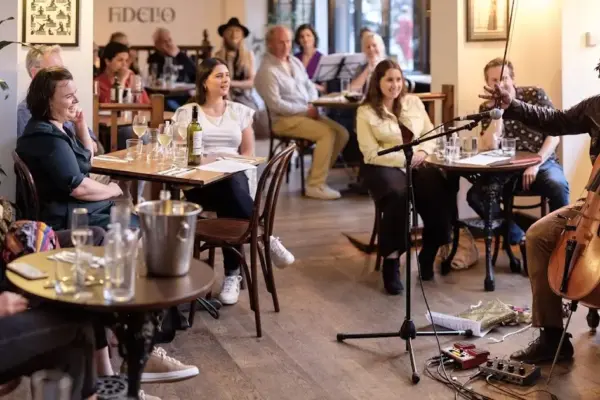
When the festival launched its single-day premiere at Holdenweid, the organizers operated with cautious optimism. Classical music gatekeepers have long debated how to engage modern audiences, often relying on digital streaming initiatives or watered-down educational programmes. Between Mountains bypassed these conventional routes entirely. Instead, it placed world-class acoustic performances in an intimate, non-traditional setting, pairing them naturally with ambient and electronic textures.
The response from the public and media was overwhelmingly positive. Visitors walked freely between pastoral clearings and performance spaces, sipping drinks, mingling with artists, and experiencing music as a fluid, continuous environment. The success of this single-day pilot proved that an appetite existed for an unpretentious, highly curated, and democratized classical experience.
The 2026 Evolution: The Three-Day Horizon
Buoyed by the momentum of its debut, the curatorial team made the strategic decision to expand the 2026 edition into a full three-day weekend (September 4–6, 2026). This expansion is not merely logistical; it represents a fundamental shift in how the festival is consumed.
By introducing on-site camping and localized accommodation partnerships, Holdenweid becomes a temporary micro-community. Attendees are no longer day-trippers rushing home after an evening recital; they are weekend residents who can wake up to the sounds of nature, attend morning workshops or intimate chamber sessions, spend the afternoon exploring experimental compositions, and dance under the stars to world-class electronic live acts. This structural evolution solidifies Between Mountains as a premier destination festival on the European cultural calendar.
Supporting Context & Metrics: Bridging the Genre Divide
To understand the significance of Between Mountains, one must examine the broader shifts in modern music consumption and the systemic challenges facing the classical music industry today.
The Death of the Ivory Tower
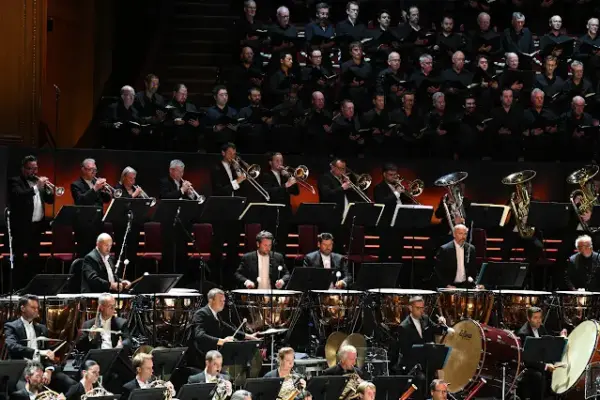
For centuries, classical music has fought the perception of being locked inside an "ivory tower"—requiring specialized academic knowledge, formal attire, and rigid concert-hall etiquette to fully appreciate. While major orchestras and institutions have attempted to modernize through movie-soundtrack nights or casual dress codes, these efforts often feel like surface-level marketing ploys rather than structural reinventions.
Modern listeners—particularly younger generations—do not consume music in vertical silos. Thanks to streaming algorithms and playlist culture, a typical listener’s daily rotation might effortlessly transition from a J.S. Bach cello suite to a contemporary ambient electronic track, followed by avant-garde jazz or indie folk. Between Mountains mirrors this contemporary reality. By normalizing the juxtaposition of Bach and Stimming, or Debussy and Acid Pauli, the festival validates natural listening habits rather than enforcing artificial academic boundaries.
Curation Principles and Regional Sustainability
The artistic footprint of the 2026 lineup is built upon a rigorously maintained three-pillar curation framework:
- Amplifying Emerging Talent: Providing a prestigious platform for young soloists and ensembles to present ambitious work to diverse, open-minded audiences.
- Commitment to Regional Sustainability: Actively integrating local and regional Swiss musicians into the lineup, ensuring that public arts funding and festival capital directly nourish the surrounding artistic ecosystem rather than vanishing after a weekend.
- Cross-Disciplinary Curiosity: Favoring artists who reject narrow specialization—performers who cross styles, compose, arrange, improvise, and collaborate across traditional media.
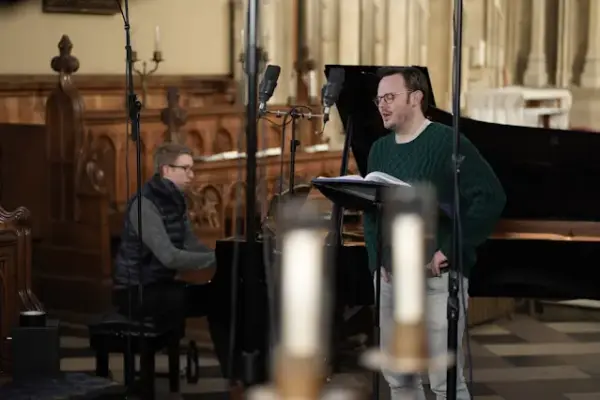
The resulting 2026 roster is a masterclass in eclectic programming. On the classical and contemporary side, the festival features internationally celebrated names such as Dobrawa Czocher, Beatrice Berrut, Alexandra Maria Seywald, Simon Höfele, Kai Schumacher, Kebyart, Los Sara Fontan, duo equinox, maTrigal, and Maximilian Wolfgang Schwarz, alongside institutional pillars like the Detect Ensemble and the Junges Kammerorchester Baselland.
Balancing this acoustic depth is a formidable electronic lineup featuring visionary producers and live acts including Acid Pauli, Sebastian Mullaert, Stimming, Robot Koch, Earth Trax, and AFAR. Together, these artists create a dynamic temporal arc that shifts effortlessly from contemplative afternoon listening to deep sonic exploration and collective nocturnal celebration.
Official Statements: An Exclusive Interview with Co-Founder Baldur Brönnimann
Ahead of the upcoming September festival, we sat down with co-founder, renowned conductor, and contemporary music champion Baldur Brönnimann to discuss the philosophy of the festival, the crisis of traditional concert formats, and the urgent need to strip away musical labels.
Between Mountains has grown from a one-day event into a three-day festival in just its second year. What inspired this expansion?
Baldur Brönnimann: The long-term vision was always to create a three-day festival. The first edition allowed us to test the concept and see how audiences would respond. The reaction from visitors, artists, and the press was overwhelmingly positive, so we decided to take the next step.
Expanding the festival also allows us to create a more complete experience. This year, visitors can camp on-site and stay throughout the weekend, making Between Mountains feel like a true destination rather than simply a series of concerts. You establish a rhythm to the weekend where community and environment become part of the art.
Classical music sits alongside electronic and experimental performances throughout the programme. How did this concept emerge?
BB: Listening habits have changed dramatically. Today, people discover music through playlists that naturally combine different genres. We wanted the festival experience to reflect that reality.
We deeply believe in the power of classical music, but we don’t believe it should exist in an ivory tower. Bach, Debussy, or Lachenmann deserve to be experienced alongside other ambitious music, without audiences feeling they need specialist academic knowledge before attending. Ultimately, we hope people stop thinking about genres altogether and simply enjoy great music.
This year’s programme features internationally recognised soloists alongside emerging musicians. How do you curate the classical programme?
BB: Our programming follows three principles. First, we want to give young artists opportunities to present their work and reach new audiences who might not encounter them in standard concert halls.
Second, supporting local musicians is essential because sustainability is one of the festival’s core values—we want to enrich the cultural fabric of our region.
Finally, we are naturally drawn to artists with broad musical curiosity: musicians who perform across different styles and periods, who compose, arrange, improvise, and actively collaborate across disciplines.
Throughout your career you’ve championed contemporary repertoire and new concert formats. How has that influenced Between Mountains?
BB: I actually think there are more people interested in classical music today than ever before—but many of them simply don’t attend traditional concerts because the environment feels exclusionary or archaic.
If classical music wants to remain relevant, we need to reconnect with today’s composers and today’s aesthetics, while also creating formats that feel natural, welcoming, and engaging, without unnecessary formality. That is really the central DNA behind Between Mountains.
How does the Holdenweid setting change the experience of listening to classical music?
BB: Nature becomes an active part of the performance. Whether you’re hearing birds outside, water flowing nearby, or looking through the rustling trees while listening to intricate chamber works, the surroundings add another dimension to the sensory experience.
People can move freely, meet the artists, grab a drink, and continue listening throughout the day. That creates a much more democratic way of experiencing classical music than sitting silently in a dark, cavernous concert hall under strict social surveillance.
Many organisations are trying to attract younger audiences to classical music. How does Between Mountains approach this challenge?
BB: We’re certainly part of that wider cultural conversation, and many industry organizations are curious about our format. But more importantly, we simply want to create unforgettable musical experiences.
If people discover classical music because they came for the festival atmosphere—or because they were initially drawn in by an electronic live act—that is an absolute win. We don’t lecture; we invite.
Someone might hear a chamber concert in the afternoon and an electronic live set at night. What do you hope audiences take away from those encounters?
BB: We want people to follow their ears rather than industry categories. Algorithms increasingly trap us in echo chambers, recommending only what we already know and like. That shapes not only how we listen but also how we think, narrowing our worldview.
Music should do the exact opposite—it should introduce us to unexpected ideas, unfamiliar textures, and transcendent experiences. The mix of genres at Between Mountains is our way of encouraging human curiosity and radical openness.
Supporting young and regional artists is another important part of the festival. Why is that so central?
BB: We don’t want the festival to arrive once a year like a meteorite, consume local resources, and disappear again. Supporting local musicians creates a lasting, organic connection with the region, while also ensuring public funding directly benefits the creative community that surrounds us. We hope Between Mountains leaves a cultural legacy that resonates long after the festival weekend itself concludes.
As the festival grows, what role do you hope it will play within the wider classical music landscape?
BB: Hopefully, Between Mountains can demonstrate that classical music can be presented in ways that are both radically informal and uncompromisingly ambitious artistically.
There are many wonderful festivals and ensembles working towards similar goals globally, and we’d like to contribute by showing that classical music doesn’t lose an ounce of its depth when presented differently. If anything, it becomes more accessible, more democratic, and infinitely more surprising.
Future Outlook: Redefining the European Festival Circuit
As the cultural sector navigates post-pandemic funding pressures and changing consumer habits, events like the Between Mountains Festival offer an inspiring blueprint for the future. By refusing to treat musical genres as mutually exclusive territories, the festival demonstrates that high art and contemporary counterculture can cross-pollinate to create something entirely unique.
Looking ahead to September 2026 and beyond, the ambitions for Holdenweid extend far beyond a single weekend of performances. The transition to a three-day camping festival model positions Between Mountains as a vital stop on the European boutique festival circuit—appealing not only to classical purists and electronic music aficionados, but to anyone seeking a thoughtful, community-driven sonic retreat.
In an era defined by algorithmic predictability and cultural compartmentalization, the team behind Between Mountains is offering a refreshing counter-narrative: step outside, leave your preconceptions at the gate, and let your ears lead the way.