Executive Overview
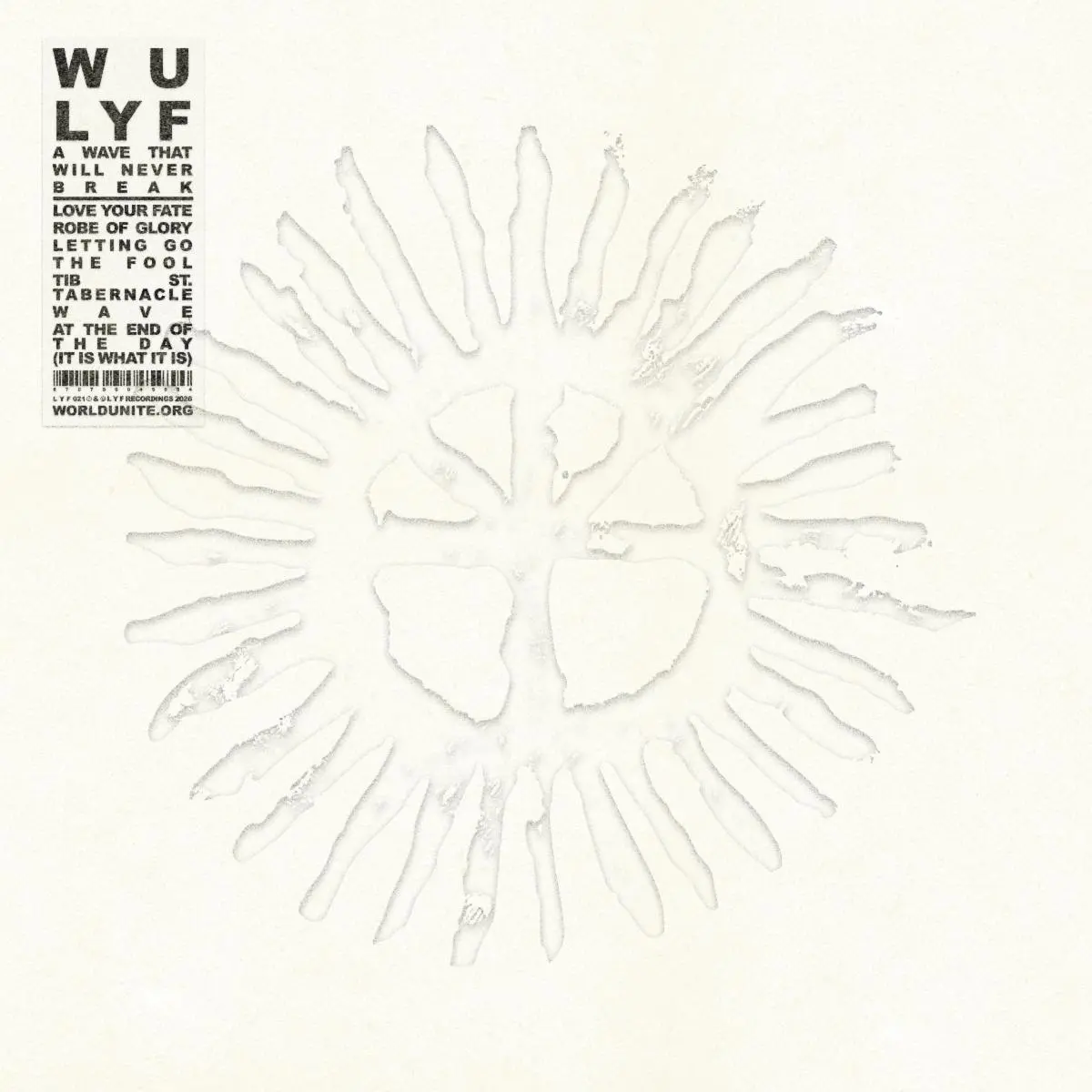
Fifteen years after dissolving at the hyper-accelerated peak of their early-decade blog-era hype, the Manchester-born, bandana-masked collective World Unite/Lucifer Youth Foundation—universally known as WU LYF—has returned. Their sophomore full-length album, A Wave That Will Never Break, arrives not through traditional major-label channels or mainstream DSPs, but via a direct-to-consumer digital subscription model hosted on their proprietary L Y F community platform.
This unexpected resurrection closes a fascinating chapter in modern alternative music history. In 2011, WU LYF arrived wrapped in impenetrable mystery, evoking comparisons to contemporaneous anonymous phenomena like The Weeknd while trading in ferocious, reverb-drenched "diddly-clap enormo-rock." Back then, their theatrical posturing and calculated anti-establishment posture triggered plenty of skepticism among industry critics. Yet, a decade and a half later, the cynicism has cleared. Reconciled and creatively reinvigorated, frontman Ellery Roberts and his childhood companions have traded their early-career growing pains for an astonishingly potent, mature sonic maximalism. Produced alongside Spacemen 3 legend Sonic Boom, A Wave That Will Never Break proves that WU LYF’s long-dormant fire was well worth reigniting—marking one of the most compelling and improbable comeback stories of the modern indie era.
Detailed Chronology: From 2011’s Hype Machine to the 2026 Resurgence
The Genesis and the Backlash (2010–2011)
To understand the magnitude of WU LYF’s return, one must revisit the fractured musical landscape of 2011. The indie blogosphere was in its dying golden age, fueled by a relentless cycle of manufactured mystique, regional buzz-bands, and algorithmic word-of-mouth. Into this ecosystem stepped WU LYF.
Concealing their faces behind World Bank-style bandanas and operating with deliberate, curatorial opacity, the Manchester four-piece—frontman Ellery Roberts, guitarist Evans Kati, bassist Tom McClung, and drummer Joe Williams—cultivated an air of radical, anarchic isolationism. Their debut album, Go Tell Fire To The Mountain (self-released via their own LYF imprint), was hailed by many as a masterclass in passionate, world-building rock music. Roberts sang—or rather, shrieked—with a tortured, gravel-throated desperation reminiscent of Isaac Brock channeled through Tom Waits.
Yet, their rapid ascent into the traditional machinery of the American music industry—stints on Late Show with David Letterman, appearances at Coachella, and heavy UK press backing—revealed deep internal contradictions. For a band preaching radical independence, the mechanics of the modern buzz-band circuit felt increasingly jarring.
The Meltdown and Fragmentation (2012–2025)
The pressure cooker of sudden fame proved unsustainable. Plagued by creative friction and a mounting sense of alienation from their own mythos, Roberts famously blew up the band at the height of their success. In the middle of recording a highly anticipated sophomore record, WU LYF imploded. The breakup was abrupt, dramatic, and emotionally costly, severing childhood friendships and leaving fans stranded in a vacuum of unfulfilled potential.
While Roberts went on to form the critically praised duo Lost Under Heaven (LUH) with his then-partner, the rest of the band pursued separate artistic trajectories. For nearly fifteen years, WU LYF remained a phantom limb of indie rock lore—a cautionary tale of a brilliant project consumed by the very hype machine it sought to subvert.
The Reunion and Direct-to-Fan Distribution (2026)
Following years of behind-the-scenes healing, Roberts and his former bandmates quietly mended their personal relationships. Recognizing that the exhausting landscape of performative indie mystique had thankfully burned itself out, the members decided to step back into the studio.
Abandoning traditional streaming platforms entirely for the release of A Wave That Will Never Break, WU LYF adopted an unconventional distribution model: fans must subscribe to their ongoing L Y F membership club at four pounds per month to access the record, alongside a parallel Bandcamp release. It is a bold, community-centric gambit designed to cut out corporate middle-men—and a testament to the band’s unwavering, if idiosyncratic, commitment to autonomy.
Supporting Context & Metrics: The Modern Landscape of Cult Survival
The music industry of 2026 bears little resemblance to the hyper-fragmented, blog-driven ecosystem of 2011. Metrics that once dictated success—such as viral pitchfork review scores, high-rotation streaming playlists, and late-night television bookings—have largely given way to niche direct-to-consumer micro-economies.
| Metric / Parameter | 2011 Era (Go Tell Fire To The Mountain) | 2026 Era (A Wave That Will Never Break) |
|---|---|---|
| Distribution Model | Independent physical/digital via traditional indie distributors | Direct-to-consumer L Y F Membership Club (£4/month) & Bandcamp |
| Production Approach | Self-produced, raw organic reverb-heavy DIY aesthetic | Collaborative production with Sonic Boom (Spacemen 3) |
| Public Persona | Performative anonymity, bandana masks, guarded interviews | Transparent creative maturity, reconciled friendships |
| Songwriting Scope | Short, urgent, driving anthems (focused on immediacy) | Expansive, multi-movement epics (e.g., the 11-minute "Tib St. Tabernacle") |
| Industry Landscape | Peak indie blog buzz-band era | Post-streaming fragmentation, micro-cult sustainability |
By anchoring themselves to a dedicated, albeit diminished, cult following through their digital membership portal, WU LYF is testing the financial viability of artistic self-sustainability in an era where major streaming models offer diminishing returns for alternative artists. Whether this specific subscription model will prove universally sustainable remains an open question, but for their core audience, it represents an authentic return to form.
Official Statements & Critical Perspectives
Reflecting on the band’s initial run, Ellery Roberts has been remarkably candid about the imposter syndrome that plagued their early years. In a retrospective interview following the reunion, Roberts recalled an encounter with Fugazi frontman Ian MacKaye during a Washington D.C. show:
"When I was chatting with him, I felt like a phony compared to what they were doing."
This existential dread—the haunting awareness of operating within a legendary lineage while feeling disconnected from its authentic roots—ultimately catalyzed the band’s demise. Yet, looking back from the vantage point of 2026, the critical consensus surrounding WU LYF has undergone a profound evolution.
Contemporary reviews of A Wave That Will Never Break emphasize that the record sheds the defensive posturing of their youth. Rather than hiding behind ironic detachment or exaggerated theatricality, the band sounds remarkably unguarded. As Roberts hollers on the sweeping 11-minute centerpiece "Tib St. Tabernacle":
"Who are we but Sons and Daughters of generational trauma who’ve abandoned our power in the absence of love? Who are we? Who are we?"
It is music that dares to be grand, emotionally transparent, and unapologetically ambitious—bridging the gap between the stadium-sized communal euphoria of U2 at Red Rocks and the fierce, politically charged independence of Fugazi at Fort Reno.
Future Outlook: What Lies Ahead for WU LYF?
As A Wave That Will Never Break hits digital shelves and mailboxes via the L Y F network, the immediate future of WU LYF remains deliberately unmapped. The band has made no aggressive commitments to traditional touring schedules, nor have they signaled an intention to reintegrate into the mainstream promotional machine. Instead, they appear content to operate on their own terms, sustained by a hard-earned maturity and a repaired brotherhood.
For the music industry at large, WU LYF’s comeback serves as an inspiring anomaly. In an era dominated by calculated nostalgia tours and algorithmic retreads, their reunion is driven by genuine artistic necessity. They took a fifteen-year detour through silence, individual growth, and personal reconciliation to arrive at a sound that finally matches their boundless ambitions. Whether this chapter marks a permanent return or merely a fleeting, beautiful coda to an extraordinary career, one thing is certain: the noise they are making now is entirely real.