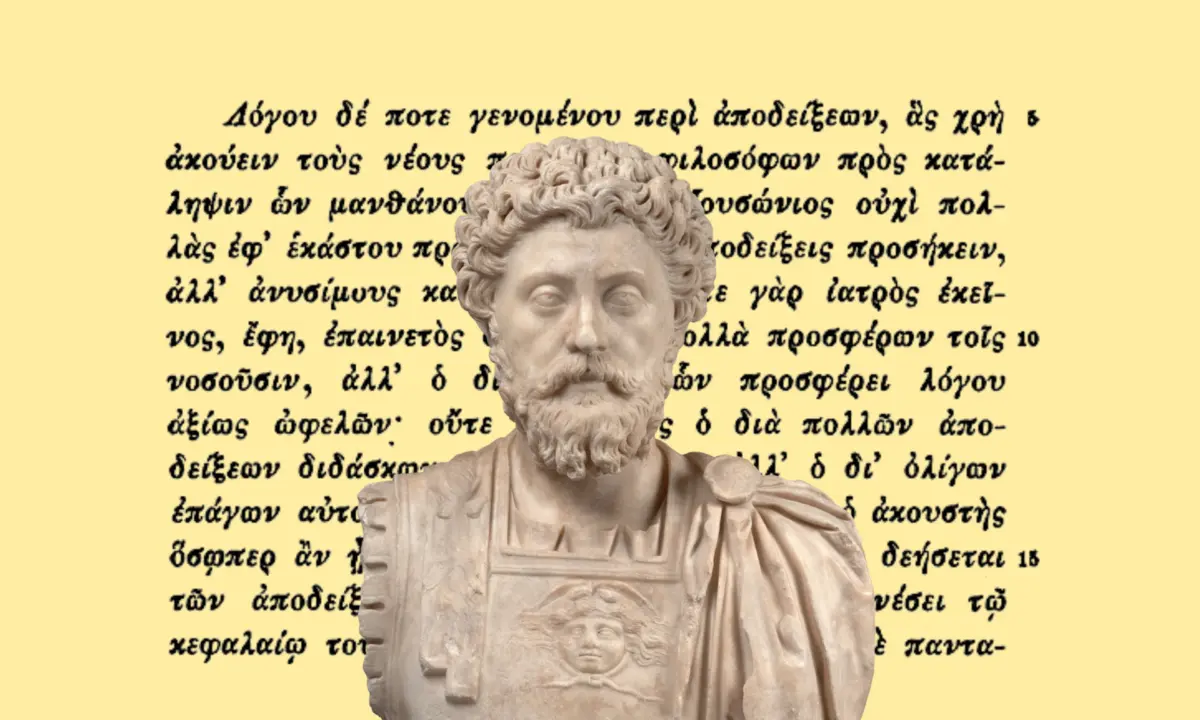
Executive Overview
In recent years, ancient Stoicism has experienced a remarkable modern renaissance. No longer confined to university seminar rooms or dusty academic translations, the philosophy of Marcus Aurelius, Seneca, and Epictetus has permeated mainstream culture, filling bestseller lists, productivity blogs, and social media feeds. Yet, this digital-age popularity has come with a controversial twist. A distinct subculture—the online "manosphere"—has embraced Stoicism as a foundational text for its worldview, weaponizing fragments of ancient philosophy to promote anti-feminist narratives, claims of male psychological superiority, and the exclusion of women from philosophical virtue.
This appropriation has triggered alarm bells among classicists and cultural historians. Scholars like Donna Zuckerberg, author of Not All Dead White Men, have documented how online misogynistic spaces selectively mine Stoic texts to argue that men possess a "superior rationality" while women are hopelessly driven by emotion. To these groups, Stoicism is styled as a rugged, hyper-masculine defense mechanism against the perceived deceit and manipulation of women.
This article investigates the roots of this ideological distortion, unpacking how a philosophy founded on universal human reason and cosmopolitanism was rebranded as a macho exclusive club. Drawing on primary historical texts—including the surprisingly progressive arguments of the first-century Roman Stoic Gaius Musonius Rufus—we examine the true architecture of Stoic thought. Far from being a cold, emotionless tool for male supremacy, authentic Stoicism champions the radical equality of all human minds, offering a blueprint for moral development that transcends gender, ethnicity, and status.
Detailed Chronology: From Ancient Athens and Rome to the Digital Manosphere
To understand how Stoicism evolved from an inclusive ancient civic philosophy into a contested modern battleground, it is necessary to trace its trajectory across two millennia.
3rd Century BC: The Birth of a Universal Philosophy
Stoicism was founded in Athens by Zeno of Citium around 300 BC. From its inception, the school was characterized by a radical inclusivity that challenged traditional Greek cultural norms. Unlike Plato’s Academy or Aristotle’s Lyceum, which were tied to specific elite properties, the early Stoics taught in the Stoa Poikile (Painted Porch), a public colonnade accessible to citizens, foreigners, slaves, and women alike. Crucially, Zeno’s lost work The Republic envisioned an egalitarian utopian society where men and women wore the same clothes, received the same education, and participated equally in governance—a startlingly progressive concept for the ancient Mediterranean.
1st Century AD: Musonius Rufus and Classical Proto-Feminism
As Stoicism migrated to the Roman Empire, it cemented its practical focus on ethics and daily living. Gaius Musonius Rufus (often dubbed the "Roman Socrates") took the foundational principles of Stoic ethics and applied them directly to the status of women. Teaching in Rome during the reigns of Nero and Vespasian, Musonius argued forcefully that women possess the exact same rational capacities as men and are equally suited to study philosophy and practice virtue. He insisted that girls receive the same education as boys, arguing that core virtues like courage, moderation, and justice are universal necessities.
2nd Century AD: Marcus Aurelius and the Private Journal
Emperor Marcus Aurelius ruled the Roman Empire from 161 to 180 AD. During grueling military campaigns along the Danubian frontier, he kept a private spiritual journal—never intended for publication—which later became known as the Meditations. In these intimate self-reflections, Marcus frequently admonishes himself to "be a man" or criticizes unmanly behavior. Centuries later, these raw, unpolished psychological notes would become the primary source material for modern interpreters seeking to extract a uniform personal code.
The Late 20th and Early 21st Centuries: The Self-Help Boom
As the modern self-help industry expanded, authors and modern popularizers—such as Ryan Holiday and Massimo Pigliucci—revitalized Stoicism for the modern workplace and digital era. Stripping away complex ancient physics and logic, popular writers emphasized Stoic emotional resilience, cognitive reframing, and personal agency. While largely positive, this popularization fractured the academic discipline of Stoicism, leaving its texts vulnerable to cherry-picking by disparate ideological movements.
The 2010s–Present: The Rise of the Manosphere
With the explosion of social media platforms like YouTube, TikTok, and X (formerly Twitter), the "manosphere"—a decentralized network of online communities focused on men’s rights, pick-up artistry, anti-feminism, and traditional masculinity—discovered the utility of Stoic tropes. Observing a cultural crisis of modern masculinity, manosphere influencers began pairing cherry-picked quotes from Marcus Aurelius and Seneca with hyper-masculine aesthetics. By framing Stoicism as an antidote to "weakness" and female manipulation, these digital spaces successfully embedded an exclusionary, gendered narrative into contemporary popular culture.
Supporting Context & Metrics: Deconstructing the Modern Misinterpretation
The appeal of Stoicism to the manosphere rests on a series of persistent cultural myths. Chief among them is the archetype of the Stoic as a cold, unfeeling automaton—a rugged individualist who suppresses emotion, dominates his environment, and remains entirely indifferent to the suffering or perspectives of others.
The Metrics of Misinformation: Digital Engagement with Stoicism
Data from social media analytics firms reveals the sheer scale of the digital Stoic phenomenon:
- Hashtag Reach: On TikTok, hashtags related to #Stoicism and #MarcusAurelius have accumulated billions of views, with short-form video creators frequently juxtaposing quotes from the Meditations with clips of elite athletes, military operators, and historic conquerors.
- Demographic Shift: While academic philosophy departments historically skewed gender-balanced or male-dominated, digital manosphere communities targeting Stoic content report an audience demographic that is overwhelmingly young, male, and economically or socially disaffected.
- Textual Selectivity: Algorithmic engagement metrics show that inflammatory or hyper-individualistic passages from Roman writers—particularly those addressing discipline, control, and endurance—outperform texts discussing cosmopolitanism, community duty, and universal human brotherhood by a factor of ten to one.
Academic Alarm and the Critique of Donna Zuckerberg
In her groundbreaking 2018 study Not All Dead White Men: Classics and Misogyny in the Digital Age, classicist Donna Zuckerberg mapped how alt-right and manosphere communities weaponize antiquity. Zuckerberg demonstrated that online forums do not merely read Stoic texts; they filter them through a lens of extreme misogyny.
In these spaces, Stoic arguments regarding the primacy of logic are warped to claim that men possess "superior rationality," while women are categorized as inherently emotional, manipulative, and constitutionally incapable of achieving true Stoic tranquility. This creates a circular ideological reinforcement loop: men use selective classical texts to justify misogyny, and use that misogyny to validate their exclusive claim to ancient wisdom.
Expert Insights and Philosophical Realities
To dismantle the manosphere’s co-optation of Stoicism, one must return to the foundational mechanics of the philosophy itself. As explored in recent scholarly works—such as John Sellars’ Stoicism is not what you think—the ancient Stoic framework shatters the modern myth of the philosophy as a macho, male-exclusive club.
Reason as the Great Equalizer
For the Stoics, human beings are defined by one overarching characteristic: rationality (logos). This capacity for reason is not distributed along gendered, racial, or national lines; it is a universal spark shared by all humanity.
The Stoic concept of cosmopolitanism—literally being a "citizen of the universe"—dictates that external markers like gender, social status, and ethnicity are utterly inconsequential when compared to our shared rational nature. Because men and women possess the exact same rational faculties, classical Stoicism provides zero philosophical justification for drawing a hard line between the sexes regarding moral capability or intellectual worth.
Gaius Musonius Rufus on Female Education and Courage
Musonius Rufus addressed the question of female participation in philosophy head-on. In a series of surviving lectures, he argued:
- Identical Faculties: Men and women share the same senses and the same rational capacity to navigate and understand the world.
- Universal Virtue: Because virtue is simply the art of living a good life, and both sexes are obligated to live good lives, philosophy is just as necessary and appropriate for women as it is for men.
- Redefining Courage: Challenging the notion that physical or military aggression defines courage, Musonius pointed to everyday acts of female endurance—such as mothers protecting and nurturing their offspring—as prime examples of supreme virtue in action.
Musonius advocated fiercely for the education of girls, arguing that moderation, justice, and practical wisdom are vital traits for both halves of the human race. While he operated within the patriarchal confines of first-century Roman culture—assuming most women would manage households—his insistence on intellectual and moral equality makes him the closest historical approximation to an ancient feminist theorist.
Recontextualizing Marcus Aurelius: "Be a Man" vs. "Be a Grown-Up"
A primary anchor for the manosphere’s appropriation of Stoicism is Marcus Aurelius’s Meditations, specifically passages where the emperor tells himself to "be a man" or criticizes unmanly behavior.
However, scholars emphasize a critical contextual error in how modern readers interpret these passages:
- A Private Journal, Not a Manifesto: Marcus was writing private notes to himself as a form of psychological journaling and self-correction. He was not drafting a public manifesto or establishing a prescriptive gender hierarchy for humanity.
- The Linguistic Nuance: When Marcus writes aner (man) in Greek, he is frequently using it as a self-referential descriptor for an adult male navigating imperial responsibilities. More importantly, he typically writes agathos aner—"a good man."
- The True Meaning of Maturity: The operative word in Marcus’s exhortations is good, not male. By "be a man," Marcus meant "be a mature, rational adult." In the context of ancient Roman elite culture, transitioning from youth to manhood meant shedding emotional volatility, impulsivity, and selfishness in favor of duty, calm reason, and stewardship for the broader community.
When Marcus admonishes himself to act with adult dignity, he is championing virtues—such as compassion, justice, and emotional regulation—that apply equally to a wise woman, an emperor, or a common citizen. A "good man" in the Stoic lexicon is simply someone who acts in the best interests of all humankind. By definition, a good woman does exactly the same.
Future Outlook: Reclaiming Stoicism for the 21st Century
The ideological tug-of-war over Stoicism carries profound implications for how ancient philosophy is consumed in the digital age. As online misinformation ecosystems continue to algorithmically reward extreme, polarizing interpretations of historical texts, the academic and popular philosophical communities face a critical imperative: curation with context.
1. Combating Textual Cherry-Picking
Future educational initiatives surrounding Stoicism must actively combat the selective quoting popularized by social media influencers. By re-centering the cosmopolitan, communal, and egalitarian dimensions of Stoic ethics—particularly the writings of Musonius Rufus, Seneca, and the broader social duties outlined by Epictetus—educators can crowd out distorted, hyper-individualistic interpretations.
2. Expanding the Canon of Accessible Philosophy
Public philosophy must continue to dismantle the false dichotomy that frames ancient wisdom as a toolkit for personal domination or emotional shutdown. Modern adaptations must emphasize that true Stoic resilience (ataraxia) is not about building an emotional fortress to shut out the world, but rather cultivating inner stability so one can better serve the global human community.
3. Fostering Inclusive Discourse
Ultimately, the future of Stoicism lies in restoring its foundational premise: that reason belongs to everyone. By stripping away the misogynistic veneer applied by the manosphere, contemporary readers can recover an ancient tradition that is remarkably modern in its defense of human equality, proving that wisdom, courage, and virtue recognize no boundaries of gender.