Executive Overview
The return of comedian Shane Gillis to NBC’s Saturday Night Live (SNL)—years after his initial, highly publicized firing over racist and homophobic remarks—was billed as a test of institutional resilience, edgy humor, and cultural forgiveness. Instead, it unfolded as a dispiriting exercise in retrograde laziness. Gillis’s opening monologue, anchored by stale, misogynistic tropes regarding women’s gym attire, offered a stark look at the state of contemporary mainstream comedy: heavily funded, creatively bankrupt, and profoundly disconnected from the realities of its audience.
At a time when American society is grappling with unprecedented socio-political polarization, economic anxiety, and institutional decay, the cultural machinery continues to reward material that relies on tired, punching-down paradigms. Gillis defended his performance under the well-worn banner of "boundary-pushing" and "risk-taking." Yet, as this analysis demonstrates, reducing women to derogatory slurs over spandex shorts requires neither risk nor talent; it is simply lazy pandering.
This article explores the fallout from Gillis’s SNL return, examining the structural failure of modern sketch comedy to address our bleak political reality, the hollow defense of artistic edge, and the rare moments of inadvertent humor that actually managed to skewer the absurdities of modern American life.
Detailed Chronology: The Return, the Monologue, and the Backlash
The trajectory of Shane Gillis’s relationship with Saturday Night Live is a case study in the modern attention economy. Fired in 2019 before ever making an on-screen appearance due to the resurfacing of derogatory racial and homophobic slurs on his podcast, Gillis spent the intervening years building an independent, highly lucrative digital footprint. His return to the Studio 8H stage was meant to signal a reclamation—a triumphant homecoming proving that cancellation is often just a stepping stone to a bigger audience.
The night began with an opening monologue that quickly alienated viewers looking for sharp, observational wit. Gillis detailed his recent return to the gym, framing it not as a path to personal health, but as an opportunity to complain about how women dress. According to Gillis, women wear shorts colored like "artificial bait" that stretch across their posteriors. He lamented the social strictures of modern fitness spaces, complaining that men are no longer permitted to openly ogle these women because workout areas are frequently recorded.
The centerpiece of his grievance—that women dressing comfortably for athletic exertion are somehow inviting moral condemnation—drew immediate and widespread criticism. Critics pointed out the jarring mismatch between the immense platform provided by Saturday Night Live and the pedestrian, locker-room nature of the material.
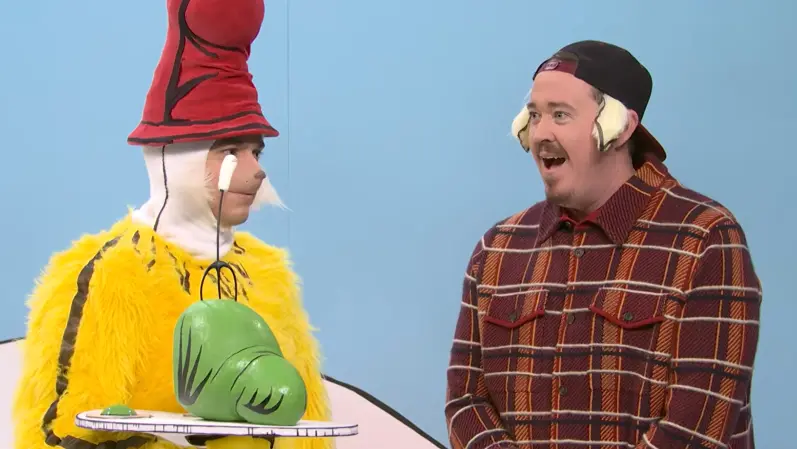
Later in the broadcast, Gillis inadvertently dropped an expletive during a sketch, an unscripted slip of the tongue that required a public apology. While the accidental profanity caused logistical headaches for the live censors, it paled in comparison to the social damage of his misogynistic monologue. When confronted with backlash regarding the gym bit, Gillis deployed the standard deflection used by comics caught in controversy: he claimed he was simply "pushing boundaries" and "taking risks."
The chronology of the evening culminated in scattered moments of self-deprecation—including a joke about his receding hairline comparing men today to either "gay or Hitler"—and a revealing dead-air moment when he mentioned his friend Joe Rogan’s private Texas gym, expecting applause that never materialized.
Supporting Context & Metrics: Comedy in an Age of Unrelenting Bleakness
To fully understand why Gillis’s monologue landed with such a heavy, offensive thud, one must examine the broader cultural and economic landscape of America. The disconnect between elite comedy production and everyday audience experience has rarely been wider.

+-------------------------------------------------------------------------+
|                  THE DISCONNECT IN MODERN MEDIA & REALITY                 |
+---------------------------+---------------------------------------------+
| Socio-Political Climate   | Economic Strain & Institutional Decay        |
+---------------------------+---------------------------------------------+
| - Public executions/gun   | - Stagnant wages vs. rising grocery/gas     |
|   violence in media       |   costs                                     |
| - Erosion of civil rights | - Looming threats of global conflict        |
| - Political extremism     | - Daily normalization of systemic violence  |
+---------------------------+---------------------------------------------+
|                   RESULT: AUDIENCES SEEK CATHARSIS                          |
|             (Instead, they receive lazy misogynistic tropes)              |
+-------------------------------------------------------------------------+
The Bleak Societal Backdrop
Americans tuning into late-night television are navigating a daily news cycle dominated by systemic horrors. Citizens read routinely about immigration enforcement actions resulting in shootings during routine traffic stops, high-profile campus sexual assault scandals, mass casualty events, and casual political rhetoric involving the threat of nuclear conflict. Economic pressures compound this psychological weight; working-class and middle-class Americans labor long hours for wages that frequently fail to keep pace with the soaring costs of groceries, gas, and housing.
In eras of profound national anxiety, historic comedic movements have historically provided relief by punching upward, dismantling hypocrisy, and offering sharp satire that speaks truth to power. When audiences turn on television at the end of a grueling week, they look for catharsis. Instead, they were offered a man complaining that spandex shorts make women look like prostitutes—a sentiment easily accessed for free from a local extremist pulpit or a hostile subway platform.
The Myth of "Boundary-Pushing"
The defense of modern edgelord comedy relies on the premise that challenging progressive social norms constitutes a radical act. In contemporary America, however, targeting marginalized groups or recycling misogynistic tropes does not challenge the status quo; it aligns seamlessly with it.
When political leaders openly boast about assaulting women, institutional bodies dismantle decades-old civil rights protections, and public discourse is saturated with retrograde views on gender and labor, complaining about women’s gym clothes is not transgressive. It is safe, lazy pandering designed to appeal to the lowest common denominator while insulating the performer from genuine intellectual critique. True boundary-pushing comedy would target the systems of power creating the prevailing bleakness—such as unregulated artificial intelligence, the erosion of democratic norms, or the widening wealth gap—rather than mocking people trying to stay healthy at the local gym.
Official Statements and Industry Reactions
The backlash to Gillis’s return has ignited a wider debate within the entertainment industry regarding the responsibilities of platforms like NBC and Lorne Michaels. While network executives and producers have largely remained silent—relying on the traditional defense that live sketch comedy inherently involves calculated risks—critics, cultural commentators, and viewers have spoken out forcefully.
- Media Analysts and Cultural Critics: Numerous independent journalists and culture writers have highlighted the hypocrisy of rewarding performers who substitute structural critique with casual bigotry. The consensus among cultural critics is that SNL’s decision to bring Gillis back reflects a desperate attempt to capture demographic segments that have tuned out traditional network television, even if it alienates core audiences who expect higher artistic standards.
- The Performer’s Defense: In keeping with his established public persona, Gillis’s defenders argue that comedy should be an unfiltered reflection of raw male anxiety. They maintain that policing comedic content inhibits the raw, conversational tone that made podcasts and alternative comedy circuits popular in the first place.
- Viewer Sentiment: Social media metrics following the broadcast revealed a stark polarization. While a loyalist base praised Gillis for "owning the establishment" and refusing to apologize for his worldview, a significant portion of the viewership expressed exhaustion at the persistent recycling of tired, sexist tropes under the guise of free speech.
Future Outlook: Is There Hope for Satire?
The controversy surrounding Shane Gillis’s Saturday Night Live appearance raises critical questions about the future of late-night television and American satire. As traditional broadcast networks fight for relevance against decentralized digital platforms, the temptation to court controversy for engagement metrics often outweighs the imperative for quality writing.
1. The Commercialization of Edgelord Culture
Comedy clubs and streaming services have discovered that polarizing content drives algorithmic visibility. When offensive or retrograde humor generates viral clips, outrage, and counter-outrage, the underlying lack of comedic craft is obscured by the noise of the culture wars. If this trend continues, mainstream platforms risk alienating audiences who demand intellectual engagement alongside humor.
2. The Resilience of True Wit
Despite the prevalence of lazy pandering, the broadcast also offered glimpses of what effective satire looks like. Gillis’s accidental self-deprecation—such as his observation about the absurd binary of modern male appearance ("You’re either gay or Hitler")—demonstrated that when comedy addresses real cultural anxieties with genuine absurdity, it can resonate broadly. Furthermore, the deafening silence that met his attempt to elicit cheers for Joe Rogan’s private Texas gym proved that audiences possess a refined bullshit detector. Viewers, it turns out, are entirely capable of rejecting forced hero-worship, even within a room predisposed to edgy humor.
Conclusion
Shane Gillis’s return to Saturday Night Live was a missed opportunity to demonstrate growth, intellectual depth, and genuine comedic innovation. By falling back on tired misogynistic tropes about women’s athletic wear, he proved that being labeled a "risk-taker" is often just a euphemism for creative stagnation. As American society navigates an era of unprecedented stress, audiences deserve better than recycled prejudices packaged as bravery. True comedy should illuminate our darkness, not add to it. Until late-night institutions recognize the difference between punching down and true satire, viewers will continue to look elsewhere for humor that respects their intelligence.