Executive Overview
In an era of hyper-connectivity, digital convenience, and climate-conscious resourcefulness, reality television continually seeks to push the boundaries of human endurance. Enter Apocalypse, a high-stakes, psychologically grueling new series from Channel 4 that strips contestants of modern comforts and drops them into an unforgiving, abandoned American settlement. Designed to test the absolute limits of ingenuity, psychology, and teamwork, the program plunges two distinct groups of strangers into a decommissioned military training facility. Armed with no food, no water, no electricity, and no tools save for the clothes on their backs, these participants must navigate extreme deprivation, biting elements, and fierce competition for scarce resources.
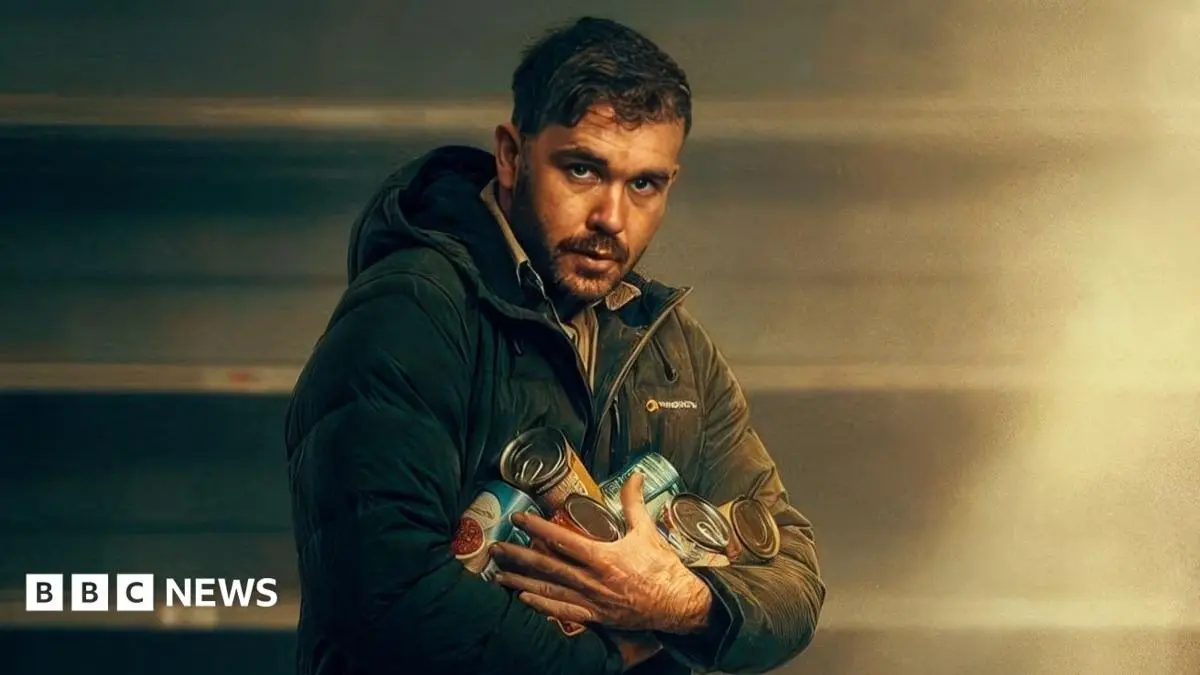
Among the intrepid individuals thrust into this dystopian landscape is Ioan Humphreys, a 33-year-old tenant farmer hailing from the picturesque village of Carno in mid-Wales. Having taken the reins of his family’s agricultural enterprise at the tender age of 20 following his father’s sudden illness, Humphreys is no stranger to hard work, early mornings, and the unpredictable nature of rural life. Yet, nothing in his decade-plus of farming could adequately prepare him for the chilling reality of Apocalypse, where nighttime temperatures plummeted to a life-threatening -12°C (10F).
Approached by casting producers specifically for his deep-rooted agricultural expertise and pragmatic, hands-on skill set, Humphreys entered the production with what he describes as "zero idea" of what lay ahead. Informed only that he was signing up for a generalized survival show a mere month before filming commenced, the Welsh farmer found himself unceremoniously airdropped into a sterile, decaying urban landscape surrounded by the rotting husks of modern civilization.
As Apocalypse prepares to premiere this Sunday, this in-depth report explores the anatomy of the show, the psychological toll of raw survival, the diverse socioeconomic cross-section of contestants forced to forge an artificial society, and what Humphreys’ harrowing journey reveals about the thin veneer of human civilization when the power grid goes dark.
Detailed Chronology: From Carno to the Concrete Wilderness
The Call to Adventure and the Month of Uncertainty
For Ioan Humphreys, life on the family farm in Carno has always been defined by steady rhythms, animal husbandry, and the quiet resilience characteristic of rural mid-Wales. That predictable existence was upended when television scouts, hunting for authentic, resilient tradespeople with practical problem-solving abilities, knocked on his door. Producers were searching for a candidate who possessed the rare combination of physical endurance, livestock management experience, and a cool head under pressure. They found an ideal match in Humphreys, whose transition to running the family farm at age 20 forced him to mature rapidly and master the art of self-reliance.
However, the recruitment process was shrouded in secrecy. True to the high-concept, high-drama nature of modern reality television production, Humphreys was kept largely in the dark. He was told vaguely that he was auditioning for a survival-based program, but the exact parameters, location, and severity of the challenge were withheld until approximately four weeks before cameras rolled. This deliberate information blackout was engineered by Channel 4’s production team to capture genuine, unscripted psychological reactions to sudden displacement and profound isolation.
The Drop: Zero Infrastructure, Absolute Zero
The journey from the rolling green hills of Powys to the desolate expanse of the American training facility was swift and disorienting. Upon arrival, the contestants were given no orientation, no safety briefings regarding the layout of the ghost town, and certainly no survival kits.
As Humphreys recounted to BBC Wales, the reality of the experiment hit the moment he stepped off the transport. "We got dropped into the survival situation with nothing, only what we were wearing," he stated plainly. The clothing on his back—standard outdoor wear inadequate for prolonged exposure to sub-zero desert or continental nights—became his sole barrier against the environment.
The location itself—a sprawling, abandoned mock-town typically reserved for military combat training—served as an eerie backdrop for the social experiment. Unlike a lush forest or a tropical island where foragers might find wild game, edible plants, or fresh water streams, this artificial urban desert offered a cruel paradox: contestants were entirely "surrounded by the remnants of modern life," yet utterly divorced from any functional utility. Power lines hung dead overhead, faucets spat only dust, and buildings stood as empty, hollow shells echoing with the wind.
Surviving the Freeze: The Reality of -12°C
As day turned to night, the psychological strain of the drop was compounded by severe meteorological hazards. During the height of the challenge, ambient temperatures plunged to an unforgiving -12°C (10F). In a survival scenario where shelter is rudimentary and fire-making materials are scarce, extreme cold ceases to be merely uncomfortable and rapidly transforms into a lethal physiological threat.
For Humphreys, the biting frost offered a stark contrast to the relative comforts of his Welsh farmhouse. While farm life in mid-Wales certainly involves braving harsh winter gales and freezing lambing seasons, those moments are tempered by the ability to retreat indoors to central heating, hot food, and modern medical care. In the abandoned American town, none of those safety nets existed.
"There was no power. There was no food. There was no running water," Humphreys emphasized, reflecting on the absolute void of basic amenities. To survive, the contestants were forced to rapidly transition from passive victims of their environment to active scavengers, utilizing every ounce of their collective wit to beat hypothermia and starvation.
Supporting Context & Metrics: Anatomy of an Artificial Society
The Social Experiment: Cross-Section of Modern Humanity
Apocalypse is structured not merely as a test of bushcraft, but as a sociological stress test. Channel 4 deliberately curated a diverse cross-section of contemporary society to populate the ghost town. Alongside the mid-Wales farmer stand individuals from entirely different walks of life, including a professional mechanic, a high-pressure paramedic, and a digital-native social media influencer.
This deliberate friction between disparate lifestyles forms the narrative and psychological core of the series. The fundamental question posed by the producers—and answered in real-time by the contestants—is whether modern humans, when stripped of their digital devices, financial security, and systemic safety nets, will regress into primitive, tribalistic behavior, or whether higher-order cooperation will prove to be the ultimate evolutionary advantage.
| Contestant Archetype | Professional Background | Potential Survival Strengths | Potential Vulnerabilities |
|---|---|---|---|
| The Farmer (Ioan Humphreys) | Agriculture & Livestock | Practical labor, endurance, basic handiness, resilience to harsh weather. | Unfamiliarity with urban survival, potential isolation from peers. |
| The Mechanic | Automotive Engineering | Metalwork, tool fabrication, mechanical recycling, engine stripping. | Lack of organic resource knowledge (food/water sourcing). |
| The Paramedic | Emergency Healthcare | Trauma care, psychological triage, high-stress management, hygiene maintenance. | Physical exhaustion, emotional burnout from caring for others. |
| The Influencer | Digital Media & Marketing | Morale boosting, persuasive communication, group entertainment, media savvy. | Lack of manual labor experience, potential friction with traditionalists. |
The Philosophy of Upcycling: Reinventing Modern Remnants
With no raw materials provided, the core mandate given to the two competing groups by Channel 4 is encapsulated in three imperatives: recycle, reuse, and reinvent.
The abandoned town is littered with the detritus of civilization—shattered glass, rusted vehicle frames, discarded piping, synthetic textiles, and broken plastic containers. To improve their quality of life, build adequate shelters to ward off the -12°C nights, and secure boiling water or rudimentary cooking vessels, contestants had to look at everyday trash through a completely utilitarian lens.
For a farmer accustomed to mending broken machinery with wire and ingenuity, this mandate played directly into practical skill sets, yet the sheer scale of urban decay demanded creative leaps far beyond standard agricultural problem-solving. Every piece of rusted iron or tattered fabric became a precious commodity, sparking both innovative cooperative projects and intense, resource-driven rivalries between the competing factions.
Official Statements & Production Insights
The psychological framing of Apocalypse has drawn significant attention from media analysts and television critics alike. Channel 4’s commissioning editors have positioned the series not as a standard, blood-and-guts survival competition, but as a philosophical inquiry into the fragility of human civilization.
In official promotional materials released ahead of the Sunday premiere, Channel 4 outlined the core premise of the show:
"A cross-section of society must discover whether reverting to primitive human behaviour will be what it takes to make it through the Apocalypse, or whether cooperation is the key to survival."
This duality—primal self-preservation versus prosocial collaboration—created intense internal friction within the camps. While some participants gravitated toward hoarding scarce finds to protect themselves and their immediate allies, others recognized that conquering an environment as hostile as a freezing, resource-dry ghost town required absolute communal cohesion.
Reflecting on his unexpected plunge into this televised crucible, Ioan Humphreys shared his candid perspective with BBC Wales:
"I had zero idea what I was getting into… We got dropped into the survival situation with nothing, only what we were wearing."
Humphreys noted that while the physical demands of agricultural work in Wales prepared him for heavy lifting and long hours, the total absence of infrastructure in the American town tested his mental resilience in entirely unforeseen ways. The psychological burden of constant cold, perpetual hunger, and interpersonal tension created an environment where mental fortitude was just as vital as physical endurance.
Future Outlook: The Cultural Impact and What Lies Ahead
As Apocalypse prepares to broadcast its debut episode this Sunday, anticipation is high for how audiences will respond to this gritty, socially complex format. In an era dominated by polished, highly produced reality shows, programs that return to raw, unscripted human endurance—while injecting a sharp sociological inquiry—frequently capture the cultural zeitgeist.
For Ioan Humphreys, the journey from Carno to the American ghost town has already left an indelible mark. Whether he emerges from the experiment as a victor in the resource race or simply as a survivor who successfully navigated the sub-zero psychological abyss, his participation puts rural Welsh resilience on a prominent international stage.
Beyond the entertainment value of Sunday night television, Apocalypse serves as a provocative mirror held up to modern society. It forces viewers sitting in warm, well-lit living rooms to ask themselves the uncomfortable question: If the power grid failed tomorrow, what would we retain of our humanity, and what would we be willing to build from the ashes?
As the first group of strangers faces the freezing dawn in their concrete prison, the answers are about to be broadcast to the world.