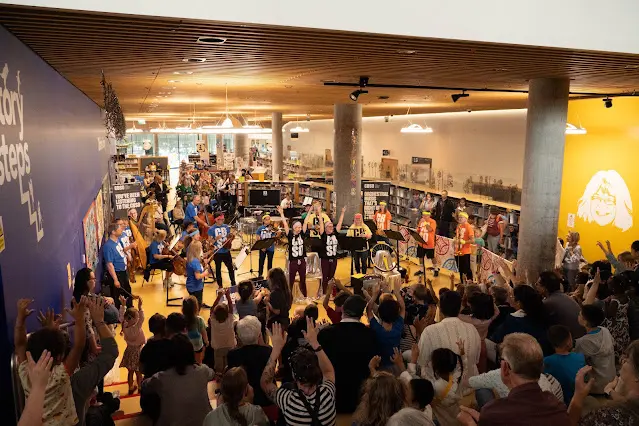
For five extraordinary days, the traditional boundaries of the concert hall are dissolving across the West Midlands. The City of Birmingham Symphony Orchestra (CBSO)—internationally renowned and traditionally anchored within the acoustic grandeur of Symphony Hall—has embarked on one of the most ambitious community outreach initiatives in its storied history. Titled CBSO in the City 2025, the festival brings a staggering 20 free public performances to unexpected, high-footfall urban environments between August 27 and August 31.
From bustling transit hubs and children’s hospitals to botanical gardens, contemporary art galleries, and moving transit cars, the initiative seeks to dismantle the perception that orchestral music is an exclusive art form. By placing world-class musicians in direct contact with commuters, shoppers, patients, and families, the CBSO is staging a masterclass in civic engagement.
At a time when cultural institutions across the globe grapple with post-pandemic audience recovery and tightening household budgets, CBSO in the City offers a refreshing counter-narrative. It is not merely a series of pop-up concerts; it is an immersive social experiment designed to democratize access to high art. Supported by clever incentives—such as the distribution of £1 "golden tickets" for the upcoming 2026–27 Symphony Hall season—the festival acts as an open invitation, welcoming first-time listeners and seasoned aficionados alike into the vibrant fold of the CBSO community.
Detailed Chronology and Venue Breakdown
The scale of CBSO in the City 2025 is vast, requiring meticulous logistical coordination across multiple municipal zones, partner organizations, and non-traditional performance spaces. The five-day itinerary blends intimate solo recitals with large-scale choral and orchestral spectacles.
Day 1 & 2: Architectural Resonance and Public Spaces
The opening acts of the festival immediately establish its eclectic character. At the Library of Birmingham—a striking piece of contemporary civic architecture—families and literature enthusiasts are treated to charming, family-friendly adaptations of Kenneth Grahame’s classic The Wind in the Willows. Elsewhere within the library’s soaring spaces, a delicate flute and harp duo creates an oasis of calm amid the urban rush.
Simultaneously, the initiative reaches deep into the heart of the city’s care networks. A solo harpist performs within the wards of Birmingham Children’s Hospital, offering a therapeutic, resonant escape for young patients, families, and overworked medical staff. This underscores a core ethos of the festival: that live music possesses intrinsic healing and restorative properties that should reach those unable to travel to a traditional concert hall.
Day 3: Art, Installation, and Unexpected Collaboration
Mid-week programming showcases inventive collaborations with Birmingham’s vibrant visual arts and cultural sectors.
The Exchange: In the Banking Hall cafe of the University of Birmingham’s city-centre facility, a CBSO string quartet performs surrounded by British artist Luke Jerram’s breathtaking Helios installation. The shimmering, celestial sculpture provides a surreal, multi-sensory backdrop for classical string arrangements.
Birmingham Museum & Art Gallery: String trios and quartets occupy gallery spaces alongside comedian and artist Joe Lycett’s provocative and playful exhibition, Everything Must Go. The juxtaposition of classical masterworks against Lycett’s subversive local commentary highlights Birmingham’s eclectic modern identity.
On the Move: In a brilliant stroke of mobile performance art, CBSO Music Director Kazuki Yamada takes the controls of a very different kind of instrument—performing piano arrangements aboard a specially branded CBSO tram slicing through the city’s transit network. Commuters glancing up from their phones find themselves sharing a carriage with one of the classical music world’s most dynamic conductors.
Day 4: Suburban Rhythms and Mass Participation
The festival’s reach extends beyond Birmingham’s immediate core into neighboring Solihull and botanical sanctuaries.
Touchwood Shopping Centre, Solihull: The Summer Sessions at the Beach in Theatre Square host the CBSO Brass ensemble. Trading traditional scores for crowd-pleasing arrangements, the brass players belt out energetic renditions of Disco Inferno, Sweet Home Alabama, and Total Eclipse of the Heart, turning a suburban shopping plaza into an impromptu dance floor.
Birmingham Botanical Gardens: A tranquil morning is soundtracked by the intricate harmonies of the CBSO Woodwind Ensemble, perfectly harmonized with the verdant, natural surroundings.
Brindleyplace: Perhaps the festival’s most inclusive mass-participation event, Saxophones in the City, is spearheaded by saxophonist and CBSO Collaborative Artist Jess Gillam. Over 60 participants—spanning an astonishing age range from 12 to 89—gather for a "come and play" clarinet and saxophone extravaganza, proving that active music-making knows no generational bounds.
Day 5: Narrative Walking Operas and Station Spectacles
The weekend culminates in high drama, theatrical immersion, and massive orchestral forces.
Digbeth (Open for Business): In an extraordinarily ambitious community collaboration, Infinite Opera, Grand Union, and the CBSO present Open for Business. Unfolding across nine distinct venues in the creative quarter of Digbeth, this walking opera features four fictional characters brought to life through real-life interviews with local industrial workers and residents. Audience members follow the characters through past, present, and future simulations of the neighborhood’s shifting socio-economic landscape.
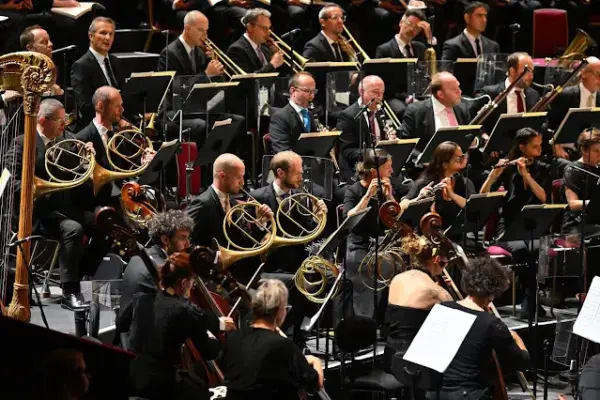
New Street Station and the Bullring: The festival crescendos in the heart of Birmingham’s major transport hub. Under the baton of conductor Jack Lovell-Huckle, the full CBSO and the CBSO Chorus take over the cavernous concourse of New Street Station. Commuters halt in their tracks as the orchestra sweeps through a diverse repertoire ranging from Gershwin, Copland, Rossini, and Beethoven to cinematic blockbusters like The Phantom Menace and Pirates of the Caribbean. The weekend concludes with encore performances of this crowd-pleasing programme in the iconic Bullring shopping center.
Supporting Context and Metrics: Breaking Down Barriers
To understand the true significance of CBSO in the City, one must examine the socio-economic context in which it operates. Arts organizations across the United Kingdom face a multi-faceted crisis: diminished local authority funding, post-pandemic shifts in audience habits, and a severe cost-of-living squeeze that has forced many families to treat live entertainment as an unaffordable luxury.
The CBSO has confronted these challenges head-on through strategic access planning:
20 Free Performances: By removing ticket prices entirely for public pop-up shows, the orchestra eliminates financial gatekeeping.
Geographic and Institutional Diversity: Reaching 20 distinct locations—from children’s wards and transit hubs to museums and botanical gardens—ensures that the orchestra meets audiences where they already are, rather than waiting for audiences to come to Symphony Hall.
Generational Span: Events like Saxophones in the City (engaging participants from ages 12 to 89) and family-friendly literature adaptations (The Wind in the Willows) demonstrate a commitment to lifelong cultural engagement.
Furthermore, the introduction of the £1 "golden ticket" acts as a brilliant bridge between spontaneous public encounters and long-term institutional loyalty. Residents who stumble upon a free performance at New Street Station or a museum cafe are handed a tangible, ultra-low-cost pathway into the formal concert hall for the upcoming 2026–27 season. This mechanism turns casual passersby into lifelong patrons, fundamentally altering the traditional funnel of classical music audience acquisition.
Official Statements and Perspectives
At the heart of the initiative is a clear, egalitarian philosophy articulated by the organization’s leadership. Emma Stenning, Chief Executive of the CBSO, emphasized the dual mission of civic celebration and economic relief during the launch of the festival:
"CBSO in the City is about us doing something special to celebrate our home city and sharing the gift of free music to people of all ages and from all walks of life. Thousands of people will experience live orchestral music for the first time, and the range of music programming and exciting locations will both part play a part in making the performances exciting, fun, and accessible."
Stenning did not shy away from addressing the harsh economic realities facing modern audiences, framing the festival’s ticketing strategy as a direct response to societal pressures:
"We also appreciate that the cost-of-living crisis has been a worry for so many people, and our £1 golden tickets will give many people that see us this coming weekend the bonus of a great night out to look forward to in the autumn. Music is for everyone and there should never be barriers to this. CBSO in the City fully opens up the world of orchestral music—removing all barriers, bringing people together, and reminding us that music should ultimately be about having fun."
This sentiment is echoed by the musicians and conductors involved, many of whom have remarked on the unique energy of performing outside the predictable acoustics of a concert hall. Without the formal expectations of silence, dark auditoriums, and black-tie dress codes, performers and audiences engage in a spontaneous, unscripted dialogue. A commuter nodding along to Beethoven while waiting for a delayed train, or a child staring in wonder at a solo harpist in a hospital ward, experiences music stripped of its historical pretension.
Future Outlook: A New Blueprint for Orchestral Survival
As CBSO in the City 2025 concludes its whirlwind five-day run, its ripples will undoubtedly be felt across the British cultural landscape for months to come. The festival serves as a compelling case study for arts organizations struggling to remain relevant in the 21st century.
For decades, classical music institutions faced criticism for remaining ivory towers—elitist entities divorced from the daily realities of the communities that housed them. The CBSO has actively dismantled that critique. By blending high art with pop culture (such as Disco Inferno and Star Wars scores), embedding music within community-driven narratives (like the Digbeth walking opera), and utilizing public transit networks as literal stages, the orchestra has proven that classical music can be dynamic, responsive, and deeply rooted in civic life.
The long-term success of this initiative will be measured not just in the initial headcounts of those who stop to listen at New Street Station, but in the redemption of those £1 golden tickets when the 2026–27 season opens at Symphony Hall in September. If even a fraction of the thousands of first-time listeners cross the threshold into the formal concert hall, CBSO in the City will have successfully redefined the relationship between an orchestra and its home city.
In an era of digital isolation and economic uncertainty, the CBSO has offered Birmingham something invaluable: a shared, joyful, and utterly accessible acoustic heartbeat echoing through the very streets, stations, and spaces where its citizens live their lives.