Executive Overview
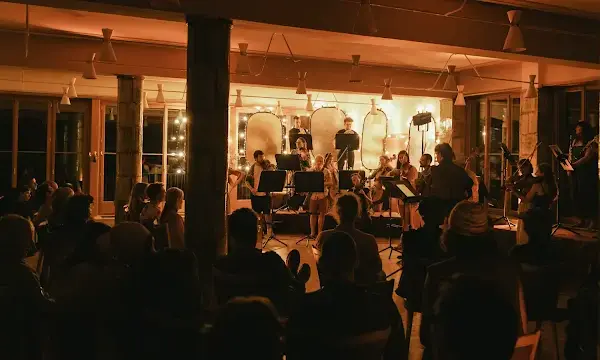
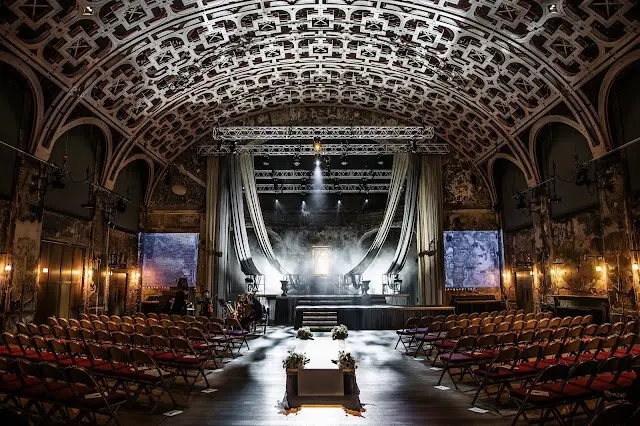
London’s operatic landscape is poised for a haunting resurrection this Halloween season. Gothic Opera, a company renowned for its adventurous programming and appetite for rediscovering neglected jewels of the repertoire, is set to stage Fromental Halévy’s 1850 opéra-comique, La Dame de Pique (The Queen of Spades). Running from October 29 to November 1 in the atmospheric, crumbling architecture of the Battersea Arts Centre’s Grand Hall, this production promises to be a major cultural event for classical music enthusiasts.
Fromental Halévy (1799–1862) was once a towering titan of the 19th-century French musical establishment. A brilliant pupil of Luigi Cherubini, Halévy commanded the Parisian stages of the Opéra and the Opéra-Comique, penning over thirty operas that captured the public imagination. Yet, despite holding a position of supreme influence in his lifetime—and earning the admiration of musical luminaries such as Hector Berlioz and Richard Wagner—Halévy’s extensive output has suffered a drastic eclipse in the modern era. Barring his monumental grand opera La Juive (1835), his works are rarely performed, existing mostly as historical footnotes rather than living theatrical experiences.
By staging La Dame de Pique—a work distinct from Tchaikovsky’s later, more famous Russian operatic adaptation of Alexander Pushkin’s novella—Gothic Opera is offering contemporary audiences a rare opportunity to evaluate Halévy’s theatrical and musical genius firsthand. Directed by Jonny Danciger, conducted by Hannah von Wiehler, and featuring a brand-new chamber orchestration by composer Leon Haxby for a bespoke ensemble of seven instruments, this production combines historical rediscovery with radical contemporary staging. Set against the decaying backdrop of the dying Ancien Régime, this revival challenges modern perceptions of Halévy, inviting us to look past Heinrich Heine’s biting contemporary critique that the composer was an artist "without the slightest spark of genius" and listen anew to a master craftsman of French romanticism.
Detailed Chronology
To understand the weight of Gothic Opera’s upcoming revival, one must trace the arc of Fromental Halévy’s life and career, as well as the tumultuous journey of La Dame de Pique from its inception to the present day.
The Rise of a Parisian Maestro (1799–1835)
Born in Paris to Jewish parents, Elias Heller (later known as Fromental Halévy) demonstrated prodigious musical talent early in life. He entered the Paris Conservatoire at a remarkably young age, studying composition under the strict and demanding Luigi Cherubini. Halévy quickly distinguished himself, winning the prestigious Prix de Rome in 1819, which funded a formative period of study in Italy.
Upon returning to Paris, Halévy established himself as an indispensable fixture of French musical life, working variously as a répétiteur, professor of harmony and accompaniment, and eventually professor of composition at the Conservatoire. His big breakthrough came with the premiere of La Juive at the Paris Opéra in 1835. A grand opera of staggering proportions, La Juive was an immediate sensation. It explored themes of religious intolerance, political oppression, and human suffering, cementing Halévy’s status in the front rank of European composers. So enduring was its initial impact that La Juive was chosen to inaugurate the magnificent new Palais Garnier in 1875.
The Creation and Premiere of La Dame de Pique (1850)
Fifteen years after his masterwork La Juive, Halévy turned his attention to a very different theatrical beast. Collaborating with Eugène Scribe—the undisputed doyen of the French libretto and the master architect of 19th-century theatrical plotting—Halévy set to work on La Dame de Pique.
The source material was Alexander Pushkin’s famous short story, but Scribe, true to form, took sweeping liberties with the narrative. Premiering at the Opéra-Comique on June 10, 1850, the resulting opera ran for a respectable 47 performances. However, Scribe’s libretto received a thoroughly mixed response from contemporary critics and theatergoers alike. It was viewed as an ungainly hybrid—a dizzying stylistic mashup encompassing elements of high drama, broad comedy, opéra-comique, tragédie lyrique, and féerie (magical spectacle).
Despite the dramaturgical confusion noted by some critics, the musical score was universally praised for its accessibility, seductive lyricism, and instrumental brilliance. Contemporary reviewers marveled at Halévy’s melodic inventiveness, the grand scale of his orchestration, and the sheer vitality of the writing—qualities that Gothic Opera’s upcoming production aims to thrust back into the spotlight.

The Long Eclipse (Late 19th Century to 2019)
Following Halévy’s death in 1862, his works steadily receded from the international stage. Changing aesthetic tastes, the rise of Wagnerism, and the monumental dominance of Verdi and Puccini pushed French grand opera into the shadows. While La Juive maintained a precarious foothold in the repertoire into the early 20th century, it eventually vanished from mainstream stages.
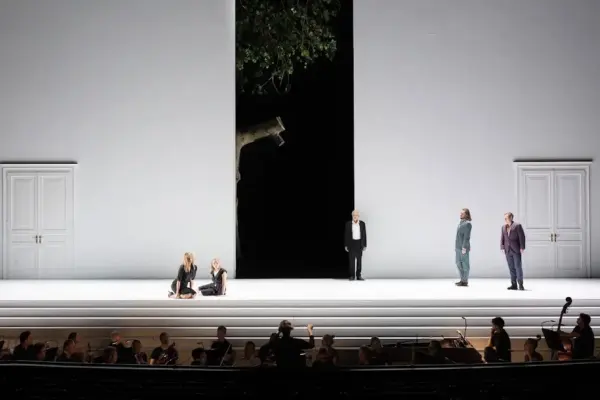
For decades, exploring Halévy’s catalog meant relying on rare archival recordings or specialized ventures. Notable modern efforts to revive his broader output have been few and far between. The Palazzetto Bru Zane foundation championed his grand opera La Reine de Chypre (1841) with a critically acclaimed recording, while his Shakespearean-derived opera La Tempesta (1850) received a rare airing at the Wexford Festival in 2022. Similarly, La Juive saw a brilliant, rare revival at Opera Vlaanderen in Antwerp in 2019, directed by Peter Konwitschny—a production that served as a watershed moment for modern champions of the composer.
Supporting Context & Metrics
The decision by Gothic Opera to stage La Dame de Pique is supported by a rich web of historical connections, artistic choices, and musicological data.
The Aesthetic Debate: Genius vs. Craft
Throughout his career, Halévy was a lightning rod for critical debate among Europe’s greatest cultural figures. Hector Berlioz, a fellow master of orchestration and dramatic flair, deeply admired Halévy’s scores, recognizing the profound technical mastery and emotional intelligence embedded within them. Richard Wagner, during his time in Paris, pointed to Halévy as an exemplary model for German composers to emulate, writing admiringly that Halévy’s "vocation is to write music springing from the most intimate and powerful depths of human nature."
Conversely, the influential German-Jewish poet Heinrich Heine offered a far more stinging assessment. Heine famously remarked that while Halévy was undeniably an artist of vast capability, he operated "without the slightest spark of genius." This dichotomy—between a composer of peerless technical craft and one lacking the ineffable, volatile lightning of true visionary greatness—has colored historical perceptions of Halévy for over a century. Gothic Opera’s revival of La Dame de Pique gives modern audiences the tools to judge this debate for themselves.
Musical Highlights and Architectural Settings
Halévy’s La Dame de Pique is structurally and musically fascinating, particularly in its daring juxtapositions of setting and mood. The narrative swings wildly from aristocratic drawing rooms to gritty, subterranean mines.
Among the score’s most celebrated moments is a remarkable sequence in Act 2, where a seemingly polite aristocratic duet violently erupts into a turbulent, visceral miners’ chorus. Halévy’s contemporaries singled out this scene as one of the most astonishing achievements in the entire score, praising its raw power and dramatic audacity—elements that will undoubtedly resonate profoundly within the cavernous acoustic of the Battersea Arts Centre’s Grand Hall.
The Proustian Connection: An Intimate Family Tree
Beyond his music, Halévy occupies a fascinating position in French cultural history through his immediate family. In 1869, Halévy’s daughter, Geneviève Halévy, married the composer Georges Bizet, who had been one of Halévy’s most brilliant composition students at the Conservatoire. Bizet, of course, would go on to write Carmen, one of the most performed operas in history.
Following Bizet’s untimely death in 1875 and a subsequent relationship with Élie-Miriam Delaborde (son of the eccentric composer Charles-Valentin Alkan), Geneviève married a wealthy banker and established herself as one of the most prominent Parisian salonnières of the Third Republic. Her glittering salons attracted the artistic elite of France, most notably a young Marcel Proust. Proust became a frequent guest at her soirées and drew heavily upon her personality, social standing, and artistic patronage when creating the character of the Duchesse de Guermantes in his monumental masterwork, In Search of Lost Time. Thus, the bloodline of Fromental Halévy runs directly into the literary DNA of high modernism.

Official Statements and Production Vision
Gothic Opera’s upcoming production is defined by a bold collaborative vision, bringing together a creative team committed to stripping away dusty historical preconceptions and injecting urgent, theatrical life into Halévy’s score.
Director Jonny Danciger, whose previous work includes an acclaimed staging of Strauss’s Die Fledermaus for St Paul’s Opera in 2024, approaches La Dame de Pique not merely as a museum piece, but as a living psychodrama. By utilizing the crumbling, unvarnished architecture of the Battersea Arts Centre’s Grand Hall, Danciger and designer Celeste Langrée aim to physically transport the audience to the twilight hours of the Ancien Régime in France—an era characterized by systemic decay, decadent aristocratic privilege, and revolutionary dissolution. Within this space, the production visualizes the relentless power struggles between the ruling elite and the working class as a high-stakes, ruthless card game where the deck is constantly being reshuffled.
Musically, the production undergoes a radical transformation. Recognizing the logistical and financial impossibilities of staging a mid-19th-century grand opéra-comique with massive forces in an intimate fringe setting, composer Leon Haxby has created a brand-new chamber orchestration. Haxby, who previously collaborated with Gothic Opera on their striking UK premiere of Donizetti’s Maria di Rudenz, has distilled Halévy’s rich, expansive score for a nimble ensemble of just seven instruments. This chamber arrangement maintains the melodic and harmonic integrity of the original while intensifying the psychological intimacy of the drama.
At the podium stands conductor Hannah von Wiehler, whose interpretive leadership will guide the instrumental ensemble and vocalists through Halévy’s intricate textures. Lighting designer Luca Panetta completes the creative triad, using shadow, amber glow, and stark contrasts to accentuate the gothic, atmospheric undertones of Scribe’s libretto and the venue’s historic interior.
Future Outlook
The staging of La Dame de Pique by Gothic Opera represents a vital bellwether for the future of operatic programming in the United Kingdom. In an economic climate where major opera houses are increasingly risk-averse—frequently recycling standard-repertoire warhorses like La Bohème, Carmen, and La Traviata—independent and fringe companies are stepping into the breach to expand our musical horizons.
By championing forgotten works by major historical figures, Gothic Opera is doing essential musicological and theatrical spade-work. The success of Antwerp’s 2019 La Juive and Wexford’s 2022 La Tempesta suggests there is a growing, sophisticated appetite among modern audiences for unearthing the lost chapters of 19th-century opera. If Haxby’s chamber orchestration and Danciger’s atmospheric staging succeed in unlocking the dramatic power of La Dame de Pique, it could pave the way for a broader reappraisal of Halévy’s vast catalog.
Furthermore, this production highlights the viability of chamber opera as a vehicle for grand-scale works. By reducing the instrumental forces without sacrificing the music’s emotional core, Gothic Opera demonstrates how high-art lyric theater can be successfully decentralized, performed in unconventional heritage spaces, and made accessible to new generations of theatergoers.
Event Details At a Glance
- Production: La Dame de Pique (The Queen of Spades) by Fromental Halévy and Eugène Scribe
- Company: Gothic Opera
- Dates: October 29 – November 1, 2024
- Venue: Grand Hall, Battersea Arts Centre, London
- Creative Team: Jonny Danciger (Director), Hannah von Wiehler (Conductor), Leon Haxby (Arranger/Chamber Orchestration), Celeste Langrée (Designer), Luca Panetta (Lighting Designer)
- Ticketing & Information: Full details and box office links are available via the official Gothic Opera Website.
As the autumn leaves fall and London prepares for the theatricality of Halloween, audiences at the Battersea Arts Centre will have a rare, unmissable chance to step back into 1850s Paris and decide for themselves: was Fromental Halévy merely a brilliant artisan, or did he indeed possess that elusive, incandescent spark of genius?