Executive Overview
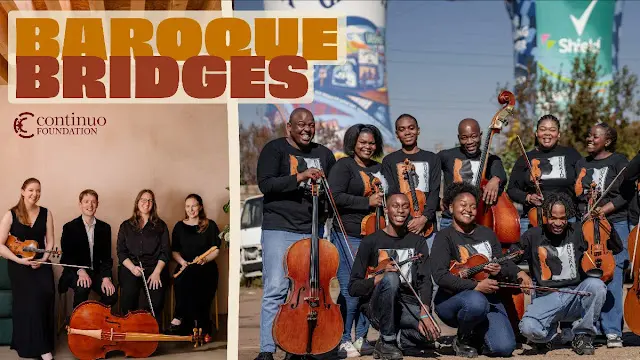
In a landmark cultural collaboration bridging centuries, continents, and musical genres, the UK-based period-instrument collective Ensemble Hesperi has joined forces with South Africa’s celebrated Buskaid Soweto String Ensemble. Titled Baroque Bridges, this high-profile series of joint events spans high-profile venues in the United Kingdom, culminating in a celebration of historical performance practice melded with vibrant South African township traditions.
The partnership brings together the refined, historically informed aesthetic of European baroque music—featuring period-appropriate recorders, harpsichords, and gut-stringed instruments—with the dazzling virtuosity, rhythmic dynamism, and deeply rooted community spirit of young musicians hailing from Diepkloof, Soweto.
The repertoire chosen for Baroque Bridges is as ambitious as it is joyous. Alongside canonical masterpieces by Johann Sebastian Bach, George Frideric Handel, Georg Philipp Telemann, Henry Purcell, and Jean-Philippe Rameau, the programme intentionally expands the Western classical canon. It incorporates works by extraordinary 18th-century composers of African descent: the Chevalier de Saint-Georges (Joseph Bologne) and Ignatius Sancho. The concerts build toward an electrifying finale: Kwela music—an infectious, improvised genre of street music deeply intertwined with South African township heritage and anti-apartheid resistance history—performed complete with traditional choreography by members of the Buskaid ensemble.
This article provides an in-depth exploration of this extraordinary cross-cultural summit. We examine the detailed chronology of the tour, trace the inspiring 33-year history of the Buskaid project from a British railway station fundraiser to an internationally acclaimed academy, analyze the rich and diverse musical repertoire, and project the long-term impact of such collaborative international artistic initiatives.
Detailed Chronology of the ‘Baroque Bridges’ Tour
The Baroque Bridges itinerary has been carefully curated to showcase both ensembles in acoustically sympathetic historic spaces, while also allowing the Buskaid Soweto String Ensemble a platform for independent artistic expression.
1. The Opening Salvo: St Mary’s Church, Bathwick, Bath (August 18)
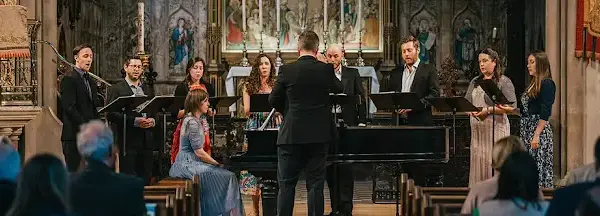
The tour launched on Sunday, August 18, at the striking neoclassical church of St Mary’s Bathwick in Bath. Known for its soaring vaulted ceilings and resonant acoustics, the church provided an ideal acoustic backdrop for the interplay between Ensemble Hesperi’s period instruments and the rich, warm timbres of Buskaid’s string players.
The concert drew an enthusiastic audience of classical music aficionados and curious newcomers alike. The juxtaposition of Handel’s driving concerto grosso textures with Bologne’s elegant violin writing highlighted the seamless dialogue between the two ensembles. The evening concluded with a standing ovation as the South African musicians broke into their signature Kwela and township dance routines down the central aisle of the church.
2. The Metropolitan Showcase: St Giles Cripplegate, London (August 20)
Moving to the heart of the capital on Tuesday, August 20, the collaboration took over St Giles Cripplegate—a historic medieval church nestled in the Barbican district of London. Surviving the Blitz and the Great Fire of London, St Giles offered a profound historical resonance that mirrored the historical breadth of the musical programme.
London critics and patrons gathered to witness the synthesis of 18th-century European court music and 20th-century South African liberation rhythms. The architectural gravitas of the venue elevated the performance of Purcell’s Chacony in G minor, while Telemann’s descriptive suite-writing allowed individual soloists from both ensembles to trade melodic lines with virtuosic flair and palpable mutual respect.
3. Solo Spotlight: The Foundling Museum, London (August 21)
The residency concluded on Wednesday, August 21, with a special standalone performance by the Buskaid Soweto String Ensemble entitled Music Hath no Borders at The Foundling Museum.
This venue choice was deeply symbolic. The museum tells the story of the Foundling Hospital, London’s first children’s charity and a historic institution deeply tied to the legacy of George Frideric Handel, who was a governor of the hospital and famously raised substantial funds for it through benefit concerts of Messiah. By performing Music Hath no Borders in this exact historical cradle of philanthropy and classical music charity, Buskaid honored its own philanthropic origins while demonstrating its evolution into an autonomous, world-class artistic powerhouse.
Supporting Context & Metrics: The Buskaid Phenomenon
To fully appreciate the significance of Baroque Bridges, one must understand the extraordinary origin story and socio-cultural metrics underpinning the Buskaid Soweto String Ensemble.
The Genesis: Busking for Soweto (1991)
The story began in 1991 during the height of the anti-apartheid struggle, when British violist Rosemary Nalden learned of the immense systemic difficulties facing a small, dedicated group of young string players striving to learn classical music in Diepkloof, a township in Soweto, South Africa. Access to instruments, qualified teachers, and dedicated rehearsal spaces was virtually non-existent under the apartheid regime’s separate-and-unequal educational infrastructure.
Demonstrating the power of grassroots artistic activism, Nalden mobilized her professional network. A total of 120 professional British musicians participated in a simultaneous, coordinated "busk" across sixteen major British Rail stations in London and the Southeast. This single act of solidarity raised an initial £6,000—a critical financial lifeline that purchased instruments, sheet music, and basic supplies for the township musicians.
.jpg)
Relocation and Institutional Growth (1997–1999)
Recognizing that remote fundraising was only a temporary fix, Nalden made a life-altering decision in 1997. She relocated permanently to South Africa to establish the Buskaid Soweto String Project.
By 1999, through continuous international fundraising and sheer tenacity, the project opened the doors to the Buskaid Music School in Diepkloof. This purpose-built facility became a safe haven and a creative powerhouse, offering rigorous, daily string instruction to talented children and teenagers from the surrounding township.
Evolution and Repertoire Metrics
What began as an elementary string training project has transformed into a globally renowned ensemble. Today, the Buskaid Soweto String Ensemble boasts metrics of remarkable artistic achievement:
- Generational Impact: Hundreds of underprivileged children have received world-class instrumental training, with many going on to pursue professional careers in music performance and education.
- Genre Versatility: The ensemble’s repertoire defies rigid categorization. While trained in rigorous classical Western methodologies, they effortlessly transition between standard classical masterworks, classic pop covers, Afro-pop, traditional township grooves, and—most recently—South Africa’s indigenous Amapiano house music genre.
- Global Footprint: Buskaid has toured internationally, performing in prestigious halls across Europe and the UK, challenging traditional Eurocentric perceptions of where classical music belongs and who can master it.
The Repertoire: Building Musical Bridges
The artistic core of Baroque Bridges lies in its thoughtfully curated programme. Rather than presenting Western classical music and South African township music as two separate, isolated entities, the collaboration emphasizes shared dialogues across time and geography.
1. The European Baroque Masters
The inclusion of Bach, Telemann, Handel, Purcell, and Rameau anchors the programme in the European 17th and 18th centuries. Ensemble Hesperi provides the historical performance framework, utilizing period-appropriate bowing techniques, tuning pitches, and continuo practices (harpsichord and theorbo) that reveal the dance-like origins and improvisatory spirit inherent in baroque scores.
2. Expanding the Canon: Bologne and Sancho
Crucially, the programme looks beyond the traditional "dead white European male" narrative by highlighting 18th-century composers of African descent:
- Joseph Bologne, Chevalier de Saint-Georges (1745–1999): A contemporary of Mozart, Bologne was a phenomenal violinist, composer, and fencing champion in pre-revolutionary France. His violin concertos and string quartets combine Gallic elegance with staggering technical demands.
- Ignatius Sancho (1729–1780): Born on a slave ship, Sancho rose to become a British composer, actor, and writer, notable as the first Briton of African descent known to have voted in a British general election. His charming country dances and songs published in London during the 1770s offer a delightful bridge between folk traditions and high-art classical composition.
3. The Kwela Finale
The emotional and kinetic climax of every Baroque Bridges concert is the integration of Kwela. Originating in the late 1940s and 1950s in the townships of South Africa, Kwela is an upbeat, jazzy street music genre heavily characterized by the penny whistle, driving basslines, and syncopated rhythms. During the apartheid era, Kwela served not only as a vibrant expression of urban Black joy and identity but also as a vehicle for coded anti-apartheid protest.
Arranged specially for string ensemble and performed with authentic, joyful choreography by the Buskaid members, the performance of Kwela alongside baroque masterworks encapsulates the central thesis of the project: music transcends geopolitical and temporal borders, uniting diverse human experiences through shared rhythm and melody.
Official Statements and Industry Reception
While specific press soundbites continue to roll in as the tour progresses, cultural commentators and arts administrators have lauded the collaboration as a masterclass in modern cultural exchange.
Arts education advocates have repeatedly pointed to the Buskaid model as proof that classical music training, when combined with community investment and cultural pride, can serve as a potent engine for social upliftment.
Collaborating partners from Ensemble Hesperi have noted in artist talks that rehearsing with the Buskaid ensemble fundamentally challenged their own perceptions of performance practice. While European early music specialists often rely heavily on historical treatises and written manuscripts, the Buskaid musicians bring an innate, living oral tradition of rhythm, movement, and collective improvisation that breathes entirely new life into centuries-old European scores.
Further contextual documentation regarding Ensemble Hesperi’s collaborative ethos and touring schedule can be explored via their artist profile on Continuo Connect.
Future Outlook
As the Baroque Bridges tour concludes its UK run, the implications of this partnership extend far beyond a single concert season.
- Redefining Early Music: Projects like Baroque Bridges signal a vital shift within the early music community. By actively programming works by Black 18th-century composers and collaborating directly with non-European traditional artists, the genre is shedding its reputation as an exclusionary, Eurocentric museum piece and re-emerging as a living, global dialogue.
- Sustaining Educational Pipelines: The ongoing success of international tours provides crucial financial and reputational support back to the Buskaid Music School in Diepkloof, ensuring that the next generation of Soweto string players will continue to receive world-class instruction despite economic and infrastructural headwinds in South Africa.
- Future Collaborations: Organizers have hinted that the success of the Bath and London dates may pave the way for reciprocal touring, potentially bringing Ensemble Hesperi to South Africa for joint educational workshops and performances in Johannesburg and Soweto.
Ultimately, Baroque Bridges stands as a triumphant testament to the power of music to dissolve geographical divides, honor marginalized historical legacies, and celebrate the unbridled joy of collective human creativity.