Executive Overview
In the shadowy corridors of modern world music preservation, few labels carry the uncompromising curatorial vision of Afro7. Founded by Norwegian vinyl collector Fredrik Lavik as a Finnish-based sister imprint to Jazzaggression, Afro7 carved its initial reputation out of unearthing and recirculating rare East African 45s—sparking archival projects like Soundway’s definitive Kenya Special. Yet, among its catalog of vintage Kenyan and Somali rediscoveries, one ensemble has consistently functioned as a brilliant anomaly: The Scorpios.
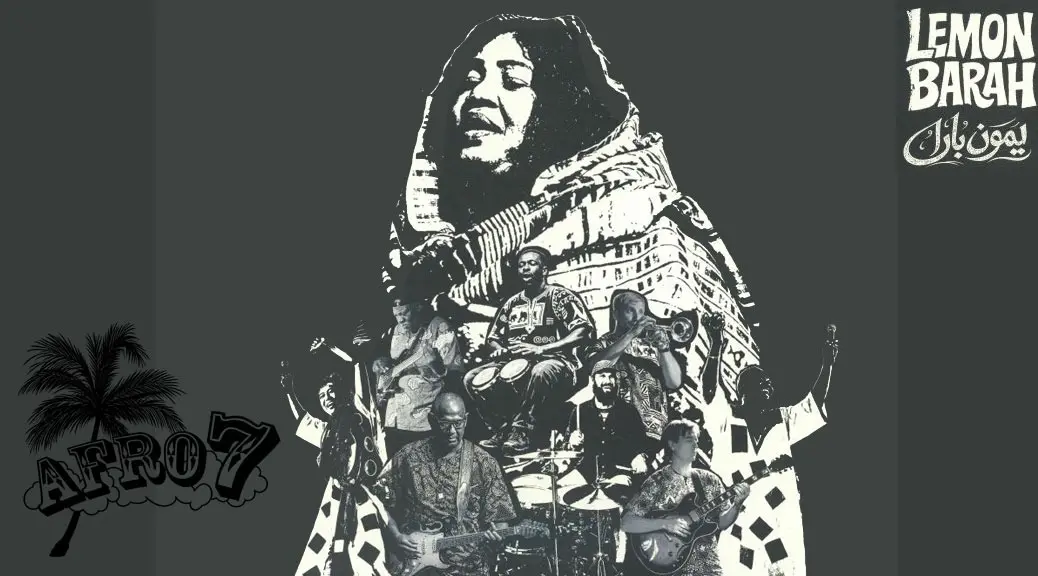
Now, with the release of their third full-length album, Lemon Barah—pressed on heavyweight 180-gram vinyl in a strictly limited edition of 500 copies—The Scorpios have delivered what may be their most culturally vital and sonically intoxicating statement yet. Recorded in July 2022 at Hackney’s legendary Total Refreshment Centre, the album arrives under a crushing weight of geopolitical tragedy. Completed just nine months before the outbreak of the devastating Sudanese civil war in April 2023, and taking four years to finally materialize on vinyl, Lemon Barah transforms from a contemporary world-funk masterclass into an urgent, historical artifact.
Centering on traditional rhythms from Kordofan, anchored by veterans of Khartoum’s golden era of the 1970s and 1980s, and enriched by London’s vibrant multicultural tapestry, the record bridges historical exile with unstoppable sonic energy. This is not merely an album review; it is an investigation into the preservation of a diasporic musical identity, the tragedy of ongoing conflict, and the transcendent power of groove.
Detailed Chronology: From Khartoum’s Golden Age to West London Collectives
The Twilight of Khartoum’s Jazz Scene
To understand the heartbeat of The Scorpios, one must trace the cultural trajectory back to Khartoum, Sudan, during the vibrant mid-20th century. In the 1970s, the Sudanese capital boasted a thriving, cosmopolitan jazz scene that effortlessly synthesized traditional pentatonic folk structures with Afro-Cuban percussion, American funk, and British rock.
Among the luminaries of this era was The Scorpions, an iconic Khartoum outfit whose singular and exceedingly rare LP, Jazz, Jazz, Jazz, was recorded in Kuwait in 1980 alongside charismatic vocalist Saif Abu Bakr. This golden era, however, was violently truncated. Following the imposition of Sharia law by President Jaafar Nimeiry in 1983, the once-flourishing nightlife, arts, and music scenes were systematically squeezed, censored, and forced underground.
For many musicians, the crackdown initiated a painful diaspora. Numerous seasoned instrumentalists fled Sudan as refugees in the 1980s, carrying their instruments and memories across East Africa and the Arab states, where they quietly kept traditions alive by performing at weddings and religious festivals. The lineage, though fractured, refused to die. In a poignant genealogical circle, vocalist Regaia Ishag notes that her father played guitar in the original Scorpions lineup—cementing The Scorpios not as a casual pastiche band, but as direct heirs to a lost musical kingdom.
Genesis in West London (2013)
The modern iteration of this lineage began to take shape in West London in 2013. Adam Bulewski, then working as a community outreach worker, set up a local music project aimed at dismantling the stigma surrounding mental health within the city’s marginalized Sudanese community.
During these sessions, Bulewski struck up a profound friendship with a seasoned percussionist attending the project. This connection opened the door to a network of master musicians who had arrived in Britain decades prior as refugees from Khartoum. These were not novices; they were veterans of institutions like the Sudan National Band and the Sudan TV and Radio Band, having toured and recorded with legends like Abdel Gadir Salim, Abdel Karim el Kabli, and Abdel Aziz el Mubarak.
Recognizing the immense cultural value and untapped energy of these players, Bulewski helped form The Scorpios. When Fredrik Lavik of Afro7 stumbled upon early recordings of the collective, he immediately requested a full-length album. Their self-titled 2017 debut became Afro7’s very first new release. It was captured so raw, live, and unpolished that discerning listeners initially mistook it for a dusty archival find—precisely the vintage aesthetic the band had carefully cultivated.
International Acclaim and Major Milestones
Following their debut, the band pressed forward. A pivotal 2018 recording session at Abbey Road yielded "Mashena"—their striking homage to a classic by the legendary Sudanese sibling duo Al Balabil—alongside the bulk of their sophomore album, Let’s Go.
As their reputation solidified, The Scorpios transitioned from studio experiments to a formidable live touring machine. They commanded stages across Europe, performing at major festivals and institutions including WOMAD, End of the Road, Utrecht’s prestigious Le Guess Who?, and the historic Opéra de Lyon, where a track from Let’s Go was captured live in 2019.
Supporting Context & Metrics: The Anatomy of Lemon Barah
Recording at the Total Refreshment Centre
The physical environment of a recording session often bleeds into the grooves of the vinyl, and Lemon Barah is a textbook example. In July 2022, the band checked into Hackney’s Total Refreshment Centre (TRC).

The building’s history reads like a microcosm of London’s immigrant story: starting out as a mid-century confectionery factory, it transformed into the Mellow Mix Caribbean social club by the 1990s. From 2012 onward, TRC evolved into one of the principal engine rooms of the new London jazz renaissance. Although the physical live venue space closed its doors in 2018, the recording studio remained a vital creative sanctuary.
A structure steeped in migrant-community history served as the ultimate spiritual home for a band of Sudanese exiles and London-based collaborators. Recorded just nine months before the outbreak of the catastrophic Sudanese civil war in April 2023, the tracks captured inside those Hackney walls now echo with a poignant, bittersweet irony.
The Significance of "Lemon Barah" and Kordofan Roots
The title track of the album is rooted in a traditional song hailing from the region of Kordofan. It is named after Bara, the second-largest town in North Kordofan. Situated strategically on the vital road junction linking Khartoum with El Obeid, Bara has long been celebrated culturally for its unusual, exceptionally large lemons.
Fans of modern East African music may recognize the melody from Ceasefire, the acclaimed 2005 collaborative album between Sudanese master Abdel Gadir Salim and South Sudanese hip-hop artist Emmanuel Jal, where it appeared as the beloved love song "Lemon Bara."
Abdel Gadir Salim, who passed away last December at the age of 79, was instrumental in introducing the hypnotic rhythms of Kordofan into Sudan’s national consciousness. His landmark release, Songs from Kordofan—recorded during his debut British tour in 1986 and issued by World Circuit—paved the way for international appreciation of Sudanese folk forms. Notably, The Scorpios’ lead guitarist, Yasir Taha, cut his teeth touring Europe alongside Salim, as well as serving within the esteemed ranks of the Sudan National Band.
The Frontline Reality of Bara
The naming of the album takes on a devastating contemporary resonance when contextualized against the current war. Bara has unhappily transformed into a heavily contested frontline.
- October 2025: The Rapid Support Forces (RSF) seized control of Bara, triggering a mass humanitarian crisis as roughly 36,000 residents fled the town within a single week.
- March 5, 2026: The Sudanese Armed Forces successfully retook the town, only to lose tactical control again just eleven days later.
- Late July 2026: The Governor of Darfur claimed that Bara had been recaptured once more, though neither side issued formal confirmations at the time.
A buoyant, centuries-old folk love song celebrating a town’s unusually large lemons now carries an unbearable geopolitical weight—one that neither the musicians nor the engineers could have foreseen during those tranquil summer sessions in Hackney.
Track-by-Track Sonic Analysis
The Scorpios’ lineup on Lemon Barah features an airtight mesh of cultures and disciplines: Regaia Ishag and Osman Gerein share mesmerizing lead vocal duties (with Gerein also anchoring the bongos); Adam Bulewski commands guitar and analogue synths alongside lead guitarist Yasir Taha; Ronnie Maxwell handles bass; Will Roberts drives the kit; João Paulo adds auxiliary percussion; and Dawid Frydryk cuts through the mix on trumpet.
Side A: Rhythmic Ferocity and Psychedelic Funk
- "Lemon Barah": Setting the thematic and sonic tone for the entire record, the title track immediately announces its lineage. Sudanese folk tradition is effortlessly filtered through London’s multicultural melting pot, underpinned by an undeniable, driving funk rhythm. Ishag and Gerein’s vocal interplay is stellar, but the moment Taha’s lead guitar enters the mix, the track shifts into gear—delivering a "fun-tastic" masterclass in cross-genre synthesis.
- "Luili": Lightening the initial tempo, this track allows the vocal harmonies to take center stage before steadily building momentum until the ensemble explodes into a euphoric fever of sound.
- "Haja": Shifting the rhythmic framework once again, "Haja" settles into a laid-back, infectious groove that flirts with reggae cadences before the electric guitar seizes control, injecting high-octane energy.
- "Zumaar Gumar": Anchored by a heavy, hypnotic bassline beneath a familiar melodic refrain, this track layers shimmering psychedelic synth sprinkles over an unyielding foundational groove.
Side B: Dub Textures, Folk Vaults, and Symbolic Closers
- "Ma Mourtah": Opening Side B as a standout highlight, this track plunges deep into the bedrock of reggae dub culture. Drenched in tape effects, spatial echo, and drifting brass lines, it evokes the sonic imagery of an ancient earth being reborn through sound.
- "Safa": Exhibiting a fully realized artistic confidence, the band pulls out all the stops here—delivering intricate, high-energy arrangements steeped in historical reverence and performance flair.
- "Azabnah": Possessing a timeless quality, this piece feels as though it has been lovingly unearthed directly from the deepest vaults of traditional musical history, demanding patient, reflective listening.
- "Sudan": The closing track carries an overwhelming symbolic gravity given the current plight of the nation. Originally written by Izumi Kobayashi (affectionately known as Mimi, a prominent figure from the Japanese city pop movement who penned "Lum’s Love Song" for the Urusei Yatsura anime and collaborated with Masayoshi Takanaka), Kobayashi relocated to London in 1985 and now fronts the Tokyo Riddim Band. Her poignant piano solo closing out the record reads as an emotional elegy to a nation’s enduring anguish, as well as a triumphant testament to the eternal revival of its cultural soul.
Future Outlook
As Lemon Barah hits shelves via Afro7 in its limited run of 500 copies on 180-gram vinyl, its release serves as both a cultural triumph and a solemn reminder of what is at stake. The Scorpios have successfully documented a living bridge between the lost golden era of Khartoum’s jazz clubs and the dynamic, multicultural heartbeat of contemporary London.
Looking forward, the band remains a vital ambassador for Sudanese musical heritage on the global stage. Yet, their art exists under the long, heavy shadow of an ongoing civil war that continues to devastate their homeland—turning towns like Bara into active frontlines and scattering artists across the globe.
The future of The Scorpios lies in their unyielding refusal to let this music be silenced by geopolitical violence. Through albums like Lemon Barah, they ensure that the trumpets blaring from Khartoum’s past, the rhythms of Kordofan, and the resilient voices of exiled masters will continue to echo across international dancefloors and archival vinyl collections for generations to come.