Executive Overview
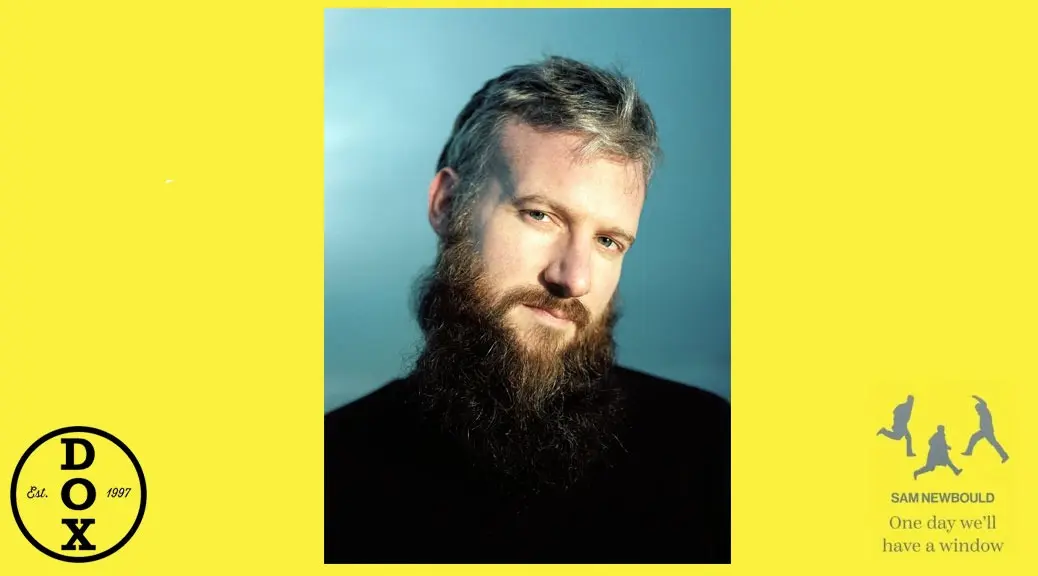
In the contemporary landscape of improvised music, few artists map their internal and external geographies with as much intentionality as composer and saxophonist Sam Newbould. Over the course of a steadily accumulating discography—marked by the evocative rural memories of Blencathra and Bogus Notus, followed by the outward-looking communal reflections of Homing—Newbould has established himself as a distinct voice among a generation of transnational artists. His fourth full-length release, One Day We’ll Have a Window, represents a profound pivot in his artistic trajectory. Rather than looking outward toward physical landscapes or cultural belongings, Newbould turns his lens inward, using an architectural limitation as a sprawling metaphor for human connection.
Conceived and largely written within the confines of a windowless basement studio situated inside Amsterdam’s iconic Volkshotel, the album transforms sensory deprivation into an expansive compositional ethos. The record finds Newbould working alongside his deeply integrated, long-standing quintet—featuring tenor saxophonist Bernard van Rossum, pianist and synthesizer player Xavi Torres, bassist Jort Terwijn, and drummer Guy Salamon—while simultaneously expanding his sonic palette through intimate, self-produced solo miniatures.
While Newbould’s eclectic vocabulary draws from touchstones as diverse as Wayne Shorter, Charles Mingus, Radiohead, English folk traditions, and contemporary classical composition, One Day We’ll Have a Window is very much its own organism. It balances rigorous harmonic architecture with exploratory fragility. This comprehensive review and analytical profile examine the structural anatomy of Newbould’s latest release, contextualize his ongoing evolution within European jazz, analyze the collaborative dynamics of his ensemble, and assess the broader implications of his evolving sonic architecture for the future of modern creative music.
Detailed Chronology: From Northern English Roots to the Amsterdam Underground
To fully understand the artistic motivations underpinning One Day We’ll Have a Window, one must trace the arc of Sam Newbould’s creative evolution. Newbould’s early musical consciousness was deeply rooted in the rugged terrain and pastoral memories of northern England. Works like Blencathra and Bogus Notus served as early audio cartography, translating physical landscapes—specifically the dramatic topography of the Lake District—into sprawling melodic structures and folk-infused modal jazz frameworks.
As Newbould relocated his creative base to the Netherlands, his geographical displacement sparked a thematic shift. The subsequent album, Homing, grappled directly with the psychological dimensions of displacement, identity, and belonging. It was an outward-looking record that sought to anchor a wandering spirit within a supportive European creative community. Critics noted how Homing successfully bridged the gap between British folk sensibilities and the sophisticated, high-wire interplay of the Amsterdam jazz scene.
However, the genesis of One Day We’ll Have a Window marked an abrupt change in physical circumstance. Cut off from natural light and the external world in a windowless subterranean workspace at Amsterdam’s Volkshotel, Newbould faced an environment that could easily have induced creative claustrophobia. Instead, he weaponized the absence of a view, converting it into an intense psychological and acoustic study on human connection. The studio walls ceased to be barriers and became instead a canvas upon which he projected internal vistas.
As the writing process matured, Newbould balanced these dark, subterranean conceptual sessions with expansive ensemble rehearsals. The chronology of the album’s creation is thus one of contrasts: the intense, isolated germination of ideas in a basement room, followed by the communal, breathable realization of those sketches alongside trusted collaborators. The resulting record is not merely a collection of tracks, but a chronological diary of an artist learning to look past physical boundaries to find universal emotional resonance.
Supporting Context & Metrics: The Ensemble Dynamics and Eclectic Influences
The Quintet Architecture
At the core of One Day We’ll Have a Window is a quintet that has been forged and refined over several years of touring, recording, and intense collaborative experimentation. This pre-existing familiarity acts as the primary structural pillar of the album, enabling a level of telepathic communication that bypasses conventional "soloing" hierarchies.

- Bernard van Rossum (Tenor Saxophone): Newbould’s front-line partnership with van Rossum is central to the album’s vibrant tonal palette. Rather than engaging in a traditional competitive "horn battle," the two saxophonists weave intricate counterpoint, sharing sonic space with mutual respect. Their contrasting yet complementary approaches add rich harmonic color and emotional depth to the arrangements.
- Xavi Torres (Piano and Synthesizers): Torres serves as the bridge between the acoustic warmth of traditional jazz and the textural possibilities of contemporary electronic music. His ability to seamlessly transition from delicate, cascading acoustic piano voicings to atmospheric, undulating synthesizer pads dictates much of the album’s ambient climate.
- Jort Terwijn (Bass) & Guy Salamon (Drum Kit): Operating as the rhythm section, Terwijn and Salamon provide a dynamic, highly responsive foundation. They do not merely keep time; they actively shape the narrative arcs of the compositions, reacting instinctively to the frequent shifts in mood, tempo, and harmonic tension initiated by the front line.
A Multidisciplinary Blueprint of Influences
Newbould’s compositional voice defies easy categorization, drawing from a rich, multidisciplinary reservoir of influences:
- Jazz Luminaries: The sophisticated harmonic restlessness and structural daring of Wayne Shorter loom large over Newbould’s writing, while the emotional urgency and social consciousness of Charles Mingus inform the ensemble’s collective bite.
- Alternative Rock & Folk: Traces of Radiohead’s cerebral, structurally unpredictable song forms are audible in the album’s rhythmic asymmetries, sitting comfortably alongside the modal, storytelling qualities of English folk music.
- Contemporary Classical: The integration of layered percussion, flute, voice, and sparse, miniature forms points directly to late 20th-century and contemporary classical composition, where texture and timbre are prioritized over standard theme-and-variation models.
Official Statements and Critical Perspectives on the Creative Process
The transition from conceptual metaphor to musical reality required a deliberate step outside the comfort zone of traditional jazz arranging. In recent commentary surrounding the release of One Day We’ll Have a Window, critics and observers have zeroed in on Newbould’s growing willingness to embrace vulnerability and fragmentation in his writing.
Industry analysts and reviewers have highlighted how tracks like "Warp and Weft," "Thee Tha Theesen," and their subsequent reprises function almost as direct dispatches from Newbould’s compositional workshop. These pieces bypass conventional jazz construction in favor of fragile, highly exploratory miniatures. In these moments, voice, flute, synthesizer, and layered percussion are brought to the foreground, capturing the artist in the raw act of creation.
The critical consensus acknowledges that Newbould’s ambition occasionally outpaces narrative resolution. Observers note that while the album’s abundance of ideas results in moments of breathtaking innovation, it can occasionally leave emotional threads dangling. Yet, this very attribute is frequently celebrated as a mark of an artist in active, courageous transition. As jazz critic Mike Gates observes, One Day We’ll Have a Window captures a musician unafraid to test his own boundaries: "The window may not be completely open yet, but plenty of interesting light comes through, making it well worth hearing."
This sentiment underscores a vital truth about Newbould’s trajectory: perfection is secondary to exploration. By opening up his process and sharing the imperfect, raw sketches of his subterranean workspace, Newbould invites the listener into a transparent dialogue about the nature of modern composition.
Future Outlook: The Horizon for Sam Newbould
As One Day We’ll Have a Window establishes its place in the global jazz ecosystem, it opens up fascinating questions regarding the future direction of Sam Newbould’s career. Having successfully navigated the pastoral nostalgia of his early English works, the identity-driven themes of Homing, and now the architectural and psychological introspection of his latest release, Newbould has proven himself to be one of the most intellectually curious composers of his generation.
Looking ahead, several key trajectories define his professional and artistic horizon:
- Expanded Interdisciplinary Collaborations: Given the integration of voice, flute, electronics, and ambient textures on this album, future projects are likely to see Newbould push further outside the traditional acoustic quintet format, potentially incorporating visual arts, live spatial audio design, or extended cross-genre partnerships with classical and folk practitioners.
- Transnational Touring and Cross-Pollination: Operating out of the dynamic European creative hubs—particularly the Netherlands and the United Kingdom—positions Newbould perfectly for international exchange programs, residency-based composition, and large-scale festival commissions that can accommodate his increasingly ambitious arrangements.
- Refining the Balance of Complexity and Impact: As critics have noted, the primary artistic challenge for Newbould moving forward will be the synthesis of his boundless conceptual ideas into cohesive emotional narratives that sustain their impact over longer durations. Mastering this equilibrium will likely cement his status from an artist "finding his voice" to a definitive master of modern improvised music.
Ultimately, One Day We’ll Have a Window stands as a testament to resilience and imagination. By transforming a windowless basement into a portal for profound musical expression, Sam Newbould has not only expanded his own artistic vocabulary but has also offered listeners a compelling blueprint for how music can bridge the walls that divide us. As he continues to look toward new horizons, the light filtering through his evolving sonic architecture promises an exceptionally bright future.