Executive Overview
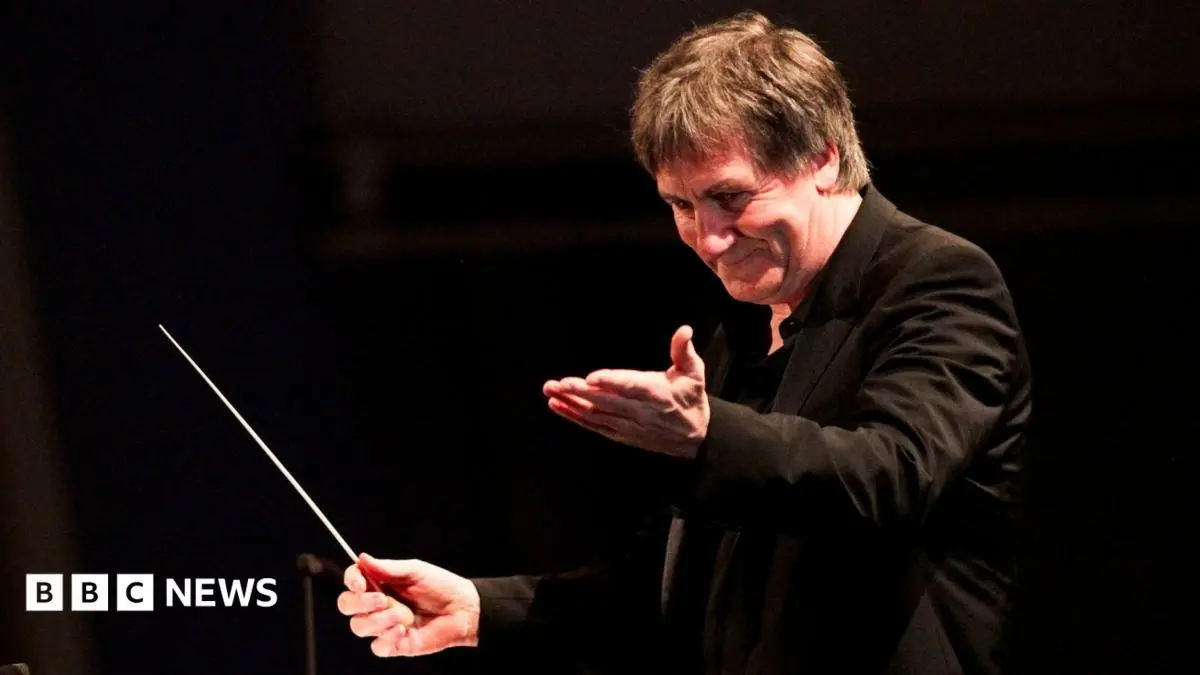
George Fenton, one of the most prolific, versatile, and enduringly celebrated British composers of the modern era, has died at the age of 76. His family announced his unexpected passing, leaving the international arts community to mourn a musician whose life was defined by an extraordinary synthesis of orchestral grandeur, cultural empathy, and dramatic precision. Over a career spanning more than five decades, Fenton crafted auditory landscapes that defined some of the most iconic cinematic narratives and television broadcasts of the 20th and 21st centuries.
With a remarkable five Academy Award nominations to his name—for landmark films such as Gandhi, Cry Freedom, and The Remains of the Day—Fenton’s artistic footprint extended far beyond the traditional boundaries of Hollywood. He was equally at home scoring gritty British social realism for director Ken Loach, crafting the suspenseful, whimsical beats of studio comedies like Groundhog Day and You’ve Got Mail, and anchoring landmark natural history epics for the BBC, including The Blue Planet and Planet Earth.
Yet, Fenton’s impact cannot be measured by accolades alone. He was a pioneering collaborator who worked hand-in-hand with musical legends such as Ravi Shankar and Jonas Gwangwa, an institutional advocate who helped found the Association of Professional Composers, and a beloved educator who shared his insights as a visiting professor at the Royal College of Music and the University of Nottingham. Appointed a Commander of the British Empire (CBE) for services to music in 2023, Fenton maintained that his entry into the profession was entirely accidental. Nevertheless, his legacy is one of deliberate mastery, emotional resonance, and a lifetime devoted to the transformative power of orchestral and popular music.
Detailed Chronology: From Bromley to the World Stage
Formative Years and the Accidental Musician
Born George Howe in Bromley, Kent, in 1949, the future composer arrived in a household steeped in working-class resourcefulness and latent artistic expression. His father earned a living as a mechanical engineer, while his mother had pursued a career as a dancer before answering the call to serve as a nurse during the Second World War. Music was a persistent, informal backdrop to their domestic life: his father played the drums, and his mother played the piano.
However, young George’s early ambitions lay elsewhere, dominated largely by a childhood passion for football. That trajectory shifted decisively at the age of seven when he encountered the electric guitar, heavily influenced by the cultural earthquake of The Beatles.
In a twist of fate that reads like cinematic fiction, his formal musical education began via an eccentric encounter with a chimney sweep named Brian Rudd. When Rudd arrived to clean the family chimney, he inadvertently filled the house with soot, provoking his mother’s ire. As amends—and having tuned the young boy’s guitar in the interim—Rudd offered guitar lessons as compensation for the domestic mess. The lessons continued, laying the groundwork for Fenton’s lifelong fluency in contemporary instrumentation.
Though he later studied the church organ, Fenton consciously rejected conventional institutional pathways, bypassing university and music college to dive headfirst into the erratic world of live performance.
The West End, Acting, and Early Pop Ambitions
In 1968, a 19-year-old Fenton stepped onto the West End stage in Alan Bennett’s debut play, Forty Years On. Administrative hurdles forced a permanent name change: strict union rules prohibited two actors from sharing the exact moniker, prompting him to adopt his mother’s maiden name. During the run of the production, Fenton doubled as an understudy to the show’s musical director, Carl Davis—a figure who would similarly forge an illustrious path as a titan of film and television composition.
Fenton’s early creative impulses stretched across multiple mediums. A year after his theatrical debut, he secured a record deal and scored a top-ten chart hit in Sweden with a vibrant cover of The Beatles’ "Maxwell’s Silver Hammer." However, his career as a pop solo artist proved fleeting. By the mid-1970s, he transitioned into television acting, securing a recurring role as soldier Martin Gimbel in the long-running ITV soap opera Emmerdale Farm.
Yet, this period of acting proved clarifying rather than fulfilling. Fenton observed that directors consistently cast him in roles that explicitly required him to play an instrument on camera. Recognizing that his true calling lay behind the curtain rather than in front of the lens, he made the decisive pivot to make music his primary focus.
The Breakthrough: Theatre, Gandhi, and Social Realism
Fenton’s transition into professional composition solidified in 1974 when he secured his first major appointment as composer and musical director for a Royal Shakespeare Company production of Twelfth Night at Stratford-upon-Avon.
His entry into feature film composition arrived with astonishing swiftness. In 1982, with only a handful of minor credits to his name and virtually entirely self-taught, Fenton was tapped by director Richard Attenborough to score the epic biographical drama Gandhi. To authentically capture the historical and cultural weight of the subject, Fenton collaborated closely with renowned Indian musician and sitar maestro Ravi Shankar. The resulting score earned Fenton his first Academy Award nomination, announcing him as a formidable new talent on the global stage.
Throughout the 1980s, Fenton cultivated a reputation for narrative versatility. He provided the atmospheric, BAFTA-winning score for the television adaptation of The Jewel in the Crown (1984), as well as The Monocled Mutineer and Alan Bennett’s Talking Heads. Concurrently, he became a master of the corporate airwaves, penning instantly recognizable theme tunes for BBC flagship news programs, including the One O’Clock News, Six O’Clock News, Nine O’Clock News, Newsnight, The Money Programme, and BBC Radio 4’s PM.
The Cry Freedom Phenomenon
In 1987, Fenton reunited with Richard Attenborough for Cry Freedom, a searing cinematic account of the relationship between South African journalist Donald Woods and anti-apartheid martyr Steve Biko. Collaborating with exiled South African jazz maestro Jonas Gwangwa, Fenton crafted a score that fused Western orchestral textures with authentic African rhythms and choral arrangements.
The project yielded two Oscar nominations: Best Original Score and Best Original Song. In a characteristic stroke of serendipity, the title track featured Fenton’s own voice reciting a sobering list of real-life anti-apartheid activists who had been imprisoned, tortured, or killed by the South African government. Fenton had initially recorded the vocals purely as a temporary guide track for Gwangwa. However, the South African musician insisted on retaining parts of Fenton’s vocals in the final mix as a powerful "gesture of brotherhood."
Reflecting on the experience years later on BBC Radio 4’s Desert Island Discs, Fenton noted the surreal aftermath:
"Then it got nominated for an Oscar, so I then found myself singing it on live television to about a billion people, which was not what I intended at all."
Scoring the Natural World: The Attenborough Collaboration
If Fenton’s dramatic scores established his theatrical credibility, his work for natural history television cemented his status as a cultural institution. Beginning with the BBC’s The Trials of Life in 1990, Fenton forged a legendary creative partnership with naturalist Sir David Attenborough and series producer Alastair Fothergill.
This collaboration reached its zenith with what became known as the Earth Trilogy: The Blue Planet (2001), Planet Earth (2006), and Frozen Planet (2011). Fenton recognized that the majesty of the natural world required music that operated on an operatic scale. Utilizing the full force of symphony orchestras, his scores elevated footage of deep-sea trenches and melting polar ice caps into emotionally gripping dramas. His music evoked awe, terror, wonder, and fragility without ever overpowering the visual splendor on screen.
The immense popularity of these broadcasts transcended the television screen. Fenton subsequently curated The Blue Planet in Concert, a live arena production that has been performed by world-class philharmonic orchestras in major concert halls across the globe, bringing symphonic cinematic music to entirely new generations of audiences.
A Cinematic Partnership with Ken Loach
Away from the pristine wilderness of natural history and the gloss of Hollywood, Fenton maintained a lifelong commitment to gritty social realism, most notably through his prolific collaboration with veteran British director Ken Loach. Fenton holds the distinction of composing for more Loach films than any other musician in the director’s storied career.
Across 18 collaborations—ranging from Ladybird, Ladybird to I, Daniel Blake—Fenton demonstrated a rare stylistic agility, stripping away Hollywood artifice to support stories of working-class struggle, systemic poverty, and political resistance. Their crowning achievement arrived in 2006 with The Wind That Shakes the Barley, a harrowing exploration of the Irish War of Independence and Civil War, which captured the prestigious Palme d’Or at the Cannes Film Festival.
Supporting Context & Metrics
Key Career Milestones and Accolades
- Academy Award Nominations (5):
- Gandhi (1982) – Best Original Score
- Cry Freedom (1987) – Best Original Score
- Cry Freedom (1987) – Best Original Song ("Cry Freedom")
- Dangerous Liaisons (1988) – Best Original Score
- The Fisher King (1991) – Best Original Score
- The Remains of the Day (1993) – Best Original Score
- Television and Specialized Honors:
- BAFTA Awards, Emmy Awards, and Ivor Novello Awards for The Blue Planet.
- BAFTA TV Award for The Jewel in the Crown (1984).
- Appointed Commander of the Order of the British Empire (CBE) in the 2023 New Year Honours for services to music.
- The Ivors Academy Fellowship:
Fenton joined an elite pantheon of musicians awarded the Academy’s highest honor, placing him alongside peers such as Sir Andrew Lloyd Webber, Sir Elton John, Kate Bush, Bruce Springsteen, and George Michael. - Institutional Leadership:
As a passionate advocate for composers’ rights, Fenton founded the Association of Professional Composers (APC), an organization that later integrated into The Ivors Academy to safeguard intellectual property and professional standards within the industry.
Official Statements
The global artistic community responded to news of Fenton’s sudden passing with widespread grief, admiration, and deep tributes to his character and craft.
In an official statement released on behalf of the family, relatives shared:
"We are very sad to announce that George Fenton passed away unexpectedly today. He is survived by his loving wife Amanda, ex-wife Jane, children Gemma, Grace and Bridget, and grandchildren Lola, Audrey, Alfred, George, Frank and Beatrice, and a life of music."
Colleagues, broadcasters, and industry bodies echoed these sentiments, highlighting his generosity as a mentor and his uncompromising artistic integrity. Representatives from the BBC, where Fenton’s sonic identity shaped decades of news and natural history programming, issued statements praising his ability to make complex human emotions and vast natural phenomena instantly accessible through sound.
Reflecting on his methodology during his celebrated appearance on Desert Island Discs, Fenton summarized the profound joy he found in his life’s work. Selecting Reunion—a composition from the film Accidental Hero—as his chosen track, he recalled the moment he heard a studio pianist bring his manuscript to life:
"If I was sitting on a desert island and thinking about what a good time I’d had writing music, which I have, I want just one thing to remind me about the best part—which is the fact that you write something and then you’re so surprised and thrilled at the way it’s played. For a composer, that’s the biggest kick you can get."
Future Outlook & Legacy
The passing of George Fenton marks the quiet close of an era when self-taught polymaths could seamlessly bridge the worlds of pop music, live theatre, mainstream Hollywood cinema, and prestige public service broadcasting.
As the music industry continues to evolve through rapid technological shifts and changing models of media production, Fenton’s legacy stands as a testament to the enduring power of traditional orchestration married to open-minded cultural curiosity. His institutional work through the Association of Professional Composers and The Ivors Academy ensures that future generations of media creators will enjoy stronger legal and financial protections.
Moreover, his concert productions, such as The Blue Planet in Concert, and the timeless recordings of his film scores will continue to resonate in concert halls and living rooms worldwide. George Fenton’s life in music proved that art is not merely an accompaniment to visual media, but an essential emotional bridge connecting humanity to the wider world—from the struggles of the oppressed to the quiet majesty of the deep ocean.