Executive Overview
The contemporary landscape of independent, folk, and experimental music occupies a complex, ever-shifting cultural ecosystem. In an era dominated by algorithmic homogenization, hyper-compressed streaming singles, and ephemeral playlists designed for background consumption, curated sonic curation remains a vital act of cultural preservation and artistic advocacy. Enter KLOF Magazine—a steadfast champion of boundary-pushing acoustic expressions, traditional revivals, and avant-garde soundscapes.
This week marks a monumental juncture for the publication with the release of its milestone 100th Mixtape. Far more than a routine promotional compilation or a casual collection of recent releases, the centennial edition functions as an expansive, deeply atmospheric journey through international folk traditions, subterranean regional scenes, and radical sonic experimentation.
Bridging the gap between venerable masters of the craft and boundary-defying newcomers, KLOF Mixtape No. 100 encapsulates the overarching ethos of the modern folk underground: a reverence for historical narrative coupled with an unyielding desire to break convention. The program weaves together recent exclusive interviews, global collaborative projects recorded in remote landscapes, foundational archival touchstones, and debut full-lengths that challenge our very definitions of acoustic music. This report provides an exhaustive, analytical examination of the centennial mixtape, breaking down its thematic resonance, structural chronology, featured artists, and the broader cultural implications of its curated selections.
Detailed Chronology: A Track-by-Track Narrative Arc
Structuring a broadcast or mixtape that spans over an hour and twenty minutes—while navigating disparate genres ranging from Appalachian-inflected indie rock to ethereal ambient folk, Slovak-Hungarian song traditions, and traditional Irish fiddle tunes—requires masterclass pacing. The sequence of Mixtape No. 100 acts as a continuous, breathing narrative, moving from introspection and urban grit to remote wilderness and transcendent collective performance.
Part I: Foundations, Atmospheres, and Emerging Visions (00:00 – 17:00)
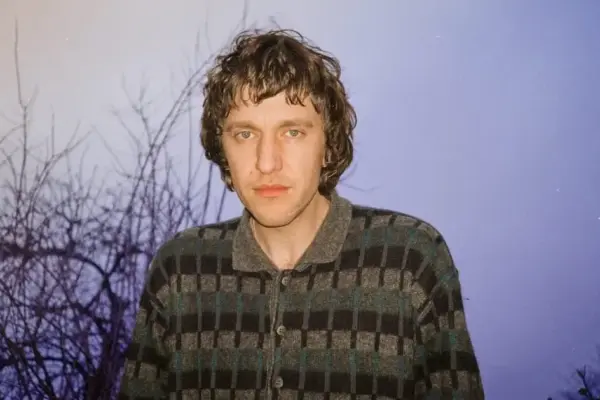
The mixtape opens with Ohtis and their track "Virgos are Honest" (drawn from the album Virgos Are Honest). Having recently been featured in an in-depth KLOF interview surrounding their appearance at End of the Road 2026, Ohtis set a tone of rugged vulnerability. Their blend of indie-rock classicism and lyrical candor immediately grounds the listener in human storytelling.
Transitioning seamlessly, North Americans introduce an instrumental expanse with "Run Down" from Roped In. The track’s pastoral, cyclical guitar patterns evoke vast American landscapes, offering a meditative bridge before introducing the first of several new KLOF additions: Esther’s Mood Ring. Comprising the collaborative duo of Stefan Beck (known for Golden Brown and Prairiewolf) and Steve Targo (of Nimbudala and Inner Travels), the project’s debut album, Dream Ecology, yields "Mustard Trees & Emerald Sprouts." The piece showcases a masterclass in texture, folding ambient electronics into organic spaces.
The historical lineage of British folk is honorably invoked next through the timeless pairing of Davey Graham & Shirley Collins performing "Riff Mountain" (Folk Roots, New Roots). Placing Graham’s pioneering modal guitar work alongside Collins’ pristine, unadorned vocal delivery reminds the listener of the bedrock upon which much of contemporary folk stands. This historical continuity deepens with KLOF’s Artist of the Month, Martin Simpson, whose rendition of "Sometimes I Feel Like a Motherless Child (Santa Monica version)" from Some Kind of Jubilee highlights a lifetime of virtuosic interpretation and emotional gravity.
Part II: Enclosures, Remote Landscapes, and Collective Resonance (17:00 – 34:00)
As the mixtape progresses, the sonic palette darkens and moves into deeper socio-historical explorations. Powtes, hailing from the Newcastle folk underground, make their KLOF debut with "Axeholme Part 1" from their album Destroying a Living. Steeped in the historical trauma and regional politics of agricultural enclosure, the music possesses a stark, unyielding power that demands active listening.
This themes of geography and isolation reach a striking apex with Garefowl and "Ruideag/Kittiwake" from Things That Vanish. Recorded entirely at night on Hirta—the main, windswept island of the remote St Kilda archipelago—the track captures the haunting acoustics of the North Atlantic. The nocturnal field recordings and spectral instrumentation mirror the abandoned stone dwellings of Hirta, turning the track into a ghost story written in sound.
Following this stark isolation comes communal warmth and intricate multi-instrumentalism with the Shovel Dance Collective. Their expansive opening suite—comprising "Jer the Rigger / The Foxhunter’s Reel / Tally Ho! Hark Away!" from their eagerly awaited album Everything in Readiness—demonstrates the collective’s radical approach to traditional material. They treat folk tunes not as museum pieces, but as living, breathing, malleable structures capable of infinite expansion and avant-garde exploration.
Part III: Trans-European Crossings and Contemporary Roots (34:00 – 56:00)
Entering the second half, the mixtape crosses the Irish Sea into the rich vernacular of traditional performance. Cathal Caulfield, a Mayo-born, Dublin-based fiddle player and singer, performs "The Winding River Roe (Song)" from his forthcoming debut solo album, Welcome the Stranger into Tipsy House. Rooted in a decade of immersion in Dublin’s legendary pub sessions, Caulfield balances rigorous archival research and sean-nós vocal techniques with a modern compositional curiosity.
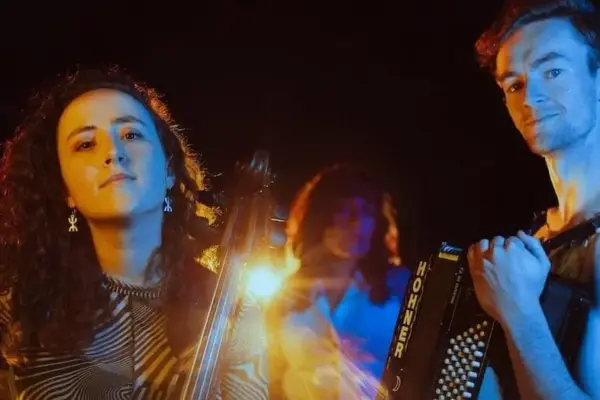
Geographic and stylistic boundaries dissolve entirely with the collaborative work of Aldana Duoraan and Tomás Niesner. Their cross-border fusion on "The Key of Darkening" (from the album Plot, released via Mappa) exemplifies how modern musicians can synthesize disparate regional instruments and sonic territories into a unified, transcendent language.
The energy shifts toward luminous melodic interplay with Good Habits, whose release-day celebration for their new album Better for Now is marked by the track "So Easy." Their modern acoustic pop-folk provides a bright, refreshing counterweight to the darker atmospheric pieces.
Returning to the American Midwest, Charlie Parr brings his unmistakable resonator guitar and world-weary delivery to "Duluth 1964" from his acclaimed album Rooming House. Parr captures the blue-collar spirit and historical memory of working-class America with rare authenticity.
Part IV: Ritual, Folkloric Echoes, and Closing Reveries (56:00 – End)
As the centennial mixtape approaches its conclusion, the programming leans heavily into acoustic intimacy and cross-cultural heritage. Adela Mede & Štefan Szabó share "Általmenők a temetőn" from their collaborative project Dalok (Songs). Bound by shared Slovak-Hungarian roots and recorded over a spontaneous weekend in a Stupava cottage with close friends, the track is a masterclass in distilled, folk-rooted minimalism.
Manchester-based guitarist and songwriter dbh brings intricate fingerstyle dexterity with "Untangle the Jig" from Mood, before the mixtape revisits the hypnotic, labyrinthine worlds of Aldana Duoraan & Tomás Niesner ("The Key of Radiance") and Charlie Parr ("Duluth 2026").
The narrative circle tightens with a second look at Garefowl‘s St Kilda nocturnal sessions ("Sgarbh/Cormorant"), before handing the narrative mic to Macdara Yeates. Performing "Matt Hyland" from his second album, Mudlark Ballads, Yeates reaffirms the enduring power of Irish storytelling. The mixtape closes precisely where emotional resonance peaked: with Martin Simpson’s transcendent guitar work on "Love Never Dies," leaving listeners in a state of profound reflection.
Supporting Context & Cultural Metrics
To fully appreciate the significance of KLOF Mixtape No. 100, one must examine the metrics of its curation. Over the course of approximately 82 minutes, the mix encapsulates:
- Over 15 distinct recording projects spanning brand-new releases, debut solo records, and historical retrospectives.
- Geographical representation stretching from the remote St Kilda archipelago and Newcastle’s industrial underground to Dublin’s traditional music hubs, the American Midwest, and Central European Slovak-Hungarian borderlands.
- A rigorous commitment to independent distribution platforms, with every featured artist linked directly to Bandcamp, ensuring that critical revenue and direct-to-fan engagement remain prioritized in an era of exploitative streaming models.
The inclusion of KLOF’s Artist of the Month (Martin Simpson) alongside radical archival interpreters like the Shovel Dance Collective highlights a deliberate editorial strategy: celebrating heritage without falling into stagnation. By spotlighting debut releases from regional artists like Cathal Caulfield and international collaborations like Duoraan & Niesner, the publication actively expands the canon of contemporary folk and experimental music.
Official Perspectives: The Philosophy of Curation
While traditional commercial radio remains tethered to format restrictions and rotation quotas, independent curation models like KLOF operate under an entirely different ideological framework. In statements accompanying their milestone releases, the editorial collective has consistently emphasized that folk and experimental music are not static genres preserved behind glass, but dynamic cultural practices that respond directly to land, history, labor, and human migration.
The thematic threads running through Mixtape No. 100—such as Powtes’ exploration of agricultural enclosure, Garefowl’s nocturnal preservation of abandoned island ecologies, and Adela Mede & Štefan Szabó’s weekend cottage recordings—underscore an industry-wide return to place-based art. Musicians are increasingly rejecting sterile, high-budget urban studios in favor of acoustic spaces that carry historical memory: rural cottages, windswept Atlantic cliffs, and subterranean underground scenes.
Future Outlook: Whither the Folk Underground?
As KLOF celebrates its 100th mixtape milestone, the broader outlook for the independent folk and experimental underground appears both fiercely resilient and dynamically experimental. The sheer volume of high-caliber, conceptually cohesive releases dropping in late 2026 proves that artists are pushing boundaries further than ever before.
Key developments to watch in the coming months include:
- The Rise of Eco-Acoustic Field Recording: As demonstrated by Garefowl, musicians are utilizing acoustic spaces and natural soundscapes not merely as backdrops, but as co-performers.
- De-siloing Traditional Music: Projects like those by Shovel Dance Collective and Duoraan & Niesner prove that traditional idioms can converse fluidly with modern composition, drone, and ambient soundscapes without losing their historical integrity.
- The Direct-to-Fan Renaissance: With physical sales and Bandcamp ecosystems continuing to sustain niche genres, independent artists are finding viable, community-funded pathways to bypass major label gatekeeping.
KLOF Mixtape No. 100 stands as a definitive document of this cultural moment. It honors the veterans who laid the groundwork, amplifies the regional voices documenting historical trauma and geographic identity, and introduces the avant-garde explorers redefining the acoustic frontier.
For listeners eager to embark on this 82-minute sonic pilgrimage, the full mixtape is available to stream now via Mixcloud, complete with comprehensive Bandcamp tracking links to support the creators directly.