Executive Overview
Four years ago, the global jazz community buzzed with the announcement of Blue Note Africa. Launched as a specialized imprint under the joint stewardship of Blue Note Records and Universal Music Group Africa, the label carried a definitive and ambitious remit: to systematically discover, sign, and elevate musical talent from across the African continent, projecting those voices onto a dominant global stage. Yet, after releasing a single landmark record—pianist Nduduzo Makhathini’s critically acclaimed In the Spirit of Ntu—the imprint seemingly went dormant.
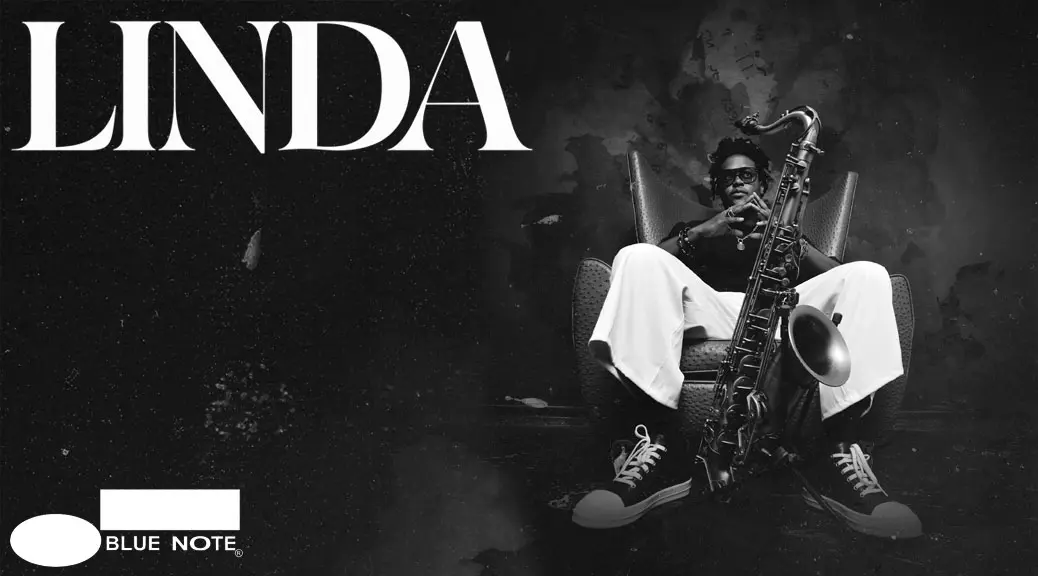
The specialized branding quietly dissolved. Subsequent releases by Makhathini and saxophonist Linda Sikhakhane (such as his 2024 effort, Iladi) appeared under standard joint credits between Blue Note and Universal Music Africa. Now arrives LINDA, Sikhakhane’s fifth studio album and his second under the historic Blue Note banner, released without any regional qualifiers attached to its marketing.
The corporate branding may have receded, but what has outlasted it is far more significant: a functional, enduring artistic pipeline connecting a legendary major label with a generation of South African virtuosos. Far from being a localized experiment or a transient marketing category, Sikhakhane’s LINDA demonstrates that contemporary South African jazz does not require geographical caveats to justify its place in the global pantheon. It is a confident, fiercely contemporary masterclass that honors ancestral memory while boldly striding into the future of modern improvised music.
Detailed Chronology: From Umlazi to the Global Stage
To understand the sonic architecture of LINDA, one must trace the deliberate, highly structured educational trajectory of its creator. When Sikhakhane spoke with jazz journalists in 2020 ahead of his album An Open Dialogue, he did not present himself merely as a gifted young instrumentalist, but as a student engaged in an ongoing, rigorous apprenticeship of the mind and ear.
The Foundation in KwaZulu-Natal
Sikhakhane’s journey began at the Siyakhula Music Centre in Umlazi, a township south of Durban. There, under the mentorship of the late Dr. Brian Thusi, the young saxophonist experienced a foundational awakening. As the story goes, Dr. Thusi placed a Miles Davis record in front of him, instantly anchoring Sikhakhane’s musical imagination and locking him into the towering, spiritual gravity of John Coltrane.
This early immersion was followed by formal academic training at the University of KwaZulu-Natal, where he earned a diploma in jazz studies. His technical brilliance and deep conceptual grasp of the idiom were further recognized in 2016 when he captured the prestigious SAMRO Overseas Scholarship. This win provided not only financial backing but a literal passport, enabling his relocation to New York City to study at the New School—an institution he specifically chose because legendary vanguard artists Billy Harper and Reggie Workman were teaching within its halls.
Throughout these formative years, Sikhakhane held fast to a central artistic philosophy: memory is a point of departure. In his view, to truly understand where you are going as an artist, you must intimately know where you come from.
Cultivating a New Generation
The band Sikhakhane has convened for LINDA serves as the ultimate practical expression of this philosophy. Eschewing the comfort of established, older American jazz luminaries—who populated his earlier recordings—Sikhakhane has instead chosen to invest in his contemporaries and the generation immediately following his own.
At the core of the ensemble are brothers Cameron Campbell (piano) and Conway Campbell Jr. (bass), who have forged an intuitive, telepathic musical bond over a decade of playing together. They are joined by drummer Kabelo Mokhatla, hailing from Tembisa. Mokhatla’s own path intersects significantly with the transnational jazz network: he met Cameron Campbell at the Manhattan School of Music (MSM), where Mokhatla studied under the Hugh Masekela Heritage Scholarship, learning directly from modern masters like Kendrick Scott, John Riley, and Jaleel Shaw.
Together, the three instrumentalists formed an MSM-born quintet called In Exile and have since operated as an exceptionally tight-knit trio. In a beautiful twist of intergenerational mentorship, a South African saxophonist who traveled to New York on a national scholarship has returned to staff his second Blue Note release with the very generation that followed him across the Atlantic.
Nduduzo Makhathini, who previously produced An Open Dialogue after witnessing Sikhakhane’s senior recital and realizing it demanded permanent preservation, steps behind the mixing desk once more. Aside from contributing a single composition to the tracklist, Makhathini relinquishes the piano chair entirely to Cameron Campbell, ensuring that the instrumental voice of the keys remains firmly rooted in the emerging generation.

Supporting Context & Metrics: Decoding the Soundscapes of LINDA
LINDA is a sweeping, multi-textured sonic journey that resists easy categorization. It moves effortlessly between modern modal jazz, deep-rooted traditional South African idioms, hip-hop, and soaring vocal tapestries.
Track-by-Track Analysis
- “Days Begin To Sing”: The album opens not with a blaring horn, but with a delicate interplay of human voice and low, resonant bass. Sikhakhane’s tenor saxophone slowly enters, aligning itself seamlessly with the singer above a stellar, understated drum foundation. The vocalist, Omagugu, is a veteran of the South African scene rather than a hired guest star. Originally from Nquthu in KwaZulu-Natal, Omagugu won the SAMRO bursary for singers in 2003—thirteen years before Sikhakhane claimed the instrumental equivalent. Having won an Mbokodo Award for Jazz in 2016, released her debut album uThingo LweNkosazana that same year, and recorded alongside icons like Themba Mkhize, Herbie Tsoaeli, and Azar Lawrence, her presence here marks a continuation of a creative relationship that began nine years prior on 2017’s Two Sides, One Mirror. The track avoids heavy-handed geographical signifiers, standing firmly as a thoroughly modern piece of global music.
- “Ubizo”: The mood shifts dramatically with “Ubizo,” where the distinct cultural pulse of South Africa immediately fills the room. Driven primarily by Cameron Campbell’s piano framework and led by Sikhakhane’s soaring tenor—which bears an unmistakable, reverent Coltrane influence—this is a breathtaking display of ensemble cohesion.
- “Indlela”: Shifting to soprano saxophone over mesmerizing, cascading piano lines, Sikhakhane deploys long, sustained notes in a modal style that feels as though it could have been pulled directly from a classic Blue Note recording session in 1966. Yet, it retains an utterly contemporary edge, aligning itself willingly with the American modern jazz mainstream while maintaining its distinct regional soul.
- “Ilanga”: This track opens the floor to Zuluboy, the celebrated Ntuzuma rapper whose maskandi-inflected hip-hop has been a cornerstone of the KwaZulu-Natal cultural landscape since the mid-2000s. Delivering rhymes in both English and isiZulu over a thick bed of drums and horns, Zuluboy finds a supportive, deeply locked-in band that treats hip-hop lyricism with the same harmonic respect as a standard jazz head.
- “Vumani”: Functioning as a crucible of creative exploration, “Vumani” features Sikhakhane’s highly distinctive horn work taking center stage. The piano remains an assertive, territorial force, pushing outward toward the edges of the arrangement while maintaining a tight gravitational pull.
- “Izibusiso”: Standing slightly apart from the surrounding tracks, this piece introduces a more commercially accessible melodic sensibility. Notably, it is the sole composition on the album contributed by producer Nduduzo Makhathini.
- “Uzalo”: Deeply entrenched in South African tradition, “Uzalo” strikes the listener with immediate, visceral force. Propelled by cowbells, a formidable and punchy bassline, and a relaxed, deeply pocketed piano, the track is further elevated by the trumpet work of Thabo Sikhakhane—the leader’s younger brother, who also matriculated through the Siyakhula Music Centre in Umlazi.
- “Abalimi Bayovuna”: A high-energy, groovy number driven by flamboyant saxophone lines played over electric keys rather than an acoustic piano. Featuring spoken and sung contributions from Phila Dlozi, the track allows the horns to dominate, keeping the leader front and center.
- “Izwi”: The album closes with a sublime, deeply emotional ballad. Sikhakhane’s playing on this track feels like a narrative unfolding entirely without words, radiating heartfelt sincerity. Allowing the album to finish with the quartet alone, stripped of vocal accompaniment, is a masterclass in sequencing.
Official Statements & Industry Perspectives
The dissolution of the Blue Note Africa sub-imprint in favor of direct, unified releases under the main Blue Note banner speaks volumes about shifting corporate and artistic strategies within major record labels. When Universal Music Group Africa and Blue Note originally formed the partnership, industry analysts viewed it as a long-overdue institutional bridge between western major labels and the immense, largely untapped ecosystem of African jazz innovation.
While the localized branding was ostensibly phased out after Makhathini’s In the Spirit of Ntu, executives and artists alike have noted that the underlying objective—fostering sustainable, cross-continental creative relationships—has succeeded beyond the confines of a marketing department.
In past commentary surrounding his creative philosophy, Sikhakhane has continually emphasized that musical lineage must never become a prison. Speaking on his educational and professional migration between Umlazi, Durban, and New York, he noted:
"Memory is a point of departure. To know where you are going, you need to know where you come from. But you cannot afford to build your house entirely in the past; the music demands that you step outside and see what air it breathes today."
Industry observers reviewing the rollout of LINDA have echoed this sentiment, noting that major jazz institutions are finally learning to bypass exoticized "world music" marketing tropes. By releasing Sikhakhane’s work straight through the primary Blue Note catalog, the label signals an institutional maturity: this music requires no geographic prefix to validate its excellence. It is simply top-tier modern jazz, crafted by global citizens.
Future Outlook: Setting the Standard for 2026 and Beyond
As the global jazz landscape continues to fracture and expand in fascinating directions, LINDA positions Linda Sikhakhane not merely as a rising star to watch, but as a fully realized bandleader and visionary architect of the 2020s sound.
The primary temptation for critics encountering jazz from the African continent is to default to backward-looking metrics—measuring contemporary artists endlessly against the giants of the past or viewing them through an anthropological lens. Sikhakhane completely bypasses this trap. By surrounding himself with a hyper-talented, fiercely ambitious younger cohort—Cameron Campbell, Conway Campbell Jr., and Kabelo Mokhatla—he demonstrates that the future of South African jazz is bright, self-sustaining, and entirely unbound by external expectations.
Having successfully delivered his sophomore outing for Blue Note without the crutch of specialized regional branding, Sikhakhane stands remarkably tall. He has proved that an artist can work with major international infrastructure while remaining radically authentic to their roots, their community, and their mentors.
LINDA is more than just a standout release in a prolific career; it is a definitive artistic statement that challenges the global jazz establishment to look forward. For listeners, critics, and industry insiders alike, it sets an extraordinarily high bar—and stands as an early, undisputed contender for jazz album of the year.