Executive Overview
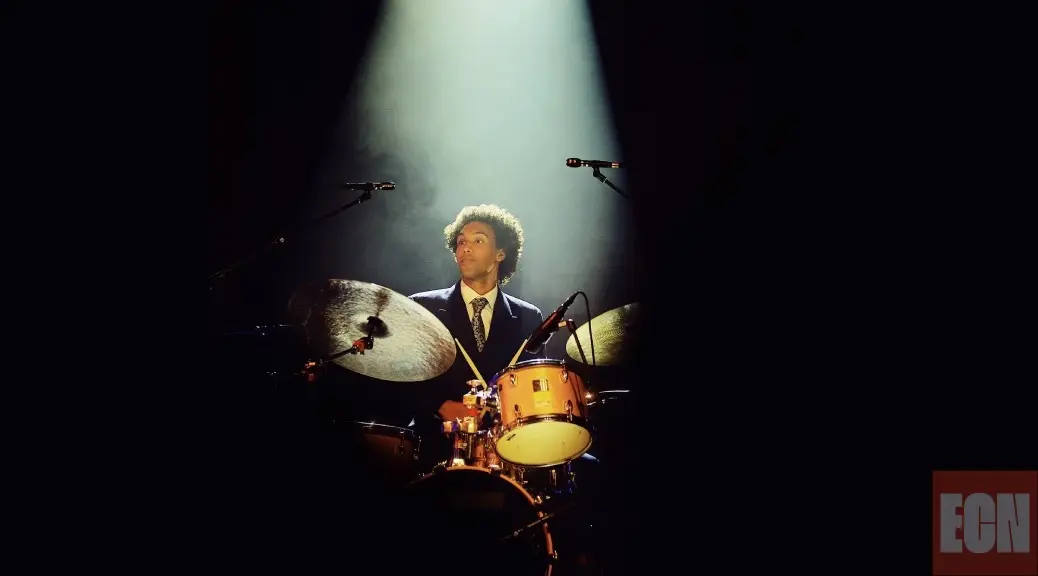
In an era defined by hyper-visibility, algorithmic saturation, and the relentless self-branding of modern artists, the arrival of British drummer and composer Miles Pillinger feels wonderfully anachronistic. Operating with a deliberate, almost monastic mystique that leaves barely a digital footprint, Pillinger has instead allowed his music to do the talking. That voice is loud, vibrant, and undeniably sophisticated.
With the release of his eagerly anticipated debut LP, Belonging, Pillinger steps firmly out of the shadows and onto the international jazz stage. Recorded at The Nave in Leeds—a creative crucible deeply intertwined with the bandleader’s artistic genesis—the album is far more than a standard introductory calling card. It is a sweeping, culturally nomadic manifesto that bridges continents, historical epochs, and stylistic boundaries.
Supported by a phenomenal cast of rising-star instrumentalists—including Tom Harris on piano, Josh Vadiveloo on bass, Olivia Cuttill on trumpet, and Benjy Sandler on saxophones and flute, alongside guest percussionist Emma Marsh and vocalist Thandanani Gumede—Pillinger has crafted a record that radiates an infectious sense of communal joy. Crucially, despite being led by a drummer who has earned prestigious accolades such as Help Musicians’ Peter Whittingham Award, Belonging subverts genre expectations. Rather than burying the listener in self-indulgent percussion solos or rhythmic bombast, Pillinger anchors his leadership in visionary composition, structural risk-taking, and an encyclopedic reverence for the global African diaspora.
Detailed Chronology and Artistic Genesis
To fully understand the sprawling geographic and sonic landscape of Belonging, one must trace the artistic trajectory of its creator. Born in Manchester before refining his craft at the esteemed Leeds Conservatoire—a notorious incubator for boundary-pushing British jazz talent—Pillinger eventually relocated to London. This geographical migration mirrors the internal journey of his music, which absorbs the industrial grit of the North, the cosmopolitan melting pot of the capital, and the expansive historical lineages of transatlantic jazz.
The genesis of Belonging began long before the microphones went live at The Nave. Pillinger immersed himself in the deep history of African-American Black music, studying its foundational architects while actively seeking out the peripheral textures of Caribbean, Latin American, and African folk traditions. When the ensemble finally convened in the studio, the chemistry was immediate.
The resulting tracklist is divided into two distinct emotional and physical halves, structured much like a classic vinyl sequence designed for dynamic contrast. Side A operates as the ignition point—a rhythmic celebration that leans heavily into movement, dance, and polyrhythmic exploration. Opening the album is "Olinda Meu Amor," a masterclass in cross-cultural pollination. The track establishes its identity with a driving batucada rhythm underpinning a contemporary jazz combo, while a soaring soprano saxophone line intertwines with the double bass to evoke the hazy, brass-soaked air of New Orleans. As the track progresses, the samba-like shuffle effortlessly slides into a rumba, strolling leisurely along the Latin jazz coastline with an uncontainable grin.
The momentum continues with "I’m Not Serious," an evocative dance around a metaphorical bonfire. Enhanced by Emma Marsh’s guest percussion work on timbales and congas, the track features horns that prance and weave with a distinctively Creole lariating energy. It is a testament to Pillinger’s arranging prowess that complex rhythmic shifts feel entirely organic and celebratory.
The tempo spikes dangerously and thrillingly on "Elvin’s Beat," an explicit yet respectful salute to drumming titan Elvin Jones. Rather than attempting a literal imitation of Jones’ legendary polyrhythmic roar, Pillinger captures his spirit: the track tears off frantically, folds inward on itself in breathtaking dynamic collapses, and finally settles into a gentle, propulsive swing. Eschewing drum dominance entirely, the arrangement instead features a sax that sprinkles rich Cajun seasoning over the sonic festivities.
Side A draws to a close with "Mysterious Meat," a track that begins within a reassuringly traditional early jazz framework before the ensemble gleefully unravels, wandering off into free-flowing, avant-garde territory.
Flipping the LP over introduces a markedly more introspective, lyrical topography. Side B initiates a sequence of gentle, cinematic reflection with "Beryl," a delicate saxophone-and-piano ballad. When a muted trumpet enters the fold, it does so with the ghost-like resonance of jazz pioneers past, bleeding directly from the genre’s collective veins.
The emotional core of the record arrives with the title track, "Belonging." Here, vocalist Thandanani Gumede steps up, delivering lyrics predominantly in English before transitioning gracefully into Xhosa. The result is a warm, prayer-like incantation that speaks directly to the album’s overarching thematic exploration of identity, home, and cultural lineage.

As the record winds down, "Momentary Peace" whisks the listener away to the French Antilles, sending the soprano saxophone on a sun-drenched journey through Martinique and Guadeloupe. The rhythm and horn sections work in tandem, leaving the listener as a happy traveler equipped with lasting auditory memories.
The penultimate piece, "The Other Other Side," stands as a luminous Afro-Latin masterpiece where the brass sections dance brilliantly just out of reach. Finally, the album closes with "The Other Side"—a journey of discovery and adventure where a solitary flute leads the ensemble into uncharted waters. The record evaporates into the ether with a fresh, startlingly modern reimagining of traditions long thought familiar. In its fearless hybridity and kaleidoscopic imagination, Belonging evokes comparisons to modern-day icons like Hermeto Pascoal.
Supporting Context & Metrics: The Anatomy of a Modern Jazz Debut
To contextualize the commercial and critical weight of Belonging, it is necessary to examine the broader ecosystem of the contemporary British jazz renaissance and the specific metrics surrounding Pillinger’s trajectory.
The Critical Landscape and Accolades
- The Peter Whittingham Award: Administered by Help Musicians, this prestigious prize has historically served as a reliable barometer for future jazz greatness, supporting artists who demonstrate exceptional compositional vision and innovative risk-taking. Pillinger’s receipt of this award placed him within an elite tier of emerging UK talent.
- Geographic Synergy: The recording sessions at The Nave in Leeds highlight a critical infrastructure within the UK jazz scene—regional studios outside of London that foster creative risk without the frantic pressures of the capital’s commercial studios.
- Ensemble Chemistry: The album features a meticulously curated lineup representing the absolute vanguard of the current UK scene. Tom Harris (piano) and Josh Vadiveloo (bass) provide an unshakeable harmonic and rhythmic foundation, while Olivia Cuttill (trumpet) and Benjy Sandler (saxophones/flute) inject melodic lyricism that bridges traditional bop with contemporary modal explorations.
| Track Title | Primary Sonic Influence | Key Instrumental Focus | Rhythmic Profile |
|---|---|---|---|
| "Olinda Meu Amor" | Samba, Rumba, New Orleans Brass | Soprano Sax & Double Bass | Batucada shifting to Latin Jazz groove |
| "I’m Not Serious" | Creole, Caribbean Folk | Congas, Timbales, Horns | High-energy polyrhythmic shuffle |
| "Elvin’s Beat" | Post-Bop, Elvin Jones Tribute | Saxophone & Drums | Frantic acceleration resolving to gentle swing |
| "Mysterious Meat" | Early Jazz & Avant-Garde | Ensemble collective improvisation | Deconstructive modal wandering |
| "Beryl" | Cool Jazz, Balladry | Piano, Muted Trumpet, Sax | Lyrical, spacious ballad tempo |
| "Belonging" | South African Folk, Xhosa traditions | Vocals (Thandanani Gumede) & Ensemble | Prayer-like, vocal-driven cadence |
| "Momentary Peace" | Afro-Caribbean (Martinique/Guadeloupe) | Soprano Sax & Percussion | Breezy, tropical modal flow |
| "The Other Other Side" | Afro-Latin Fusion | Brass section & Piano | High-gloss harmonic interplay |
| "The Other Side" | Experimental Folk Fusion | Flute & Rhythm Section | Exploratory, dissolving cadence |
Official Statements and Critical Reception
While Miles Pillinger famously maintains a low public profile, avoiding the endless PR cycles typical of modern musicians, the critical response from jazz tastemakers has been universally glowing. Reviewers across the European jazz circuit have rushed to champion Belonging as one of the most refreshing debut releases of the decade.
Industry commentary has focused heavily on Pillinger’s rare restraint as a bandleader. In a culture where drum-led records frequently devolve into multi-minute showcases of physical endurance and technical flash, Pillinger’s approach is radically composition-first.
"With a drummer leading, you wait for the solo that never comes, because Miles Pillinger never steps into the spotlight. He plays his best cards in the writing. He knows the depth of African-American music, takes risks and brings his own flavours to great reward." — Steve Williams, UK Vibe
This sentiment underscores a broader artistic maturity. Pillinger understands that true leadership does not require overpowering the ensemble. By stepping back and trusting his collaborators—allowing Harris, Vadiveloo, Cuttill, and Sandler to inhabit the frontline of the soundstage—he creates a democratic, conversational jazz environment where every voice carries equal weight. The resulting statements from the ensemble reflect a deep, shared trust in Pillinger’s compositional blueprints, which successfully marry rigorous conservatory training with untamed street-level groove.
Future Outlook: The Horizon for Miles Pillinger
As Belonging ripples outward through physical record sales, critical acclaim, and streaming platforms, the future looks extraordinarily bright for Miles Pillinger. In an industry increasingly obsessed with algorithmic predictability, Pillinger’s refusal to conform to standard promotional tropes—coupled with his fearless geographical and stylistic wanderlust—marks him out as an essential voice for the future of creative music.
The immediate outlook suggests that Pillinger and his stellar ensemble will take these complex, joyous compositions to live stages across the UK and international jazz festivals. Translating the intricate acoustic interplay of Belonging from the sanctuary of The Nave to live performance venues will undoubtedly push the band into exciting new realms of improvisation.
Furthermore, Pillinger’s success points toward a healthy, decentralized future for British jazz. By anchoring his artistic identity in northern roots while drawing upon a global mosaic of African, Caribbean, and Latin American traditions, he shatters old parochial boundaries. If Belonging is indeed the opening statement of a long and storied career, the musical world should prepare itself for an artist who refuses to stand still, refuses to pander to the spotlight, and ultimately redefines what it means to be a modern bandleader.