Executive Overview
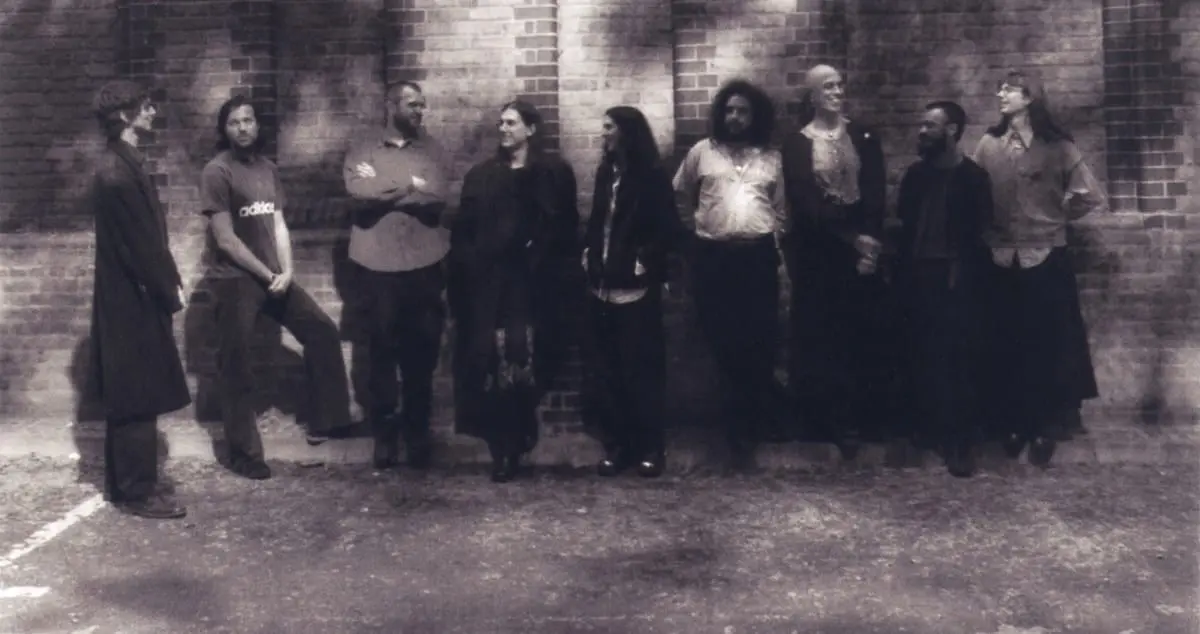
In the contemporary landscape of experimental music, few ensembles operate with the fearless historical consciousness and sonic radicalism of the Shovel Dance Collective. With their third full-length album, Everything in Readiness—scheduled for release on October 23, 2026, via Tak:Til Records—the collective has not merely pushed the boundaries of modern folk music; they have effectively dismantled them, reassembling the wreckage into something ancient, alien, and vital.
Bridging the chasm between raw traditionalism and boundary-shattering avant-garde improvisation, Everything in Readiness acts as a seismic event in the global underground. The record synthesizes a dizzying array of conceptual and structural influences: from the uncompromising free-jazz fire of Evan Parker and the scholarly uillean piping of Seamus Ennis to the transcendent deep listening of Pauline Oliveros and the avant-garde hillbilly blues of Henry Flynt.
This is not polite, museum-piece folk music. It is an egalitarian, hyper-collaborative experiment that treats traditional song not as a fragile relic to be preserved under glass, but as a living, mutating organism. By aggressively hybridizing native forms with musique concrète, field recordings, industrial percussion, and ecstatic drones, Shovel Dance Collective has produced what is arguably the most potent and visionary folk album of the decade. This review and deep-dive analysis explore the architecture of Everything in Readiness, charting its journey from conceptual daydream to recorded masterwork, and evaluating its monumental impact on the future of traditional sound.
Detailed Chronology & Track Analysis: Mapping the Shadow-Reality
The journey through Everything in Readiness is an exercise in auditory displacement. It mirrors the chaotic, visionary listening habits of the avant-garde underground—where disparate musical universes collide to form entirely new architectural spaces.
Opening Salvos: Jer the Rigger and Foxhunter’s Reel
The record opens with Jer the Rigger, functioning as the keystone overtone for a grand sonic architecture. Initially, the track manifests as a vibrational tuning fork for the earth itself: a shruti box, bowed strings, and cascading banjos hum in sustained, meditative tension. Gradually, this atmospheric monolith unfolds into a roaring Scottish jig. Here, internally rhyming cadences and leaping rhythms are driven into states of sheer ecstasy by a dense ensemble arrangement spearheaded by Joshua Barfoot’s hammered dulcimer.
No sooner has this earth-born monolith risen than it violently capsizes into the frenetic Foxhunter’s Reel. On this track, Oliver Hamilton channels Henry Flynt at his most rapturous. Traditional themes are simultaneously repeated and pulverized, forcing new meanings to bleed out of their structural margins. It is a masterclass in tension, release, and deconstruction.
Industrial Folk and Concrete Collisions: Ní ar Chnocnóar Ísleacht and Jowl
Providing a tart, unsettling amuse-bouche, Ní ar Chnocnóar Ísleacht (Mists Are the Best Times for Sowing) deconstructs a traditional penny whistle using field recordings, static interference, and musique concrète ephemera. The resulting sonic collage evokes the pioneering social realism of Ewan McColl’s legendary Radio Ballads series, grounding the ethereal in the grit of industrial environments.
This grit bleeds directly into Jowl, a heavy, bone-rattling mining song that cautions against the treacherous, asphyxiating conditions of the subterranean pit. Nick Granata delivers the vocal lead with harrowing gravity, underpinned by the pneumatic, mechanical thud of drums and Tom Hardwick-Allen’s swordfish trombone—an instrument whose timbre cuts through the mix like jagged slate. As Jowl dissolves, it segues seamlessly into Jacken Elswyth’s mesmeric banjo work. Elswyth spins melody lines with the guile and dexterity of Arachne’s mythical tapestry, while distant church bells and asynchronous bird song drift in and out of the listener’s consciousness.
Poetic Apocalypses and the Centerpiece Resurrection
On A Summoning (Kind Morning in our Fists), Mataio Austin Dean narrates a harrowing, surrealist poem over a swarm of restless strings. Evoking apocalyptic visions of "skies of boundless skin" and "children of pain [who] wield columns of blood," the spoken word poetry unfurls against levitating drones and fractured banjos. The piece shares spiritual DNA with Alastair Galbraith’s lo-fi masterwork Cry, while also nodding to the anarchic lineage of free-folk outsider units like the No Neck Blues Band and the Vibracathedral Orchestra.
The emotional and conceptual centrepiece of Everything in Readiness, however, is the collective’s full-throated, transgressive reimagining of the moribund nursery rhyme Who Killed Cock Robin?. The band amplifies the inherent strangeness and dark undercurrents of the narrative through an arrangement that begins with delicate, clinical pizzicato strings and snowballs into a prolonged, cataclysmic crescendo.
This massive climax spills effortlessly into another Hamilton-led violin reel—a masterclass in duality that is simultaneously as bellicose and as delicate as any historical David Munrow pavan.
Supporting Context & Metrics: The Philosophy of the Mongrel Folk
To understand the weight of Everything in Readiness, one must contextualize the socio-musical landscape from which Shovel Dance Collective emerges. For decades, the UK and international folk scenes have been locked in a dialectical tension between purism and progressivism. On one side stand institutional gatekeepers advocating for historical preservation; on the other stand sonic outlaws who recognize that folklore has always been an oral, fluid, and constantly mutating tradition.
The Genetic Mutation of Native Music
Shovel Dance Collective firmly occupies the latter camp, but with a degree of scholastic rigour that separates them from casual pastiche. By allowing native folk forms to be hybridized and mongrelised by external influences—such as the celestial monochords of Pauline Oliveros or the kinetic hillbilly blues of Henry Flynt—they are returning to the core vitality of the genre.
- Egalitarian Ensemble Improvisation: Unlike traditional folk outfits structured around a singular singer-songwriter or lead instrumentalist, Shovel Dance Collective operates on strict cooperative principles. Every voice, texture, and drone holds equal weight in the mix.
- Aesthetic Range: The collective draws from an impossibly broad palette:
- Free Jazz: Echoes of Evan Parker’s multiphonic saxophone blasts.
- Early Music: Consort-like string arrangements reminiscent of Renaissance pavans.
- Electroacoustic Sound Art: The integration of tape loops, field recordings, and radio static.
- Historical Grounding: Despite their avant-garde tendencies, the band maintains a profound respect for the social history embedded in the tunes—whether it is the labor politics of mining songs or the dark folklore of nursery rhymes.
Official Statements & Critical Reception
Early advance notices, press releases, and critical circles have universally hailed Everything in Readiness as a watershed moment for modern underground music.
In their official album notes, Tak:Til Records frames the release as a vital artifact for a fractured cultural moment:
"In an era obsessed with nostalgic pastiche and historical safety, Shovel Dance Collective offer us a perilous, beautiful mirror. ‘Everything in Readiness’ is not an escape from reality, but an excavation of the subterranean histories, collective traumas, and ecstatic possibilities that still haunt our modern landscapes."
Early critical reactions from underground music publications have highlighted the album’s unique ability to merge academic ethnomusicology with visceral, skin-prickling emotion:
"The collective has achieved a rare alchemy. They combine intuitive gristle with total scholastic rigour. Each genetic mutation they introduce to these native melodies doesn’t weaken the tradition—it makes it dangerously, vibrantly alive."
Members of the collective have frequently emphasized that their music is designed to act as a portal—a psychological space where past and future collide. By summoning the ghosts of traditional balladeers and placing them in dialogue with modern noise architects, they construct an alternative reality where traditional song is freed from the archive and permitted to breathe wild air.
Future Outlook: The Path Ahead for Avant-Folk
As the October 23, 2026 release date approaches, the implications of Everything in Readiness for the broader musical ecosystem are profound. Shovel Dance Collective has set a new benchmark for what modern folk ensembles can achieve when they abandon commercial safety nets in favor of uncompromised collective vision.
Impact on the Underground Scene
- Redefining Collaboration: The collective’s egalitarian, non-hierarchical approach to composition offers a vital blueprint for future bands looking to break free from traditional front-person/backing-band dynamics.
- Validating Genre Fluidity: By proving that free jazz, noise, field recordings, and traditional jigs can coexist within a singular, cohesive artistic statement, the album opens doors for younger artists experimenting at the margins of genre.
- Revitalizing Oral Histories: By treating historical songs as living documents capable of addressing contemporary anxieties, Shovel Dance Collective ensures that folk music remains politically and culturally urgent.
With Everything in Readiness, Shovel Dance Collective has not only delivered the defining folk album of the year; they have forged a new map for the soul of traditional music. As the final notes of Hamilton’s violin fade into the ether, the listener is left with a singular, lingering sensation: the feeling of standing at the threshold of a hidden world, staring through a newly opened portal, and realizing there is no turning back.
Everything in Readiness drops on CD, digital, and LP via Tak:Til Records on October 23, 2026.