Executive Overview
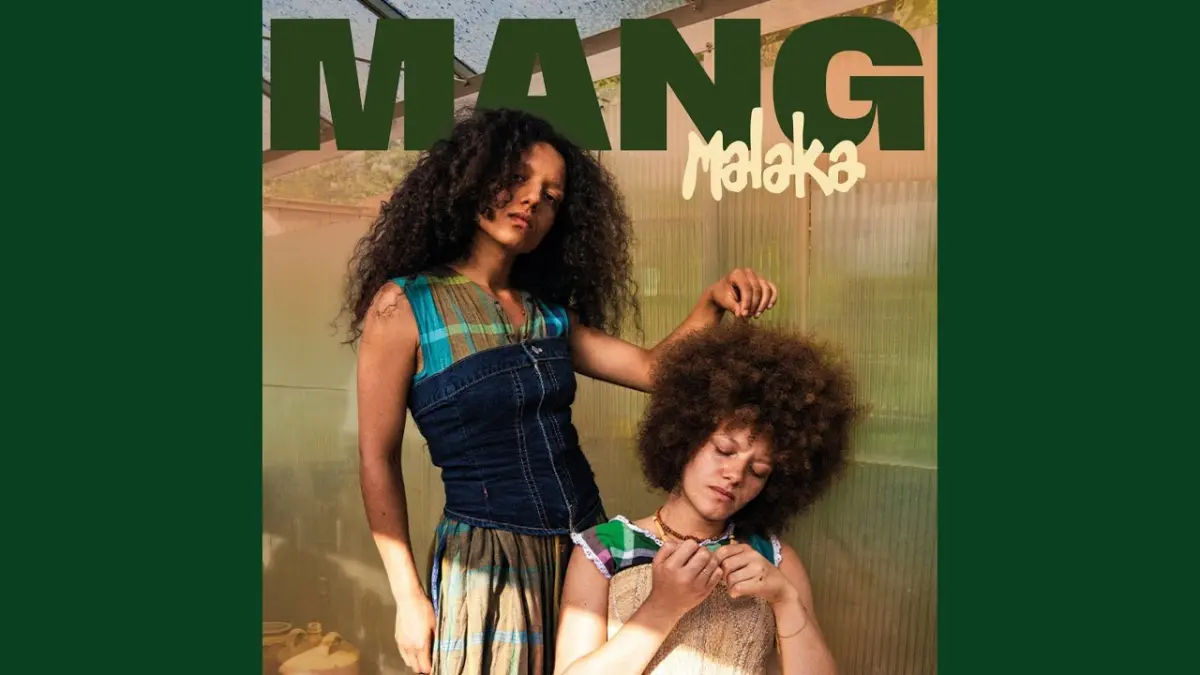
The contemporary musical landscape is increasingly shaped by artists who refuse to inhabit a single cultural, linguistic, or sonic box. At the vanguard of this borderless movement are Guadeloupe-born sisters Laurina and Sacha Moïsa, who record and perform under the moniker Malaka. With the November 14, 2025 release of their sophomore extended play, Mang, via Green Piste Records, the sibling duo has delivered a masterclass in transnational identity construction. At the heart of this release is the standout track "Run"—a visceral, uncompromising anthem that confronts systemic categorizations, societal expectations, and the complexities of a mixed Guadeloupean-French heritage.
"Skin real, don’t dare, trying to make a rule here," the sisters assert on the track, establishing a fierce boundary against cultural appropriation, tokenism, and external definitions of their identity. "Run" is not merely a song; it is a sonic manifesto documenting the emotional toll of navigating spaces that demand conformity, followed by an immediate reclamation of personal and ancestral power. Through a potent synthesis of traditional Guadeloupean rhythms, afrobeat, soul, hip-hop, and contemporary urban production, Malaka bridge the geographical and cultural divide between the French mainland and their Caribbean homeland.
This comprehensive report examines the genesis of Mang, dissects the profound cultural mechanics behind the track "Run," explores the collaborative musicianship that brings Malaka’s vision to life, and evaluates the broader implications of their work within the modern European and Caribbean music ecosystems.
Detailed Chronology: From the Antilles to the Streets of Clermont-Ferrand
The Caribbean Beginnings and the Mainland Shift
The story of Malaka is deeply rooted in a lineage of artistic expression and geographical displacement. Born in Guadeloupe—an archipelago in the Lesser Antilles and an overseas department of France—Laurina and Sacha Moïsa spent their earliest years immersed in the sensory richness of Caribbean life. Their household was saturated with the sounds of zouk and traditional Creole music, providing an organic musical education that bypassed formal academic parameters.
This domestic soundtrack was complemented by their parents’ creative pursuits: their father laid down rhythms as a percussionist, while their mother captured the visual world as a painter. This dual exposure to acoustic rhythm and visual composition laid an intuitive foundation for the sisters’ future artistic sensibilities.
However, childhood transitions uprooted the family, relocating the sisters from the tropical climate and vibrant culture of Guadeloupe to mainland France. This cultural transplantation presented immediate challenges common to the diaspora experience. Navigating the rigid educational, social, and cultural structures of mainland France while holding onto an intrinsic Caribbean identity required a delicate balancing act. The contrast between the warm, collectivist traditions of the Antilles and the often atomized, fast-paced realities of urban and suburban France left deep psychological and emotional impressions that would later fuel Malaka’s songwriting.
The Street-Corner Convergence in Clermont-Ferrand
Artistic renaissances often begin in the unlikeliest of places. For Malaka, the catalyst for their full-scale musical collaboration ignited on the sidewalks of Clermont-Ferrand, a city in the Auvergne region of central France. It was here, amidst the ephemeral encounters of street busking, that Laurina and Sacha crossed paths with percussionist Timothé Faure.
Faure’s integration into the fold marked a pivotal turning point. Street performance demands an immediate, arresting connection with an uncaptive audience—a skill that directly influenced Malaka’s dynamic, high-impact vocal delivery and rhythmic urgency. With Faure anchoring the percussion, the duo transitioned from private, insular songwriting sessions to a fully realized live outfit.
The subsequent inclusion of bassist, guitarist, and keyboardist Hadrien Mabilat, alongside drummer Nathan Pinel, expanded Malaka’s sonic palette from acoustic sketches to a muscular, multi-instrumental force. This ensemble dynamic allowed the sisters to merge the organic warmth of live instrumentation with the punchy, direct energy of contemporary urban genres.
The Pilgrimage Back: The Catalyst of the 2024 Guadeloupe Voyage
Despite their upbringing in mainland France, the gravitational pull of the archipelago remained strong. A critical turning point in the development of Mang occurred in 2024, when Laurina and Sacha undertook a foundational pilgrimage back to Guadeloupe.
This return journey was far from a casual vacation; it was an emotional and artistic reckoning. Reconnecting with the physical landscape, the cadence of the Creole language, and the living traditions of their ancestors unlocked a new wave of creative clarity. The trip acted as a pressure valve, releasing years of accumulated identity friction and channeling it directly into the studio sessions for Mang.
Upon returning to mainland France, the sisters, alongside their core band and production team, translated this Caribbean revival into the studio. Mixed by Hadrien Mabilat and Mathias Chaumet, and mastered by veteran engineer Yves Roussel, Mang emerged as a cohesive bridge connecting their ancestral past with their contemporary European present. Released on November 14, 2025, via Green Piste Records, the EP stands as the definitive artistic statement of Malaka’s career to date.
Supporting Context & Metrics: The Anatomy of "Run"
To fully appreciate the cultural and musical weight of "Run," one must examine its structural progression, lyrical architecture, and the broader socioeconomic metrics governing the contemporary French-Caribbean music market.
Lyrical and Structural Breakdown of "Run"
"Run" occupies the crucial second-track position on Mang, acting as a conceptual thesis statement for the entire project. The song is structured in two distinct emotional and sonic movements, mirroring a psychological shift from vulnerability to aggressive self-defense.
Movement One: The Weight of Social Alienation
The track opens with a disarming vulnerability that immediately strips away pop artifice:
"My social power is weak,"
This opening line of the first verse charts a harrowing spiral of frustration, social disconnection, and the physiological manifestations of anxiety—specifically, a debilitating stutter that physically leaves the body behind under pressure. The lyrics capture the exhausting emotional labor required to maintain a rehearsed, socially acceptable smile in environments that subtly or overtly alienate marginalized identities. This facade inevitably cracks, culminating in a verse that dissolves into tears and silent prayer.
Movement Two: The Rhythmic Counter-Attack
Just as the listener settles into this melancholic space, the track executes a violent tectonic shift. A biting, hip-hop-inflected patter takes over—frontal, wound tight, and rhythmically relentless. Here, the Moïsa sisters place their mixed Guadeloupean and French heritage squarely on the table, demanding respect rather than seeking validation.
The second verse delivers the emotional climax of the track:
"My ideas come from a blood running for long, too strong."
This assertion of ancestral continuity serves as both a proud declaration of resilience and a menacing warning to external forces attempting to dilute or define their identity. The song reaches its boiling point with a direct, uncompromising threat to trespassers of their cultural space:
"You might upset the roots, run."
+-------------------------------------------------------------------------+
                    THE DUAL STRUCTURE OF "RUN"
+-------------------------------------------------------------------------+
| MOVEMENT 1: INTERNALIZED PRESSURE                                       |
| - Theme: Social alienation, anxiety, and the exhaustion of assimilation.|
| - Musical Palette: Atmospheric, tense, vulnerable vocal delivery.       |
| - Resolution: Collapse into tears and prayer.                           |
+-------------------------------------------------------------------------+
| MOVEMENT 2: ANCESTRAL RECLAMATION                                       |
| - Theme: Cultural pride, historical lineage, and fierce self-defense.   |
| - Musical Palette: Biting hip-hop patter, heavy percussion, urban edge. |
| - Resolution: A stern warning to cultural interlopers ("run").          |
+-------------------------------------------------------------------------+
The Linguistic and Sonic Tapestry
One of the most defining metrics of Malaka’s artistic identity is their fluid multilingualism. Across Mang, and specifically within "Run," the sisters seamlessly navigate between French, English, and Creole. This linguistic dexterity is not merely a stylistic flourish; it is an accurate reflection of the modern diaspora experience.
- French serves as the institutional language of their education and mainland upbringing, as well as a tool for direct communication with the broader European market.
- English acts as the global lingua franca of urban music, hip-hop, and afrobeat, connecting Malaka to an international network of contemporary anti-colonial artists.
- Creole functions as the secret heart of their identity—an intimate, ancestral code that resists total assimilation and anchors the music in the Antilles.
Sonically, this linguistic fluidity is matched by an eclectic genre-blending framework. The track’s production merges the polyrhythmic complexity of traditional Guadeloupean percussion (steeped in Gwo Ka traditions) with the swinging bounce of modern afrobeat, the atmospheric depth of alternative soul, and the sharp, percussive cadence of contemporary European hip-hop.
Official Statements and Artistic Philosophy
While Malaka maintain an elusive, fiercely independent public persona, the thematic DNA of Mang and "Run" communicates a clear, uncompromising artistic philosophy. In promotional materials accompanying the EP’s release via Green Piste Records, the sisters have emphasized that their music is an act of psychological and cultural self-preservation.
"Skin real, don’t dare, trying to make a rule here,"
This central lyric encapsulates their ongoing battle against what cultural theorists term epistemic violence—the subtle and overt ways dominant cultures attempt to categorize, sanitize, and commodify the art of racialized and diasporic subjects.
In interviews and press statements regarding their 2024 return to Guadeloupe, the duo noted that physical displacement often creates an idealized, static memory of the homeland. However, their physical return shattered these romanticized notions, replacing them with a deeper, more grounded understanding of the archipelago’s contemporary realities, struggles, and enduring creative vitality.
By refusing to choose between their French citizenship and their Guadeloupean heritage, Malaka position themselves as cultural bridge-builders who refuse to flatten their multifaceted identities for mainstream consumption. Their collaboration with producer-instrumentalists Hadrien Mabilat, Nathan Pinel, and Timothé Faure is built on a foundation of mutual artistic respect, where traditional Caribbean polyrhythms are not treated as exotic window-dressing, but as the foundational engine driving modern European alternative music forward.
Future Outlook: The Trajectory of Malaka in the Global Music Ecosystem
As the music industry continues to decentralize away from traditional Anglo-American and Parisian major-label hubs, artists operating from the intersections of diaspora and regional identity are finding unprecedented audiences. Malaka’s positioning on Green Piste Records places them at the forefront of this progressive movement.
Expanding the Transatlantic Dialogue
The release of Mang marks a critical milestone in Malaka’s career, transitioning them from a promising regional act into a vital voice within the European and global underground scenes. The integration of live, organic instrumentation—courtesy of Faure, Mabilat, and Pinel—positions the group exceptionally well for the international festival circuit. Their ability to translate the studio intricacy of tracks like "Run" into a high-energy live performance will be paramount as they tour in support of the EP.
The Evolution of French-Caribbean Alternative Music
For decades, Caribbean music exported from France’s overseas departments was largely ghettoized within specific, niche commercial categories (such as traditional zouk or localized compas), rarely intersecting with the cutting edge of Parisian or European alternative culture. Artists like Malaka, alongside a new wave of trans-insular creators, are systematically dismantling these barriers. By welding the heavy social consciousness and rhythmic complexity of their Guadeloupean heritage to the sonic architecture of modern hip-hop, afrobeat, and soul, they are expanding the boundaries of what French-language and Caribbean-rooted music can achieve.
Anticipated Milestones
Looking ahead, industry analysts and music critics anticipate several key developments for Malaka:
- Extended International Touring: Building upon their street-busking roots in Clermont-Ferrand, the band is expected to bring their visceral live show to major European showcase festivals and cultural centers throughout 2026.
- Cross-Cultural Collaborations: Given their multilingual and genre-fluid approach, collaborations with fellow diasporic artists across the UK, West Africa, and the broader Caribbean basin represent a natural evolutionary step.
- Deepening Archival Exploration: Following the creative breakthrough of their 2024 Guadeloupe pilgrimage, future releases are likely to explore even deeper layers of traditional Antillean rhythms, further modernizing ancestral art forms for a globalized generation.
Conclusion
With Mang and its defining centerpiece "Run," Malaka have done much more than release a collection of songs; they have drawn a definitive line in the sand. Laurina and Sacha Moïsa have transformed personal alienation, historical displacement, and the friction of dual identities into a weapon of mass artistic liberation. Supported by an elite cadre of musicians and anchored by the visionary backing of Green Piste Records, Malaka are proving that true creative power lies not in assimilation, but in the unwavering preservation and modernization of one’s roots. As they warn anyone foolish enough to test their boundaries: you might upset the roots, run.