Executive Overview
Look around. From the minimalist facades of modern apartment complexes to the relentless curation of digital feeds, our visual environment is undergoing a profound and deeply concerning mutation. We are systematically draining the color, unpredictability, and vitality from our shared spaces.
This cultural whitening reached a symbolic climax with the announcement of Pantone’s Colour of the Year for 2026: Cloud Dancer, a stark, "lofty white." While presented as a soothing antidote to global chaos, this choice acts as a symptom of a much larger, darker reality—a relentless retreat from color, character, and cultural distinctiveness in both our physical and digital lives.
Across the globe, vibrant neighborhoods are being bulldozed and replaced by "cookie-cutter" developments designed for maximum financial extraction rather than human flourishing. Paired with this urban homogenization is the rise of the algorithmic feed. Behind our screens, lines of code analyze our habits, tastes, and leisure time, fundling human desire toward a narrow, hyper-efficient monoculture.
The consequences of this aesthetic homogenization go far beyond mere superficial boredom. When we sanitize our cities, flatten our artistic outputs, and replace vibrant community hubs with sterile, gentrified developments, we erode the foundational pillars of human well-being. As researchers in law, sociology, and aesthetics point out, a loss of color is a loss of expression, mental resilience, and social cohesion. It is time to examine how we arrived at this monochrome dystopia—and why reclaiming color is an urgent societal necessity.
Detailed Chronology: The March Toward Sameness
To understand how our world became so aggressively uniform, we must trace the historical milestones of design rationalization, urban restructuring, and algorithmic control.
1983: The Birth of the "McDonaldization" Thesis
In the early 1980s, American sociologist George Ritzer published groundbreaking work detailing what he termed the "McDonaldization of society." Ritzer observed that modern institutions—ranging from fast-food chains to hospitals and universities—were increasingly organized around four core principles: efficiency, calculability, predictability, and control.
While McDonaldization successfully lowered costs and provided consumers with uniform, reliable experiences worldwide (a Big Mac tastes identical in Paris and Bangkok), it carried a devastating side effect: it eliminated space for spontaneity, human error, organic personality, and creative friction. Efficiency became the enemy of art.
1993: The Discovery of the "Generic City"
A decade after Ritzer’s sociological warning, Dutch architect Rem Koolhaas embarked on a massive 360,000-kilometer global journey. His observations culminated in the concept of the "Generic City." Koolhaas noted that cities across the world were beginning to shed their unique historical identities, local materials, and chaotic charm in favor of rationalized, hyper-functional urban planning.
The Generic City was born out of a desire for frictionless global capital flows. It is functional, clean, and entirely forgettable—devoid of a distinct sense of place.
The 2010s–Present: The Algorithmic Mediated World
As urban environments were being flattened by real estate financialization, the digital realm underwent a parallel homogenization. The rise of recommendation engines, social media algorithms, and hyper-personalized streaming platforms fundamentally altered how humans discover culture.
Instead of stumbling across raw, eccentric, or challenging art, modern consumers are fed a steady diet of predictable content derived from past behaviors. The algorithm takes a single data point—a song, a sofa, a color palette—and loops the user into an echo chamber. By the mid-2020s, phenomena like Spotify’s "Pink Pilates Princess Strut Pop" encapsulated how algorithms manufacture uniform micro-trends, smoothing down the jagged edges of human creativity until everything sounds, looks, and feels the same.
2026: The Pinnacle of the Monochrome
The release of Pantone’s "Cloud Dancer" as the 2026 Colour of the Year serves as the ultimate marker of this trajectory. Encapsulating a visual world terrified of expressive color, the "lofty white" aesthetic mirrors the gentrified developments, sterile corporate office spaces, and minimalist digital user interfaces that dominate modern life.
Supporting Context & Metrics: Urban Gentrification and Algorithmic Monocultures
The retreat from color is not happening by accident; it is driven by systemic economic forces and technological feedback loops.
Urban Dislocation: The Case of Elephant and Castle
Consider the transformation of the London borough of Elephant and Castle. Over recent years, billions of pounds of capital have poured into the area. Once a bustling, chaotic Latin American enclave defined by architectural diversity, independent businesses, and vibrant community spaces, it has undergone radical redevelopment.
Oli Mould, a professor of social, cultural, and historical geography, has diagnosed Elephant and Castle as the "patient zero" of modern urban gentrification. It has been converted into an "identikit homogeneous gentrified place."
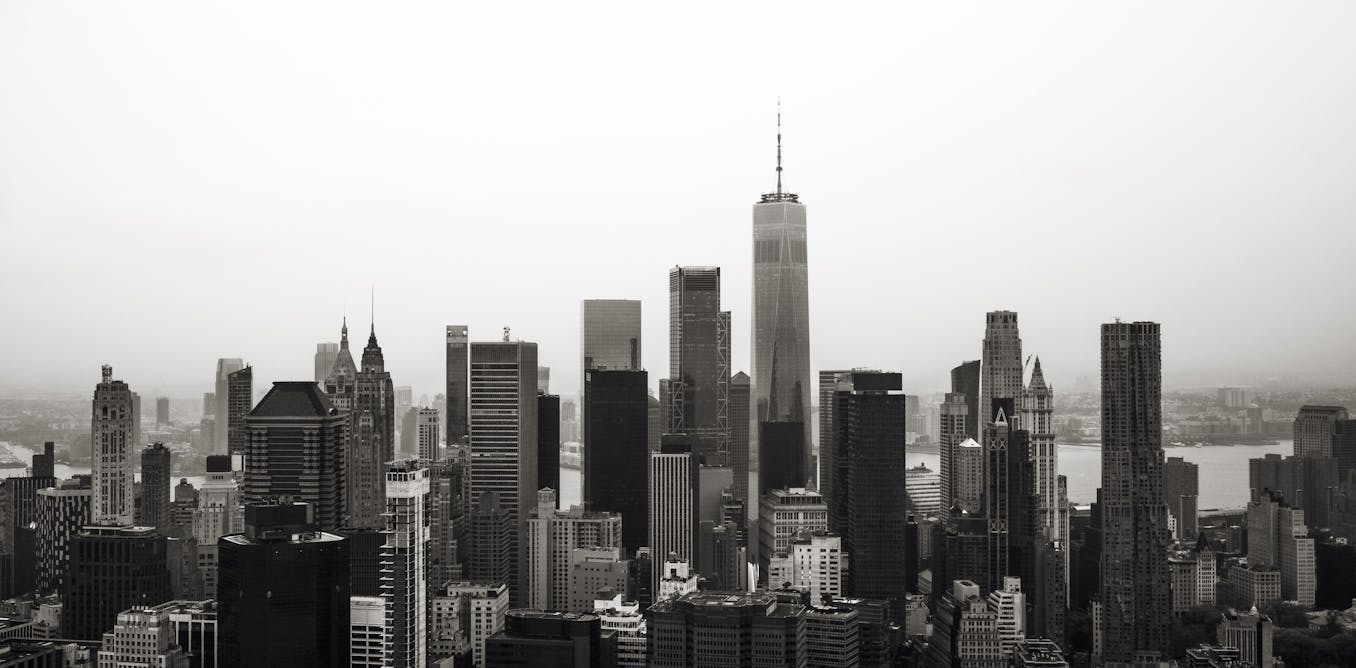
This pattern repeats itself in major metropolitan areas worldwide. Urban landscapes are no longer viewed by developers as dynamic ecosystems for human life and cultural expression; they are treated as financial assets and investment objects. When the primary metric of a building’s success is its liquidity and ease of transaction on global markets, architectural eccentricity, local history, and vibrant public art are the first casualties.
The Economics of the Built Environment
According to insights from professional architectural bodies, the financialization of the built environment forces a convergence in design choices. Developers rely on risk-averse, standardized palettes—shades of white, grey, and muted beige—because these tones appeal to the broadest possible pool of institutional investors and transient buyers. Diversity of design requires risk; financialized urbanism cannot afford risk.
The Algorithmic Pull Toward Sameness
On the digital front, peer-reviewed research confirms that algorithmically driven taste results in a profound cultural monoculture. When algorithms mediate our exposure to fashion, interior design, pet ownership, and music, human choice is subtly constrained.
The mechanism is simple yet insidious:
- Data Ingestion: The user makes a choice (e.g., listening to a formulaic pop song).
- Prediction & Amplification: The algorithm serves up dozens of near-identical iterations of that choice.
- Behavioral Conditioning: The user’s tastes narrow to align with the algorithm’s boundaries.
- Market Production: Creators and manufacturers respond to these concentrated data pools by producing more homogenous goods, completely flattening the diversity of creative work.
Official Statements and Expert Perspectives
The academic and professional communities are increasingly sounding the alarm over the psychological and social tolls of this global homogenization.
Professor Oli Mould on Gentrification:
"This trend risks destroying the very thing that makes a community thriving and beautiful in the first place… converting rich, varied cultural hubs into identikit homogeneous gentrified spaces."
The Philosophy of Aesthetic Welfare:
More than 50 years ago, American philosopher Monroe Beardsley introduced the concept of "aesthetic welfare"—a framework evaluating the quality and availability of positive aesthetic experiences through our physical environment. According to researchers working at the intersection of law and aesthetics, the presence of color, contrast, and expressive architecture directly impacts community resilience, mental health, and social cohesion.
Recent studies published in environmental psychology journals emphasize the importance of environmental enrichment. When human beings are starved of visual complexity and color in their immediate surroundings, their capacity for emotional expression and visual communication diminishes.
Furthermore, as modern life forces us indoors and in front of digital screens, our primary exposure to color is mediated through glass. Experts warn that a lack of physical engagement with vibrant, dynamic environments leaves populations less equipped to appreciate, understand, and utilize color effectively in real life.
Future Outlook: Reclaiming Color and Choice
The homogenization of our visual world is not an irreversible law of nature; it is the byproduct of specific economic incentives, urban planning models, and unchecked technological systems. If we wish to avoid a completely desensitized, soul-deadening future, structural changes must occur.
1. De-Financializing Urban Spaces
City planners, local governments, and communities must push back against the treatment of housing and public spaces as mere financial instruments. Zoning laws and development mandates should actively incentivize architectural diversity, local craftsmanship, and community-led design processes that prioritize human well-being over algorithmic predictability.
2. Breaking the Algorithmic Echo Chamber
Consumers and creators must actively rebel against algorithmic curation. In music, literature, and visual arts, seeking out independent platforms, supporting human-led curation, and deliberately choosing unpredictable, challenging media can fracture the monoculture.
3. Prioritizing "Aesthetic Welfare"
We must reintroduce aesthetics into discussions of public health and urban policy. Color, public art, and architectural variance are not mere luxuries or cosmetic afterthoughts; they are vital components of social infrastructure.
As the idiom goes, to be unwell is to feel "off-colour." It is a linguistic acknowledgement that human vitality is inextricably linked to vibrancy. To heal our communities, combat urban alienation, and restore our capacity for genuine expression, we must consciously reject the sterile safety of "Cloud Dancer" and the bland promises of the generic city. It is time to step outside the algorithm, dismantle the architecture of sameness, and live life in full color.