Executive Overview
The global dental tourism market has experienced exponential growth over the past decade, driven by surging domestic healthcare costs, long waiting lists, and the globalization of elective medical travel. For millions of patients worldwide, the proposition appears straightforward: identify an overseas clinic, compare its dramatically lower fee schedule against local quotes, book flights, and return home with a restored smile at a fraction of the price.
However, beneath the polished veneer of marketing materials, aesthetic clinics, and all-inclusive travel packages lies a complex web of clinical, logistical, and legal challenges. The single most difficult hurdle for prospective dental tourists is not coordinating travel logistics, but objectively evaluating clinical quality, material safety, and institutional accountability before ever walking through a foreign clinic’s door.
To establish a definitive framework for safe dental travel, industry experts—including specialized clinicians from the renowned European practice Orto Nova—have collaborated to develop a rigorous vetting checklist. While attractive pricing remains the primary catalyst for medical travel, sustainable clinical outcomes depend on a matrix of variables: the explicit credentials of the treating surgeon, advanced diagnostic protocols, transparent financial disclosures, and, crucially, comprehensive post-operative care continuity once the patient returns home.
This investigative report explores the critical factors patients must evaluate before making financial and travel commitments. By examining clinician credentials, diagnostic integrity, material traceability, financial transparency, long-term maintenance, and operational communication, this guide provides the authoritative blueprint necessary to navigate the dental tourism landscape securely.
Detailed Chronology: The Lifecycle of Overseas Dental Care
Understanding how a dental tourism journey unfolds chronologically helps patients identify vulnerabilities at each stage of the process. From initial remote inquiry to post-operative maintenance months down the road, every phase requires distinct quality-assurance checkpoints.
Phase 1: The Remote Inquiry and Initial Assessment
The journey typically begins online, where patients submit digital photographs, panoramic X-rays, or CBCT scans to overseas clinics. During this phase, clinics generate preliminary treatment plans and remote price estimates.
- The Pitfall: Relying solely on photographs can lead to misdiagnoses. Soft tissue health, bone density, and micro-fractures are frequently invisible in standard digital images.
- The Safeguard: Patients must recognize that remote quotes are speculative estimates, not binding medical contracts. A reputable clinic will explicitly state that a comprehensive in-person examination is required to finalize the scope of work.
Phase 2: Pre-Travel Planning and Financial Agreement
Once the remote estimate is accepted, the patient coordinates travel dates, hotel accommodations, and clinical appointments, often facilitated by the clinic’s international patient coordinator.
- The Pitfall: Committing to non-refundable travel arrangements before receiving a binding, itemized treatment plan that accounts for potential procedural contingencies.
- The Safeguard: Securing a detailed written agreement that separates laboratory fees, surgical costs, temporary prosthetics, and permanent restorations, while outlining the financial policy if the treatment plan must be modified chairside.
Phase 3: The Clinical Execution (The Overseas Visit)
Upon arrival, the patient undergoes the physical clinical examination, followed by the execution of procedures—ranging from single restorations to complex full-mouth rehabilitations such as All-on-4 implant protocols.
- The Pitfall: Feeling pressured to proceed due to time constraints (e.g., return flights booked for specific dates) even if unexpected clinical complications arise during surgery.
- The Safeguard: Ensuring adequate padding in the travel itinerary to allow for immediate post-operative healing checks before boarding a flight home.
Phase 4: Post-Operative Recovery and Repatriation
The patient returns home with new restorations, entering the long-term maintenance phase.
- The Pitfall: Assuming that dental treatment is a permanent, set-and-forget solution requiring no further professional intervention.
- The Safeguard: Establishing a continuity-of-care plan with a local dentist prior to departure, complete with comprehensive surgical records, implant component identification cards, and radiographic imaging.
Supporting Context & Metrics: The Anatomy of Overseas Dentistry
To contextualize why rigorous vetting is necessary, it is helpful to examine the structural differences between domestic and international dental care delivery.
Cost Arbitrage vs. Hidden Liabilities
The financial savings associated with dental tourism in regions like Eastern Europe, Southeast Asia, or Central America often range from 50% to 70% compared to Western Europe, the United Kingdom, or North America. These cost differentials are primarily driven by lower local operating overheads, reduced insurance and liability premiums, and favorable macroeconomic labor costs.
However, these savings can evaporate rapidly if secondary interventions are required. According to international dental association reports, a significant percentage of corrective dental work performed by domestic practitioners involves rectifying failed or poorly documented dental tourism procedures. Common complications requiring remediation include:

- Peri-implantitis resulting from poor initial osseointegration or substandard implant placement angles.
- Ill-fitting crowns and bridges that trap food debris, accelerating secondary decay and periodontal disease.
- The use of unverified, unbranded implant components that cannot be serviced or restored by domestic clinicians due to a lack of compatible prosthetic tools.
The Diagnostic Imperative
Advanced dental procedures—particularly full-arch rehabilitations like All-on-4—demand rigorous pre-surgical planning. Bone density analysis, nerve mapping via Cone Beam Computed Tomography (CBCT), and a comprehensive evaluation of systemic health factors (such as diabetes, smoking status, and bruxism) are non-negotiable prerequisites. Clinics that offer immediate-load implants without demanding comprehensive diagnostic imagery pose severe clinical risks.
Official Guidelines: The 6-Point Clinical Vetting Framework
Based on insights from leading clinical authorities, patients should systematically evaluate prospective clinics across six core dimensions before transferring deposits or booking travel.
+-------------------------------------------------------------------------+
|                  THE 6-POINT DENTAL TOURISM CHECKLIST                   |
+--------------------------+----------------------------------------------+
| 1. Clinician Credentials | Verify specific surgical/restorative training|
| 2. Diagnostic Integrity  | Insist on in-person exams & detailed plans   |
| 3. Material Traceability | Demand official component passports/brands   |
| 4. Financial Clarity     | Scrutinize itemized quotes & contingencies   |
| 5. Post-Care Continuity  | Plan for domestic follow-up & records access |
| 6. Communication Quality | Require direct answers from clinical staff   |
+--------------------------+----------------------------------------------+
1. Check Who Will Perform the Treatment
Never select a clinic based solely on its brand equity, marketing spend, or glossy website. The safety and longevity of your dental work depend entirely on the individual clinician’s hands.
- Identify the Practitioner: Request the full name, professional registration number, and curriculum vitae of the exact dentist or oral surgeon scheduled to perform your procedure.
- Verify Specialist Competency: General dentists may be fully qualified for basic restorative work, but complex surgeries—such as sinus lifts, bone grafting, or multi-unit implant placements—require specialized surgical training (e.g., in periodontology, maxillo-facial surgery, or prosthodontics). Ask specifically how many times the clinician has performed your exact procedure.
- Understand Team Hierarchies: Clarify who handles the surgical phase versus the prosthetic restoration phase, and ensure seamless communication between the surgeon and the dental laboratory technician.
2. Find Out How the Treatment Plan Is Built
A professional treatment plan is an evolving medical document, not a static retail product.
- The Limits of Remote Consultations: While digital photos help frame an initial conversation, a definitive treatment plan cannot be established without clinical diagnostics. Understand which elements of your quote are firm and which are contingent upon physical examination.
- Contingency Protocols: Ask the clinic how they handle unexpected intra-operative discoveries (e.g., insufficient bone mass discovered during implant placement). A transparent clinic will explain the alternative treatment options and cost implications before altering the surgical course.
- Scheduling Realities: Ensure the proposed timeline matches biological healing realities. Complex implant procedures often require a healing phase (osseointegration) lasting three to six months before final restorations can be loaded safely. If a clinic promises complex full-mouth restorations in an unrealistically short timeframe, treat it as a red flag.
3. Ask What Materials and Systems Will Be Used
The long-term success of dental work relies heavily on the physical materials implanted into your jaw or bonded to your teeth.
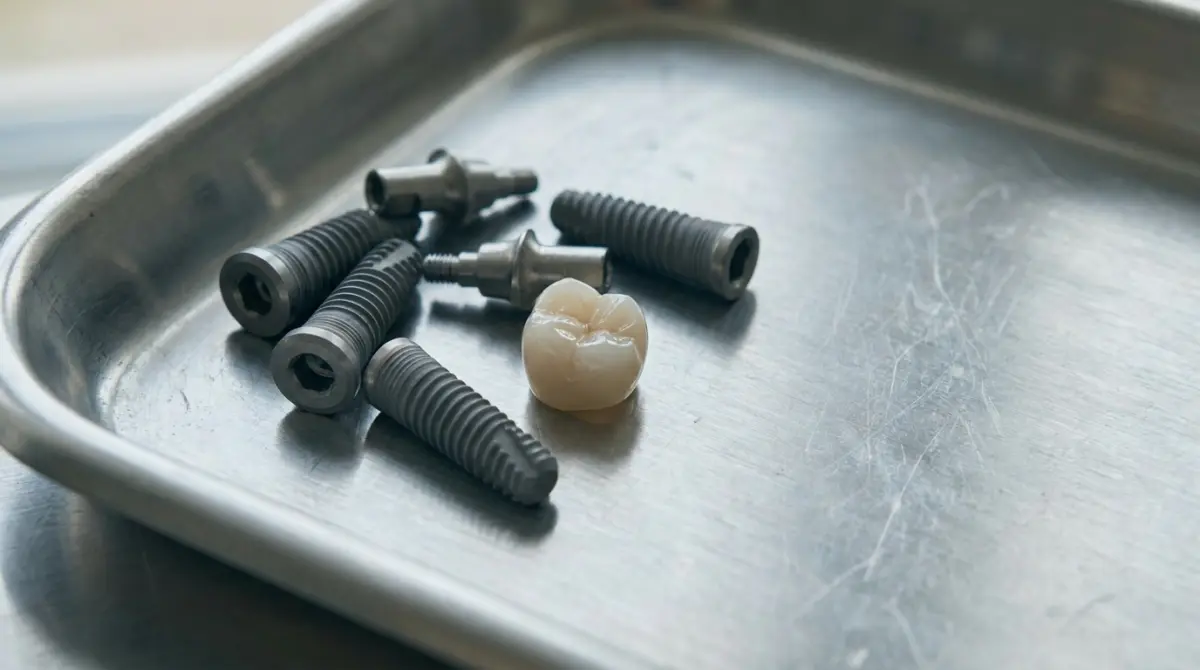
- Implant Brand Transparency: If you are receiving dental implants, demand to know the specific manufacturer and implant system (e.g., Nobel Biocare, Straumann, Zimmer Biomet). Upon completion, you must receive a physical or digital "implant passport" containing serial numbers, lot numbers, and component specifications. This documentation is vital if a domestic dentist needs to perform maintenance years later.
- Laboratory Provenance: For crowns, bridges, and veneers, ask where the dental laboratory is located, what ceramics or composite materials are utilized (e.g., monolithic zirconia, lithium disilicate), and whether the laboratory adheres to international medical device manufacturing standards (such as ISO 13485).
4. Read the Quote as Carefully as the Treatment Plan
Financial clarity prevents bitter post-treatment disputes. A professional quote must be fully itemized.
- Inclusions vs. Exclusions: Clarify whether the quoted price covers local anesthesia, temporary restorations, post-operative medications, follow-up imaging, and necessary adjustments. Temporary prosthetics are frequently billed separately from final restorations.
- The True Cost of Travel: Factor in the cumulative expense of multiple trips, international flights, ground transportation, and extended hotel stays. When multi-stage procedures require a mandatory healing interval, a seemingly inexpensive treatment can match domestic pricing once travel logistics are fully accounted for.
5. Ask What Happens After You Go Home
The true test of a dental clinic’s integrity is how it manages complications after the patient has returned home.
- Remote Support vs. Physical Intervention: Establish clear protocols for post-operative care. Which symptoms can be monitored via digital photographs or video calls, and what triggers the necessity for an in-person physical examination?
- Domestic Continuity: Before departing, consult with a local dentist in your home country to determine if they are willing to provide routine maintenance and emergency check-ups for foreign-placed restorations. Ensure you leave the overseas clinic with complete clinical records, probing charts, panoramic or periapical radiographs, and material specification sheets in a language your domestic dentist can interpret.
6. Judge the Communication Before Paying a Deposit
Communication is a reliable proxy for overall operational competence.
- Access to Clinicians: While international patient coordinators are valuable for scheduling and travel logistics, clinical questions must be addressed by qualified dental professionals. If your medical queries are continually deflected by sales staff using high-pressure promotional tactics, reconsider your options.
- Written Records: Ensure all treatment details, guarantees, payment terms, and warranty conditions are documented in writing. A reputable clinic stands by its work with explicit, written guarantees that outline what is covered (and excluded) should a restoration fail prematurely.
Future Outlook: The Evolution of Cross-Border Healthcare
As the dental tourism industry matures, regulatory pressures and technological innovations are steadily raising operational standards worldwide. The future of cross-border dental care points toward greater standardization, digital integration, and accountability.
Technological Convergence and Digital Dentistry
The widespread adoption of Computer-Aided Design and Computer-Aided Manufacturing (CAD/CAM), 3D printing, and digital smile design is bridging the clinical quality gap between nations. Clinics that invest in state-of-the-art digital infrastructure can share diagnostic data instantaneously with international partner laboratories, ensuring high-precision manufacturing regardless of geographic boundaries. Furthermore, tele-dentistry platforms are improving post-operative monitoring, allowing foreign clinicians to collaborate seamlessly with local practitioners when minor adjustments are required.
Towards Greater Regulatory Transparency
In response to consumer protection concerns, international accreditation bodies and industry associations are moving toward stricter credentialing frameworks. Patients are increasingly empowered by independent review platforms, verified patient registries, and transparent peer-reviewed clinical data. Clinics that embrace this culture of openness—providing verifiable credentials, open material sourcing, and robust post-treatment guarantees—will increasingly dominate the medical travel landscape.
Conclusion
Choosing a dental clinic abroad is a significant healthcare decision that requires the same level of investigative rigor applied to any major surgical intervention in your home country. By prioritizing clinical credentials, diagnostic thoroughness, material traceability, and post-operative continuity over headline-grabbing price discounts, patients can successfully navigate the complexities of international dentistry. Ultimately, a successful dental tourism journey is defined not merely by how much money is saved at the outset, but by the clinical safety, functional longevity, and peace of mind secured for the years ahead.