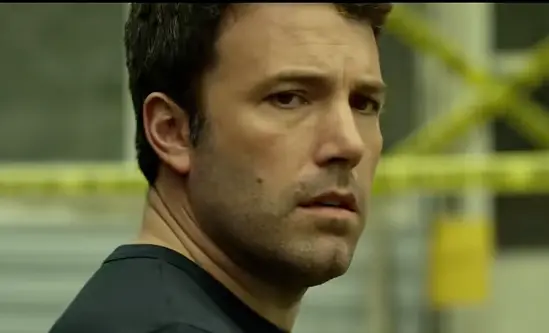
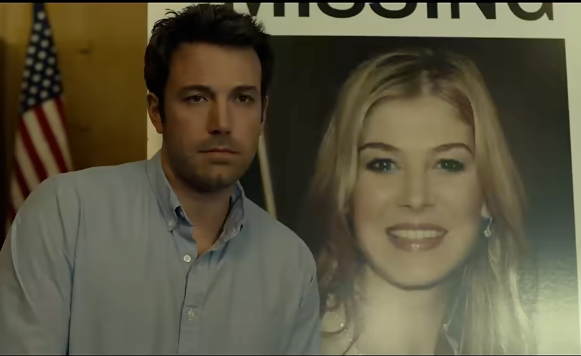
More than a decade after the cameras stopped rolling on David Fincher’s electrifying 2014 psychological thriller Gone Girl, its leading man, Ben Affleck, is still feeling the chilling aftershocks. In a recent interview with Variety, Affleck candidly admitted that he remains "afraid" of his on-screen wife and co-star, Rosamund Pike, whose terrifyingly icy portrayal of the sociopathic Amy Dunne continues to haunt him in his waking life.
Reflecting on interactions with Pike long after the production wrapped, Affleck offered a humorous yet genuinely shaken glimpse into the enduring psychological footprint left by the film. Mimicking her precise, chilling British accent and demeanor, the actor highlighted the uncanny way Pike’s chilling aura has persisted well beyond the cinematic frame.
Adapted from Gillian Flynn’s massive bestselling novel of the same name, Gone Girl was a watershed moment in contemporary cinema. It redefined the domestic thriller genre, dominated global box offices, and yielded career-defining performances. Yet, behind the multi-million-dollar box office success and critical acclaim lay a rigorous, deeply immersive production process—one defined by Fincher’s notorious perfectionism and a casting process fraught with near-misses involving Hollywood heavyweights like Jon Hamm and Reese Witherspoon. As Hollywood looks back at the cultural phenomenon of Gone Girl, the legacy of the film is anchored not just in its twisted plot, but in the indelible psychological terror Pike injected into the cultural consciousness—a terror that apparently still gives even her on-screen husband the chills.
Detailed Chronology: From Page to Screen and Beyond
To fully understand why Rosamund Pike’s performance continues to resonate so deeply—and why it still rattles Ben Affleck—it is necessary to trace the harrowing journey of Gone Girl, from its literary roots to its enduring cinematic legacy.
1. The Literary Phenomenon (2012)
Before the film adaptation ever materialized, Gillian Flynn’s 2012 novel Gone Girl took the literary world by storm. Spending over 100 weeks on The New York Times Best Seller list, the novel captivated readers with its unflinching, cynical examination of modern marriage, media sensationalism, and the facade of domestic bliss. At the center of the story were Nick and Amy Dunne: a glamorous couple whose seemingly golden life in New York is upended by the 2008 recession, forcing them to relocate to Nick’s economically depressed hometown of North Carthage, Missouri.
When Amy mysteriously vanishes on their fifth wedding anniversary, the ensuing media firestorm places Nick directly in the crosshairs of suspicion. Flynn’s novel brilliantly utilized unreliable narrators and diabolical twists, most notably the revelation that Amy had meticulously orchestrated her own disappearance to frame Nick for her murder.
2. The Casting Labyrinth (2013)
Securing the right actors to bring Flynn’s toxic couple to life was no simple task. Director David Fincher, renowned for his uncompromising vision and meticulous attention to detail, engaged in an exhaustive casting process that could easily have reshaped cinematic history.
Initially, Jon Hamm was heavily considered for the role of Nick Dunne. However, scheduling conflicts with the final, sixth season of AMC’s landmark television series Mad Men forced Hamm to turn down the opportunity. Reflecting on the missed role years later on Watch What Happens Live, Hamm quipped, "It was meant to be me, but we had to film the continuing adventures of Mr. Draper."
Similarly, Reese Witherspoon—who acquired the film rights to the novel through her production company, Pacific Standard—was heavily eyed to star as Amy Dunne. However, Fincher ultimately decided she was miscast. Recounting the blunt rejection on the Las Culturistas podcast, Witherspoon shared, "[Fincher] sat me down—and this is not on David, but David’s like, ‘You’re totally wrong for this part, and I’m not putting you in it.’" Despite missing out on the role, Witherspoon later conceded that the director’s instincts were spot on: "Fincher just killed it, and Rosamund Pike is so diabolical and Ben Affleck is sort of the rube on the other side of it."
Ultimately, Fincher cast Ben Affleck, drawn to the actor’s real-life experiences with intense media scrutiny and tabloid fame, and selected relative newcomer Rosamund Pike to embody the icy, calculating Amy.
3. Principal Photography and Fincher’s Method (2013–2014)
Filming Gone Girl was an exercise in psychological endurance. David Fincher is famous for demanding dozens, sometimes upwards of 50, takes for a single scene, pushing his actors to strip away their instincts until their performances feel raw and mechanized. For Affleck and Pike, this meant leaning heavily into the claustrophobia, resentment, and manipulation central to the Dunnes’ marriage.
Pike, in particular, had to undergo a radical physical and psychological transformation to embody "Amazing Amy." From mastering the complex psychological shifts of a woman capable of calculated vengeance to executing the film’s infamous, brutal sequences, Pike delivered a performance that required both physical vulnerability and emotional detachment of the highest order.
4. The Theatrical Release and Cultural Impact (October 2014)
Upon its release in October 2014, Gone Girl was a critical and commercial juggernaut. It polarized audiences and critics alike, sparking fierce dinner-table debates about gender roles, marital resentment, and the justice system. The film solidified Fincher’s status as a master of suspense and launched Rosamund Pike into the upper echelon of Hollywood A-listers, earning her widespread critical acclaim and an Academy Award nomination for Best Actress.
5. The Post-Release Resonance (2014–Present)
Years after the dust settled on the red carpets, the cultural imprint of Gone Girl remains entirely intact. Memes, dialogue snippets, and stylistic choices from the film continue to populate internet culture. Yet, perhaps the most telling sign of the film’s lasting impact is how it affected the people who made it—specifically Ben Affleck, whose recent confession proves that living in the cinematic shadow of Amy Dunne is something one never truly escapes.
Supporting Context & Metrics: Box Office Dominance and Critical Reception
Gone Girl was not merely a critical darling; it was a massive financial triumph that proved mid-budget adult thrillers could still dominate the global box office in an era increasingly dominated by superhero franchises.
Global Box Office Performance: Released by 20th Century Studios, the film grossed an astounding $369.3 million worldwide against a production budget of approximately $61 million. This impressive return underscored the global appetite for high-concept psychological suspense.
Domestic vs. International Split: The film grossed roughly $167.8 million domestically and pulled in an additional $201.5 million from international markets, proving that its dark, satirical examination of American marriage resonated across cultural boundaries.
Accolades and Nominations:
Academy Awards (2015): Rosamund Pike received a well-deserved Best Actress nomination. (The award ultimately went to Julianne Moore for her moving portrayal of an early-onset Alzheimer’s patient in Still Alice). Gillian Flynn also earned an Academy Award nomination for Best Adapted Screenplay.
Golden Globe Awards: The film scored four major nominations, including Best Director (David Fincher), Best Actress in a Motion Picture – Drama (Rosamund Pike), Best Screenplay, and Best Original Score (Trent Reznor and Atticus Ross).
BAFTA Awards: Pike earned a BAFTA nomination for Best Actress in a Leading Role, cementing her status as an international powerhouse.
Official Statements and Behind-the-Scenes Insights
The enduring legacy of Gone Girl is best captured through the firsthand reflections of its principal creators and cast members, who have frequently spoken about the unique intensity required to bring Flynn’s vision to life.
In his recent interview with Variety, Ben Affleck pulled back the curtain on his real-life dynamic with Pike a decade after sharing the screen with her. Describing his ongoing apprehension, Affleck joked about encountering his former co-star:
“I’m like, ‘Hey Rosamund. How are you?’” Affleck said in the recorded video interview, adopting a skittish posture. “She still has that, sort of, look. You know what I mean?”
Mimicking Pike’s crisp British accent and her character’s chillingly polite yet menacing inflection, Affleck added:
“Hello Ben, it’s nice to talk to you.”
*“I’m like, ‘Oh, f**,’” Affleck laughed. “She still has that quality. It was a great performance. She was great in the movie.”
These lighthearted comments underscore the profound psychological weight of Pike’s performance. Playing a character as methodical and terrifying as Amy Dunne requires a level of commitment that clearly left an impression on her co-star—so much so that the boundary between actor and character occasionally blurs in casual conversation.
Reflecting on the grueling production process in past interviews, Pike herself acknowledged the unique mental space required to inhabit Amy. To prepare for the role, the actress isolated herself, studied the body language of sociopaths, and absorbed the chilling duality of a woman who weaponizes societal expectations against her husband.
Director David Fincher, known for his refusal to compromise on artistic vision, famously fostered a tense, highly focused environment on set to draw out the necessary paranoia. The result was a masterclass in cinematic tension that continues to pay dividends for the actors’ reputations, even as they move on to entirely different projects.
Future Outlook: The Enduring Legacy of Gone Girl
As Hollywood continually seeks out intellectual property with proven cultural resonance, the shadow of Gone Girl looms large over the thriller genre. While no sequel or reboot has been announced—nor is one creatively necessary, given the definitive conclusion of Flynn’s narrative—the film’s DNA can be seen in a wave of subsequent psychological mysteries and domestic dramas.
For Ben Affleck, whose career has navigated everything from high-profile blockbusters to deeply personal directorial projects, Gone Girl remains a high-water mark of his acting filmography. His ability to play the deeply flawed, frequently unsympathetic "rube" opposite Pike’s diabolical mastermind showcased a willingness to subvert his own leading-man image—a risk that continues to pay off critically.
For Rosamund Pike, the role of Amy Dunne permanently elevated her career trajectory, proving her ability to command the screen with a terrifying, cool-headed magnetism. Her post-Gone Girl filmography—including standout turns in I Care a Lot and Saltburn—demonstrates a clear comfort with complex, morally ambiguous, and downright dangerous characters.
Ultimately, Affleck’s playful admission that he is "still afraid" of Rosamund Pike is more than just a viral interview moment; it is a testament to the transformative power of great acting. When a performance is so thoroughly realized that it continues to evoke genuine shivers years down the road, it ceases to be mere entertainment. It becomes cinematic history—and proof that "Amazing Amy" will haunt the halls of Hollywood, and the nightmares of Ben Affleck, for generations to come.