Executive Overview
London’s cultural landscape is currently hosting an exhibition that actively resists the frantic pace of the modern attention economy. Robert Ryman: The Real Thing, running at the Barbican Centre, marks the late American artist’s first major UK retrospective in over thirty years. Bringing together 68 works spanning from the mid-1950s to the early 2010s, the exhibition is a masterclass in spatial choreography, tactile sensitivity, and artistic reduction.
True to Ryman’s lifelong philosophy that "you cannot understand a painting by explaining something. You can only understand painting by experience," the exhibition boldly discards traditional wall texts and interpretive labels. There are no didactic panels to guide the viewer’s eye or contextualize the pieces chronologically. Instead, the works are arranged thematically across the gallery spaces, compelling visitors to confront the physical reality of the canvases, metals, and papers without a linguistic safety net.
This retrospective is not merely a display of objects; it is an immersive environment designed to challenge how contemporary audiences consume visual art. In an era dominated by digital reproductions, algorithm-driven social media feeds, and bite-sized cultural consumption, Ryman’s work demands quiet, patient observation. It asks the viewer to step into a temporal relationship with the artwork—one where light, movement, and material interact in real time. For critics and art enthusiasts alike, The Real Thing offers a rare opportunity to reevaluate one of the most rigorously experimental minimalist figures of the 20th century.
Detailed Chronology: From Jazz Standards to Minimalist Mastery
The trajectory of Robert Ryman’s life and career is as unconventional as his art. Born in Nashville, Tennessee, Ryman did not follow a predictable academic path toward the fine arts. His initial ambitions lay firmly in the realm of music. After serving a two-year stint playing the tenor saxophone in the US Army Reserve Corps, Ryman relocated to New York City in 1952 with a singular, driving ambition: to forge a career as a professional jazz saxophonist.
Ryman himself famously admitted that he "never saw a painting until I came to New York." His entry into the art world was entirely accidental. Needing to support himself while pursuing his musical aspirations, he took a job as a security guard at the Museum of Modern Art (MoMA). Stationed in the galleries day after day, Ryman found himself surrounded by the groundbreaking works of mid-century abstract expressionists. Guarding these masterpieces afforded him hours of uninterrupted contemplation. Gradually, his curiosity was piqued.
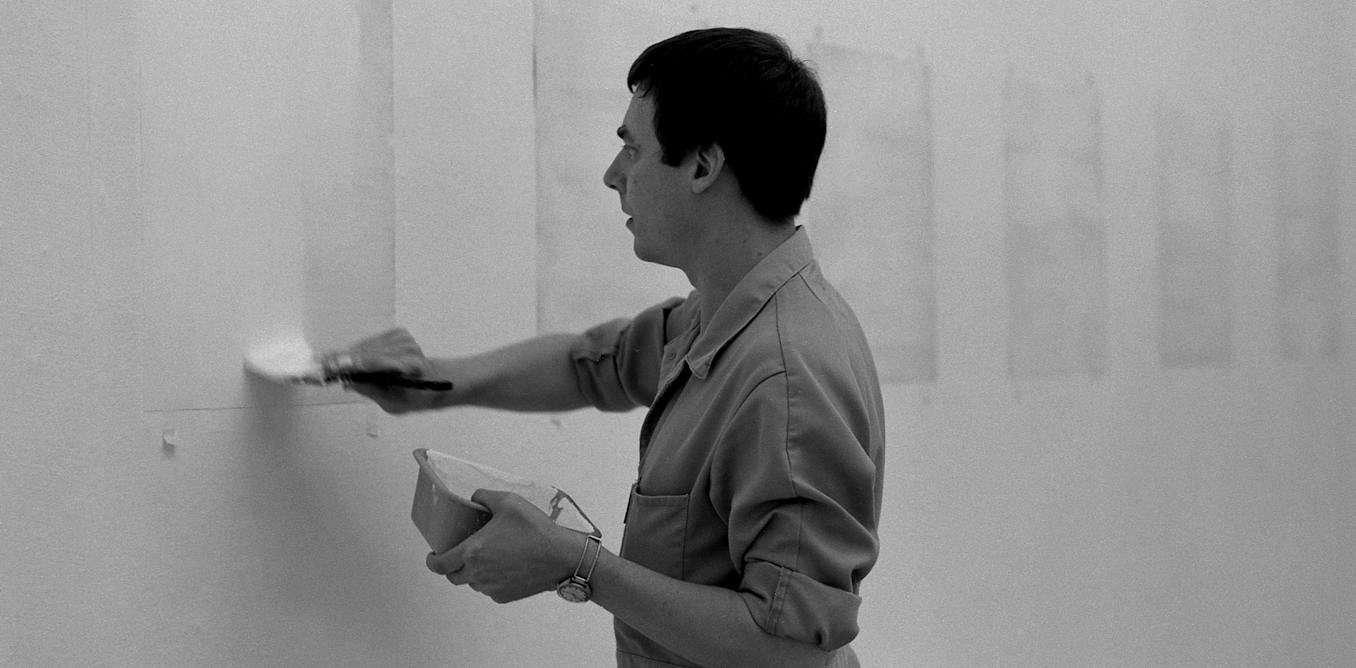
To understand how paintings were constructed—not through theoretical critique, but through the primal, physical act of creation—Ryman began making his own art. The Real Thing meticulously charts this evolution, beginning with his first recognized "professional" painting executed in 1955 and extending right up to the year of his death in 2019.
As the decades progressed, Ryman’s investigation into the fundamentals of painting expanded dramatically. While he became universally celebrated for his relentless exploration of white paint, his choice of substrates was remarkably diverse. The exhibition traces his experiments across a staggering array of materials:
- Traditional linen canvas
- Industrial aluminum
- Delicate waxed paper
- Rolled steel
- Industrial fibreglass
Each material presented new structural challenges, forcing Ryman to adapt his brushwork, thickness of paint, and fastening techniques to the unique properties of the surface. A painting was never just a painted plane; it was a total object reacting to its physical environment.
Supporting Context & Metrics: The Mechanics of the Exhibition
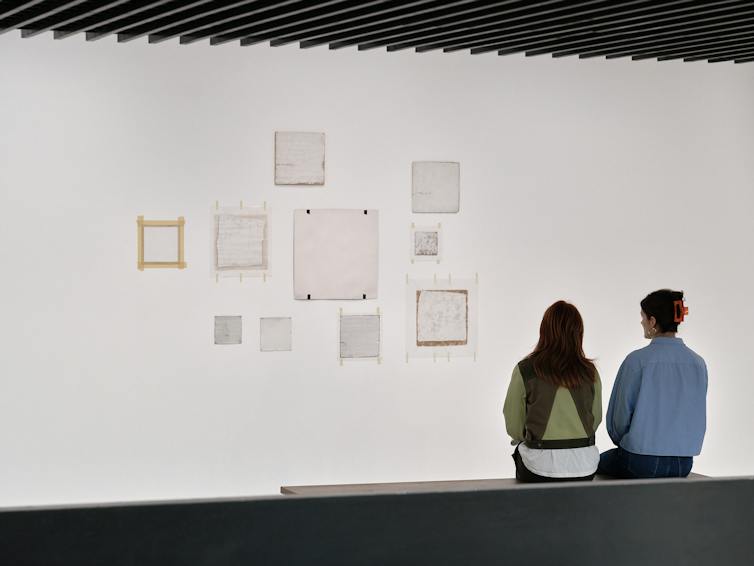
Mounting a retrospective of an artist who treated the physical wall as an active component of his compositions presents monumental logistical challenges. Unlike traditional framed artworks that hang safely from picture rails, many of Ryman’s pieces are material objects that must be physically altered, pinned, taped, or stapled directly into the architecture of the gallery space for each installation.
Architectural Hurdles and "Tender" Walls
During the development of The Real Thing, curator Wells Fray-Smith encountered unique engineering hurdles while hanging complex pieces such as Versions VI (1991), which incorporates elements stapled directly onto the wall. Speaking on the intricacies of the installation process, Fray-Smith revealed that the Barbican’s exhibition walls had to undergo rigorous testing for "tenderness"—a metric measuring how easily the substrate could accept an ordinary staple without compromising the structural integrity of the display. In several instances, standard gallery partitioning had to be replaced with specially modified, softer alternatives to accommodate the exact installation methods demanded by Ryman’s estate and conservation guidelines.
The Physics of Light
Equally meticulous care was dedicated to the gallery’s lighting design. Eschewing the conventional approach of pointing harsh spotlights directly at the surface of the art, the exhibition designers engineered a subtle, indirect lighting scheme. The majority of spotlights are bounced upward from the floor onto the works, creating a gentle, upward gradient of illumination.
Furthermore, several large ceiling-mounted light boxes were installed in the main gallery space, while the Barbican’s striking windowed walls in two of the side rooms were repurposed to harness natural light. This design choice creates a diffuse, atmospheric luminescence that shifts continuously throughout the day. As natural light changes outside, the paintings inside seem to breathe; thin flashes of color break along the edges of the white brushwork, pulsating softly as the viewer shifts their perspective.
Official Statements and Curatorial Vision
The curatorial ethos behind Robert Ryman: The Real Thing is deeply rooted in the artist’s own ontological views on art production. By stripping away wall texts, biographies, and interpretive dates from the immediate vicinity of the canvases, the Barbican has chosen to honor Ryman’s insistence that his art requires direct, unmediated engagement.
"You cannot understand a painting by explaining something. You can only understand painting by experience." — Robert Ryman
This philosophy challenges the contemporary museum-going experience, which increasingly relies on audio guides, QR codes, and extensive wall essays to contextualize exhibits. Curator Wells Fray-Smith and the Barbican team have embraced a minimalist presentation that mirrors the artist’s own reductionist tendencies.
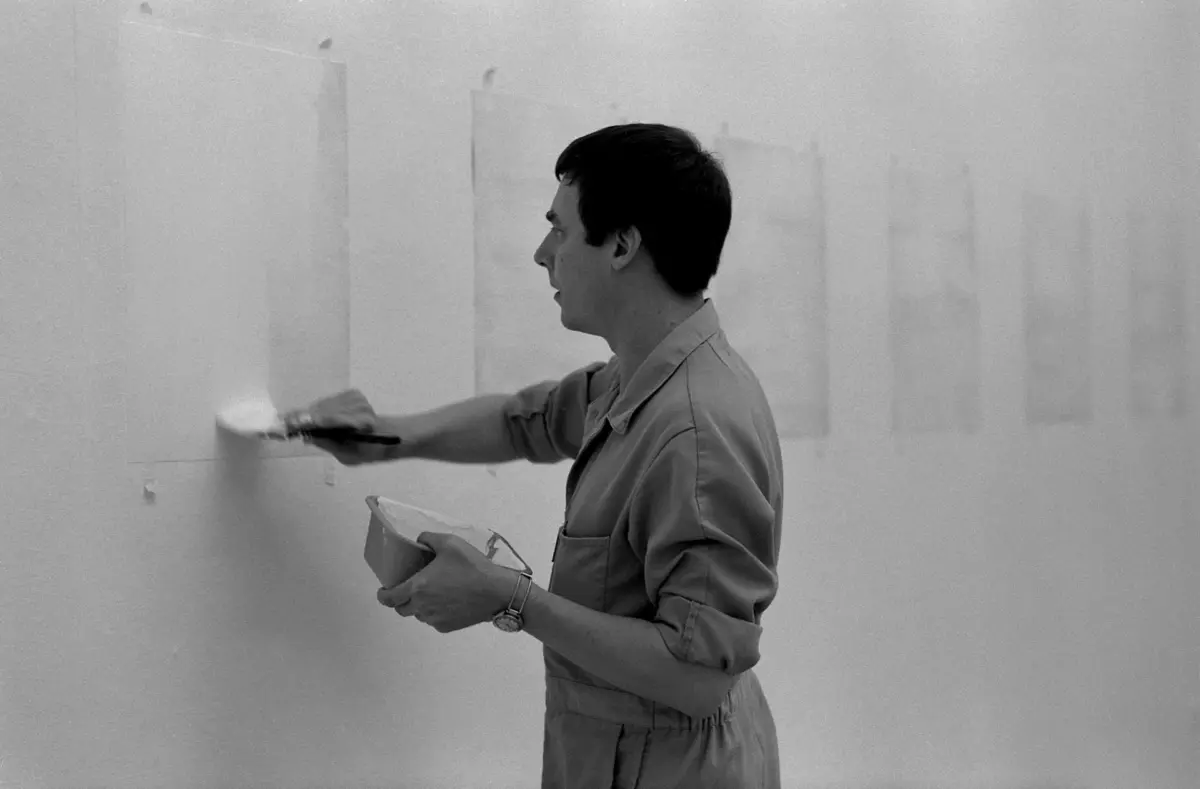
While the gallery spaces remain strictly devoid of didactic text to preserve the purity of the visual encounter, supplementary archival material is thoughtfully housed in an upper-level room. Visitors seeking biographical context can view Ryman’s 1950s membership card for the Associated Musicians of New York, early paint tests dating back to 1963, and intimate photographs of the artist at work in his studio during the late 1990s. This separation ensures that historical documentation remains strictly isolated from the sensory experience of the primary artworks.
Future Outlook: Art in the Age of the Attention Economy
As museums globally race to digitize collections, create Instagram-friendly installations, and capture fleeting digital engagement, Robert Ryman: The Real Thing stands as a profound, radical counterpoint.
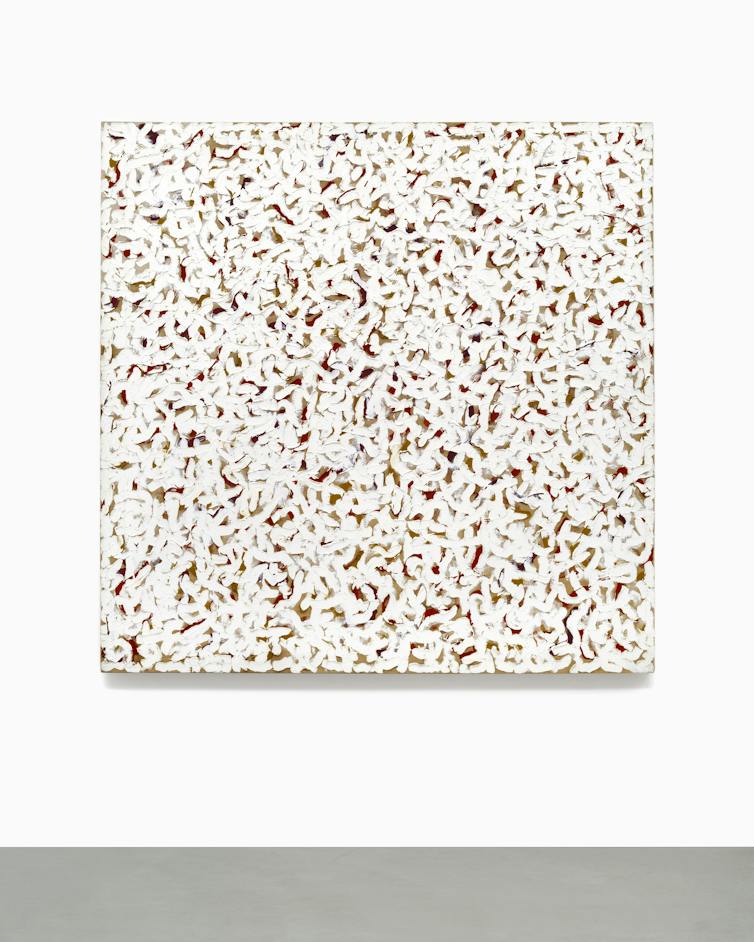
Ryman’s oeuvre is fundamentally resistant to the digital medium. Photographic reproductions flatten his nuanced surfaces, erasing the delicate interplay of texture, light, and edge that occurs only in physical space. As the exhibition review notes, the experience of viewing Ryman’s work is temporal—akin to listening to a live musical performance. A photograph compresses a dynamic, changing sensory event into a static, unchanging image, stripping away the very qualities that make the work vital.
Highlights within the exhibition, such as Best or Worst (1996–1997)—hung just above eye level and featuring creamy-white strokes over a matte white ground that ghosts a memory of green—demonstrate the futility of digital mediation. As the viewer walks past, the brushstrokes reflect light with a joyous energy reminiscent of shoaling fish, anchored only by self-reflective numerical markings like the pale grey "96" and "7" denoting its creation date.
In a cultural landscape increasingly dominated by fast information streams and fleeting digital interactions, Ryman’s paintings ask for something revolutionary: undivided, patient human attention. They do not perform for social media algorithms. They do not offer narrative illustrations or dramatic scenes. They are simply objects in the world, asking us to slow down, look closely, and rediscover the profound reality of physical experience. The Real Thing at the Barbican Centre is not merely a retrospective; it is a timely reminder of what art can achieve when it refuses to compromise with the modern pace of distraction.