Executive Overview
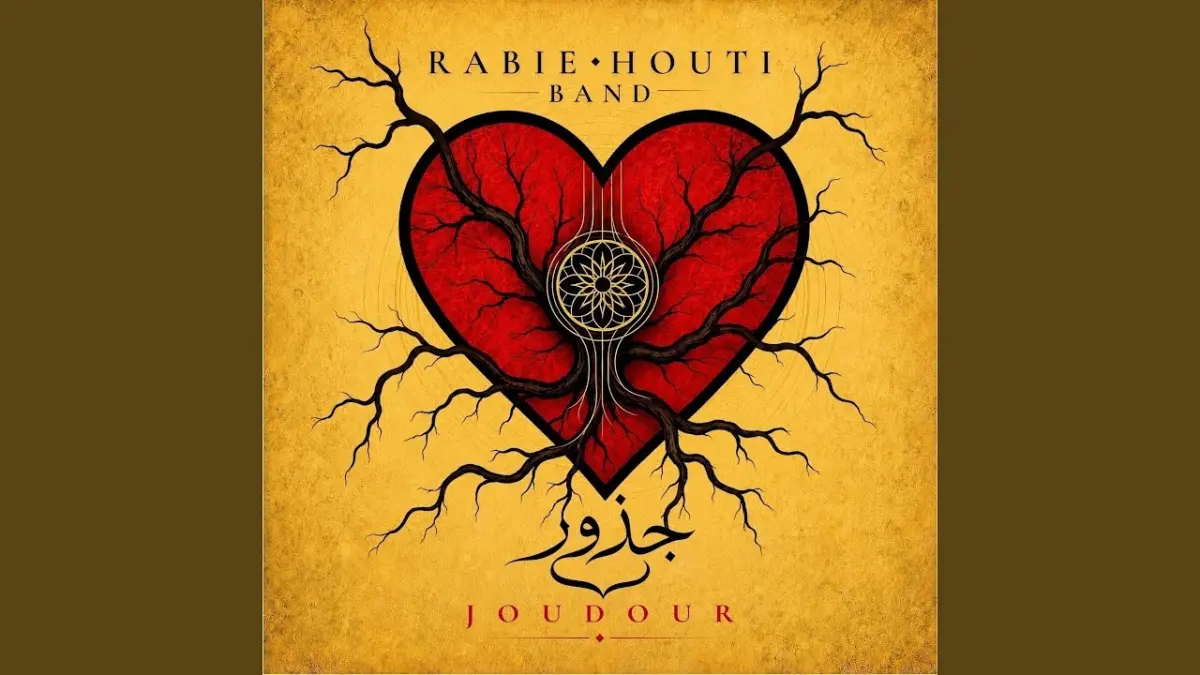
In the contemporary landscape of global music—often characterized by rapid cross-cultural hybridization—few artists manage to fuse ancestral heritage with contemporary electronics as seamlessly as Algerian-born violinist and singer Rabie Houti. Now based in Montpellier, France, Houti and his collaborative ensemble, Gasba Électrique, have captured the attention of world music critics and live-circuit enthusiasts alike with their latest release, the sophomore studio album Joudour.
At the vanguard of this new musical wave is the hypnotic lead single, “Rokia.” Built upon a timeless narrative of young romance impeded by parental disapproval, the track acts as a microcosm of the band’s broader artistic philosophy: a bold synthesis of classical Arabo-Andalusian violin lines, traditional Maghrebi flute work, driving electronic beats, and aggressive rock guitars. The resulting sonic tapestry naturally builds into what the ensemble’s members proudly describe as a state of “trance.”
This release marks a critical milestone in Houti’s career. Arriving as a follow-up to the band’s exploratory 2019 debut, Tahtaha, Joudour—derived from the Arabic word for “roots”—represents a creative maturation. Every track on the album is an original composition, signaling that the Rabie Houti Band has firmly cemented its signature sound. From their triumphant album-release concert at Montpellier’s legendary Rockstore venue to international stages spanning Canada, Algeria, and Kazakhstan, the ensemble is redefining the boundaries of Sono Mondiale—the global sound movement once championed by the late, iconic Rachid Taha.
This comprehensive report examines the trajectory of Rabie Houti, the conceptual and sonic architecture of Joudour, the cultural mechanics of “Rokia,” and the group’s ongoing mission to bridge the musical heritage of North Africa with the pulse of Western electronic and rock music.
Detailed Chronology: From the Opera Houses of Oran to the Stages of Europe
The Genesis in Oran: Early Virtuosity and Family Roots
The story of Rabie Houti’s musical journey begins far from the Mediterranean shores of southern France, rooted deep within the vibrant cultural hub of Oran, Algeria. Born into a household where music was both a daily ritual and an intellectual pursuit, Houti was immersed in traditional soundscapes from infancy. His father harbored a profound passion for Arabo-Andalusian music—a complex, classical genre that traces its lineage back to the medieval Moorish courts of Islamic Spain and North Africa.
However, Houti’s introduction to instrumental execution came courtesy of his older sister, Khedija. Recognizing an early aptitude for rhythm and melody, Khedija patiently taught the young Rabie his first notes on the mandolin. This foundational instruction catalyzed a rapid escalation of his musical education.
Possessing a natural ear and an insatiable appetite for performance, Houti transitioned swiftly to the violin—an instrument that would become his primary voice. By the age of eight, his prodigious talent had earned him a spot in the junior orchestra of the prestigious Nassim El Andalous school. Performing on the grand stage of Oran’s historic opera house at such a tender age was not merely a childhood milestone; it was a baptism by fire that instilled in him a lifelong reverence for classical discipline and performance rigor.
Migration, Transition, and the Birth of Gasba Électrique
For many North African musicians operating within traditional frameworks, creative stagnation can present an existential threat. Houti, however, possessed a restless creative spirit that sought to converse with the broader Mediterranean and European diaspora. In 2014, he made the decisive move to relocate to Montpellier, France—a city renowned for its vibrant arts community and welcoming stance toward international artists.
Relocating to France provided Houti with the structural freedom and cross-cultural proximity required to experiment. He began synthesizing his classical Arabo-Andalusian training with the sonic vocabulary of Western Europe, integrating elements of contemporary rock, funk grooves, and electronic production.
By 2017, this collaborative experimentation crystallized into the formal establishment of the Rabie Houti Band. Teaming up with Gasba Électrique—a collective known for integrating the earthy, haunting tones of the Maghrebi flute (the gasba) with modern electronic textures—Houti found the ideal vehicle for his trans-Mediterranean vision. The project quickly evolved beyond a localized French curiosity, morphing into an international touring powerhouse that has taken Houti and his bandmates to distant stages across Canada, Algeria, and Kazakhstan.
The Milestones: From Tahtaha (2019) to Joudour (2023–2026)
The band’s evolution has been deliberate and methodical. In 2019, they released their debut album, Tahtaha. Looking back on that formative chapter, Houti characterizes the record as an exploratory test—a period during which the ensemble was actively searching for its authentic voice while navigating the tensions between acoustic tradition and modern production.
That search reached its definitive conclusion with the conception and release of Joudour. Translating to “roots” in Arabic, the album title reflects a conscious anchoring in North African identity, even as the music looks outward toward global genres. Marked by a celebratory live performance at Montpellier’s famed Rockstore venue on October 3, 2026, Joudour showcases an ensemble entirely comfortable in its skin. Steering away from covers or derivative arrangements, every track on the new album is an original composition, leaning further into high-octane rock instrumentation and cutting-edge electronic soundscapes than anything the band has previously attempted.
Supporting Context & Metrics: The Anatomy of "Rokia" and Sono Mondiale
Dissecting "Rokia": Narrative, Structure, and Sonic Texture
At the beating heart of the Joudour campaign is the single and music video for “Rokia.” The track’s narrative framework is deceptively simple yet universally resonant: a young villager falls deeply in love with his neighbor, only to encounter fierce, unyielding opposition from the girl’s mother, the eponymous Rokia. This classic dramatic tension of star-crossed love provides a narrative anchor for an otherwise experimental sonic journey.
Musically, “Rokia” is a masterclass in genre-blending. The track opens with traditional flourishes, showcasing Houti’s intricate Arabo-Andalusian violin work intertwined with the breathy, organic warmth of the Maghrebi flute provided by Gasba Électrique. As the song progresses, the acoustic elements are steadily engulfed by a rising tide of electronic beats and gritty rock guitars.
Rather than clashing, these disparate elements lock into a hypnotic groove that builds incrementally over the course of the track. The arrangement is specifically designed to induce a state of trance—a psychological and physical state that the band actively cultivates both in the studio and during their high-energy live performances.
+-------------------------------------------------------------------------+
                    THE ANATOMY OF "ROKIA"
+-------------------------------------------------------------------------+
| [Acoustic Foundation]  --->  [Electronic Layer]  ---> [Rock Crescendo]  |
| Arabo-Andalusian Violin      Digital Beats & Loops    Electric Guitars  |
| Maghrebi Flute (Gasba)       Ambient Synths           Heavy Distortion  |
+-------------------------------------------------------------------------+
                                    |
                                    v
                       [HYPNOTIC TRANCE STATE]
+-------------------------------------------------------------------------+
The Legacy of Sono Mondiale and Rachid Taha
To fully understand the cultural significance of the Rabie Houti Band, one must examine the lineage to which they belong. The band explicitly aligns itself with "Sono Mondiale," a progressive musical movement championed by the late, legendary Algerian-French singer and activist Rachid Taha.
Taha, who rose to fame as the frontman of Carte de Séjour before embarking on a celebrated solo career, revolutionized the global music scene by fusing traditional Raï and Chaabi music with punk rock, techno, and dance beats. He used his platform to challenge sociopolitical borders, advocate for immigrant rights, and prove that Arab cultural expressions could thrive in the epicenter of Western modernism.
The Rabie Houti Band carries this torch forward. By setting traditional Maghrebi melodies over heavy funk and rock grooves, Houti avoids the trap of museum-piece folklorism. His music does not preserve heritage by locking it behind glass; instead, it weaponizes heritage as a living, breathing, evolving force capable of dialoguing with a Parisian electronic clubber, a Canadian festival-goer, or a rock fan in Montpellier.
Official Statements and Artistic Philosophy
In various interviews and promotional statements surrounding the release of Joudour and the single “Rokia,” Rabie Houti has articulated a clear, cohesive philosophy regarding his craft, his migration, and his musical identity.
On the Evolution from Tahtaha to Joudour
Reflecting on the creative process that birthed their second album, Houti has been refreshingly candid about the band’s developmental growing pains:
“Tahtaha was a test—a time when the band was still searching for its footing, experimenting with how far we could stretch our traditional instruments without breaking them. With Joudour, we stopped searching. We found our signature. Every track is an original composition that speaks directly to who we are today: rooted in our North African heritage, but fully electrified and liberated by the global sounds surrounding us in Europe.”
On the Concept of "Trance" in Live Performance
For Houti and Gasba Électrique, music is not merely an intellectual exercise or an aesthetic display; it is a physical and spiritual transference of energy. The band routinely uses the word “trance” to describe the destination of their live shows:
“When we play live—whether we are on stage in Montpellier, touring across Canada, or performing in Kazakhstan—our goal is to break down the barrier between the stage and the audience. The combination of the gasba flute, the classical violin, and driving rock electronics creates a cyclical rhythm. When that rhythm locks in, time stops. That is what we call trance. It is a universal language that bypasses intellect and speaks directly to the pulse.”
Future Outlook: The Global Trajectory of Rabie Houti Band
As the critical and public reception to Joudour continues to expand following their triumphant October release party at the Rockstore, the future appears exceptionally bright for the Rabie Houti Band.
Expanding the International Footprint
Having already carried their trans-Mediterranean soundscape to audiences in North America, Central Asia, and across Europe, the band is actively planning an extended international touring schedule to support Joudour. Promoters and festival directors are increasingly recognizing the unique value proposition the group brings to world music, rock, and electronic circuits alike: an act that satisfies the purist’s appreciation for classical North African musicianship while igniting the dance floors of modern alternative festivals.
Musical Innovation and Ongoing Collaboration
Looking ahead, Houti has signaled that the creative breakthrough achieved on Joudour is not an endpoint, but a new baseline. By proving that original compositions can successfully bridge the gap between Arabo-Andalusian classicism and underground European rock-electronics, the band has opened doors for further sonic exploration. Future projects are expected to dive even deeper into cross-genre collaborations, inviting producers, beatmakers, and rock instrumentalists from diverse cultural backgrounds into the studio.
In an era where cultural silos frequently threaten to divide artistic communities, the Rabie Houti Band stands as a vibrant testament to the power of synthesis. Through the haunting melodies of “Rokia,” the relentless drive of Joudour, and a steadfast commitment to the spirit of Sono Mondiale, Rabie Houti and Gasba Électrique are not only honoring their roots—they are mapping out the future of global music.
Quick Facts: Rabie Houti Band & Joudour
- Band Leader: Rabie Houti (Violinist and Singer, originally from Oran, Algeria; based in Montpellier since 2014)
- Collaborative Collective: Gasba Électrique (Specialists in Maghrebi flute and electronic textures)
- Active Since: 2017
- Discography: Tahtaha (2019), Joudour (2023–2026)
- Key Single: “Rokia” (Featuring narrative-driven romance, classical violin, rock guitars, and electronic beats)
- Musical Movement: Sono Mondiale (In the tradition of Rachid Taha)
- Recent Milestone: Album release show at Rockstore, Montpellier (October 3, 2026)
- Streaming Information: Available on Bandcamp and major streaming platforms via official links.