Executive Overview
For decades, the name Steve Hackett has been synonymous with the intricate, genre-defying guitar work that helped propel Genesis into the upper echelon of progressive rock royalty. From his seminal finger-tapping techniques to his mastery of nylon-string textures, Hackett’s signature sound did not emerge in a vacuum. It was forged in the crucible of a transformative era in popular music—a time when Motown soul, British rhythm and blues, American folk-protest, and avant-garde orchestration collided to reshape the global cultural landscape.
In a retrospective discussion with journalist Michael Heatley, coinciding with the release of The Roaring Waves via InsideOutMusic (a collaborative venture alongside Steve Rothery), Hackett opened his personal vault of musical memories. Detailing ten foundational UK releases spanning from 1964 to 1978, Hackett traces the exact audio DNA that transformed a young music lover gazing across a segregated Battersea funfair into one of progressive rock’s most visionary architects.
This piece explores those 10 pivotal records, evaluating not only their historical and emotional resonance within Hackett’s personal journey, but also their enduring collector value in today’s thriving vinyl marketplace.
Detailed Chronology: The Soundtrack of a Formative Life
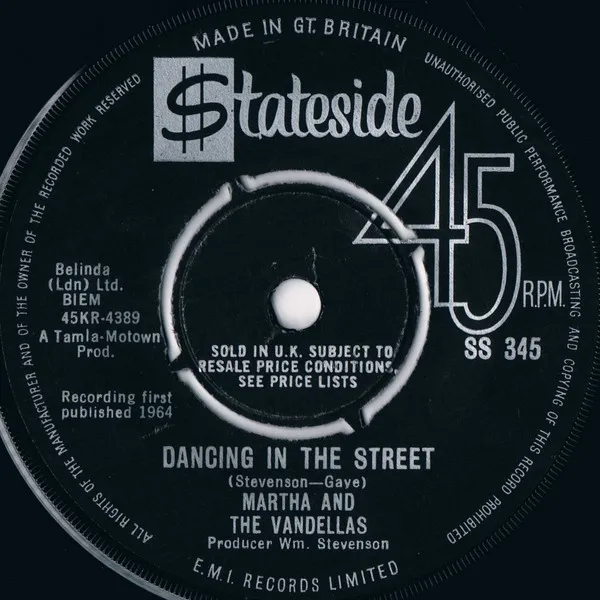
1. Martha & The Vandellas – Dancing In The Street
- Label / Format: Stateside (SS 345), 7″ Single, UK, 1964
- Estimated Collector Value: £20
The Memory:
"I first heard this at Battersea funfair when I was about 14 years old. There were groups of young teenagers standing about, all the girls on one side, boys on the other, everyone afraid to talk to each other. This song was a kind of exhortation towards movement worldwide, but that really wasn’t what was going on in those teenagers’ lives at that point. Later on, I did actually meet Martha Reeves and congratulate her. I said it was the best song on Motown, the one that touched all the bases. It was a clarion call to youth."
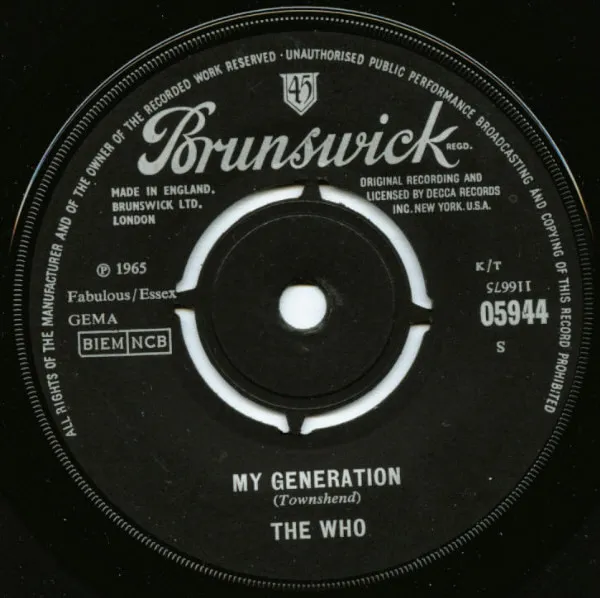
2. The Who – My Generation
- Label / Format: Brunswick (05944), 7″ Single, UK, 1965
- Estimated Collector Value: £20
The Memory:
"Another call to arms… the sheer excitement of the song! Many guitarists like myself assumed that there was a guitar solo in the middle of it, but we found out later that that was actually John Entwistle on bass. It’s just got such attitude. The whole song doesn’t date. I was never a mod. I was either too young or too old to be either a mod or a hippie. The Who had a slight mod kind of edge to them, but I think they abandoned that flag pretty early on. It was always going to be a limitation."
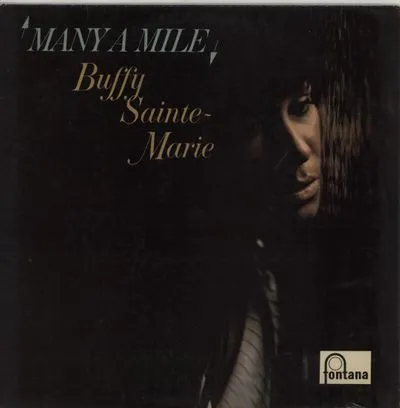
3. Buffy Sainte-Marie – Many A Mile
- Label / Format: Fontana (TFL 6047), LP, UK, 1965
- Estimated Collector Value: £5
The Memory:
"I was about 15 when I first heard Buffy. She was folky but, at the same time, wrote protest songs. My favourite, Must I Go Bound, is on this, her second album. It’s a traditional lyric that’s been interpreted by various people in different ways, but she sings it in an absolute sob from beginning to end; that voice is so emotional. My heart melted when I originally heard this. I saw her first of all on a 1965 TV programme called Heartsong with Marianne Faithfull and Julie Felix. I did get to meet Buffy a few times, but always with five seconds to spare before a gig."
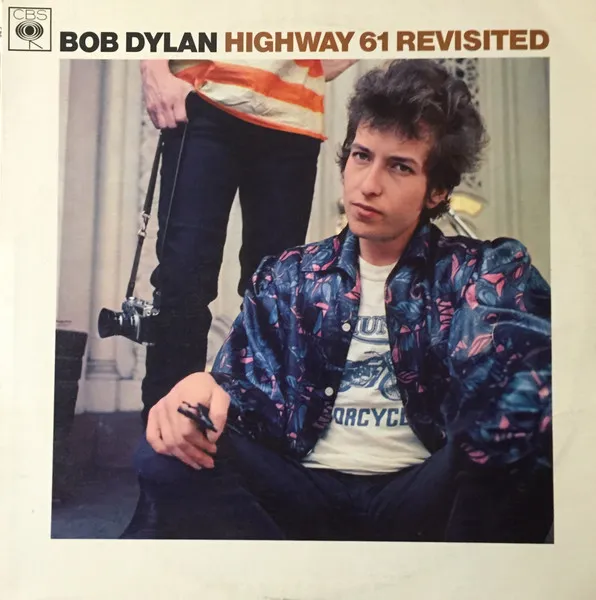
4. Bob Dylan – Highway 61 Revisited
- Label / Format: CBS (BPG 62572), LP, UK, 1965
- Estimated Collector Value: £80
The Memory:
"Whenever I got together with a friend of mine, an absolute Dylanologist, I would put on my favourite records, normally by Cream or Jeff Beck. This friend was equally enthralled by the most basic of Dylan’s recordings while I struggled, not realising that what he was all about was lyrical intensity. When he put together this band, which had Mike Bloomfield and Al Kooper, suddenly guitar and keyboards were making songs like Like A Rolling Stone sound absolutely wonderful."
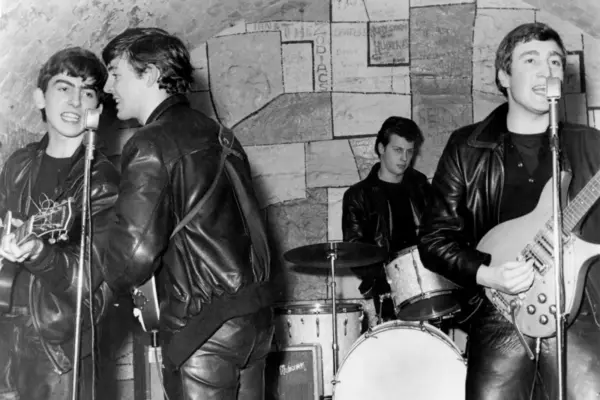
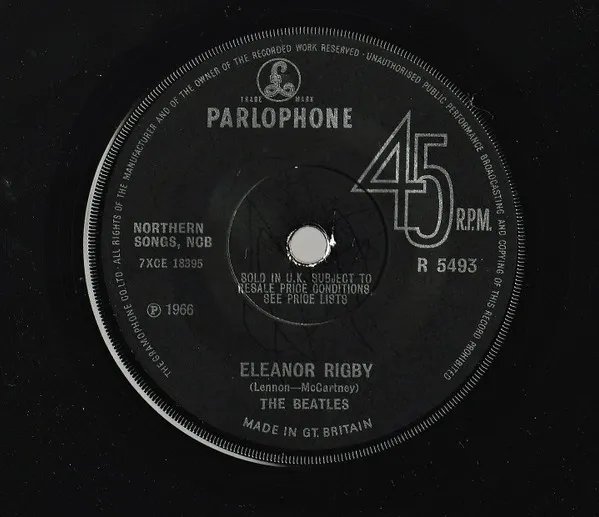
5. The Beatles – Eleanor Rigby
- Label / Format: Parlophone (R 5493), 7″ Single, UK, 1966
- Estimated Collector Value: £15
The Memory:
"Eleanor Rigby is possibly the finest rock song ever written, because it’s a hybrid. It’s rock’n’roll, and yet it isn’t. There’s such colour in the lyrics; it was a fly-on-the-wall mini-documentary. This is the standard by which all other pop songs should be judged. I remember having a conversation with Peter Gabriel, who’d written far more songs than me, when I first joined Genesis. He told me it was very difficult to do convincing narrative: Eleanor Rigby, of course, is masterful."
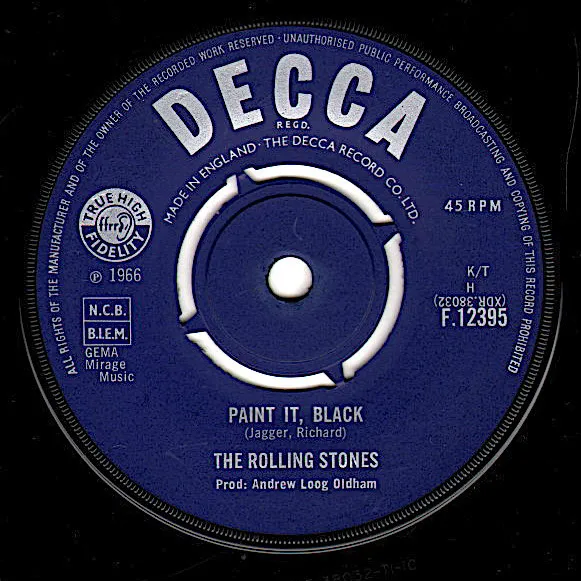
6. The Rolling Stones – Paint It, Black
- Label / Format: Decca (F 12395), 7″ Single, UK, 1966
- Estimated Collector Value: £15
The Memory:
"What an amazing lyric, what an amazing vocal, one of Jagger’s strongest. It’s essentially a two-part invention. You’ve got the verse, where the vocal is being covered by the sitar line, and then the bit most people would call the chorus but is actually just an extension of the verse. It was on heavy rotation in my bedroom as a young boy. I practised many of the guitar licks, copying both Brian [Jones] and Keith [Richards]."
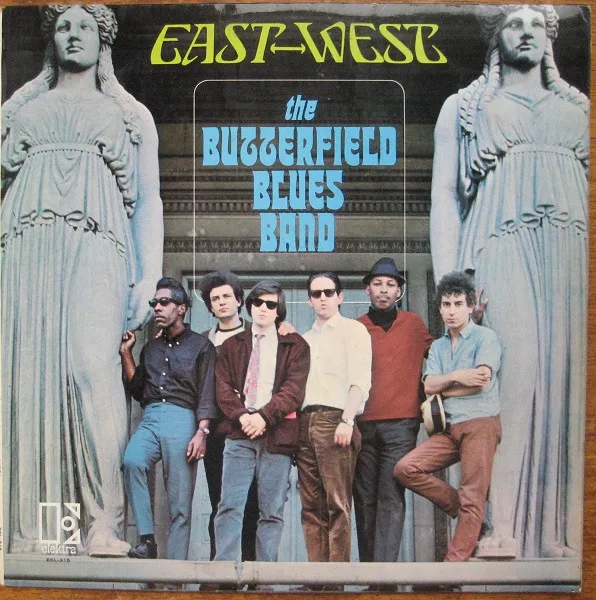
7. Paul Butterfield Blues Band – East-West
- Label / Format: Elektra (EKL 315), LP, UK, 1966
- Estimated Collector Value: £50
The Memory:
"I saw this band at Eel Pie Island in 1966. There were about 20 people in the audience. But from the very first note Paul Butterfield played on the harmonica, an instrument I’d been playing all my life, he absolutely floored me. East-West is mainly blues, but the title track, written by Mike Bloomfield, is very long and goes through a number of styles; Eastern, Western, Mexican, Indian… a real mixture of cultures. It’s the only one where Butterfield himself sounds like he’s a bit at sea…"
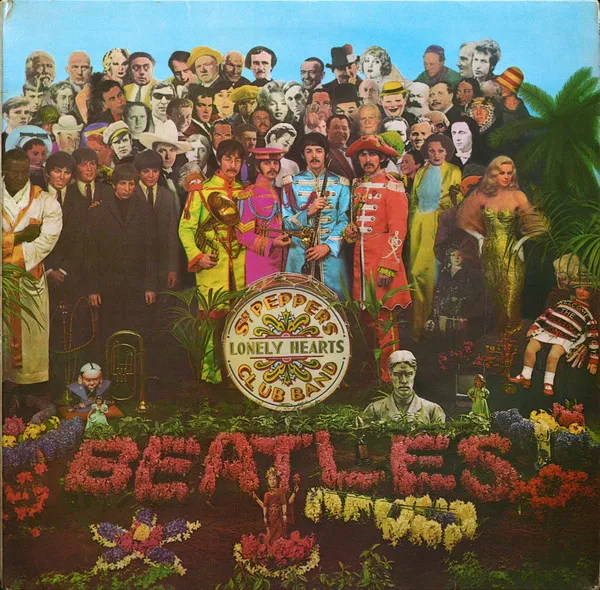
8. The Beatles – Sgt. Pepper’s Lonely Hearts Club Band
- Label / Format: Parlophone (PCS 7207), LP, UK, 1967
- Estimated Collector Value: £175
The Memory:
"The title track wrong-foots you, because you hear an orchestra tuning up but then a rock band takes over. It’s a great vocal from McCartney; every now and again there’s an interjection of something which justifies the title… the band knew when to stop playing. That was part of the charm and part of the surrealism, or magic realism, if you like, they were serving up. Then She’s Leaving Home, with all the hopes and fears, is Eleanor Rigby’s bookend."
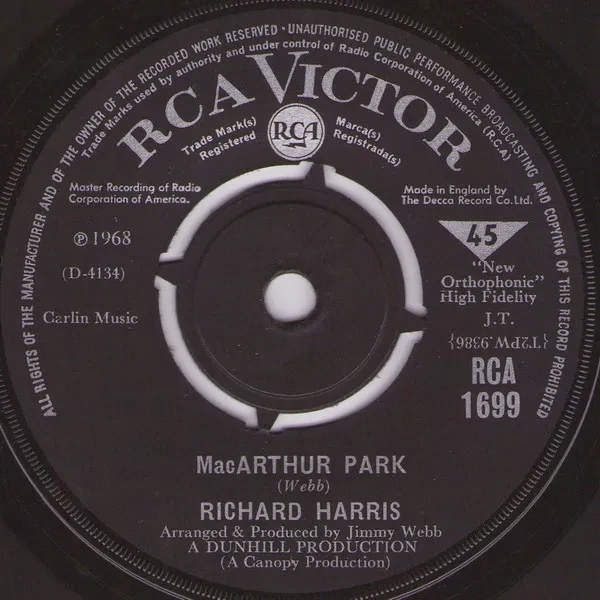
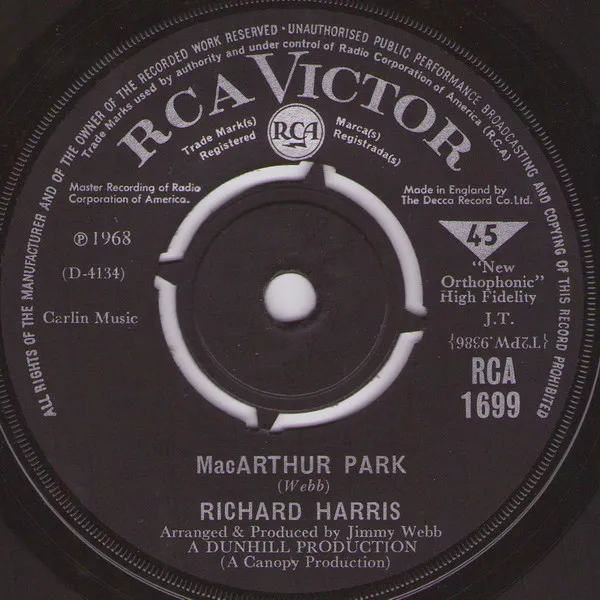
9. Richard Harris – MacArthur Park
- Label / Format: RCA (1699), 7″ Single, UK, 1968
- Estimated Collector Value: £3
The Memory:
"A paean to lost love set to a wonderful chord sequence, with wonderful use of orchestra, written by a young Jimmy Webb. And Richard Harris pours his heart into it with an actor’s approach to a song that requires great feeling. Because of its length, about seven minutes, you’ve got the template for much of what Genesis were to undertake. This was the kind of stuff we wanted to be able to write: storytelling, unusual changes, old instruments, new instruments…"
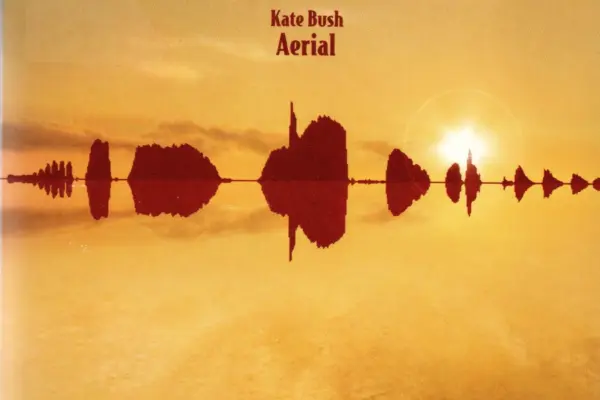
10. Kate Bush – The Man With The Child In His Eyes
- Label / Format: EMI (2806), 7″ Single, UK, 1978
- Estimated Collector Value: £15
The Memory:
"As with Jimmy Webb, Kate Bush was mature beyond her years. The song has to be part fantasy, and part – well, who knows? – the early stirrings of romance. At that age (Kate was 13 when she wrote it), so much of it has to be left to the imagination. It’s a beautiful song, with great use of brass, from a superb debut album, The Kick Inside."
Supporting Context & Market Metrics
The Collector’s Viewpoint: Audio Heritage as Tangible Assets
For music aficionados and vintage record collectors, Hackett’s curated list reads like a blue-chip stock portfolio of British and American mid-century recording history. The valuations attached to these specific UK pressings highlight the broader macroeconomic trends in physical media preservation.
- The Holy Grail: The highest-valued piece in this selection is the UK stereo pressing of The Beatles’ Sgt. Pepper’s Lonely Hearts Club Band (Parlophone PCS 7207, 1967), commanding an estimated collector price of £175. This reflects its cultural status as a watershed moment in album packaging, track sequencing, and studio innovation.
- The Undervalued Gem: Conversely, Richard Harris’s dramatic epic MacArthur Park (RCA, 1968) sits at an accessible £3, while Buffy Sainte-Marie’s deeply emotive Many A Mile (Fontana, 1965) lingers at £5. These lower price points offer modern crate-diggers an affordable entry point into the very records that influenced foundational prog-rock orchestration.
The Stylistic Bridge: From Folk Protests to Progressive Suites
Hackett’s list underscores a critical transitional phase in Western music history. By juxtaposing the raw, unadulterated urban blues of the Paul Butterfield Blues Band with the delicate narrative structure of Kate Bush’s early compositions, one can map the exact trajectory that birthed progressive rock.
The emphasis on storytelling—exemplified by Dylan’s lyrical density, the cinematic string arrangements of George Martin on Eleanor Rigby, and Jimmy Webb’s multi-movement structure in MacArthur Park—directly informed how Genesis and their contemporaries structured multi-part epics like Supper’s Ready and The Musical Box.
Official Statements and Industry Insights
Reflecting on the overarching philosophy of his creative influences, Hackett emphasizes the importance of stepping outside rigid sub-cultural boundaries. By noting that he was "never a mod" and "either too young or too old to be either a mod or a hippie," Hackett frames his artistic identity as that of an independent observer. This detachment allowed him to absorb the best elements of multiple scenes—blues, folk, soul, and classical orchestration—without being weighed down by stylistic dogma.
Furthermore, his exchange with the late Peter Gabriel regarding the difficulties of lyric-driven narrative in pop music highlights the internal rigour required during Genesis’s formative golden era. Crafting a song that functions simultaneously as a catchy tune and a three-minute cinematic masterwork (Eleanor Rigby) set a benchmark that challenged Hackett, Gabriel, and their peers to continually elevate their craft.
Future Outlook: Continuing the Musical Journey
As Steve Hackett continues to tour the globe and release boundary-pushing material—demonstrated by his ongoing creative partnerships, including his recent work on The Roaring Waves via InsideOutMusic with Steve Rothery—his connection to these foundational recordings remains as vital as ever.
The records that once filled his teenage bedroom in London continue to serve as a compass for his artistic endeavours. For collectors, musicians, and fans alike, revisiting these ten masterworks offers more than just a trip down memory lane; it provides a masterclass in how boundary-pushing inspiration translates into generational art.