Executive Overview
In the sprawling pantheon of Brazilian popular music (MPB), few artists possess the chameleon-like capability of Marcos Valle. A pioneer who helped define the luminous, sun-kissed contours of the 1960s bossa nova explosion, Valle never allowed himself to be creatively boxed into a single genre. While his peers frequently adhered to established formulas, Valle consistently looked outward, absorbing the seismic cultural shifts of international rock, American soul, jazz improvisation, and tropical psychedelia.
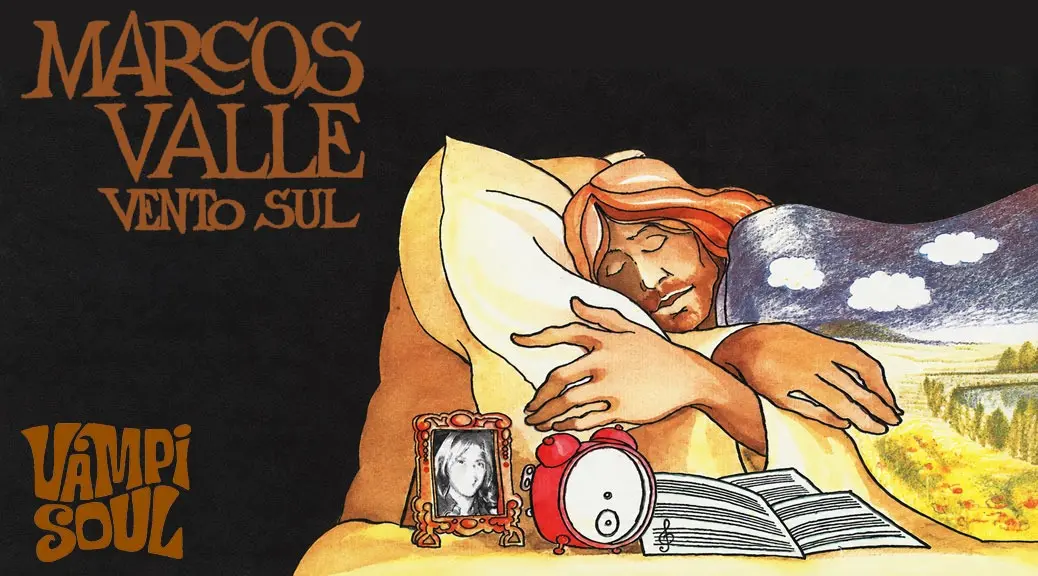
Nowhere is this fearless sonic synthesis more vividly captured than on his transcendent 1972 studio album, Vento Sul ("South Wind"). Long celebrated as a holy grail among crate-diggers, rare-groove aficionados, and international vinyl collectors, the record has undergone a meticulous, high-fidelity resurrection. Madrid-based reissue powerhouse Vampisoul has added Vento Sul to its definitive campaign of Valle’s catalog. Pressed exclusively on heavyweight 180-gram vinyl with the label’s customary curatorial precision—split evenly with six tracks on side one and five on side two—this reissue breathes vibrant new life into an album that was profoundly misunderstood upon its initial release.
This comprehensive feature explores the historical crucible that forged Vento Sul, examining the artistic migration from the sophisticated optimism of early bossa nova to the gritty, progressive counterculture of early-1970s Brazil. Through a deep dive into the album’s creation in the coastal hideaway of Búzios, its unexpected collaboration with progressive rock band O Terço, and its enduring legacy as a precursor to the legendary jazz-funk outfit Azymuth, we chart the ongoing reevaluation of a record that time has rightfully crowned as a masterwork of 20th-century music.
Detailed Chronology: The Evolution of a Sound
From Bossa Nova Optimism to Global Fusion
To understand the radical departure represented by Vento Sul, one must trace Marcos Valle’s trajectory from the burgeoning cultural landscape of early-1960s Rio de Janeiro. As a principal figure of bossa nova’s second wave, Valle entered the public consciousness with a style that married the rhythmic sophistication of samba with cool jazz harmonies. His uplifting melodies and optimistic lyricism mirrored the surging economic confidence of a modernizing Brazil. Anthems like "Summer Samba" (So Nice) established him internationally as a master of accessible, breezy elegance.
However, the socio-political climate of Brazil shifted drastically as the decade progressed. The installation of a military dictatorship in 1964 cast a long shadow over artistic expression, gradually eroding the naive optimism of the early bossa nova movement. Concurrently, global music was undergoing an unprecedented revolution. The sonic innovations of The Beatles, the emotive power of Motown icons like Marvin Gaye and Stevie Wonder, and the burgeoning psychedelic and progressive rock movements in Europe and North America provided a rich palette of new influences.
Valle was not immune to these cross-currents. Rather than retreating into nostalgia, he aggressively integrated these global idioms into his own compositional framework. The pivot was gradual but decisive, marked by his self-titled 1970 album and the triumphant, rhythmically dense 1971 recording Garra. On these records, Valle began welding orchestral arrangements, fuzz-box guitars, syncopated funk breaks, and cosmic keyboards into a singular, forward-looking sound that challenged traditional genre boundaries.
The Búzios Retreat: Escaping the Pressure
By the early 1970s, Marcos Valle and his frequent collaborator, lyricist and brother Paulo Sérgio Valle, were operating at a grueling professional pace. The duo was in relentless demand across the Brazilian media landscape, penning scores and themes for a string of commercially successful television telenovelas. While this work brought financial stability and widespread public recognition, it also induced intense creative fatigue and institutional pressure.
Seeking refuge from the stifling demands of the Rio music industry, the brothers packed up and retreated to Búzios. In 1972, long before it became an international jet-set resort destination, Búzios was a quiet, rustic fishing village situated on a peninsula east of Rio de Janeiro. During a pivotal two-month sabbatical, the brothers immersed themselves in the countercultural ethos of the era. The sun-drenched, laid-back environment attracted a bohemian community of painters, poets, dropouts, and musicians.
Away from the studio clocks and commercial expectations, the atmosphere in Búzios proved to be the ideal incubator for Vento Sul. Stripped of urban stress, the music took on an organic, ethereal, yet profoundly adventurous quality. Valle began conceptualizing songs that reflected both the tranquil natural beauty of the coastline and the turbulent, transformative energy of the global counterculture.
Collaborating with O Terço
A crucial turning point in the creation of Vento Sul was Valle’s decision to diverge from the traditional session players who had fueled the rhythmic fire of Garra. Instead of relying on conventional studio hands, Valle partnered with O Terço, one of Brazil’s pioneering and most respected progressive rock bands.
Known for their intricate arrangements, virtuosic musicianship, and embrace of heavy electric instrumentation, O Terço brought a muscular, dynamic edge to Valle’s sophisticated harmonic structures. This fusion of Valle’s inherently melodic bossa/jazz sensibilities with the driving, rock-inflected energy of the band resulted in an intoxicating sonic hybrid. The collaboration imbued tracks like "Democústico" and "Malena" with an electric vitality, seamlessly blending acoustic introspection with soaring electric guitar lines, complex rhythm sections, and cascading keyboards.

Supporting Context & Metrics: The Anatomy of a Masterpiece
Tracklisting and Structural Design
Vento Sul is engineered as a complete listening journey, demanding to be experienced from needle-drop to run-out groove. The eleven tracks are deliberately sequenced to balance atmospheric sound-sculpting with immediate melodic engagement:
- Side One (The Progressive Tapestry):
- Opens with immersive, genre-defying compositions that immediately establish the album’s psychedelic-progressive ethos.
- Features standout cuts such as "Democústico" and "Malena," both of which highlight Valle’s classical understanding of composition, dynamic contrast, and structural arrangement.
- Side Two (The Cosmic Groove):
- Delves deeper into atmospheric textures, funk grooves, and jazz-fusion explorations.
- Maintains a seamless continuity of mood, bridging the gap between delicate acoustic confessionals and full-band workouts.
The Technical and Physical Reissue Standard
Vampisoul’s commitment to the preservation of Valle’s legacy is evident in the physical production of this release. Issued solely on heavy-duty 180-gram vinyl, the pressing honors the sonic depth and dynamic range of the original master tapes. The Spanish label, renowned for its obsessive archival standards, has previously rehabilitated several crucial chapters of Valle’s discography, including:
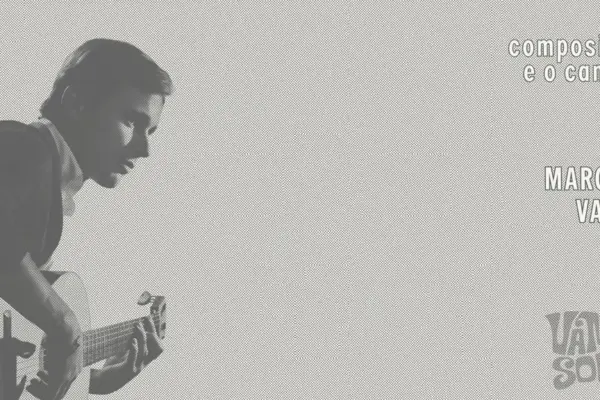
- O Compositor e o Cantor (1965) – reissued earlier this year.
- Marcos Valle (1970)
- Garra (1971)
- Marcos Valle (1983)
By presenting Vento Sul in its definitive analog format complete with faithfully restored original sleeve art and liner notes, Vampisoul provides both longtime devotees and new listeners with an optimal bridge to 1972 Rio de Janeiro.
Commercial Misunderstanding vs. Retrospective Triumph
It is a familiar irony in music history that many of the most innovative and enduring records of the 20th century were commercial failures upon arrival. Vento Sul was no exception. Upon its release in Brazil in 1972, the album largely baffled contemporary audiences and mainstream critics. Mainstream radio listeners expecting the comforting, accessible melodies of Valle’s early bossa nova hits were confronted instead with a dense, uncompromised pastiche of prog-rock experimentation, psychedelic soundscapes, and complex jazz-funk polyrhythms.
Consequently, the album languished in commercial obscurity, becoming a forgotten footnote in domestic record stores. However, over the subsequent decades, the tide turned dramatically. As crate-diggers, international DJs, and forward-thinking producers began combing through the bins of South American record shops, Vento Sul was rediscovered as an ahead-of-its-time masterpiece. Today, original pressings command steep prices on the secondary collector market, celebrated globally as a cornerstone of the Brazilian rare-groove canon.
Future Outlook: The Enduring Echoes of Valle’s Sound
The Bridge to Azymuth and Beyond
The aesthetic blueprint forged during the recording of Vento Sul did not terminate with its final master track. Instead, it served as a direct stepping stone to one of the most influential partnerships in Brazilian jazz history.
The ethereal, rhythm-forward qualities captured on Vento Sul drifted naturally into Valle’s next masterwork, the 1973 album Previsão do Tempo. For that project, Valle enlisted a phenomenal rhythm section comprising keyboardist Jose Roberto Bertrami, bassist Alex Malheiros, and drummer Ivan Conti. Shortly thereafter, this trio adopted the name Azymuth—derived directly from one of Marcos Valle’s own compositions.
The jazz-funk, space-age samba sound that Azymuth popularized globally across the 1970s and 1980s was, in many ways, the direct organizational descendant of the sonic experiments first tested alongside O Terço on Vento Sul. As contemporary electronic producers, broken-beat architects, and modern jazz luminaries continue to sample and draw inspiration from the Azymuth catalog, the foundational shockwaves of Vento Sul continue to reverberate through modern music.
The Global Reassessment of MPB
The systematic reissue campaign spearheaded by labels like Vampisoul reflects a broader paradigm shift in how international audiences consume historical popular music. Boundaries between genres—and between domestic and foreign markets—have effectively dissolved. Today’s listeners approach historical recordings with an ear unburdened by the commercial constraints of 1970s radio formats.
As Marcos Valle continues to perform to adoring, multi-generational audiences worldwide, albums like Vento Sul are finally receiving the unreserved critical acclaim they were denied at birth. This high-fidelity vinyl reissue ensures that the restless, pioneering spirit of a Brazilian master will continue to inspire, provoke, and delight music enthusiasts for decades to come. Vento Sul stands not merely as a historical artifact of a specific geopolitical moment, but as a timeless testament to the boundless possibilities of creative reinvention.