Executive Overview
For decades, rock historians and music critics have framed hardcore punk through a rigid two-era paradigm. The first era—the early 1980s "Golden Age"—is defined by the raw speed, suburban angst, and DIY spirit of Black Flag, Minor Threat, Bad Brains, and Dead Kennedys. The second era, occurring in the mid-to-late 2000s and continuing into the present, represents the genre’s commercial and sonic breakthrough, exemplified by crossover juggernauts like Turnstile, Knocked Loose, and Refused.
Under this historical framework, the 1990s is frequently mischaracterized as a fallow intermediate phase—a period of survival rather than innovation. However, an examination of the decade’s subterranean developments reveals that the 1990s was the most stylistically transformative era in hardcore’s history.
Between 1990 and 1999, the subgenre underwent a series of seismic structural mutations. The pure, fast-tempo punk blueprint of the 1980s fractured into distinct, highly influential sub-movements:
- Metallic hardcore (metalcore),
- Major-label New York Hardcore (NYHC),
- Melodic youth-crew revivals,
- Beatdown, and
- Complex, dissonant mathcore.
Far from being a holding pattern, the 1990s established the technical, lyrical, and logistical blueprints that govern modern heavy music.
Below is an analytical chronicle of five pivotal releases that defined this decade of evolution, exploring their historical context, musical innovations, and long-term industry impact.
Detailed Chronology: Five Landmark Releases of 1990s Hardcore
+-----------------------------------------------------------------------------------+
|                            1990s HARDCORE EVOLUTION                               |
+-----------------------------------------------------------------------------------+
| 1993: Earth Crisis - "Firestorm" EP     --> Metallic Hardcore & Straight Edge     |
| 1994: Sick Of It All - "Scratch..."     --> Major-Label NYHC Crossover            |
| 1995: CIV - "Set Your Goals"            --> Melodic Hardcore Blueprint            |
| 1997: Hatebreed - "Satisfaction..."    --> Beatdown & Metal Audience Integration|
| 1999: Botch - "We Are the Romans"       --> Technical Mathcore & Post-Hardcore    |
+-----------------------------------------------------------------------------------+
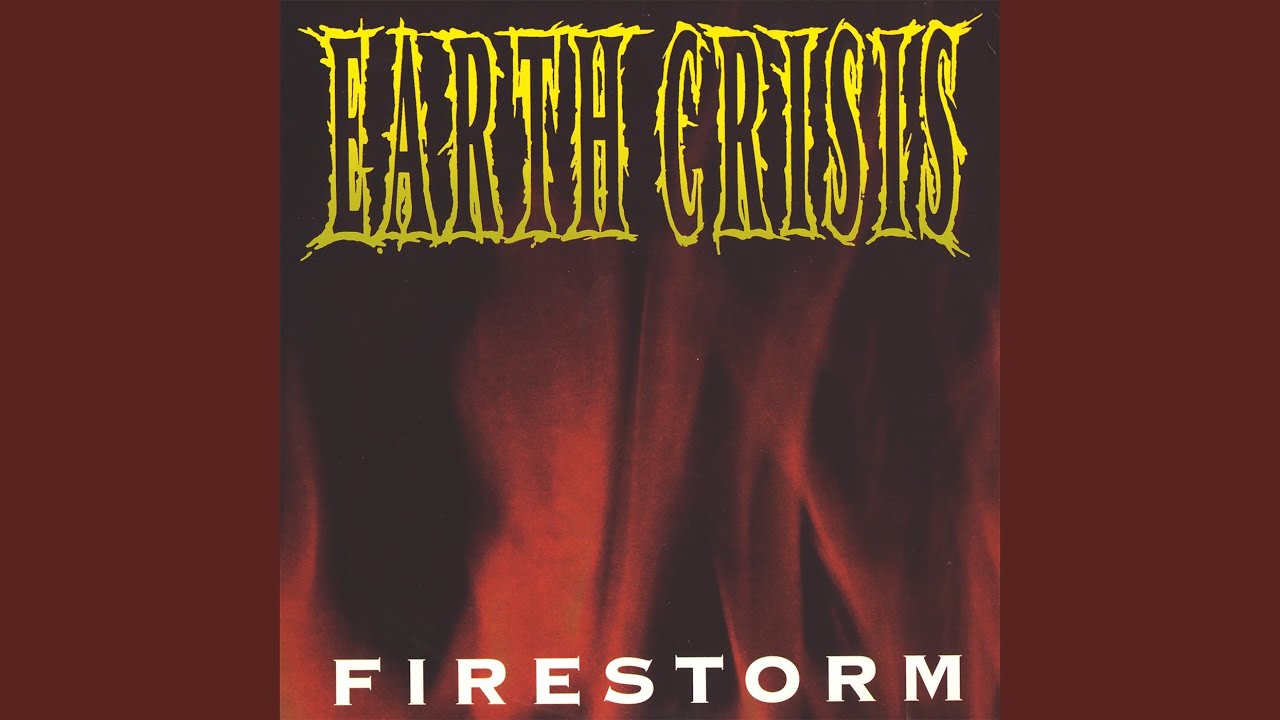
1. Earth Crisis – Firestorm EP (1993)
- Release Date: March 1993
- Label: Victory Records
- Key Tracks: "Firestorm," "Forged in the Flames"
[1980s Fast Hardcore Punk]
       │
       ▼
[Earth Crisis: Heavy Metal Riffs + Chugging Breakdown Architecture]
       │
       ▼
[Modern Metalcore & Militant Straight Edge Movement]
Although clocking in at just under 15 minutes across four tracks, the second EP from Syracuse, New York’s Earth Crisis served as the foundational catalyst for modern metallic hardcore. Prior to 1993, groups like Agnostic Front, Cro-Mags, and Integrity had experimented with combining thrash metal guitar work with hardcore intensity. However, Firestorm fully integrated heavy metal riffing and chugging breakdown architecture into the subgenre’s core identity.
Guitarist Scott Crouse tuned down his guitars, replacing traditional punk speed with heavy, mid-tempo groove and weight. Lyrically, frontman Karl Buechner delivered a militant, uncompromising vision of straight-edge ideology, animal liberation, and environmental activism. The EP’s title track became an instant anthem within underground circles, though its confrontational imagery stirred debate within the broader punk community.
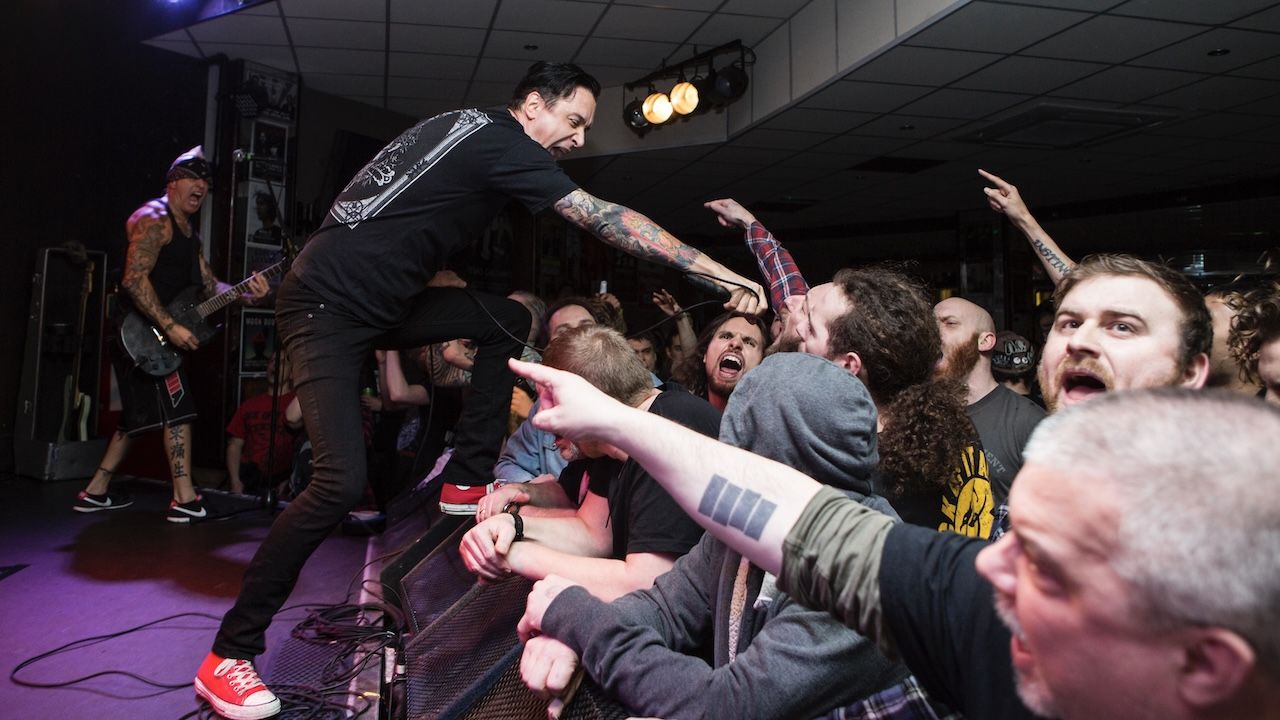
Despite the controversy, Firestorm redefined how heavy a hardcore record could sound. It altered the trajectory of the straight-edge movement and provided the musical blueprint for the metalcore boom that dominated the following decade.
2. Sick of It All – Scratch the Surface (1994)
- Release Date: October 18, 1994
- Label: East West Records / Warner Music Group
- Key Tracks: "Scratch the Surface," "Step Down," "Maladjusted"
By 1994, major record labels were aggressively signing underground alternative and punk talent following the commercial success of Nirvana and Green Day. When New York Hardcore veterans Sick Of It All signed with East West Records (an imprint of Warner Music Group) to release their third full-length album, Scratch the Surface, skeptical fans voiced concerns that the group’s sound would be diluted for mainstream radio consumption.
Those concerns proved unfounded. Produced by Billy Anderson, Scratch the Surface delivered a clean, thunderous production mix without sacrificing the band’s characteristic speed, fury, or street-level ethos. Tracks such as "Maladjusted" and the iconic title track featured massive drum soundscapes and aggressive vocal performances from Lou Koller.
The album’s lead single, "Step Down," was accompanied by a humorously instructional music video detailing hardcore dancing styles. The video entered high rotation on MTV’s Headbangers Ball and Alternative Nation, introducing NYHC iconography to a global suburban audience.
Scratch the Surface demonstrated that authentic hardcore could operate within the major-label ecosystem without compromising its artistic integrity.
3. CIV – Set Your Goals (1995)
- Release Date: October 30, 1995
- Label: Revelation Records / Atlantic Records
- Key Tracks: "Can’t Wait One Minute More," "Boring Summer," "So Far, So Good… So What"
As metallic hardcore grew darker and more aggressive in the mid-1990s, a parallel movement sought to revive the uplifting, high-energy ethos of late-1980s "Youth Crew" hardcore. Formed by vocalist Anthony "CIV" Civarelli and bassist Arthur Smilios—both alumni of the influential band Gorilla Biscuits—CIV emerged as a prominent force in melodic hardcore.
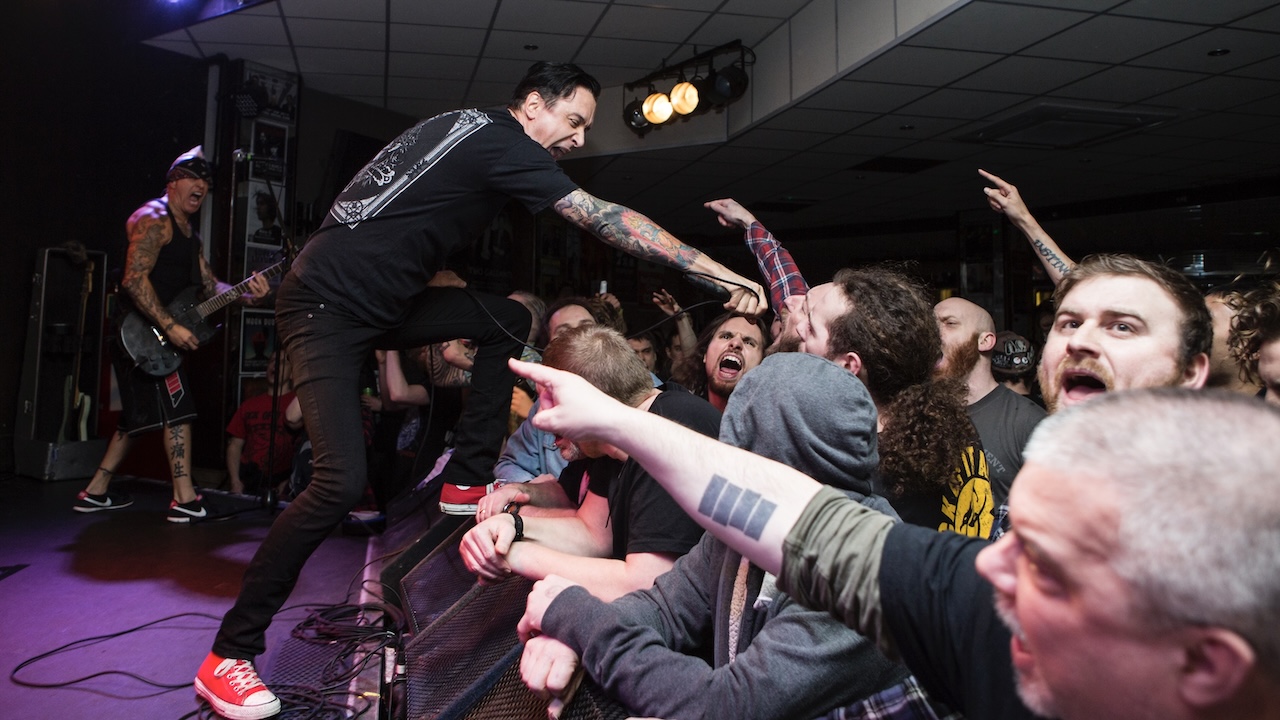
Produced by Walter Schreifels, CIV’s debut album, Set Your Goals, paired fast punk rhythms with arena-ready gang vocals and prominent pop melodicism. The lead single, "Can’t Wait One Minute More," became a surprise college radio and MTV hit, featuring a music video that showcased the band’s energetic live presence.
[Late-1980s Youth Crew] ──► [CIV: "Set Your Goals" (1995)] ──► [Melodic Hardcore Boom]
                                 • Pop Melodicism               • H2O
                                 • High-Energy Hooks            • Strike Anywhere
                                 • Gang Vocals                  • As Friends Rust
Set Your Goals provided a key bridge between classic 1980s Youth Crew and the late-1990s melodic hardcore wave. It paved the way for bands like H2O, Strike Anywhere, Avail, and As Friends Rust by proving that hardcore could incorporate melody and optimism while retaining its underground edge.
4. Hatebreed – Satisfaction Is the Death of Desire (1997)
- Release Date: November 11, 1997
- Label: Victory Records
- Key Tracks: "Empty Promises," "Before Dishonor," "Last Breath"
Hailing from Bridgeport, Connecticut, Hatebreed stripped hardcore down to its most raw, visceral components on their debut album, Satisfaction Is the Death of Desire. Led by vocalist Jamey Jasta, the band combined metallic beatdowns, short song structures, and self-empowerment lyrics addressing personal struggles and resilience.
Clocking in at under 27 minutes, the album offered an uncompromising sonic attack. Tracks like "Empty Promises" and "Before Dishonor" featured minimal ornamentation, focusing instead on heavy breakdown shifts designed for maximum crowd reaction in live settings.
+----------------------------------------------------------------------------------+
|               HATEBREED: COMMERCIAL & TOURING CROSSOVER (1997–2002)              |
+----------------------------------------------------------------------------------+
|  Satisfaction Is the Death of Desire (1997)                                      |
|  • Becomes Victory Records' fastest-selling debut album.                         |
|  • Establishes crossover appeal across hardcore and metal fanbases.              |
|                                       │                                          |
|                                       ▼                                          |
|  Cross-Genre Tour Support                                                        |
|  • Opens for Slayer, Slipknot, Napalm Death, and Danzig.                         |
|  • Expands hardcore's live audience into mainstream metal arenas.                |
|                                       │                                          |
|                                       ▼                                          |
|  Perseverance (2002)                                                             |
|  • Major-label debut on Universal Records.                                       |
|  • Debuts on Billboard 200, cementing mainstream metalcore crossover status.     |
+----------------------------------------------------------------------------------+
The album became the fastest-selling debut in Victory Records’ history, eventually moving hundreds of thousands of units. More importantly, it crossed the boundary separating the hardcore punk scene from the broader heavy metal community.
Hatebreed toured relentlessly alongside metal acts like Slayer, Slipknot, Napalm Death, and Danzig. By the time they released their major-label follow-up, Perseverance, in 2002, Hatebreed had built a foundation that established them as one of the most commercially successful hardcore-derived bands of their era.
5. Botch – We Are the Romans (1999)
- Release Date: November 23, 1999
- Label: Hydra Head Records
- Key Tracks: "Saint Matthew Returns to the Womb," "To Our Friends in the Great White North," "Mondrian Was a Liar"
At the close of the decade, Tacoma, Washington’s Botch released We Are the Romans, an album that redefined the boundaries of complex, heavy music. While bands like Converge, Coalesce, Deadguy, and Cave In were actively blending math-rock signatures with hardcore intensity, Botch achieved a unique level of technical precision and artistic cohesion.
Driven by Dave Knudson’s dissonant, finger-tapped guitar riffs, Brian Cook’s distorted bass lines, Tim Latona’s polyrhythmic drumming, and Dave Verellen’s vocal delivery, We Are the Romans challenged traditional song structures. Songs such as "Saint Matthew Returns to the Womb" and "Mondrian Was a Liar" combined unpredictable time signature shifts with aggressive, heavy breakdowns.

Produced by Matt Bayles at Studio Litho, the record offered a spacious, clear, and punchy sound mix. We Are the Romans became a defining document of mathcore and post-hardcore, directly influencing subsequent generations of technical, chaotic heavy music.
Supporting Context & Metrics: The Infrastructure of 90s Hardcore
The sonic innovations of 1990s hardcore were supported by a growing independent infrastructure. Independent record labels, zine networks, and specialized touring circuits allowed underground subgenres to build sustainable operations without relying on traditional radio exposure.
Label Ecosystem and Distribution Evolution
Independent record labels served as the primary incubators for 1990s hardcore. Companies such as Victory Records, Revelation Records, Hydra Head Records, Trustkill Records, and Equal Vision Records developed professional distribution pipelines while maintaining DIY ethics.
+-------------------------------------------------------------------+
|               1990s HARDCORE INDEPENDENT LABELS                   |
+-------------------------------------------------------------------+
| Label               | Notable Releases / Bands Supported          |
+---------------------+---------------------------------------------+
| Victory Records     | Earth Crisis, Hatebreed, Snapcase           |
| Revelation Records  | Gorilla Biscuits, CIV, Judge, Texas Is...   |
| Hydra Head Records  | Botch, Cave In, Coalesce, Isis              |
| Equal Vision        | Converge, Shelter, Snapcase, Coheed & Camb. |
+---------------------+---------------------------------------------+
Victory Records, founded by Tony Brummel in Chicago, grew into an independent powerhouses during this era. The commercial performance of Hatebreed’s Satisfaction Is the Death of Desire and Earth Crisis’s catalog demonstrated that independent hardcore labels could achieve substantial retail sales figures through alternative distribution networks.
Media Exposure and Crossover Venues
While commercial radio largely ignored non-melodic hardcore, late-night television programming and alternative media played a central role in expanding the music’s reach:
- MTV’s Headbangers Ball & Alternative Nation: Broadcast music videos by Sick Of It All, CIV, Biohazard, and Snapcase to millions of households worldwide.
- The Warped Tour & Ozzfest: Established in 1995 and 1996 respectively, these touring festivals provided second-stage performance slots for underground hardcore acts, exposing them to mainstream punk and metal audiences.
Official Statements & Historical Perspectives
Reflecting on the evolution of 1990s hardcore, key figures from the era have noted how shifts in studio production, industry dynamics, and audience demographics reshaped the genre.
In a retrospective reflection on the major-label transition of the mid-1990s, Sick Of It All vocalist Lou Koller noted the initial skepticism from underground purists:
"When we signed with East West, people in the scene thought we were going to change our sound or put out a pop record. But our goal was to show that New York Hardcore didn’t need to be watered down to be recorded properly. We made ‘Scratch the Surface’ as heavy and fast as anything we had ever done, but with a production budget that let the drums and guitars hit with real weight."
Speaking on the impact of integrating heavy metal riffs into hardcore song structures during the early 1990s, Earth Crisis guitarist Scott Crouse highlighted the stylistic shift:
"When we started playing those heavy, palm-muted metallic riffs, it wasn’t universally accepted. A lot of traditionalists thought it was too metal. But for us, the intensity of the music had to match the urgency of the message. We wanted the breakdowns to feel heavy enough to back up the lyrics."
Regarding Hatebreed’s role in breaking down genre barriers between punk and metal audiences, frontman Jamey Jasta reflected:
"In the late ’90s, metalheads and hardcore kids didn’t always get along. When we took ‘Satisfaction Is the Death of Desire’ on the road with bands like Slayer or Napalm Death, we had to earn those crowds every night. We proved that a heavy groove and a positive, aggressive message could bridge that gap."
Future Outlook: The Long Shadow of 1990s Hardcore
The structural and sonic developments of the 1990s continue to influence the contemporary heavy music landscape. The modern hardcore renaissance—highlighted by festival headliners and critically acclaimed bands—draws heavily on the templates established between 1993 and 1999.
+---------------------------------------------------------------------------------+
|                      GENEALOGY OF HARDCORE INNOVATION                           |
+---------------------------------------------------------------------------------+
| 1990s INNOVATORS                       2020s CONTEMPORARY ARTISTS               |
|                                                                                 |
| Earth Crisis / Hatebreed (Heavy/Metal) ───► Knocked Loose / Speed / Kublai Khan |
| CIV / Gorilla Biscuits (Melodic)       ───► Turnstile / One Step Closer / Praise|
| Botch / Converge (Mathcore/Dissonant)  ───► Vein.fm / The Callous Daoboys       |
| Sick Of It All (NYHC Crossover)        ───► Drain / Sunami / Scowl              |
+---------------------------------------------------------------------------------+
Key Lineages in Contemporary Hardcore:
- The Metallic & Beatdown Crossover: Modern festival headliners such as Knocked Loose, Speed, and Kublai Khan TX rely on the heavy, breakdown-centric song structures pioneered by Earth Crisis and Hatebreed.
- Melodic and Genre-Bending Expansion: The crossover success of Turnstile (Glow On) traces its conceptual lineage back to 1990s melodic hardcore acts like CIV, Snapcase, and Shelter, which embraced melody and wider stylistic influences.
- Complex and Dissonant Mathcore: The technical, chaotic energy of modern acts like Vein.fm, SeeYouSpaceCowboy, Frail Body, and The Callous Daoboys draws directly from the dissonant guitar work and complex arrangements perfected on Botch’s We Are the Romans.
Rather than serving as a quiet transition period, the 1990s functioned as hardcore punk’s primary sonic laboratory. By incorporating heavy metal instrumentation, experimenting with major-label support, embracing melodic hooks, and pushing technical boundaries, the bands of the 1990s transformed a localized subculture into a enduring global music movement.