Executive Overview
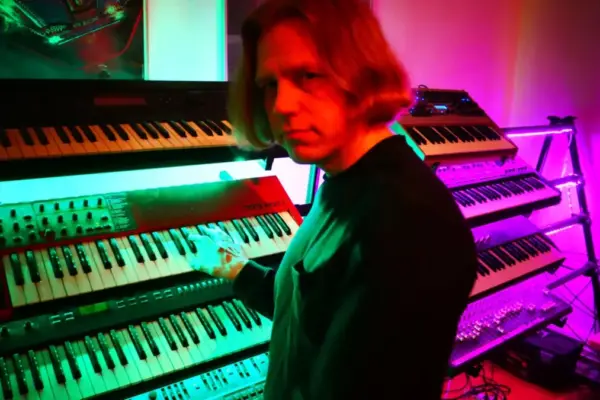
The shimmering synthesizers, melancholic melodies, and pulsating four-on-the-floor rhythms of Italo disco are experiencing a profound, sophisticated renaissance. At the vanguard of this nostalgic yet forward-thinking movement stands Swedish producer, composer, and electronic music heavyweight Johan Agebjörn. Best known globally as the creative mastermind behind the ethereal synth-pop duo Sally Shapiro, Agebjörn has cultivated a reputation for blending the lush, synthetic textures of 1980s European dance music with modern atmospheric depth, pristine production, and emotional vulnerability.
Now, Agebjörn is set to captivate dancefloors and headphone listeners alike with his latest grand collaborative project: Casablanca Nights 2: The Unveiled Chapter. Arriving via Blanco y Negro Music, the album serves as a spiritual and sonic successor to his beloved 2011 cult-classic record, Casablanca Nights. True to its predecessor, the new LP is built upon a foundation of cross-generational collaboration. Agebjörn has assembled an enviable, eclectic roster of vocal talent, bridging the gap between legendary icons of the 1980s Italo disco golden age and luminaries of contemporary synth-pop, indie-electronica, and jazz.
The sprawling 12-track LP features contributions from a diverse pantheon of artists, including British synth-pop trailblazer Little Boots, Italo disco royalty Fred Ventura, Ryan Paris, and Tom Hooker, along with modern electronic fixtures such as NINA, R. Missing, Yota, Dana Jean Phoenix, Bunny X, and jazz virtuoso Ellen Andrea Wang.
Ahead of the album’s official release, Agebjörn has given fans a taste of the sonic journey to come with the release of the jazz-infused lead single, "Substitute For Love," featuring Ellen Andrea Wang. With pre-orders already live via Bandcamp, Casablanca Nights 2: The Unveiled Chapter stands poised to be one of the most defining and ambitious electronic music crossover events of the year. This comprehensive feature explores the genesis of the album, breaks down its exhaustive tracklist, contextualizes Agebjörn’s enduring impact on the electronic landscape, and examines the meticulous creative process behind this cinematic record.
Detailed Chronology: From the Original Casablanca Nights to The Unveiled Chapter
To fully understand the weight and significance of Casablanca Nights 2: The Unveiled Chapter, one must retrace the trajectory of Johan Agebjörn’s career and the legacy of the original 2011 release.
The 2011 Blueprint: The Birth of a Concept
When Johan Agebjörn released Casablanca Nights in 2011, the landscape of electronic music looked vastly different. The blog-house era was winding down, and a global hunger for analog synthesizer nostalgia was beginning to bubble beneath the surface. Agebjörn, who had already begun turning heads with Sally Shapiro’s critically acclaimed debut Transit Scandinavia (2006), decided to channel his deep-seated obsession with classic Italo disco into a producer-led collaborative album.
The original Casablanca Nights was celebrated for its cinematic scope. It wasn’t merely a collection of club tracks; it was an homage to a bygone era of romance, neon lights, European coastal cities, and melancholic mid-tempo grooves. It established Agebjörn’s unique production philosophy: treating synthesizers not just as tools for rhythm, but as instruments capable of evoking deep, cinematic melancholy. For over a decade, fans and crate-diggers alike viewed the album as a high-water mark of modern Italo disco curation.
The Interim Years: Refining the Craft
In the years following Casablanca Nights, Agebjörn remained a tireless creative force. He continued to shape the sound of Sally Shapiro—releasing a string of critically adored albums and EPs that blurred the lines between Italo disco, balearic house, and dream pop. Simultaneously, he built a reputation as a master collaborator, lending his distinctively warm, analog-drenched production style to remix projects, solo ambient soundscapes, and underground electronic anthems.
However, the itch to return to the conceptual framework of Casablanca Nights never truly faded. The idea for a sequel began to germinate years ago, sparked by Agebjörn’s desire to once again unite disparate musical worlds under one cohesive, romantic umbrella.
The Conception of The Unveiled Chapter
Work on Casablanca Nights 2: The Unveiled Chapter spanned multiple years, requiring meticulous coordination across international borders, digital workstations, and historical eras. Agebjörn approached the project with a dual mission: to honor the heroes of his youth whose posters once adorned his bedroom walls, and to spotlight fresh, innovative vocalists he had discovered through modern media and contemporary underground scenes.
The title itself—Casablanca Nights 2: The Unveiled Chapter—hints at the cinematic narrative Agebjörn wanted to convey. Speaking on the moniker, the producer notes:
"The title ‘Casablanca Nights 2’ sounds a bit like an old VHS movie that was left on the shelf when the video store closed. I think it somehow fits this project."
This imagery perfectly captures the aesthetic of the album: a dusty, treasured artifact discovered in the back of a dimly lit independent video rental store, waiting to be popped into a VCR for a late-night audiovisual escape.
Supporting Context & Metrics: The Collaborative Ecosystem
What sets Casablanca Nights 2 apart from standard electronic compilation records is the staggering pedigree and diversity of its featured vocalists. Agebjörn has curated a lineup that reads like a who’s who of electronic music history and alternative pop innovation.
Bridging Generations: Legends and Modern Icons
Agebjörn’s approach to casting vocalists for the album is rooted in deep musical reverence balanced with contemporary curation.
- The Icons: The album features towering figures of the original 1980s Italo disco movement. Fred Ventura, the Italian singer-songwriter and producer behind anthems like "Let’s Go" and "Late Night Danger," brings his signature melancholic baritone to "My Only One." Ryan Paris, immortalized globally by his 1983 global smash "Dolce Vita," teams up with longtime collaborator Sally Shapiro on "Love On Ice." Meanwhile, Tom Hooker—the legendary voice behind many of the biggest Miko Mission and Den Harrow hits—lends his iconic vocals to a newly minted 2026 mix of "Have You Ever Been In Love."
- The Indie-Pop & Electronic Luminaries: Representing the contemporary vanguard of synth-driven music are artists like Little Boots (Victoria Hesketh), who rose to global prominence with her Mercury Prize-nominated electropop sounds and brings her immaculate vocal styling to "Beautiful Stranger." NINA, a modern synthwave heavyweight known for her cinematic, driving sound, fronts "Hush Hush Baby." Meanwhile, R. Missing adds an ethereal, shadowy edge to tracks like "Fakesnow" and "Nightbows."
- The Specialized Collaborators: Project mainstays such as Dana Jean Phoenix, Bunny X, and Yota provide the bright, neon-soaked harmonic foundations that tie Agebjörn’s electronic compositions together, ensuring the record maintains its core sonic identity.
The Jazz Infusion: "Substitute For Love"
One of the most daring and successful departures on the album is the lead single, "Substitute For Love," which features Norwegian jazz artist Ellen Andrea Wang. Moving away from traditional synth-pop vocalists, Agebjörn sought a distinct textural shift for the track.
Recounting the chance discovery that led to the collaboration, Agebjörn shares:
"I felt it would be good to have a jazz singer on ‘Substitute For Love’, so I contacted Ellen whom I had just recently discovered watching her concert on Swedish TV. I was lucky that she replied and said she loved the track! She delivered marvellous vocals and added some jazzy stems, it’s one of my favourite tracks on the album."
The resulting track marries the strict, metronomic pulse of electronic dance music with the fluid, improvisational phrasing and harmonic sophistication of contemporary jazz vocals. It stands as a testament to Agebjörn’s fearlessness as a producer, proving that the stylistic boundaries of Italo disco are infinitely expandable.
Official Statements & Production Philosophy
Johan Agebjörn’s creative philosophy centers on empathy, emotional resonance, and a profound respect for the vocalists he collaborates with. In an era where electronic music can sometimes feel sterile, heavily processed, or overly focused on algorithmic drop-generation, Agebjörn prioritizes vulnerability and human connection.
Reflecting on the emotional core of Casablanca Nights 2, Agebjörn expresses profound gratitude for his collaborators:
"I am beyond thankful to have been able to work with these amazing vocalists. Some of them are heroes from my childhood, others are singers I’ve discovered recently. I have done my best to bring out the emotions and the sense of vulnerability of the vocals in a way that does them justice."
This commitment to the emotional integrity of the performance is evident across every second of the album. Whether working with a stadium-filling 80s icon or an avant-garde jazz bassist, Agebjörn tailors his instrumental arrangements to cradle the vocal delivery, wrapping lush pads, arpeggiated basslines, and crisp drum machine percussion around the lyrics like a protective second skin.
Tracklist Analysis
Casablanca Nights 2: The Unveiled Chapter is structured as a complete listening experience, taking the audience through various emotional shades of nocturnal romance, heartache, and dancefloor euphoria.
- Falling (feat. Yota): A shimmering, atmospheric opener that establishes the nocturnal theme, driven by Yota’s crystalline vocals and sweeping synthesizer pads.
- Beautiful Stranger (feat. Little Boots): A masterclass in electropop songwriting, merging Little Boots’ distinctively catchy pop sensibilities with Agebjörn’s warm, analog production sheen.
- Fakesnow (feat. R. Missing): A moody, frost-bitten excursion into minimal synth territory, showcasing R. Missing’s haunting, atmospheric vocal delivery.
- Substitute For Love (feat. Ellen Andrea Wang): The lead single that brilliantly fuses Italo-disco propulsion with organic jazz vocal phrasing and intricate instrumental stems.
- My Only One (feat. Fred Ventura): A triumphant nod to the golden era of Italo disco, featuring the unmistakable voice of genre legend Fred Ventura.
- Hush Hush Baby (feat. NINA): A driving, cinematic synthwave anthem led by NINA’s powerful, emotive vocal performance.
- Waiting For Magic (feat. Dana Jean Phoenix & Mikael Ögren): A dynamic duet that balances soaring melodies with complex, retro-futuristic sound design.
- Have You Ever Been In Love (feat. Tom Hooker – 2026 Mix): A historical artifact updated for the modern era, featuring the legendary Tom Hooker in top form.
- Love On Ice (feat. Ryan Paris & Sally Shapiro): A dream collaboration uniting Italo royalty Ryan Paris with Sally Shapiro’s signature whisper-pop aesthetic.
- Filled Me Up (feat. Bunny X): An infectious, high-energy dancefloor cut built around Bunny X’s vibrant vocal hooks.
- Will You Be Home For Christmas (feat. Dana Jean Phoenix – backing vocals by Sally Shapiro): A festive, melancholic winter ballad that showcases Agebjörn’s penchant for emotional seasonal songwriting.
- Nightbows (feat. R. Missing): A shadowy, reflective closer that leaves the listener lingering in the atmospheric haze of the album’s cinematic universe.
Future Outlook
As the electronic music community counts down the days to the October 30 release of Casablanca Nights 2: The Unveiled Chapter via Blanco y Negro Music, anticipation has reached a fever pitch. Pre-orders are currently active on Bandcamp, drawing support from die-hard vinyl collectors, synthwave enthusiasts, and international music critics alike.
Looking ahead, the album is expected to solidify Johan Agebjörn’s status not merely as a genre revivalist, but as a master architect of modern electronic pop. By seamlessly connecting the foundational pioneers of 1980s European dance music with contemporary jazz and indie innovators, Agebjörn has created a timeless body of work.
Casablanca Nights 2 proves that the ghosts of the past—when handled with reverence, imagination, and top-tier production skill—can sound more vital, urgent, and emotionally resonant than ever before. As the VHS tape spins and the neon lights flicker on screen, Johan Agebjörn invites listeners to step into a world where the night never ends, and the music speaks directly to the soul.