Executive Overview
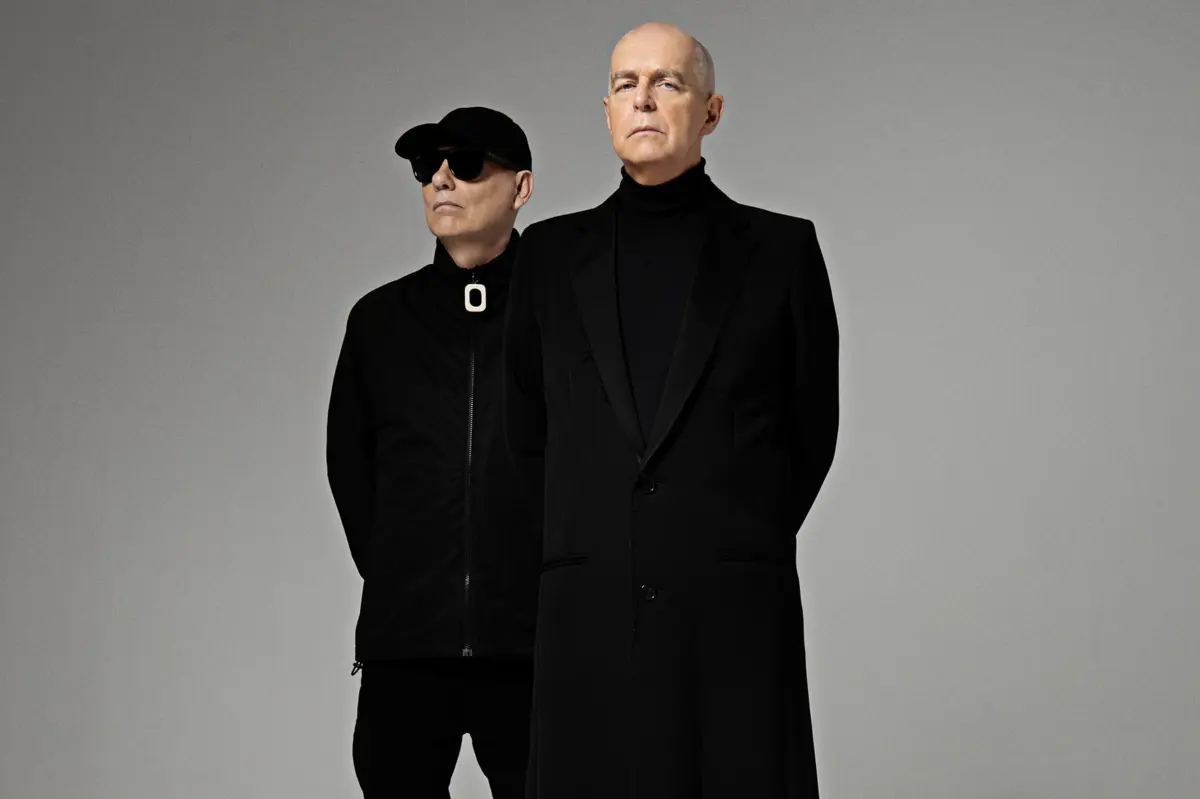
On a quiet midnight release through Parlophone Records, legendary British electro-pop duo Pet Shop Boys delivered one of the most ambitious projects of their illustrious career: A Man from the Future. Serving as a sweeping conceptual audio-visual landscape, the album explores eight monumental, harrowing, and triumphant chapters in the life and tragic death of Alan Turing. Widely recognized as the father of modern computing, Turing’s brilliant mind fundamentally altered the trajectory of human history, only to be cruelly persecuted by the very government he helped save.
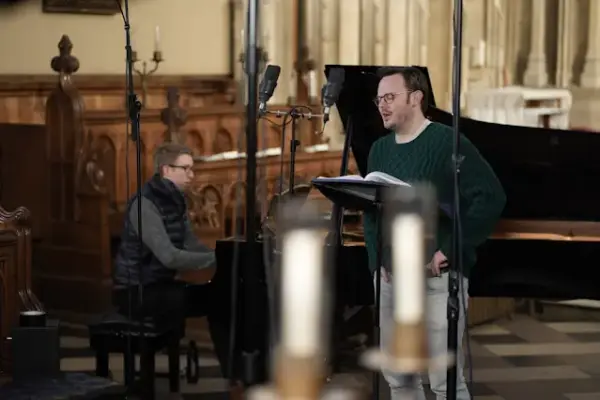
Produced collaboratively by Pet Shop Boys (Neil Tennant and Chris Lowe) alongside modern classical composer Sven Helbig, the project bridges the seemingly disparate worlds of synthesized electronic music and organic orchestration. The sweeping string arrangements are performed by the Manchester Camerata Octet, providing a lush, cinematic backdrop for the electronic soundscapes. Adding profound narrative gravity to the project, acclaimed actress Juliet Stevenson lends her voice, delivering spoken-word passages adapted from Andrew Hodges’ definitive biographical text, Alan Turing: The Enigma.
Originally conceived between 2012 and 2013, the work has spent more than a decade in a state of continuous evolution. It was updated, reworked, and rearranged specifically for this release, incorporating entirely new electronic elements, fresh narrative text, and newly minted orchestrations by Helbig. More than just a collection of songs, A Man from the Future stands as a monumental sonic tribute—an artistic act of reclamation and remembrance for a visionary who was tragically penalized for his humanity.
Detailed Chronology: The Eight-Chapter Life of Alan Turing
A Man from the Future unfolds chronologically, tracing the arc of Alan Turing’s brief yet earth-shattering existence. The sequence moves purposefully from his formative intellectual awakening to his historic wartime contributions, his pioneering theoretical work, and finally, his state-sponsored persecution and untimely death.
1. Formative Years: Mathematics, Science, and Awakening
The album’s opening movements cast light on Turing’s childhood and adolescent years, capturing his insatiable curiosity for mathematics and the natural sciences. Long before he was decoding enemy ciphers or theorizing artificial intelligence, Turing was a boy whose mind operated on frequencies entirely separate from his peers. These early tracks explore not only his rigorous academic fascinations but also the quiet, increasingly urgent realization of his sexuality in an era where homosexuality was strictly criminalized.
2. The Cambridge Crucible
Moving into his university days at Cambridge, the musical landscape expands to mirror the intellectual vigor of the institution. It was here that Turing’s theoretical genius began to solidify. The album captures the atmosphere of academic rigor, philosophical debate, and the birth of foundational mathematical concepts that would eventually lay the groundwork for the digital age.
3. Bletchley Park and the Enigma Machine
Perhaps the most universally recognized chapter of Turing’s public legacy is his pivotal wartime work at Bletchley Park during World War II. Working in absolute secrecy under immense geopolitical pressure, Turing and his team designed the electromechanical "Bombe"—a device capable of breaking the seemingly impenetrable encrypted messages generated by the German Enigma machine.
Military historians credit Turing’s cryptographic breakthroughs with shortening the war by multiple years and saving millions of lives. The music during this sequence pulses with frantic, metronomic urgency, reflecting the relentless, high-stakes race against time that defined the Allied intelligence effort.
4. The Birth of the Digital Computer
With the war won, Turing turned his formidable intellect toward the theoretical architecture of computation. He was not merely an engineer of wartime tools; he was a prophet of the digital era. The album explores his conceptualization of stored-program computers—the direct ideological ancestors of every smartphone, laptop, and server operating in the modern world.
5. Prophesying Artificial Intelligence
Long before silicon chips and neural networks dominated global discourse, Alan Turing was asking whether machines could think. He conceptualized Artificial Intelligence and devised the famous "Turing Test," challenging humanity to consider the philosophical and ethical implications of synthetic cognition. Pet Shop Boys translate these forward-thinking philosophies into mesmerizing, futuristic electronic textures that sound simultaneously retro and avant-garde.
6. Trial, Conviction, and Chemical Castration
The tone of A Man from the Future darkens dramatically as the narrative reaches the post-war socio-political landscape of 1950s Britain. In 1952, Turing was arrested and criminally prosecuted for his homosexual relationship with a Manchester man.
Faced with a choice between imprisonment or devastating chemical castration—administered via estrogen injections meant to "cure" his sexuality—Turing chose the latter to continue his academic research. The orchestrations during this chapter shift from triumphant and exploratory to suffocating, tragic, and deeply mournful, mirroring the institutional betrayal he suffered.
7. The Final Days and Suicide (1954)
The chronological journey culminates in the tragic events of June 1954. Stripped of his security clearance, subjected to degrading medical treatments, and viewed as a security threat by his own government, Turing ingested cyanide and died at the age of 41. The album handles this poignant conclusion with immense emotional restraint, utilizing Juliet Stevenson’s spoken-word delivery and sparse, lingering string arrangements to honor a life cut brutally short.

Supporting Context & Metrics: From BBC Proms to Modern Reimagining
The genesis of A Man from the Future dates back to a time when public awareness of Turing’s contributions was experiencing a massive cultural resurgence. In 2012 and 2013, as Neil Tennant and Chris Lowe collaborated with biographer Andrew Hodges, anticipation was also building around the theatrical release of The Imitation Game, the Academy Award-winning film starring Benedict Cumberbatch as Turing.
Recognizing the theatrical and emotional weight of the material, the BBC commissioned a live performance. On July 22, 2014, Pet Shop Boys premiered select movements of the work at a prestigious BBC Prom at London’s iconic Royal Albert Hall, backed by the BBC Concert Orchestra and the vocal talents of Frances Barber.
However, rather than rushing a studio recording to capitalize on the immediate hype of the film, Tennant and Lowe allowed the project to mature. Over the subsequent decade, the conceptual framework was subjected to rigorous refinement. Partnering with German composer and arranger Sven Helbig, the duo injected fresh electronic production techniques, updated textual interpretations, and completely revamped orchestrations performed by the Manchester Camerata Octet.
Commercial Standing and Chart History
A Man from the Future arrives hot on the heels of Pet Shop Boys’ critically acclaimed 2024 studio album, Nonetheless, which peaked at No. 2 on the Official U.K. Albums Chart. The duo’s enduring commercial vitality is a testament to their four-decade reign over electronic pop.
In their home country of the United Kingdom, Pet Shop Boys have cultivated an astonishing legacy:
- 22 Top 10 Hit Singles, including four chart-topping No. 1s.
- 10 Top 10 Albums, highlighted by a No. 1 peak with 1993’s celebrated Very.
Across the Atlantic, the duo carved out a formidable transatlantic footprint, scoring 12 appearances on the Billboard Hot 100, five Top 10 hits, and capturing the coveted No. 1 spot in 1986 with their generation-defining anthem, "West End Girls."
Official Statements and Artistic Intent
The release of A Man from the Future is accompanied by a powerful joint statement from Neil Tennant and Chris Lowe, shedding light on the moral and humanitarian imperatives driving the project. The duo did not set out merely to construct a historical biography; they intended to build a permanent sonic monument.
"Our motive in creating this work was to make a musical memorial to Alan Turing who gave so much to his country and the world and was rewarded for it by being prosecuted for his sexuality," reads the statement from Pet Shop Boys.
"Alan made a massive contribution to the defeat of Germany in World War II and was a pioneer of computing, imagining a world with intelligent computers. He also looked forward to a time when being gay would be accepted as normal. In both his professional and private lives, he was ahead of his time."
This sentiment resonates deeply within the current cultural landscape. Turing received a posthumous royal pardon from Queen Elizabeth II in 2013, nearly six decades after his death, and his likeness now graces the British £50 banknote. Yet, Pet Shop Boys’ musical memorial serves as a vital artistic reminder that state apologies cannot undo historical atrocities, emphasizing the ongoing necessity to celebrate and protect the marginalized visionaries who propel humanity forward.
Future Outlook and Legacy
As A Man from the Future begins streaming worldwide and physical editions hit record stores via Parlophone Records, critics and fans alike are reassessing the boundaries of electronic pop music. By wedding avant-garde classical composition with state-of-the-art electronic production and rigorous biographical narrative, Pet Shop Boys have proven that pop acts can operate with the intellectual depth and emotional gravitas of high-art institutions.
For Pet Shop Boys, this release marks another daring pivot in a career defined by refusal to stagnate. Whether they are scoring classical ballet, collaborating with underground electronic producers, or constructing orchestral memorial pieces for persecuted mathematicians, Tennant and Lowe remain vital cultural architects.
A Man from the Future ensures that Alan Turing’s ghost continues to haunt the digital networks he conceptualized—not as a tragic footnote of mid-century prejudice, but as a towering, luminous pioneer who saw tomorrow long before the rest of the world caught up.