Executive Overview
When Egyptian archaeologists announced the discovery of a "lost golden city" near Luxor in 2021, global headlines erupted instantly. Words like treasure, revelation, and once-in-a-century find dominated news cycles. For the researchers involved, however, the most striking aspect of the media storm was not the gold—which had yet to materialize—but the breathtaking speed with which methodical years of stratigraphic mapping, ceramic analysis, and painstaking regional surveys were flattened into a pulp-fiction adventure narrative.
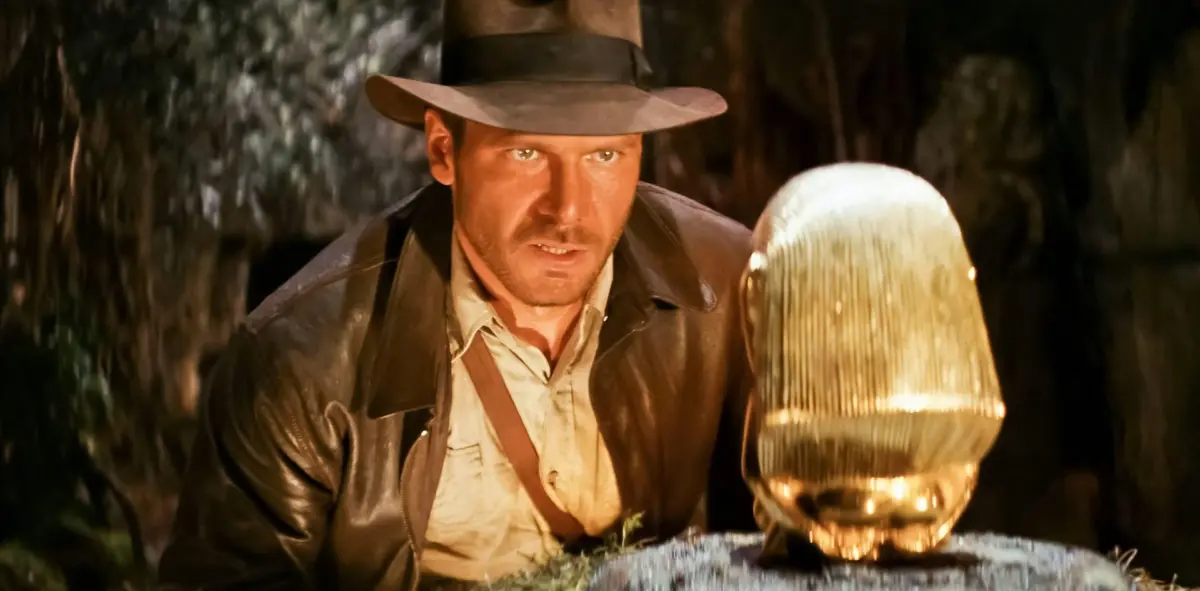
Archaeology occupies a unique space among academic disciplines. It is one of the rare fields where popular culture does not merely reflect public understanding, but actively produces it. Most people do not encounter archaeology through peer-reviewed excavation reports, specialized monographs, or museum cataloguing metrics. Instead, they encounter it through a man in a fedora cracking a whip in a torchlit tomb, or through digital-age video game franchises where ancient ruins serve as interactive obstacle courses.
This disconnect between the cinematic myth and the academic reality is not merely a harmless quirk of Hollywood storytelling. It carries significant ramifications. The adventure narrative shapes funding priorities, obscures the grueling realities of modern fieldwork, masks the colonial genealogies of artifact collection, and complicates ethical debates surrounding repatriation and indigenous heritage. Yet, this same myth serves as the primary engine for public engagement, sustaining cultural curiosity about the deep human past.
Understanding how archaeology became synonymous with adventure—and examining what is lost and gained in that translation—requires looking past the Hollywood facade to explore the intersection of 19th-century imperialism, modern media algorithms, and the internal politics of academic communication.
Detailed Chronology: From Imperial Looting to Cinematic Myth
The transformation of archaeology from a systematic science into an adrenaline-fueled adventure genre is rooted in a centuries-long evolution of exploration, literature, and media production.
The 17th to 19th Century: Loot, Exploration, and Colonial Foundations
Long before archaeology existed as an academic methodology, the pursuit of antiquities was deeply intertwined with colonial expansion and elite European travel. In the 17th century, travelers journeying through the Levant—such as Cornelis de Bruyn—returned to European capitals not as scientific researchers, but as minor celebrities bearing exotic curiosities.
By the 19th century, this dynamic intensified. During the height of European imperialism, the ancient world was treated less as a reservoir of human history and more as a warehouse of portable wealth. Ancient sites were framed as landscapes of hidden riches, ripe for extraction and display in metropolitan museums. This era established the foundational trope of the lone western explorer unearthing civilizations that local populations supposedly lived alongside without understanding.
The Late 19th Century: Victorian Adventure Literature
Victorian publishing capitalized on these imperial expeditions, spawning a new literary genre. H. Rider Haggard’s 1885 novel, King Solomon’s Mines, set a powerful template by presenting distant, non-Western landscapes as dangerous backdrops for hidden fortunes and lost white civilizations. Even as early universities began establishing archaeology as a formal discipline, popular imaginations remained tethered to this romanticized framework. Museums displayed monumental architecture and glittering artifacts as aesthetic masterpieces, deliberately divorcing them from their cultural and stratigraphic contexts.
The Mid-20th Century: Popularizing the Past
In the wake of World War II, popular writers further codified the adventure paradigm. C.W. Ceram’s influential 1949 book, Gods, Graves and Scholars, translated dense archaeological research into a sequence of high-stakes, dramatic narratives. Ceram invited readers to experience excavation not as a slow, destructive process of data collection, but as a series of sudden, cinematic epiphanies. This solidified a specific narrative form: archaeology as a heroic, individualistic confrontation with antiquity driven by extraordinary personalities.
The Late 20th Century to Present: Cinematic Standardization
Cinema and digital media subsequently amplified and standardized these tropes. From classic Hollywood productions like 1932’s The Mummy to blockbuster cornerstones like Raiders of the Lost Ark (1981), and onward into interactive digital spaces like Tomb Raider (1996) and Assassin’s Creed (2007), archaeology was institutionalized as a distinct pop-culture genre. Defined by secret mechanisms, deadly traps, and solitary heroism, these properties reinforced a singular message: knowledge of the past is something to be seized, not constructed.
Supporting Context & Metrics: The Reality of Modern Fieldwork
The persistence of the adventure narrative is understandable. Archaeology deals with inherently evocative material culture—crumbling ruins, haunting human remains, and beautifully crafted objects. Popular media naturally gravitates toward the most visually arresting moments of this work. However, the contrast between Hollywood fantasy and actual fieldwork is stark.
+-----------------------------------+-----------------------------------+
|         The Cinematic Myth        |       The Academic Reality        |
+-----------------------------------+-----------------------------------+
| Discovery via sudden revelation   | Construction via slow, cumulative |
| and heroic breakthroughs.         | data collection and analysis.     |
+-----------------------------------+-----------------------------------+
| Focus on glittering, complete     | Focus on micro-fragments, soil    |
| artifacts and gold.               | chemistry, and discarded pottery. |
+-----------------------------------+-----------------------------------+
| Solitary adventurers operating    | Collaborative, multidisciplinary  |
| outside legal/social frameworks.  | teams bound by strict permits.    |
+-----------------------------------+-----------------------------------+
| The past waiting passively to be  | The past transformed through      |
| "uncovered" by outsiders.         | continuous scholarly debate.      |
+-----------------------------------+-----------------------------------+
The Slog of Science
Real archaeological fieldwork rarely resembles a thrilling afternoon montage. It typically takes place under grueling physical conditions—baking desert heat, biting wind, or driving mud—and proceeds through tedious, unglamorous methods:
- Measuring and mapping coordinates using total stations and GPS.
- Sifting tons of sediment through fine mesh screens.
- Washing, cataloguing, and fragmenting millions of mundane ceramic shards.
- Conducting micro-morphological soil analyses and archaeobotanical flotation.
Crucially, archaeological excavation is fundamentally destructive. Once a layer of soil is removed, it cannot be put back. Every spadeful of earth documented must be recorded with meticulous precision, turning fieldwork into an exercise in disciplined archiving rather than treasure hunting. Furthermore, historical knowledge is rarely discovered fully formed; it is constructed collaboratively, debated fiercely, revised over decades, and occasionally abandoned when new data disproves old theories.
Case Study: The "Lost Golden City" of Aten
The 2021 announcement of the "lost golden city" of Aten near Luxor serves as a textbook example of the tension between modern media cycles and archaeological reality. Hailed globally as one of the most significant finds in Egypt since the tomb of Tutankhamun, the site generated massive international headlines long before comprehensive, peer-reviewed analyses were published.
The label "golden city" caught fire across international news outlets, despite the fact that the moniker’s exact rationale remained secondary to the viral nature of the headline. While media platforms raced to feed the public appetite for lost treasures, the actual work of long-term site conservation, urban mapping, and artifact analysis continued at a methodical, academic pace.
Official Statements & Institutional Perspectives
The friction between scholarly precision and public communication is not an external problem imposed upon archaeology by Hollywood; it is an internal tension actively navigated by research institutions, museums, and universities.
Academic Classrooms and the "Indiana Jones Effect"
In university lecture halls across the globe—from the University of Tübingen to institutions in North America and beyond—educators face the "Indiana Jones effect" on day one of introductory courses.
"Students rarely arrive at our departments with their expectations shaped by stratigraphic trench reports or specialist botanical monographs," notes academic literature addressing pedagogy in the field. "They arrive having watched heroes punch Nazis for ancient relics. Our initial job as educators is not to validate that fantasy, but to systematically deconstruct it while channeling that initial, infectious curiosity into rigorous scientific inquiry."
Many professors report that while cinematic tropes draw students to introductory classes, those same students often find a deeper, more enduring passion for the discipline once they realize that the historical significance of a broken, unassuming pot shard far outweighs the cinematic allure of a golden idol.
The Ethics of Representation and Colonial Legacies
The adventure model carries heavy ethical consequences. When archaeology is framed through the lens of individual conquest, it naturally downplays issues of provenance, cultural property rights, and Indigenous sovereignty.
Treating ancient material culture as "loot to be found" rather than evidence deeply embedded within living cultural traditions has a direct lineage in 19th-century colonial extraction. Today, museum boards, field directors, and international heritage organizations are forced to confront these historical realities. Debates over repatriation—such as the return of looted artifacts to the cultures that produced them—sit uncomfortably within a pop-culture framework that celebrates the lone Western excavator "saving" history from obscurity.
The Digital Acceleration: Social Media and the Algorithm
In the 21st century, digital platforms like Instagram, TikTok, and YouTube have compressed these dynamics further. Algorithmic visibility heavily rewards visual immediacy, sensational claims, and dramatic "unboxing" reactions. The slow, unphotogenic labor of data entry, radiocarbon dating, and peer review struggles to compete for eyeballs against short-form video content celebrating instant discovery. Consequently, archaeological institutions find themselves balancing the necessity of public outreach with the risk of sensationalizing their own data.
Future Outlook: Reclaiming the Narrative
Despite its distortions, cultural analysts and veteran researchers agree that the adventure myth is not simply an error to be corrected out of existence. To dismiss popular culture entirely is to misunderstand its vital role in sustaining the discipline’s cultural relevance.
Sustaining the Public Imagination
Without the cultural footprint of cinematic archaeology, public awareness of the deep human past would plummet. Museum attendance, philanthropic donations, governmental research grants, and university enrollments are all sustained, in part, by a broader cultural imagination that views archaeology as important enough to be exciting.
+--------------------------------------------------------------------------+
|                       The Archaeological Feedback Loop                   |
|                                                                          |
|   [ Pop-Culture Myth ] ---> Inspires Public Interest & Funding           |
|          ^                                           |                   |
|          |                                           v                   |
|   [ Scholarly Outreach ] <--- Sustains Academic Research & Discovery     |
+--------------------------------------------------------------------------+
As the discipline moves forward, the central challenge facing archaeologists is not how to eradicate the myth of the adventurer, but how to leverage the public attention it generates. By acknowledging why people are drawn to archaeology—through mystery, wonder, and human drama—researchers can pivot public conversations toward the real triumphs of the field:
- Collaborative Science: Highlighting multidisciplinary teams involving local communities, indigenous experts, and global specialists.
- Technological Innovation: Showcasing how LiDAR, remote sensing, and stable isotope analysis are answering historical questions without disturbing fragile sites.
- Ethical Stewardship: Framing archaeology not as an act of possession, but as an act of care, preservation, and shared human heritage.
Ultimately, Indiana Jones would never survive a modern institutional review board, nor would he secure an excavation permit under contemporary heritage laws. Real breakthroughs happen far away from collapsing temple ceilings—in comparative databases, statistical models, and quiet laboratory analyses. Yet, accuracy alone has never determined cultural influence. The adventure myth compresses a complex, collaborative, and invisible scientific process into a narrative that resonates at a glance. The defining question for contemporary archaeology is not how to silence the stories that bring people through the door, but what kind of rigorous, ethical, and inclusive stories it chooses to tell once they arrive.