Executive Overview
Yayoi Kusama, the peerless Japanese avant-garde visionary whose hypnotic polka dots, mesmerizing infinite reflections, and monumental pumpkins captured the imagination of the global public, has died at the age of 97. Her company confirmed that the legendary artist passed away on August 14, 2026, at a hospital in Tokyo, bringing to a close one of the most remarkable, resilient, and enduring creative trajectories in the history of modern art.
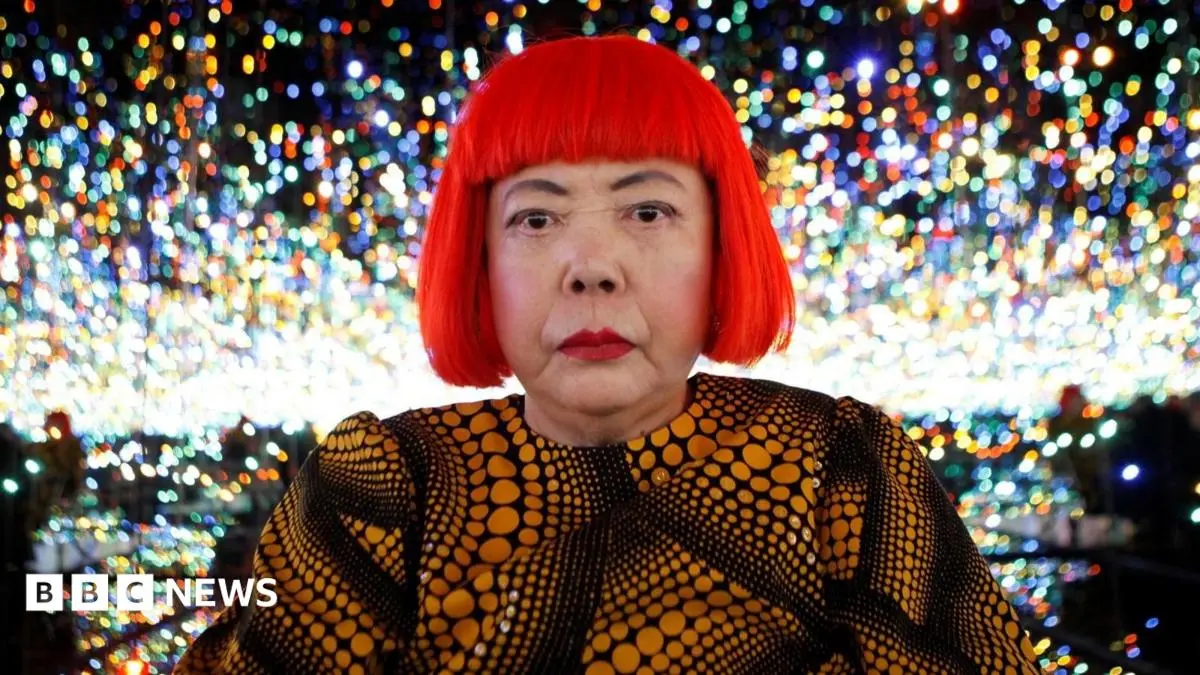
Throughout an extraordinary lifetime devoted entirely to artistic creation, Kusama forged a trailblazing career that transcended traditional boundaries. Her artistic practice spanned visual art, large-scale sculptures, immersive installations, performance art, fiction, and poetry. Though she spent decades largely sidelined by a male-dominated Western art establishment, Kusama experienced a monumental renaissance in her later years. In her eighties and nineties, she evolved into one of the world’s most recognizable, commercially successful, and beloved cultural icons.
Operating largely from a voluntary residence in a Tokyo psychiatric hospital—where she lived and worked for decades—Kusama painted until her final days. She never set aside her brush, continuing an unyielding exploration of love, infinity, and the eternal soul. Her passing marks the end of an era for contemporary art, yet her boundless vision leaves behind a permanent imprint on global culture, inspiring generations to view the universe through her kaleidoscopic lens.
Detailed Chronology: From Matsumoto to Manhattan and Beyond
Early Life and Traumas in Rural Japan
Born in 1929 in the provincial town of Matsumoto, nestled within the mountainous Nagano region of Japan, Kusama’s introduction to art was inextricably linked to the psychological storms of her early life. As a young child, she began experiencing vivid hallucinations—visions of flashing lights, creeping tendrils, and glowing embers that threatened to consume her reality. In her autobiography, she famously recounted the genesis of her signature aesthetic:
"One day, after seeing a tablecloth with a red flower pattern on a desk, I saw the same red flower pattern all over the ceiling, windows, and pillars. It filled the room, and covered my body."
Art became her primary defense mechanism, a vital vehicle designed to translate her internal hallucinations into a language the external world could comprehend. However, her creative ambitions were met with fierce resistance from her family. Her parents deeply disapproved of her early aspirations to study traditional painting in Kyoto, viewing her avant-garde inclinations as a profound embarrassment to a conservative household.
The Turbulent New York Years
Undeterred by familial opposition, Kusama relocated to the United States in 1958, settling in the crucible of the postwar art world: New York City. The 1960s art scene was fiercely masculine, cliquish, and fiercely competitive. Kusama quickly caused a stir, orchestrating provocative happenings, anti-war protests, and exhibitions featuring phallic soft sculptures—such as furniture upholstered in fabric protrusions—alongside frequent displays of public nudity.
In 1965, she introduced her revolutionary Infinity Mirror Rooms. Utilizing mirrors, lights, and water, these installations created the illusion of endless, boundless space, captivating millions of visitors and redefining the relationship between the viewer and the artwork.
Yet, institutional recognition remained elusive. Kusama grew deeply distressed and disillusioned as she watched her pioneering ideas appropriated or flatly copied by high-profile male contemporaries—including artists such as Andy Warhol, Claes Oldenburg, and Lucas Samaras. While these men enjoyed widespread critical acclaim, gallery representation, and financial reward for concepts pioneered by Kusama, her contributions were marginalized. Dejected, emotionally exhausted, and physically drained, she returned to Japan in the early 1970s.
The Psychiatric Sanctuary and Creative Rebirth
Upon returning to Japan, Kusama checked herself into a psychiatric facility in Tokyo, seeking professional treatment for the severe mental illnesses that had shadowed her life. Miraculously, she found an institution where the medical staff embraced art therapy, providing her with the secure, predictable environment and psychological stability necessary to resume her creative output.
Throughout the 1970s and early 1980s, her artistic output shifted. Moving away from the bright, pop-infused happenings of New York, she produced a series of uncharacteristically dark, intricately layered collages that grappled with mortality, psychological torment, and the cyclical rhythms of the natural world.
The Global Renaissance
The turning point of Kusama’s international career arrived in 1993, when she was chosen to represent Japan as a solo artist at the Venice Biennale. It was the first time a Japanese woman had received this singular honor. The exhibition was an unmitigated triumph, shattering lingering prejudices and fundamentally transforming how her work was received both at home and abroad.
Major international museums soon queued up to host retrospectives of her work. Her signature polka-dot motifs, monumental outdoor pumpkins, and immersive mirrored environments transformed into cultural phenomena. In the 21st century, fueled in part by the digital age and social media, Kusama’s installations became the ultimate aesthetic backdrop for global audiences, cementing her status as a ubiquitous pop-culture figure.
Supporting Context & Metrics: The Economics and Cultural Impact of an Icon
Kusama’s journey from outsider artist to commercial powerhouse represents one of the most dramatic market revaluations in art history.
- Market Valuation: The art market’s belated embrace of Kusama translated into staggering financial milestones. In 2022, one of her iconic paintings fetched an astounding $10.5 million (£7.7 million) at a major contemporary art auction, placing her in the elite tier of living artists.
- Luxury Collaborations: Her unmistakable aesthetic bridged the gap between high art and commercial consumerism. Her high-profile partnership with luxury fashion house Louis Vuitton brought her polka dots and painted faces to handbags, ready-to-wear clothing, and global storefronts, exposing her vision to millions of new consumers.
- Public Installations: From the shores of Naoshima—where her iconic yellow-and-black and red-and-black polka-dot pumpkins greet ferry passengers—to urban plazas across New York, London, and Tokyo, her monumental public sculptures transformed civic spaces into open-air museums.
- The Psychology of the Pumpkin: Among her vast lexicon of motifs, the pumpkin held a deeply personal significance. To Kusama, the unassuming vegetable symbolized warmth, humor, humility, and psychological stability. "Pumpkins speak to me," she once reflected. "They embody a sense of stability and give me peace of mind."
Official Statements and Tributes
The global arts community, cultural institutions, and world leaders united in mourning following the announcement of her death.
In their official statement released on August 14, 2026, her company expressed the collective grief of those who worked alongside her:
"With profound sorrow, we announce the passing of Yayoi Kusama at a hospital in Tokyo on August 14, 2026, at the age of 97. Throughout an extraordinary lifetime devoted entirely to artistic creation, Kusama pursued an internationally acclaimed career as a pioneering avant-garde artist whose creative practice encompassed visual art, performance, fiction, and poetry."
The statement emphasized her tireless work ethic right up until her final moments:
"She continued to paint until her final days, never setting aside her brush, and continued exploration of forever love and eternal soul. We will carry forward Kusama’s wishes and, through art, continue to bring hope and strength for the future to people around the world."
Throughout her life, Kusama faced skepticism not only from the art world but occasionally from the media. During various phases of her career, particularly when using her platform to campaign for world peace or aggressively critique institutional stagnation, pockets of the press criticized what they characterized as an unquenchable thirst for publicity. Yet history ultimately vindicated her, casting her media interventions not as self-promotion, but as the urgent crusade of an artist determined to break down the barriers separating human consciousness from universal truth.
Future Outlook: Preserving the Infinite Legacy
As the art world processes the loss of Yayoi Kusama, the focus shifts inevitably toward the preservation and future interpretation of her vast opus. Her passing closes the chapter on a life defined by radical perseverance, proving that artistic integrity, when paired with relentless stamina, can ultimately conquer institutional neglect and systemic bias.
Institutions worldwide are already planning posthumous retrospectives, academic symposia, and archival preservation projects to ensure that future generations understand the depth of her contributions. Her works—housed in permanent collections ranging from the Museum of Modern Art in New York to the Tate Modern in London and the Kusama Museum in Tokyo—will continue to offer visitors safe passage into the boundless realms of her imagination.
Yayoi Kusama taught the world that art is not merely an object to be consumed, but an immersive state of being. By transforming her private psychological struggles into public portals of wonder, she conquered the darkness within her and shared an infinite, polka-dotted light with humanity. Her brush has been laid down at last, but the ripples of her eternal soul will continue to reverberate across the cosmos.