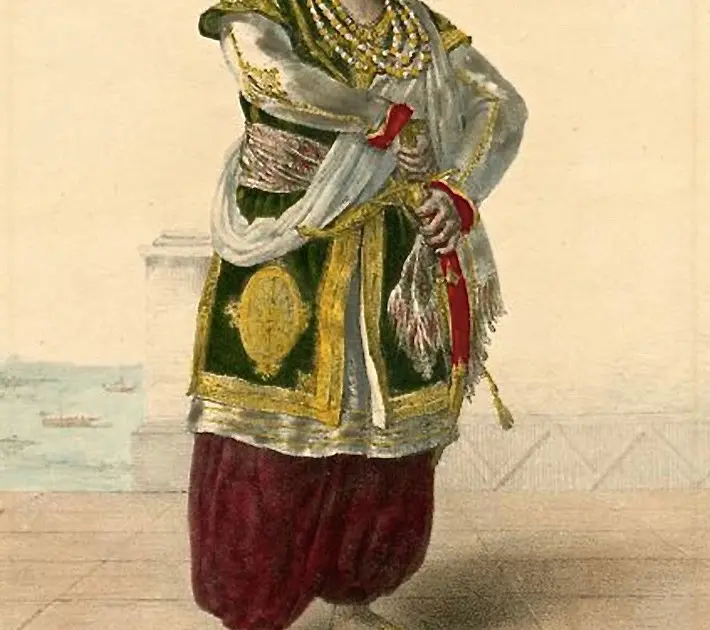
Antonio Salieri remains one of the most unjustly stereotyped figures in the history of Western classical music. Overshadowed in the popular cultural imagination by the cinematic and theatrical myths surrounding his relationship with Wolfgang Amadeus Mozart—largely cemented by Peter Shaffer’s play and Miloš Forman’s film Amadeus—Salieri’s true legacy is that of a towering, innovative, and deeply influential architect of late-18th-century opera. While his stage works occasionally surface at boutique festivals, they remain frustratingly absent from mainstream international repertoires.
This long-standing neglect is set to be challenged this autumn. From October 10 to 18, the prestigious Opéra Royal du Château de Versailles will stage a major new production of Salieri’s revolutionary 1787 masterpiece, Tarare. Directed by Jean-Romain Vesperini and conducted by Théotime Langlois de Swarte, this high-profile revival promises to bring one of the most politically charged and musically daring operas of the pre-Revolutionary era back into the spotlight.
Featuring a libretto by none other than Pierre-Augustin Caron de Beaumarchais—author of The Barber of Seville and The Marriage of Figaro—Tarare is an explosive mixture of exoticism, high tragedy, political subversion, and biting satire. Its upcoming staging at Versailles, an architectural jewel inaugurated in 1770, offers a historically resonant backdrop for a work that audaciously critiqued absolute monarchy on the eve of the French Revolution.
Detailed Chronology: Salieri’s Path to Operatic Mastery
To understand Salieri’s artistic DNA, one must look beyond the Viennese court and trace a trans-European career that bridged Italian comic traditions, French theatrical grandeur, and groundbreaking reform movements.
The Protean Years and the Gluckian Succession
Arriving in Vienna as a teenager around 1766, the young Salieri quickly found himself under the wing of two intellectual and artistic titans of the Enlightenment: the imperial poet laureate Pietro Metastasio, who provided informal literary instruction, and the revolutionary composer Christoph Willibald Gluck.
Gluck became Salieri’s mentor, friend, and confidante. So profound was this artistic lineage that Salieri rightfully considered himself Gluck’s true heir. This influence was immediately apparent in Salieri’s 1771 opera Armida, based on Torquato Tasso’s epic poem Gerusalemme liberata. In Armida, Salieri fully embraced the tenets of Reform Opera—championed by Gluck and librettist Ranieri de’ Calzabigi—which sought to strip Italian opera seria of excessive, ego-driven vocal ornamentation in favor of dramatic truth, poetic unity, and orchestral integration.
The Milanese Interlude and Europa Riconosciuta
The theatrical landscape of Vienna shifted dramatically in 1777. Financial mismanagement caused the collapse of Vienna’s Italian opera company, and Emperor Joseph II expressed a sudden desire to foster German-language singspiel. Granted a year’s leave of absence, Salieri looked abroad.
When Gluck turned down an invitation to inaugurate Milan’s brand-new theatre, he deferred the commission to his young protégé. With Gluck’s blessing, Salieri composed Europa riconosciuta (Europa Recognized) for the grand opening of La Scala in 1778. (In a testament to the work’s historical weight, the opera house revived the score in 2004 to celebrate its reopening following extensive structural renovations). Salieri’s Italian touring commitments during this period also yielded charming comedies such as La scuola de’ gelosi (1778), a work rich in stylistic pre-echoes of Mozart’s own ensemble-driven masterpieces.
The Paris Commissions and Les Danaïdes
Salieri’s international reputation reached its zenith when he was approached to conquer the formidable Parisian lyric stage. In 1783–84, he agreed to collaborate on a prestigious French commission for the Académie Royale de Musique.
The resulting work, Les Danaïdes, was conceived as a five-act tragédie lyrique. In a fascinating twist of musical history, Gluck—initially credited as the primary composer—failed to write a single note of the score, leaving Salieri to shoulder the entire creative burden. While initial marketing efforts maintained a strategic deception regarding authorship to ensure ticket sales, Salieri’s sole responsibility was publicly acknowledged following the premiere.
The gamble paid off spectacularly. Les Danaïdes captivated Parisian audiences, remaining a repertory fixture for over four decades. Among its most fervent admirers was a young Hector Berlioz, who detailed the profound, almost visceral impression the work left on him in his Mémoires.
The Beaumarchais Collaboration and Tarare
Les Danaïdes was the first of three major French operas Salieri produced. It was followed by Les Horaces (1786), which met with a lukewarm reception, and then the crowning achievement of his Parisian catalog: Tarare (1787).
With a libretto by Beaumarchais—marking the playwright’s sole operatic credit—Tarare was an audacious theatrical venture. Salieri’s commitment to French prosody and dramatic momentum reached its peak here. So successful was the partnership that Salieri subsequently reworked the opera into an Italian version, retitled Axur, re d’Ormus, featuring a libretto translated and adapted by Lorenzo Da Ponte. Premiering in Vienna in January 1788, Axur became one of the most frequently performed operas in Europe over the next two decades.

Supporting Context & Metrics: The Revolutionary Anatomy of Tarare
+--------------------------------------------------------------------------+
                    THE ANATOMY OF SALIERI'S TARARE
+--------------------------------------------------------------------------+
| Premiere Date:       June 8, 1787 (Paris Opera)                          |
| Librettist:          Pierre-Augustin Caron de Beaumarchais               |
| Composer:            Antonio Salieri                                     |
| Italian Adaptation:  Axur, re d'Ormus (Libretto by Lorenzo Da Ponte)     |
| Modern Revival:      October 10–18, 2023 / 2025 (Opéra Royal de Versailles)|
+--------------------------------------------------------------------------+
Plot Mechanics and Political Subversion
Set in the exoticized, despotic realm of Ormus, Tarare weaves a complex tapestry of romance, tyranny, and moral philosophy. The plot pits the noble, valiant soldier Tarare against the corrupt and absolute Sultan Atar. Tarare’s relentless quest to rescue his abducted wife exposes a societal structure rot with vice. Ultimately, the tyrant is overthrown, and Tarare is proclaimed king not by divine right, but by the explicit will of the people.
The opera’s socio-political undertones were impossible to miss, even in pre-revolutionary France. Years later, looking back at the upheaval of 1789, Beaumarchais famously claimed that the libretto for Tarare had served as a conceptual first draft for the Declaration of the Rights of Man and of the Citizen.
Christophe Rousset and the Modern Re-Evaluation
Much of the credit for the contemporary rediscovery of Salieri’s French-language operas belongs to harpsichordist and conductor Christophe Rousset and his period-instrument ensemble, Les Talens Lyriques. Over decades of meticulous archival research and performance, Rousset has championed Salieri’s French trilogy (Les Danaïdes, Les Horaces, and Tarare), recording definitive audio cycles that reveal a composer of immense daring and structural ingenuity.
In interviews discussing the thematic core of Tarare, Rousset has emphasized its proto-revolutionary DNA:
"The central theme is death to tyrants. We witness the primal emergence of nature creating society, contrasted sharply with the artificial and oppressive way royalty and tyrants impose themselves upon humanity."
Furthermore, Tarare breaks theatrical conventions of the era through its unorthodox epilogue. Rather than ending with a conventional celebration of the principal characters’ union, the opera pulls back the theatrical veil, featuring characters who return to directly address the audience, offering a cynical, philosophical commentary on human folly.
Official Statements & Production Insights
The upcoming revival at the Opéra Royal du Château de Versailles represents a major milestone in period-performance practice. In official statements released by the opera house, production teams have emphasized the physical and acoustic suitability of the venue.
Inaugurated in 1770—just seventeen years before Tarare premiered in Paris—the Opéra Royal offers a rare historical synergy. Built entirely of wood with remarkable acoustic resonance, the auditorium mirrors the architectural and aesthetic sensibilities of the late Ancien Régime, making it the ideal acoustic vessel for Salieri’s opulent orchestration.
Director Jean-Romain Vesperini approaches the work not merely as an 18th-century museum piece, but as a living, breathing dramatic inquiry into the corrupting nature of absolute power. Paired with the dynamic, historically informed baton of conductor Théotime Langlois de Swarte, the production aims to strip away centuries of Salierian caricature to expose the vibrant, muscular theatricality of his score.
Future Outlook: Reclaiming Salieri for the 21st Century
The marginalization of Antonio Salieri is an operational failure of the modern classical music industry. While institutions routinely recycle a narrow canon of standard-repertory works, masterpieces of Enlightenment musical theater languish in academic archives.
Performances by specialized ensembles like Bampton Classical Opera—which previously staged Salieri’s La grotta di Trofonio (2015) and La scuola de’ gelosi (2017)—have proven that contemporary audiences respond enthusiastically to Salieri’s brisk pacing, sophisticated harmonic language, and psychological acuity.
The Versailles production of Tarare serves as an acid test for the international opera community. If major houses across Europe and North America continue to relegate Salieri to the status of a historical footnote, they ignore a vital evolutionary link between Gluckian reform and the mature masterpieces of Mozart and Beethoven. By injecting theatrical life back into scores like Tarare, the classical world takes a crucial step toward correcting a historic injustice—proving once and for all that Antonio Salieri was not merely a footnote in another composer’s tragedy, but a master dramatist who helped write the soundtrack to the modern world.