Executive Overview
The cinematic landscape of parody has long been dominated by the rapid-fire gag culture of late-20th-century classics. From the Zucker-Abrahams-Zucker masterpiece Airplane! (1980) to the slapstick heights of The Naked Gun (1988) and Hot Shots! (1991), the disaster-action spoof genre relies on a strict formula: relentless absurdity, predictable narrative arcs, and absolute disregard for realism. Enter Stop! That! Train!, a new addition to the cinematic canon that leans heavily into this legacy while injecting the unmistakable aesthetic and humor of the RuPaul’s Drag Race universe.
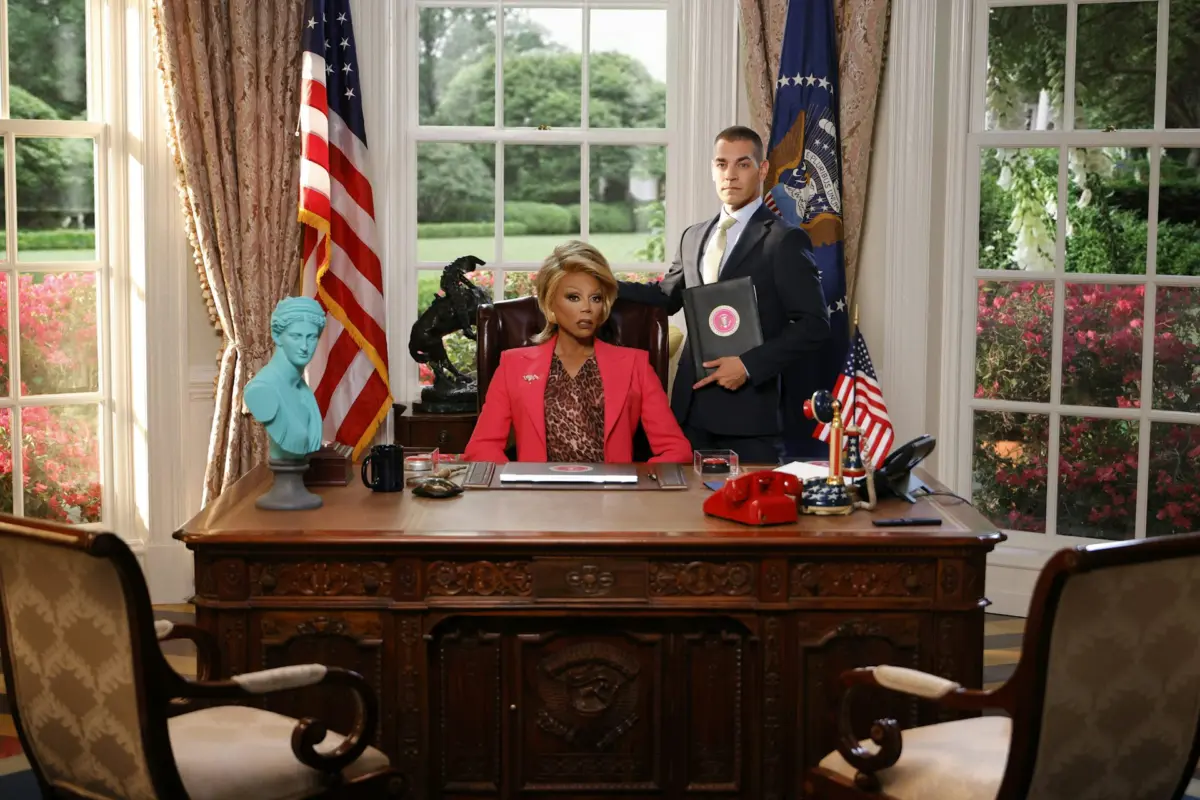
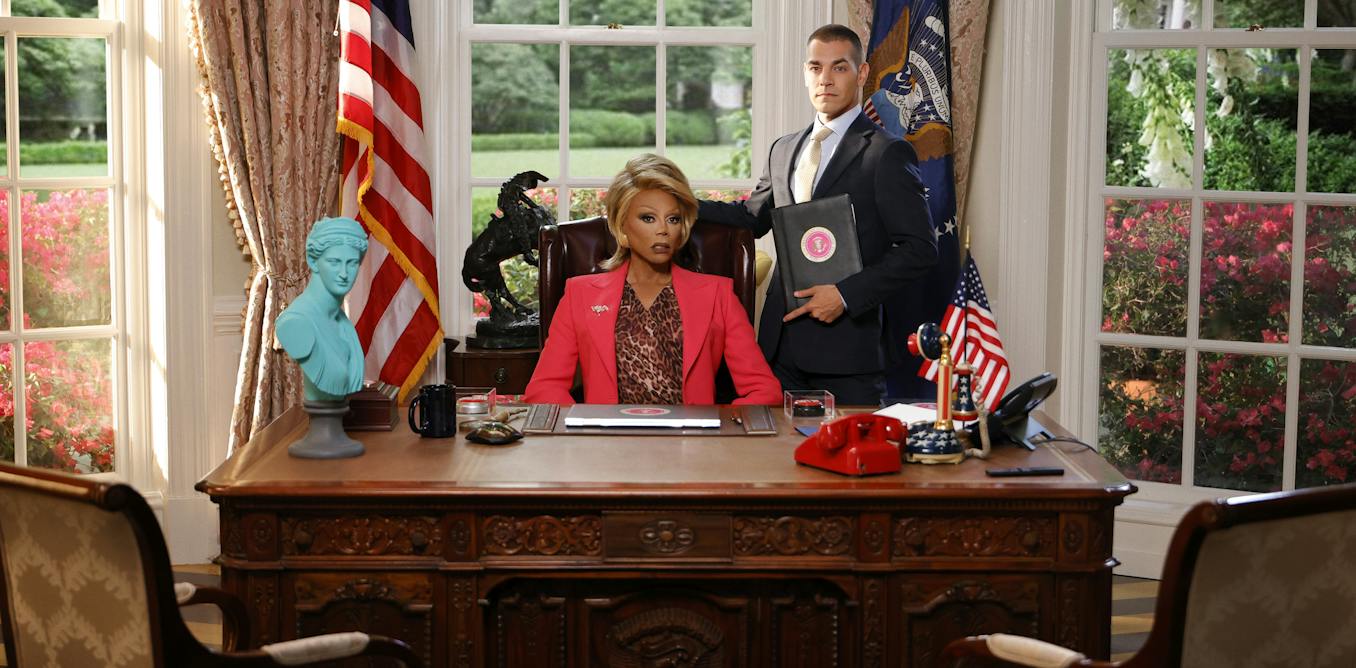
Directed toward audiences who prefer their cinema with a heavy dose of irony and theatricality, Stop! That! Train! stars drag icons Ginger Minj and Jujubee as a pair of plucky, down-on-their-luck train stewardesses. Set against the backdrop of "Stank Rail"—a budget transit line striving for the high-end glamour of the elite Glamazonian Express—the film follows the duo as they navigate failing brakes, malicious first-class rivals, demanding passengers, and an unprecedented meteorological phenomenon known only as "Stormaganza." To make matters worse, they are joined by the nation’s commander-in-chief, President Gagwell, played with deadpan authority by RuPaul Charles himself.
While the film offers a dazzling array of camp performances, rapid-fire visual gags, and a dizzying slate of celebrity cameos—including Sarah Michelle Gellar and The Real Housewives star Lisa Rinna—it also sparks a broader cultural conversation. Beneath the sequined surface and relentless joke delivery lies a tension familiar to modern queer media: the balance between mainstream commercial sanitization and sharp, subversive political resistance. As the culture industry continues to revisit and reboot the parody formats of the 1980s, Stop! That! Train! provides a fascinating case study in how queer artistry updates historical cinematic tropes, even if it occasionally stops short of delivering the biting social critique some audiences might crave.
Detailed Chronology
To understand the trajectory of Stop! That! Train!, one must trace its lineage across both cinematic parody history and the expanding commercial footprint of the reality television phenomenon that birthed it.
The Evolution of the Disaster Spoof
- 1980: The release of Airplane! sets the gold standard for cinematic parody, establishing a narrative structure based on earnest disaster films (specifically Zero Hour!) while subverting them with low-brow puns, visual gags, and deadpan absurdist humor.
- 1988–1991: The genre matures with The Naked Gun and Hot Shots!, cementing the expectation that viewers will suspend all disbelief in exchange for rapid-fire comic relief.
- The 2020s Revival: A broader cinematic trend emerges to resurrect and modernize these 1980s formats, highlighted by upcoming revivals like The Naked Gun (2025). Within this landscape, Stop! That! Train! positions itself as an explicit heir to Airplane!, adopting its structural beats much like a drag queen lip-syncing to a legendary diva’s anthem—respectful of the original lyrics, yet performed through a distinct interpretive lens.
The Narrative Arc of Stop! That! Train!
- Act I: Stank Rail and Aspirations: Viewers are introduced to Tess (Ginger Minj) and DeeDee (Jujubee), two overworked and underpaid stewardesses navigating the grim realities of Stank Rail. Inspired by the legendary advice of RuPaul—"Good luck, and don’t fuck it up!"—the duo sets their sights on transferring to the prestigious Glamazonian Express.
- Act II: Escalating Chaos: The journey is derailed by a compounding series of obstacles. Tess and DeeDee must contend with snooty first-class "mean girl" stewardesses, helpless conductors, and a catastrophic mechanical failure. Compounding these workplace hazards is Stormaganza, an unprecedented, hyper-dramatic weather event that threatens the entire transit system.
- Act III: Presidential Intervention and Climax: Facing insurmountable odds, the stewardesses find an unlikely ally in President Gagwell (RuPaul). Alongside a supporting cast of hyper-masculine hunks—such as the dim-witted co-conductor Cal, played by Brian Jordan Alvarez—the crew must work together to avert total catastrophe, delivering a climax that echoes the triumphant, underdog-saves-the-day resolutions of classical Hollywood cinema.
Supporting Context & Metrics
The release of Stop! That! Train! arrives at a unique cultural and academic intersection, where the mechanics of drag culture, cinematic pastiche, and sociopolitical resistance meet.
The Economics and Aesthetics of Modern Camp
Pastiche and parody are inherently delicate balancing acts. On one hand, the cartoonish exaggeration of the genre distances the viewer, making it difficult to forge genuine emotional attachments to the characters. On the other hand, this exact emotional detachment allows skilled comedic artists to expose the constructed, mawkish, and manufactured sentimentality often peddled by the very mainstream films being spoofed.
- Star Power and Cameos: The film relies heavily on meta-humor and guest appearances, featuring cultural touchstones like Sarah Michelle Gellar (playing a version of herself trapped in perpetual hope of public recognition) and Lisa Rinna, officially credited under the splendidly tongue-in-cheek title of "Sceney Celebrity."
- The Weaponization of Stereotypes: One of the film’s sharpest satirical choices is its sustained mockery of traditional "straightness" and hyper-masculinity, personified by Brian Jordan Alvarez’s himbo character, Cal. By inverting decades of mainstream cinema that used non-straight characters as punchlines or disposable tropes, the film offers a form of comedic payback.
Drag as a Force of Resistance
Scholars and cultural researchers have increasingly documented the socio-political significance of drag performance. According to research highlighted by academic Ella Greenhalgh and publications in political science journals, drag has evolved far beyond entertainment into a recognized force of queer resistance.
At a time when legislative and cultural attacks on drag performers have reached historic highs across the globe, the presence of drag artists in mainstream feature films carries profound weight. However, critics note a distinct tension: while academic and grassroots understandings of camp—rooted in Susan Sontag’s seminal 1964 essay Notes on Camp as an exercise in "artifice and exaggeration"—frequently weaponize humor to fight back against oppressive social norms, commercialized projects like Stop! That! Train! often sand down these sharp edges to appeal to broader audiences.
| Analytical Dimension | Traditional 1980s Spoof (Airplane!) | Stop! That! Train! (Modern Queer Pastiche) |
|---|---|---|
| Primary Target | Earnest disaster melodramas of the 1970s | Corporate sanitization, celebrity culture, and heteronormative tropes |
| Stylistic Vehicle | Slapstick, puns, rapid-fire sight gags | Camp, high-artifice drag performance, meta-commentary |
| Socio-Political Edge | Minimal; purely escapist entertainment | Intermittent; mocks traditional masculinity and marginalization |
| Audience Engagement | Broad, multi-generational mainstream | Cult following, LGBTQ+ community, reality TV consumers |
Official Statements & Critical Reception
The reception of Stop! That! Train! among film critics and cultural commentators highlights a broader debate about the responsibilities of contemporary parody.
While reviewers universally praise the chemistry and comedic timing of Ginger Minj and Jujubee, opinions diverge on whether the film goes far enough in its satirical ambitions.
- On the Performances: Critics have hailed Minj and Jujubee as natural inheritors of the Zucker-Abrahams-Zucker slapstick tradition, seamlessly translating the high-energy performance style of reality television competition stages into feature-length narrative cinema. Their execution of physical comedy during high-stress sequences has been described as "gloriously camp, ridiculous, and over the top."
- On the Critique of Celebrity Culture: Industry analysts note that while the film appears primed to skewer the hollow nature of modern celebrity worship—utilizing self-aware cameos from figures like Lisa Rinna and Sarah Michelle Gellar—the actual critique remains largely superficial. As one cultural critic observed, the subversion is "definitely shallower than the layers of a drag queen’s make-up."
- On Political Engagement: Discussion has also centered on whether modern camp comedy should carry a heavier political burden. While films like Adam McKay’s Don’t Look Up (2021) demonstrated that disaster-comedy formats can successfully tackle systemic issues like climate denialism, Stop! That! Train! largely bypasses explicit political commentary in favor of pure, unadulterated escapism—mirroring the depoliticized trajectory of its parent franchise, RuPaul’s Drag Race.
Future Outlook
As Hollywood continues to look backward in search of reliable intellectual property—evidenced by the ongoing wave of 1980s and 1990s franchise revivals—the success of Stop! That! Train! points toward a potential sub-genre within modern comedy: the Queered Pastiche.
- The Evolution of Spoof Formats: With major studios greenlighting updates to foundational comedies like The Naked Gun, filmmakers are actively experimenting with how classic joke structures can be filtered through contemporary comedic sensibilities. The integration of drag artists into lead roles in mainstream studio-backed parodies suggests that casting directors are increasingly recognizing the crossover appeal of alternative performance art.
- Balancing Commercial Viability with Subversion: The central challenge moving forward will be determining whether queer creators working within mainstream commercial spaces can push past sanitization. While Stop! That! Train! proves that drag performers can successfully anchor a high-concept studio comedy, future iterations within the genre may face increasing pressure to match their stylistic excess with a sharper, more enduring cultural bite.
- The Longevity of Camp Cinema: Ultimately, Stop! That! Train! demonstrates that audiences remain eager for lighthearted, fast-paced escapism—provided it is delivered with enough sequins, wit, and self-awareness to survive the journey. Whether future pastiches choose to arm themselves with deeper social critiques or remain content playing strictly for laughs, the tracks have been successfully laid for a new era of disaster spoofing.