Executive Overview
For centuries, the global culinary imagination has been haunted by a persistent, punishing stereotype: that British cooking is an unforgiving landscape of boiled over-familiarity, uniformly dismal grey meats, and uninspired starches. Popular culture loves to mock the culinary horrors of jellied eels, leaden suet puddings, and vegetables boiled into submission. Even the foundational triad of roast beef, Yorkshire pudding, and gravy is routinely dismissed as provincial and unrefined when measured against the vibrant pantries of France, Italy, or Asia.
Yet, this pervasive caricature is a historical aberration—a symptom not of ancient tradition, but of mid-20th-century wartime rationing, austerity, and post-war industrial trauma.
Long before rationing stripped the British larder of its color and complexity, the nation’s kitchen was a dynamic engine of global flavors. In their compelling new book, The King’s Dinner, digital humanities scholar Adam Crymble, historian Sarah Fox, and their research collaborators turn back the clock to the Georgian era—specifically the reign of George III (1760 to 1820). Mining household account books, contemporary ephemera, and rare cookbooks, the authors reveal a surprising, sophisticated culinary culture.
Far from being insular, the British palate during the age of Enlightenment and the Industrial Revolution was complex, multicultural, and deeply international. Driven by a rapidly expanding empire, waves of European migration, and burgeoning global trade routes, Georgian Britons enthusiastically imported ingredients, techniques, and cooks from across the planet, brilliantly assimilating them into an emerging, globally-inflected national cuisine.
Detailed Chronology: The Evolution of the Georgian Table (1760–1820)
To understand how the British table transformed during the late 18th and early 19th centuries, one must trace a timeline defined by shifting geopolitics, colonial expansion, and royal consumption.
1760–1780: The Foundations of Imperial and Continental Exchange
As George III ascended the throne in 1760, Britain was entering a period of profound geopolitical ascent. Concurrently, the British domestic kitchen began quietly absorbing the spoils of global trade.
- 1761: The annual Lord Mayor’s Day banquet in London cements turtle soup—an extravagant import from the Caribbean requiring live transportation across the Atlantic—as the ultimate status symbol of imperial wealth, a tradition that would run unbroken until 1825.
- 1773: The establishment of early culinary innovators, such as the Norris Street Café in London, marks a pivotal shift. Alongside traditional fare, the café begins serving Indian-style curries, catering to the growing demographic of East India Company employees returning from the subcontinent with a taste for heat and spice.
- 1784: The commercial landscape shifts permanently with the publication of the very first newspaper advertisements for pre-mixed Indian curry powder, democratizing South Asian flavor profiles for middle-class English cooks.
1780–1800: The Crucible of War and Migration
The outbreak of the French Revolution in 1789 sent waves of émigrés fleeing across the Channel, dramatically altering London’s gastronomic ecosystem by injecting high-end French culinary techniques into an increasingly patriotic urban environment.
- 1792: Caricaturist James Gillray publishes French Liberty, English Slavery, immortalizing the ideological weaponization of food. The corpulent English character John Bull is depicted feasting on a massive, steaming slab of roast beef, while his starving French counterpart gnaws on raw onions and snails—cementing meat as a metaphor for national supremacy.
- 1794–1799: Monthly account books from King George III’s royal household at Kew paint an intimate portrait of royal dining. They record regular purchases of 32 distinct varieties of fruits and vegetables, ranging from ancient domestic staples like samphire and cabbage to exotic American potatoes, Italian broccoli, and Asian cucumbers.
- 1800: Specialist food warehouses, such as Warehouse No. 42 and Skill’s Warehouse, thrive in London’s commercial districts, advertising specialized wares like East Indian-style piccalilli and exotic spices directly to aristocratic and royal clienteles.
1800–1820: The Regency Peak and the Codification of Taste
During the Regency era—governed by George III’s decadent son, the Prince Regent (later George IV)—Britain’s culinary landscape reached a dizzying synthesis of domestic comfort foods and luxury imperial imports.
- 1802: Wood’s Soup House begins publicizing live turtle-butchering events, feeding an insatiable public demand for luxury broths that are subsequently jarred and shipped across the country. Meanwhile, mock turtle soup, constructed from economical calf’s heads, emerges as a working-class and middle-class proxy.
- 1810: Deen Mahomet, an Indian immigrant, entrepreneur, and "shampooing surgeon" to the Prince Regent, opens the legendary Hindostanee Coffee House in Portman Square, offering authentic Indian dishes to London’s elite.
- 1815: The opening of the "Four Nations" eating house in Soho reflects a city utterly obsessed with cosmopolitan variety, serving a unified menu of German, Italian, French, and English dishes under one roof.
Supporting Context & Metrics
The meticulous reconstruction of Georgian dietaries by Crymble, Fox, and their peers relies heavily on surviving archival metrics that dismantle the myth of historical culinary monotony.
The Royal Vegetable Cornucopia
While popular historical memory reduces the royal diet to mountains of charred animal protein, the administrative archives of Kew Palace and Carlton House tell a dramatically different story. Financial records from the late 18th century reveal an administration deeply committed to horticultural variety.
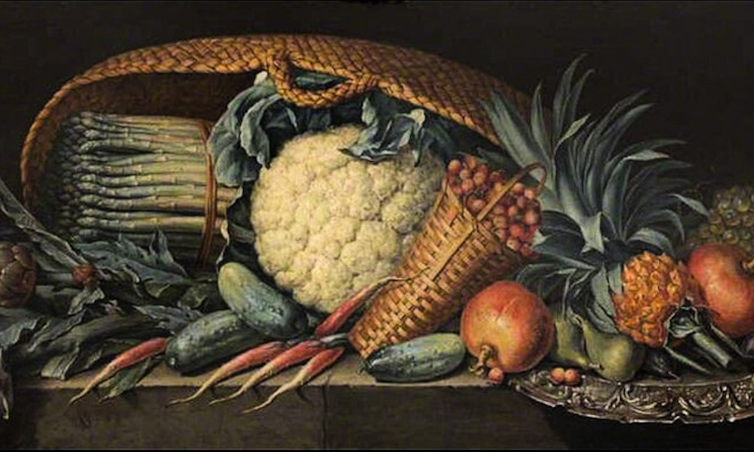
- 32 Varieties: Household ledgers consistently catalogued at least 32 distinct fruits and vegetables entering royal kitchens on a monthly basis.
- Global Origins: The royal pantry bridged continents, drawing upon local British crops like samphire, artichokes, and cabbages alongside relatively recent arrivals: broccoli imported from Italy, potatoes naturalized from the Americas, and cucumbers brought over from Asia.
The Domination of Umami
A striking revelation from The King’s Dinner is the quantitative dominance of savory, umami-rich preparations over delicate French emulsions within elite households. While fashionable society fawned over French sauces, the royal household’s actual consumption patterns heavily favored deep, savory flavor enhancers.
- Gravy Dominance: Rich meat gravies were ladled out over 1,000 times across monitored periods at Kew and Carlton House.
- Fish-Based Condiments: Paired with anchovy-and-wine sauces, umami-laden additions dwarfed the frequency of delicate French cream and butter sauces on the royal table.
- Store-Bought Sauces: By 1760, commercialized catsups (historically mushroom or walnut-based rather than tomato-based) and bottled fish sauces were standard pantry staples, proving that the British palate craved intense, salty, tangy notes that could be dialed in at the dining table.
Official Statements and Academic Insights
The re-evaluation of British culinary history is not merely a gastronomic exercise; it represents a major methodological breakthrough in digital humanities and social history.
Reflecting on the motivations behind The King’s Dinner, lead researchers emphasize how modern political narratives warped historical realities.
"The pervasive stereotype of bland British food is a relatively modern invention," note digital humanities scholar Adam Crymble and historian Sarah Fox. "It was the dark era of wartime rationing in the 20th century—coupled with post-war industrial food manufacturing—that shattered Britain’s historic culinary reputation. When you look back at the vibrant, interconnected world of the Georgian table, you find an empire actively tasting the world, bringing foreign cooks, strange ingredients, and exotic spices straight into the national mainstream."
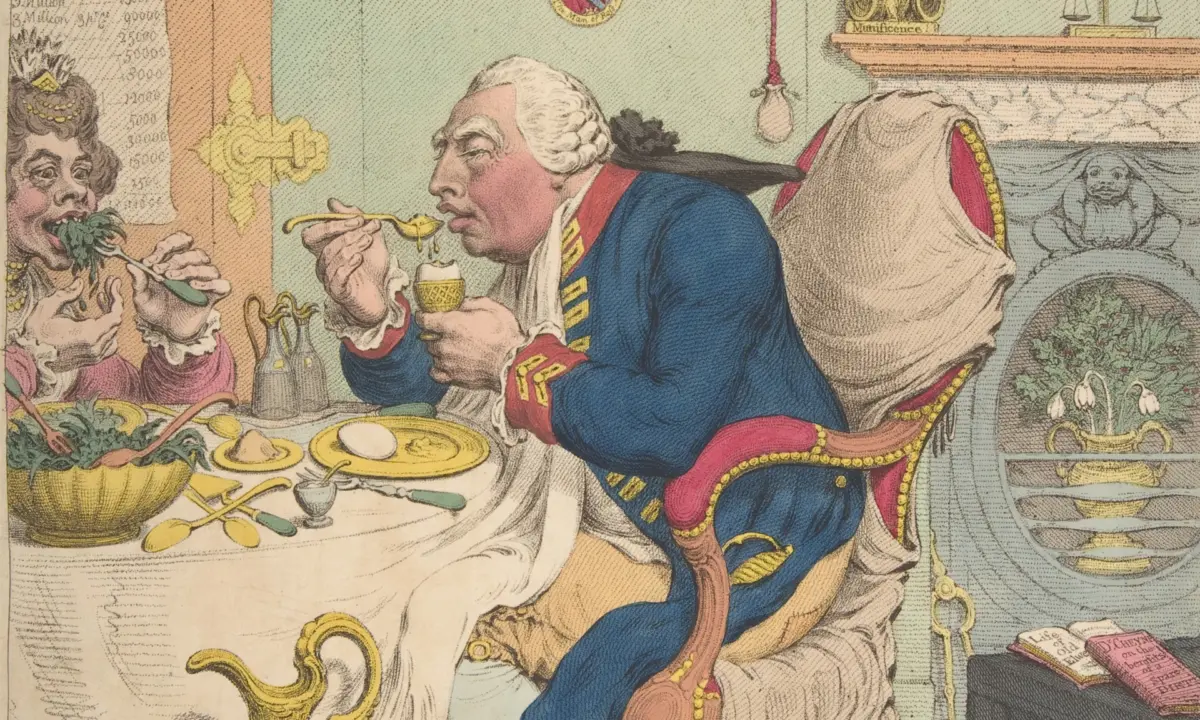
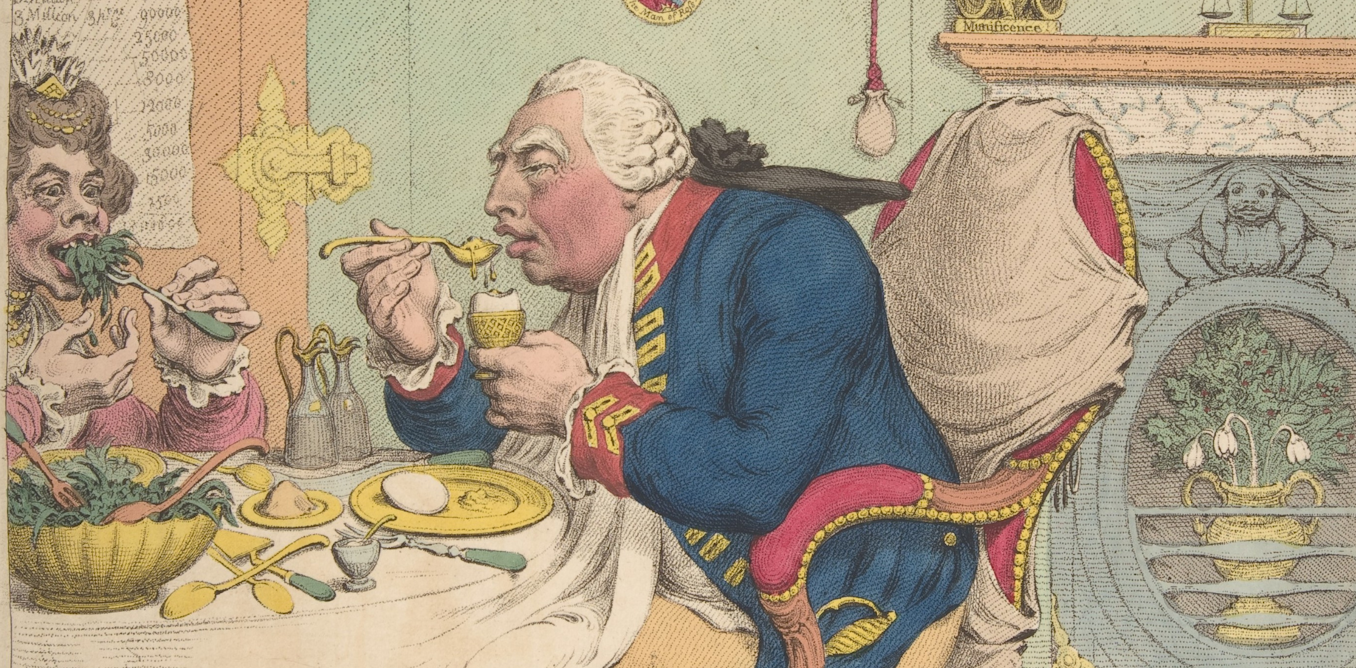
Historians point out that the geopolitical anxieties of the Napoleonic Wars often created a schizophrenic public attitude toward foreign food. While satirical prints like those by James Gillray warned against the moral decay of French influence—depicting French fare as effeminate and unpatriotic—the British aristocracy and wealthy merchant classes eagerly embraced continental luxuries. Smoked sausages from Germany, Parmesan cheeses from Italy, reindeer tongues, and Mediterranean olives flew off London shelves.
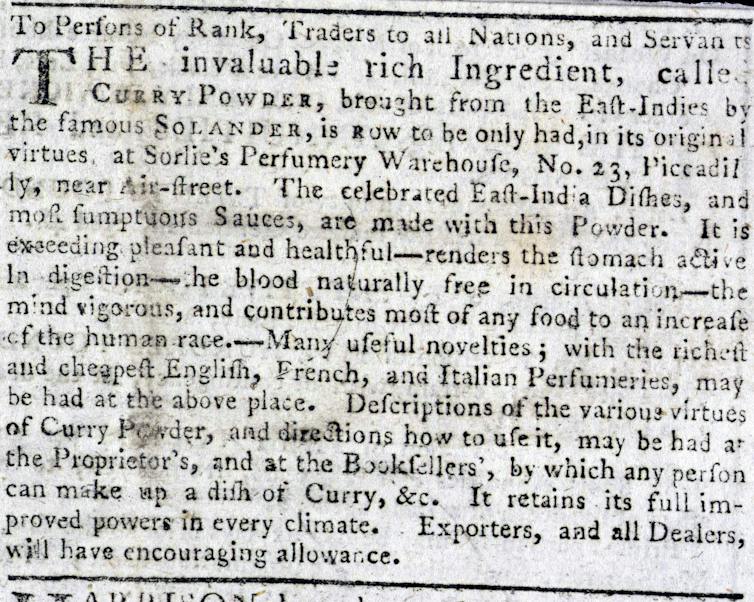
Furthermore, the rapid domestication of South Asian flavors underscores how deeply intertwined British domestic life was with the East India Company’s colonial engine.
"Curry powder wasn’t an exotic novelty tucked away in a royal curiosity cabinet; it was a commercial commodity aggressively marketed to the British housewife as early as the 1780s," the authors explain. "From elite dining clubs serving turtle soup to middle-class kitchens marinating vegetables in Indian-style piccalilli, Britain was an early incubator of globalized fusion cuisine."
Future Outlook: Reclaiming Britain’s Gastronomic Identity
As contemporary food historians, chefs, and researchers continue to mine digitized archives, parish records, and household account books, the historical narrative surrounding British cuisine is undergoing a radical, long-overdue renaissance.
The publication of works like The King’s Dinner signals a broader cultural appetite for historical accuracy in gastronomy. Modern British chefs are increasingly looking past the mid-century trauma of wartime austerity—where egg powder, Spam, and boiled mutton reigned supreme—to draw inspiration from the genuinely adventurous palates of their Georgian and Regency forebears.
By recognizing that historical British cooking was fundamentally pluralistic, shaped by immigrant communities, global trade networks, and an insatiable curiosity for foreign flavor profiles, modern British cuisine can finally shed its unearned reputation for culinary torpor. The future of British food criticism lies not in the defense of a mythical, monochrome past, but in the confident reclamation of a rich, messy, and wonderfully multicultural heritage that has been simmering in the national larder for over two centuries.